
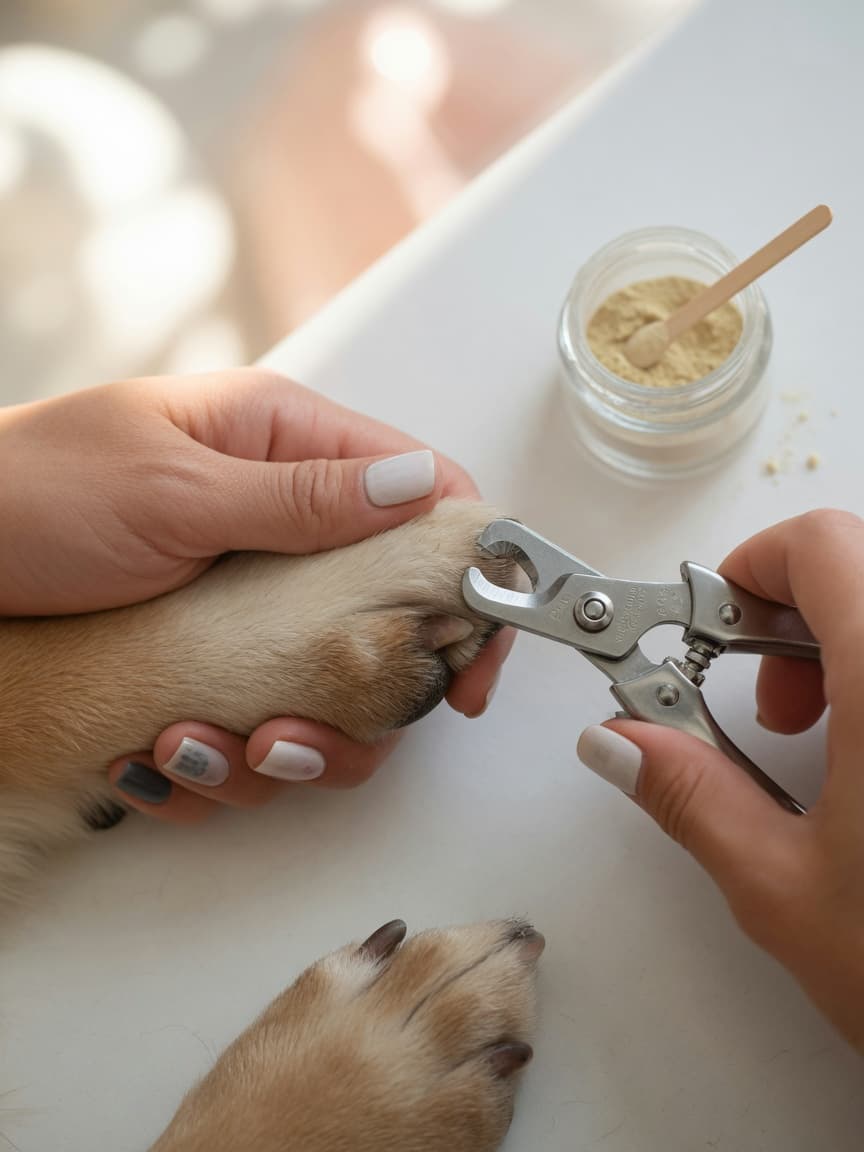
Why Nail Trimming Matters
Overgrown nails are one of the most common and preventable welfare issues in pet dogs. When nails grow too long, they press against the floor with each step, forcing the toe joints into an unnatural position. Over time, this can affect your dog's gait, cause chronic joint pain, and even lead to postural problems that travel up the legs and into the spine. Long nails are also prone to snagging on carpet or soft furnishings, which can result in a painful tear or broken nail. Trimming every four to six weeks keeps nails at a healthy length and makes the whole process easier for both of you.
Understanding the Quick
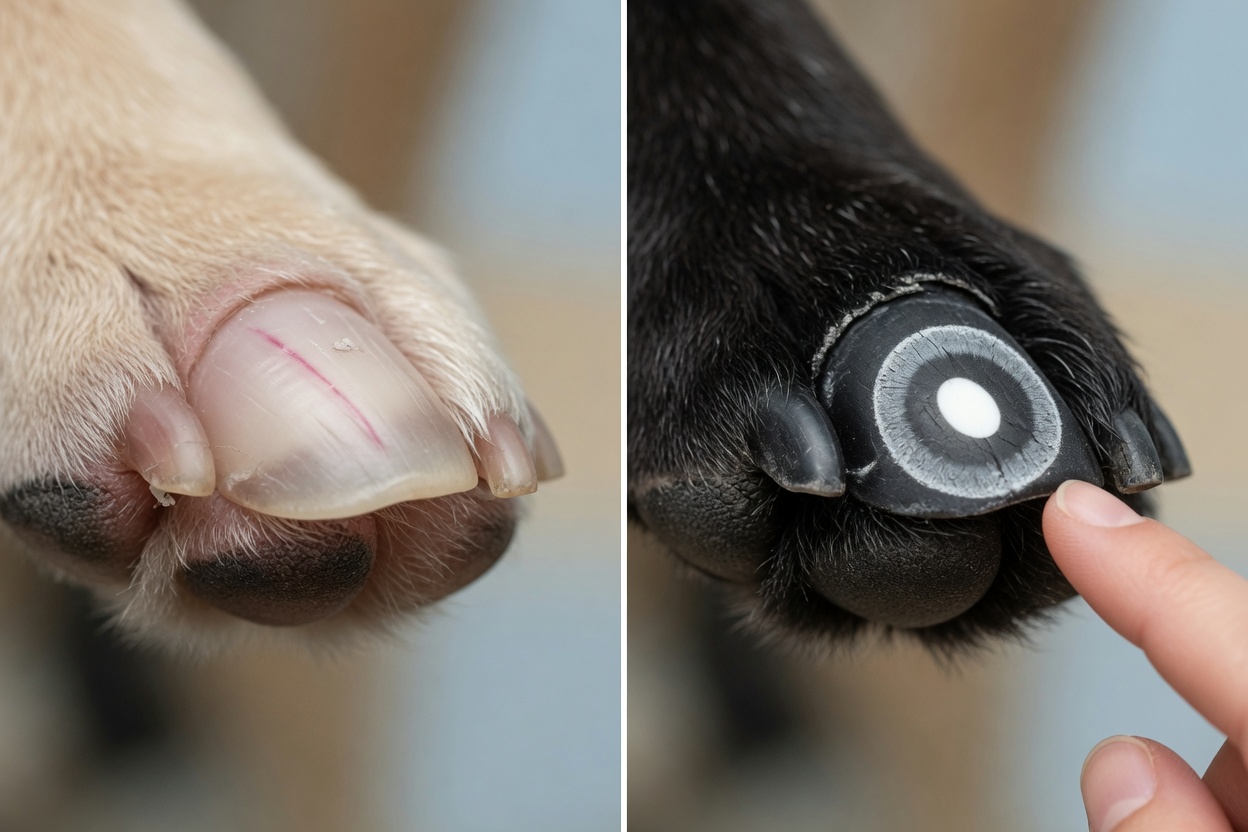
Inside every dog's nail runs a structure called the quick, which contains a blood vessel and a nerve. Cutting into the quick causes pain and bleeding, and it is the main reason many owners feel anxious about nail trimming. Understanding where the quick ends is the key to trimming safely.
In dogs with white or light-coloured nails, you can usually see the quick as a pink line running through the centre of the nail. Clip below where the pink ends and you will avoid it entirely.
Dark or black nails are more challenging because the quick is not visible from the outside. The technique here is to take very thin slices off the tip of the nail, one at a time, and examine the cut surface after each slice. Initially the cross-section will look dry, chalky, and white or grey. As you get closer to the quick, a small grey or white oval will appear in the centre of the cut surface. That oval is your signal to stop. You are now within two millimetres of the quick and that is exactly where you want to be.
What You Need Before You Start
- Sharp clippers — either a guillotine style or a scissor-style pair designed for dogs. Blunt clippers crush rather than cut cleanly, which is more uncomfortable for the dog and increases the risk of splitting the nail.
- Styptic powder, which contains a clotting agent. If you do not have any, plain cornflour (cornstarch) works as a reasonable substitute.
- Good lighting so you can see what you are doing clearly.
- Small, high-value treats to reward your dog throughout.
- A non-slip mat if you are working on a smooth surface.
Step-by-Step Method
Choose a moment when your dog is calm and relaxed — after a walk or a meal is often ideal. Avoid trimming when your dog is already anxious or excitable.
- Sit or kneel beside your dog rather than looming over them. Have your treats within reach.
- Pick up one paw gently and hold it firmly but without squeezing. Place your thumb on the pad and your fingers on top of the paw to separate and stabilise the toes.
- Position the clipper at a 45-degree angle to the nail, angling the cut downward and forward. This mimics the natural angle of the nail tip and gives a cleaner result than cutting straight across.
- Make a single, decisive clip. Hesitating leads to a crushing rather than cutting action, which is more uncomfortable. For dark nails, take a thin slice and examine the cut surface before proceeding.
- Stay at least two millimetres from the quick. When in doubt, take less off.
- Reward after each nail, not just at the end. Short, positive sessions build better associations than long, stressful ones.
- Do not forget the dewclaws — the small nails located on the inner side of the leg above the paw. These do not touch the ground, so they grow faster and can curl into the skin if neglected.
If You Cut the Quick
It happens to experienced groomers too, so do not panic. A calm response helps your dog stay calm as well.
- Dip the tip of the nail into a small amount of styptic powder, or press a pinch of cornflour firmly against the bleeding nail and hold it there for thirty to sixty seconds.
- Apply gentle, continuous pressure rather than repeatedly checking whether it has stopped, as this disrupts clot formation.
- Keep your dog as still as possible for a few minutes.
- Offer plenty of calm reassurance and treats once the bleeding has stopped.
- If bleeding does not stop within ten minutes, contact your vet.
One accidental nick is unlikely to put your dog off nail trims permanently, provided you stay calm and positive throughout. If you make a habit of ending every session — even a very short one — with something your dog loves, you will preserve their trust.
Desensitising Nervous Dogs
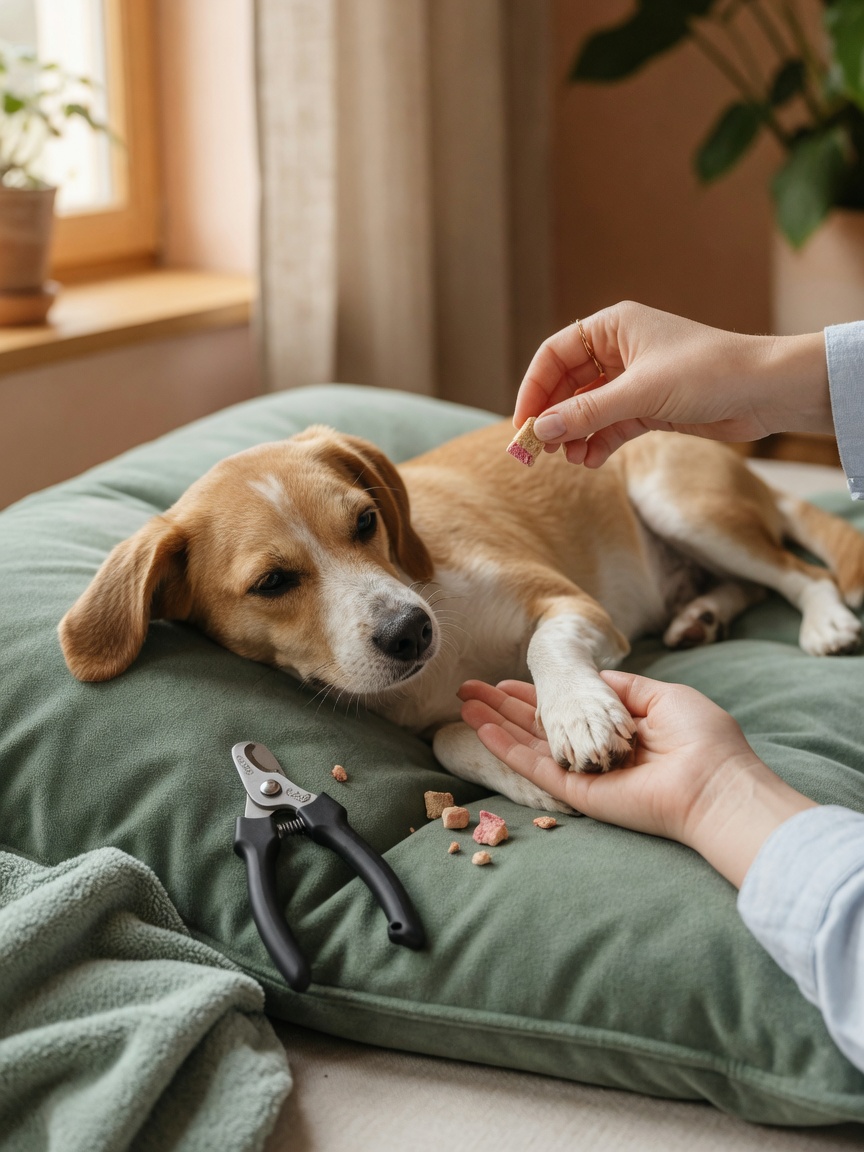
Many dogs dislike having their paws touched, and some will actively resist nail trimming. Trying to force the issue rarely helps and often makes the problem worse over time. A gradual desensitisation programme is far more effective.
- Start by simply touching your dog's paws regularly during calm moments — while they are resting, during fuss sessions, or when you are watching television. Pair every touch with a treat until your dog is relaxed about it.
- Once paw handling is comfortable, introduce the clippers by leaving them near your dog's bed or food bowl so they become part of the ordinary environment.
- Progress to picking up the clippers and touching them against each nail without clipping, rewarding generously.
- Only move to actually clipping once your dog is showing no signs of stress during the previous stages. If you need to go back a step at any point, do so — there is no benefit to rushing.
- For very anxious dogs, working with a veterinary behaviourist or a reward-based groomer can make an enormous difference.
How Often Should You Trim?
Most dogs need their nails trimmed every four to six weeks. Dogs that walk frequently on hard surfaces such as pavements and concrete may wear their nails down naturally and need less frequent trimming. Dogs that exercise mainly on grass or soft ground, and older dogs that are less active, will usually need more regular attention. A reliable indicator that nails need trimming is when you can hear them clicking on a hard floor, or when the nails are visibly touching the ground when the dog is standing.
When to Use a Professional Groomer Instead
There is absolutely no obligation to trim your dog's nails at home, and for some dogs and some owners, a professional groomer or vet nurse is the better choice. Consider seeking professional help if your dog becomes extremely distressed or aggressive during nail trimming at home, if the nails are severely overgrown or have already begun to curl, if your dog has very dark nails that you find difficult to read, or if your dog has had a previous bad experience that has made them deeply fearful of the process. Many groomers offer a nail-trim-only appointment, which is quick, affordable, and a perfectly reasonable solution.