
Bringing a newborn home is one of life's most exciting moments, but for your dog, it can feel like their world has turned upside down. Suddenly, their beloved human is less available, there are strange new sounds and smells, and their routine has shifted dramatically. The good news? With patience, preparation, and a structured approach, you can help your dog not only accept but genuinely welcome the new addition to your family. This guide will walk you through practical strategies to ensure a harmonious transition for everyone involved.
Start Your Training Before Baby Arrives
The best time to begin preparation is several months before your baby is due. This gives your dog time to gradually adjust to new expectations and routines without the stress of an actual infant in the home.
- Introduce new sounds: Play recordings of babies crying, cooing, and playing at low volumes during relaxed moments. Gradually increase the volume over weeks so your dog becomes desensitised to these unfamiliar noises.
- Establish boundaries: If you don't want your dog in the nursery later, start restricting access now. Use baby gates to create off-limit areas and reward your dog for respecting these boundaries.
- Adjust routines gradually: Begin adjusting feeding times and walking schedules to reflect what life will look like with a baby. This prevents sudden, jarring changes.
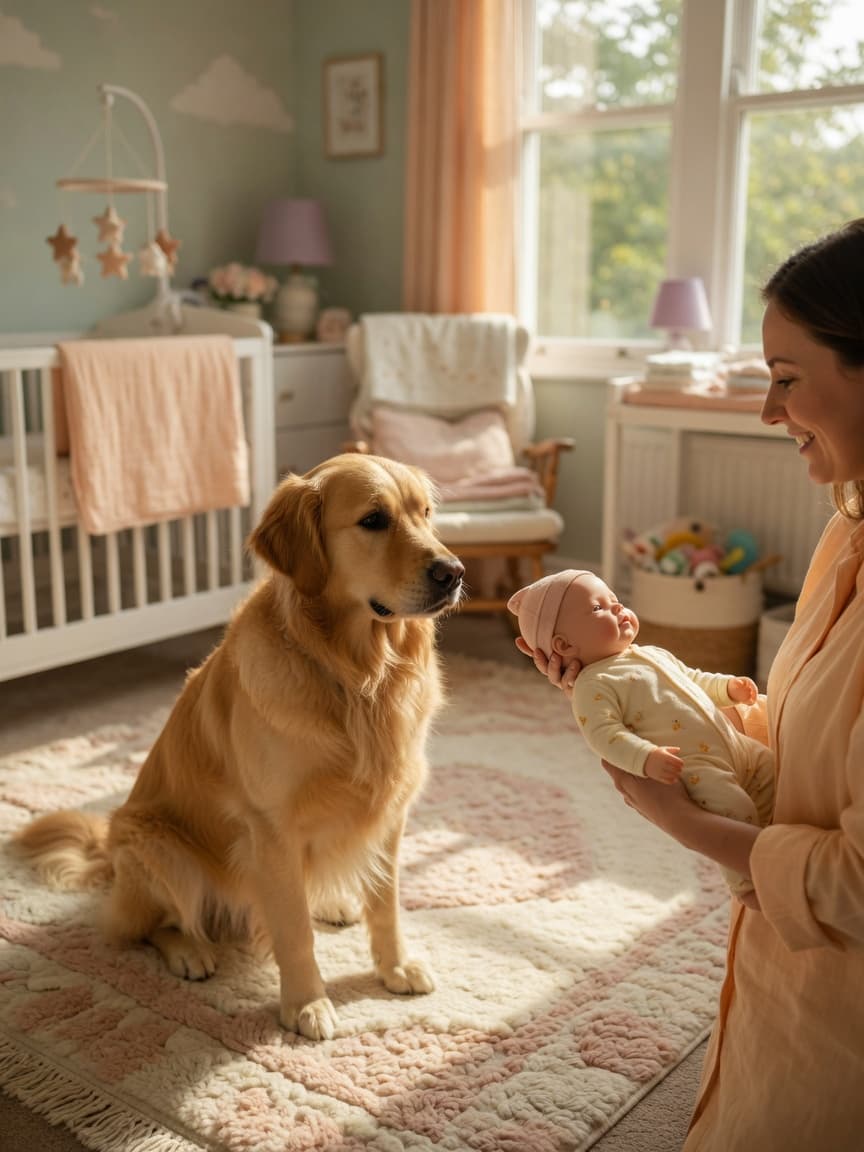
- Practice with a doll: Carry around a baby doll, rock it, and attend to it whilst your dog is present. This helps them understand that you'll be distracted with something small and precious.
Reinforce Basic Obedience
A well-trained dog is safer and more manageable around a baby. Focus on strengthening commands like "sit," "stay," and "leave it." These become essential when you need to control your dog's behaviour around the infant quickly and calmly.
Additionally, teach your dog to move away from you on command. Practise "go to your bed" or "go to your spot" regularly so your dog can retreat to a safe space when needed, which benefits both your dog and your baby.
Create a Safe, Comfortable Space for Your Dog
During the chaos of early parenthood, your dog needs a refuge where they can feel secure. Set up a quiet area away from the baby's nursery with their bed, toys, and water bowl.
Make this space positive by rewarding your dog for spending time there. This becomes their sanctuary during nappy changes, feeding times, or when visitors arrive. A relaxed dog is far more likely to accept a baby than one who feels anxious or threatened.
Manage the First Introduction Carefully
When you bring your baby home, keep the first meeting low-key and controlled:
- Have your partner hold the baby whilst you greet your dog first. Let them sniff your clothes, which will carry baby scents from the hospital.
- Allow your dog to approach the baby at their own pace. Never force interaction.
- Keep the meeting brief and positive. Offer praise and treats whilst your dog remains calm.
- Always supervise interactions, even if your dog seems gentle.
Maintain Your Dog's Routine and Exercise
Consistency is crucial. Stick to regular feeding, walking, and play schedules as much as possible. Exercise is particularly important—a tired dog is a well-behaved dog. Daily walks help your dog burn energy and provide mental stimulation, preventing frustration-related behaviours.
Continue one-to-one time with your dog. Whether it's a morning walk or an evening cuddle, these moments maintain your bond and reassure your dog they're still valued.
Key Takeaways
Successfully introducing your dog to a new baby requires preparation, patience, and positivity. Begin training months ahead, reinforce obedience, create safe spaces, manage introductions carefully, and maintain your dog's routine. Remember that every dog is unique—some adapt quickly whilst others need more time. If you notice signs of severe stress or aggression, consult your veterinarian or a certified dog behaviourist. With these strategies in place, you're setting the foundation for a loving relationship between your dog and your new family member that can last a lifetime.