

If you've ever walked barefoot through your home only to step in a surprise deposit of cat litter, you're not alone. Many cat owners struggle with litter tracking—that frustrating habit where cats emerge from their litter box with granules clinging to their paws, fur, and undercarriage. Beyond being unpleasant, litter tracking can spread bacteria and create hygiene concerns throughout your home. The good news is that with the right strategies and understanding of why cats track litter, you can significantly reduce this messy problem.
Why Cats Track Litter
Before tackling solutions, it's important to understand the root causes. Cats naturally track litter because:
- Litter clings to moisture on their paws and fur after using the box
- Standard clay litter granules are small enough to catch between toe pads
- Cats may be fastidious groomers, but they're not always thorough around their lower body
- The litter box design itself may not contain debris effectively
Some cats are simply heavier walkers or have longer fur that traps more material. Older cats or those with mobility issues may have particular difficulty keeping themselves clean after toileting.
Choose the Right Litter Type
Your choice of litter makes a tremendous difference in tracking. Consider these alternatives to traditional clay:
- Larger-grain litters: Pellet-based or wood-based litters have bigger particles that are less likely to stick to paws and fur
- Paper-based litters: Softer and more absorbent, these track less frequently and are gentler on sensitive paws
- Corn or wheat litters: Natural alternatives with heavier granules that stay in the box better
- Clumping crystal litters: Though dusty for some cats, the larger crystal structure can reduce tracking in sensitive animals
Experiment with different types to find what works best for your cat. Some cats prefer specific textures, so transition slowly over 7-10 days to prevent litter box avoidance.
Optimise Your Litter Box Setup
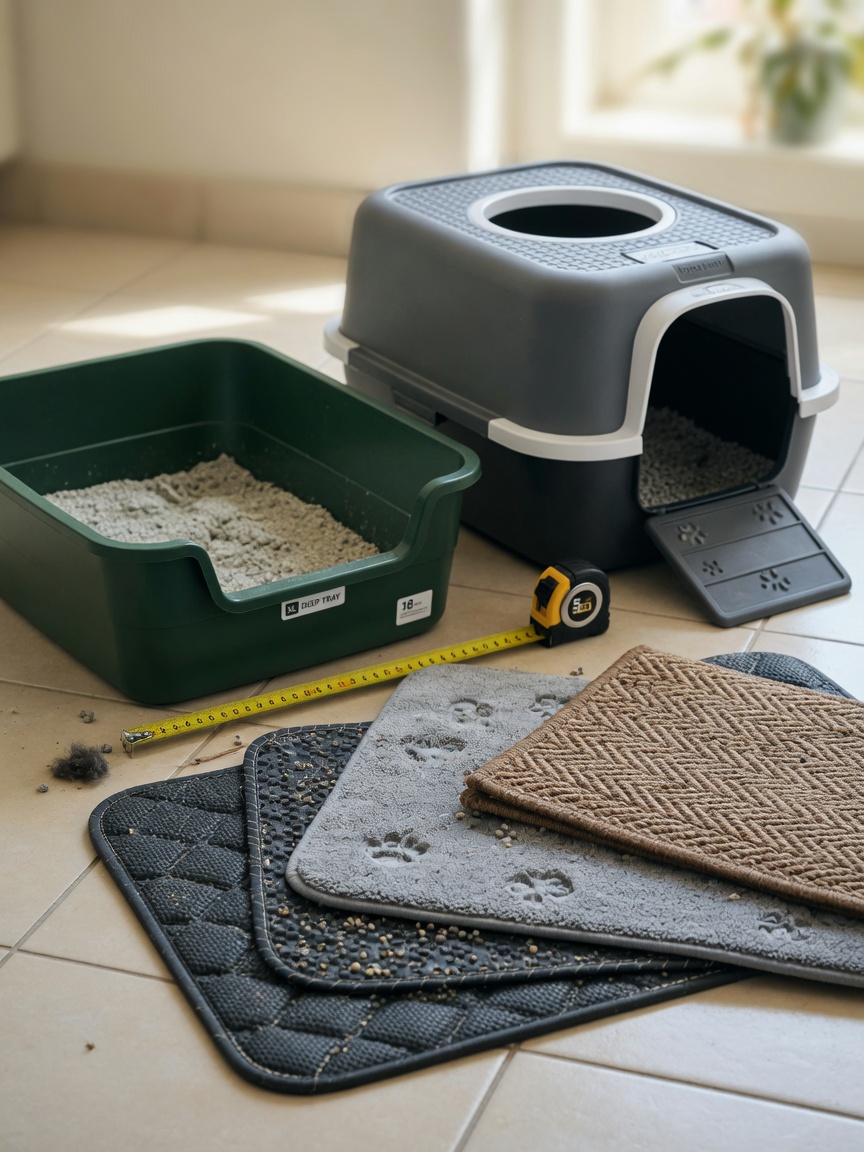
The right containment system is crucial for reducing litter tracking:
- Invest in a litter box with higher sides or a covered design to create a natural barrier
- Use a litter box mat or tray outside the box to catch escaping granules
- Place multiple mats in layers if needed—cats will naturally wipe their paws on the first surface they encounter
- Keep the box clean and dry, as moist litter sticks to paws more easily
- Scoop daily and change litter completely at least once weekly
A top-entry or corner litter box can be particularly effective, as cats must jump out rather than step, giving gravity a chance to work in your favour.
Post-Bathroom Grooming Support
Help your cat stay clean after using the litter box:
- Gently wipe your cat's paws with a damp cloth after they've been in the box (if they'll tolerate it)
- Trim long fur around the rear quarters and between toe pads to reduce litter adhesion
- Provide a grooming session with a soft brush to remove trapped particles
- For senior cats with mobility issues, consider professional grooming every 6-8 weeks
Environmental Management
Strategically place your litter box to minimise spread:
- Locate the box on easy-to-clean flooring like tile or vinyl rather than carpet
- Use washable rugs or mats rather than permanent flooring
- Position the box away from high-traffic living areas
- Keep a small dust pan and brush nearby for quick cleanups
Key Takeaways
Stopping litter tracking requires a multi-pronged approach. By switching to larger-grain or alternative litters, upgrading your box setup with containment solutions, maintaining a clean litter environment, and supporting your cat's grooming routine, you'll see dramatic improvements. Most cat owners find that combining just two or three of these strategies yields excellent results. Remember that patience is essential—changes take time, and your cat's comfort should always be the priority.