
Administering medication to your cat can feel daunting, especially if your feline friend is resistant or anxious. Whether it's an antibiotic, pain relief, or a chronic condition management tablet, learning proper pill administration technique is essential for both your cat's health and your peace of mind. With patience, the right approach, and a few practical strategies, you can make the process smoother and less stressful for everyone involved.
Preparation: Setting Yourself Up for Success
Before attempting to give your cat a pill, gather everything you'll need in one place. This includes the medication, a small pill crusher or grinder (if appropriate), water, and a treat or food vehicle. Always check with your veterinarian first to confirm whether the tablet can be crushed, as some medications are designed for slow release and must be given whole.
Choose a calm, quiet environment where your cat feels comfortable. Avoid giving pills during stressful times or when your cat is already anxious. It's also helpful to have a second person available to gently restrain your cat if needed, though some cats respond better with just one handler.
The Pill-in-Food Method
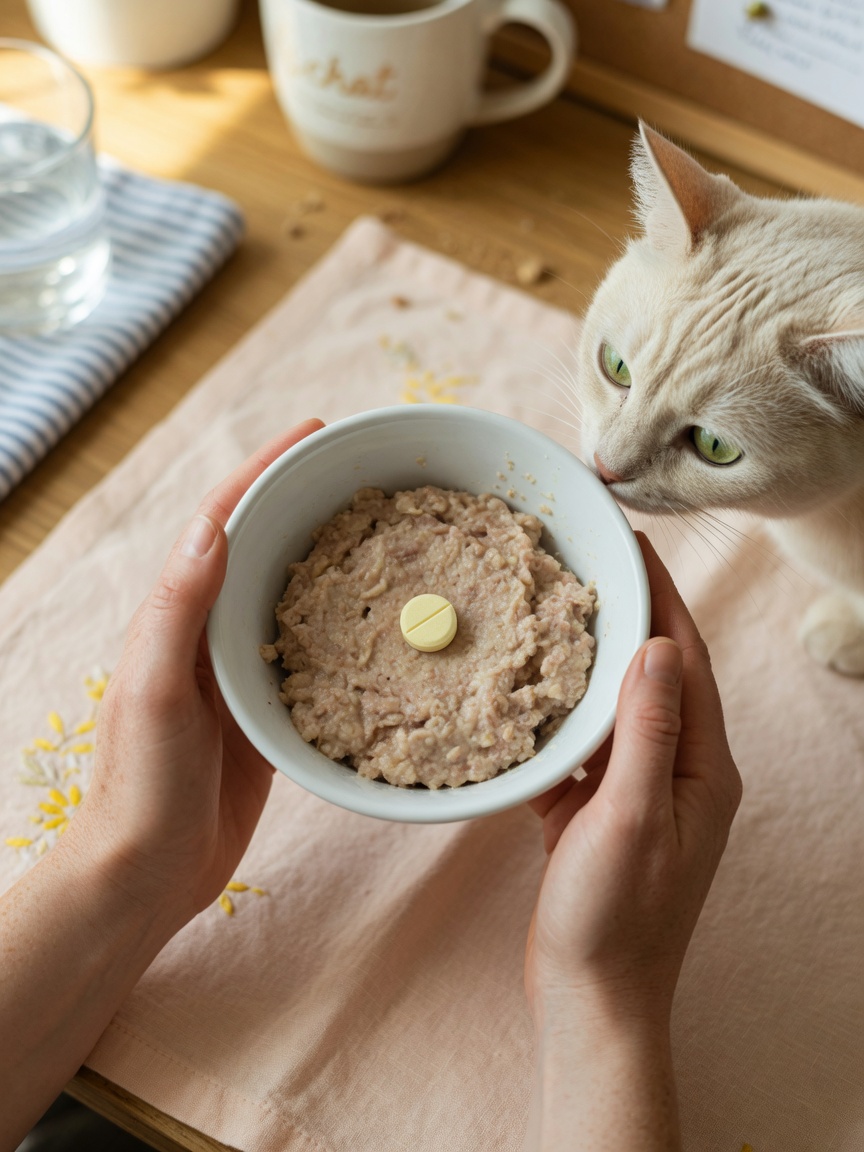
This is often the easiest and least stressful approach. Hide the pill in a small amount of highly palatable food your cat enjoys:
- Wet food or pâté (a tablespoon is usually sufficient)
- Cream cheese or soft cheese
- Tuna or salmon
- Chicken breast or meat-based paste
- Specially formulated pill pockets
Place the pill in the centre of the food, then cover it completely. Offer this small amount separately from your cat's regular meal to ensure they consume the entire portion with the medication. Once they've finished, offer their normal food immediately afterwards to maintain their appetite.
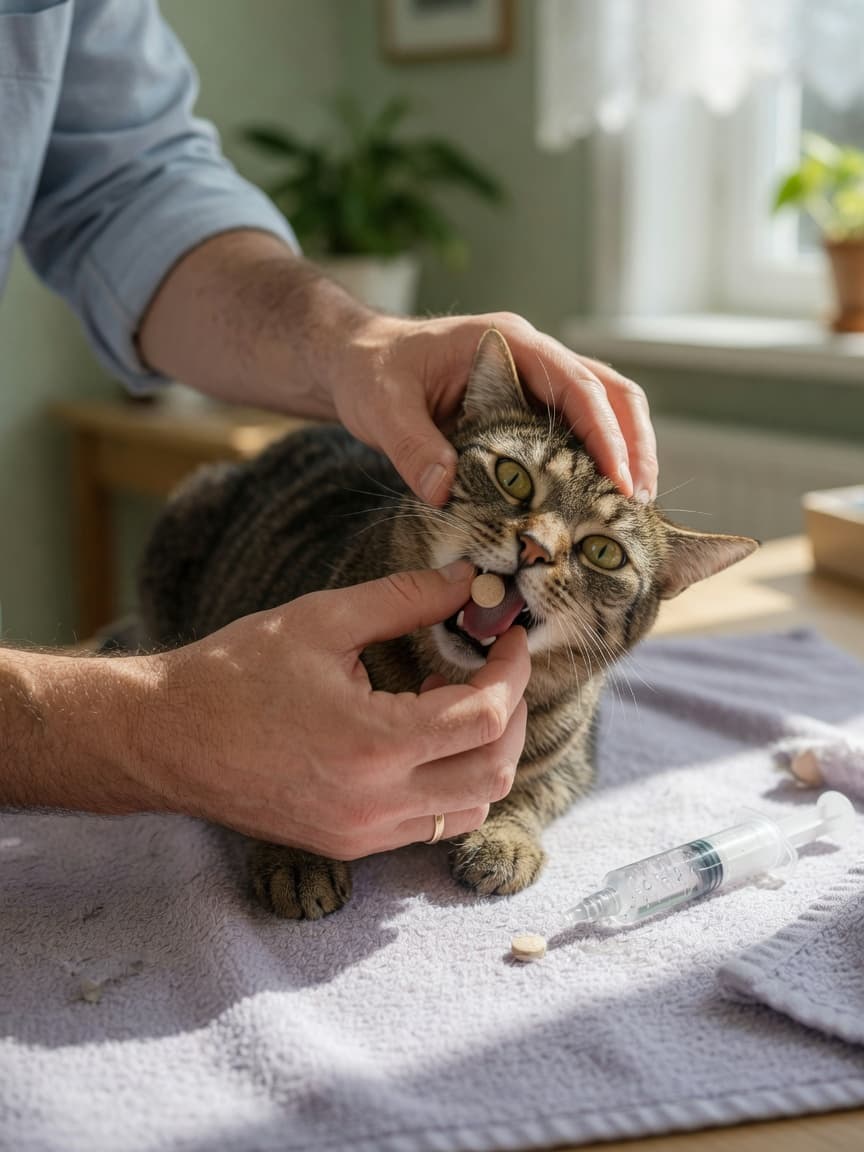
The Direct Administration Method
Sometimes the pill-in-food approach doesn't work, particularly if your cat is discerning or if the medication has a strong taste. For direct administration:
- Gently restrain your cat by supporting their body firmly but kindly
- Tilt their head backwards slightly, allowing their mouth to open naturally
- Using your dominant hand, carefully place the pill as far back on the tongue as possible
- Close their mouth gently and encourage them to swallow by stroking their throat downwards
- Offer water immediately using a dropper or syringe to help flush the pill down
This method requires practice and confidence. Move calmly and assertively—hesitation can make your cat more anxious. If you're uncomfortable, ask your veterinary nurse to demonstrate the technique.
Useful Tools and Aids
Several devices can make pill administration easier:
- Pill crusher: Allows you to crush tablets (if approved) and mix with food
- Pet piller: A small plastic device designed to hold and dispense pills safely
- Syringe or dropper: Useful for providing water after direct administration
- Tablet splitter: Some medications can be split—ask your vet first
Managing a Stressed or Resistant Cat
If your cat becomes anxious or resistant, take breaks rather than forcing the issue. Speak in calm, soothing tones and reward compliance with gentle praise. Never chase your cat around the house, as this creates negative associations with medication time.
For particularly difficult cases, discuss with your veterinarian whether liquid formulations, transdermal patches, or veterinary-guided sedation might be suitable alternatives.
Key Takeaways
Giving your cat pills successfully combines preparation, patience, and the right technique. Most cats respond well to the pill-in-food method, but having direct administration skills as a backup is valuable. Always consult your veterinarian before crushing medication or changing administration methods, and remember that staying calm and positive makes the experience better for your feline companion. With consistency and compassion, medication administration can become a routine part of your cat's healthcare without unnecessary stress.