

The Tablet Your Dog Won't Take
You've collected the prescription, driven home, and opened the bottle — only to watch your dog spit the tablet out for the fourth time. It's one of the most common frustrations in pet ownership, and it costs real money when medication is wasted or missed. The good news is that technique matters far more than the dog's cooperation.
Why Dogs Resist Tablets
Dogs don't refuse medication out of stubbornness. Their sense of smell is roughly 10,000 to 100,000 times more sensitive than ours, which means they detect the bitter compounds in tablets long before the pill reaches their mouth. Understanding this is the starting point for any successful approach.
The Food Concealment Method
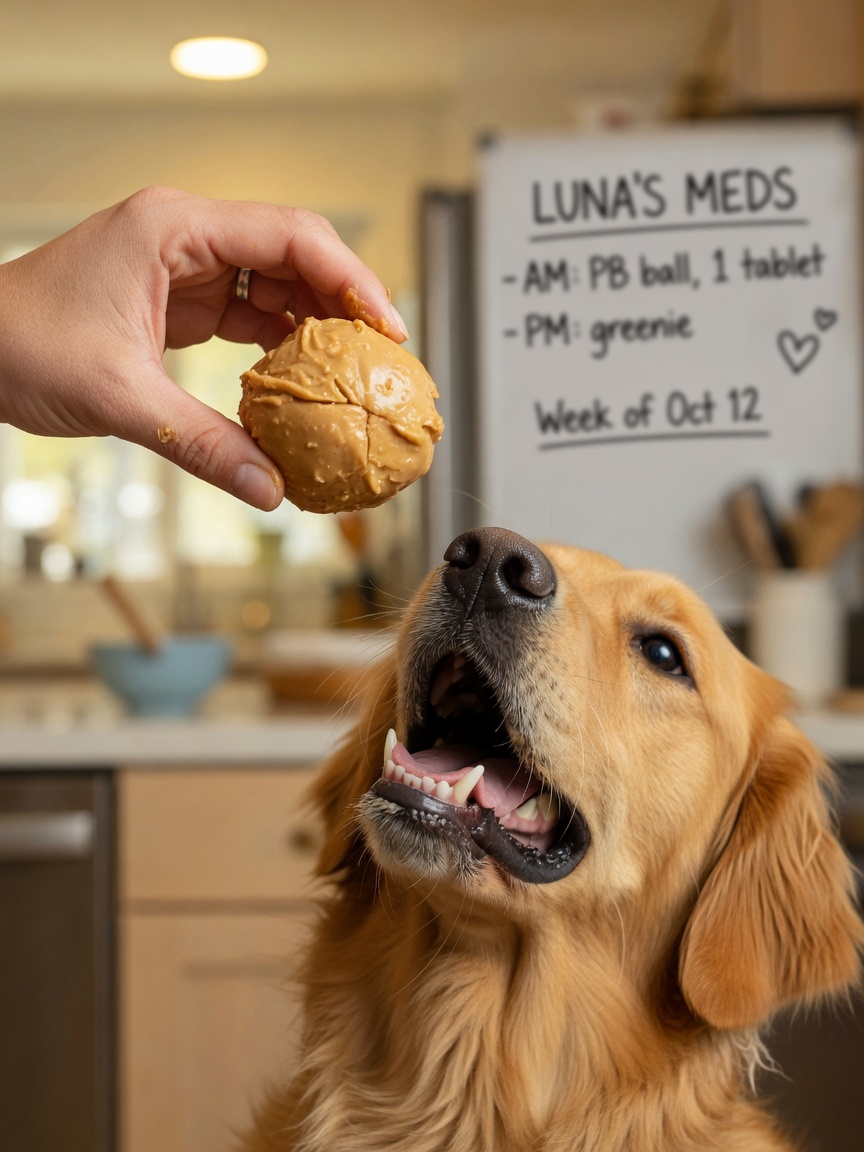
This is the first option to try with most dogs, and it works well when the medication can safely be given with food. Always confirm with your vet that the tablet doesn't need to be given on an empty stomach before using this approach.
Choosing the Right Concealment Food
The food needs to be soft, strongly scented, and something your dog finds irresistible. Good options include soft cheese, peanut butter without xylitol, cooked chicken, or small amounts of wet dog food formed into a ball. The tablet should be buried completely in the centre.
The Three-Treat Trick
Offer the first treat without the tablet so your dog takes it enthusiastically. Follow immediately with the treat containing the tablet, then produce the third treat straight away. The anticipation of the third treat encourages rapid swallowing of the second. This sequence works remarkably well for dogs who might otherwise slow down and investigate.
Direct Administration by Hand
When food concealment isn't suitable, or your dog has learned to eat around tablets, direct placement is the most reliable method. Done correctly, it takes under five seconds and causes no distress.
Positioning
Ask your dog to sit. Kneel or crouch beside them rather than looming overhead, which some dogs find threatening. Hold the tablet between the thumb and index finger of your dominant hand.
Opening the Mouth
Place your non-dominant hand gently over the top of your dog's muzzle, with your thumb on one side and fingers on the other. Tilt the head back slightly — the jaw will naturally begin to open. Use your middle finger on your dominant hand to gently push down on the lower front teeth to open the mouth further.
Placing the Tablet
Place the tablet as far back on the tongue as possible, past the tongue's midpoint. Close the mouth gently, hold it shut, and stroke the throat downward or blow lightly on the nose to encourage swallowing. Wait until you see your dog lick their lips — this confirms the tablet has been swallowed.
Tablet Dispensing Devices
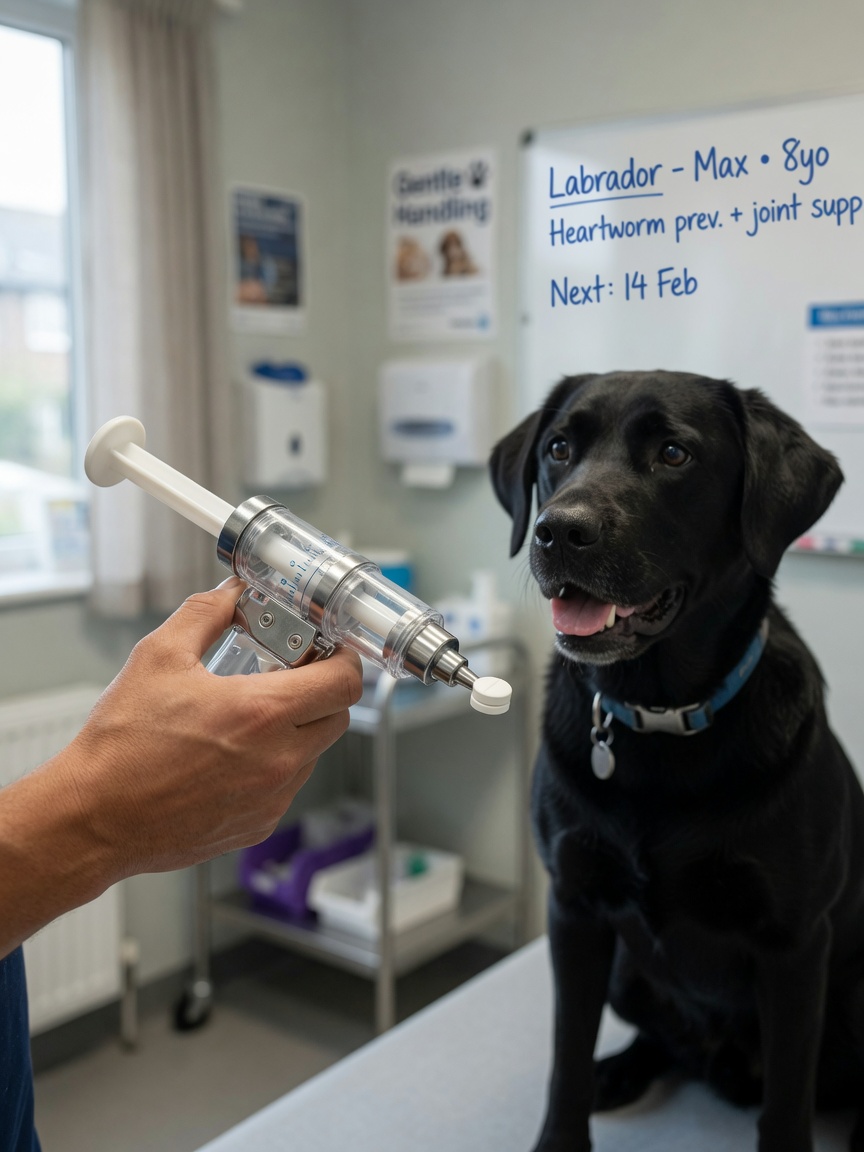
Pill guns or tablet dispensers are inexpensive tools available from most veterinary practices and pet shops. They hold the tablet at the end of a long syringe-style plunger, allowing you to place it at the back of the throat without putting your fingers inside the mouth. They are particularly useful for dogs who mouth or nip, and for tablets that must not be broken or dissolved.
When Dogs Learn to Outsmart You
Some dogs become expert at holding a tablet in their cheek and spitting it out minutes later. If this is happening, try following tablet administration with a small syringe of water to ensure the tablet is washed down. Staying with your dog for two to three minutes after dosing is also advisable — this lets you confirm the medication hasn't been cached somewhere in the house.
Practical Summary
- Always confirm with your vet whether the tablet can be given with food.
- Use the three-treat trick as your first approach for food-motivated dogs.
- For direct administration, place the tablet past the midpoint of the tongue.
- Stroke the throat or blow on the nose to encourage swallowing.
- Wait for the lip-lick confirmation before walking away.
- Consider a tablet dispenser if you're uncomfortable placing fingers in the mouth.
- Follow up with a small syringe of water if your dog is known to hide tablets.
- Never crush a tablet without checking with your vet — some formulations must remain intact.