
Nobody enjoys discovering that their beloved dog has had an accident on the carpet, but it happens to the best of pet owners. Whether your puppy is still in training, your senior dog is struggling with mobility issues, or your furry friend simply couldn't make it outside in time, dealing with this mess efficiently and hygienically is essential. The good news is that with the right approach, you can completely remove both the soiling and any lingering odours from your carpet. This guide will walk you through the process step by step, helping you restore your carpet to its original condition whilst maintaining a hygienic home environment.
Step 1: Remove Solid Matter Safely
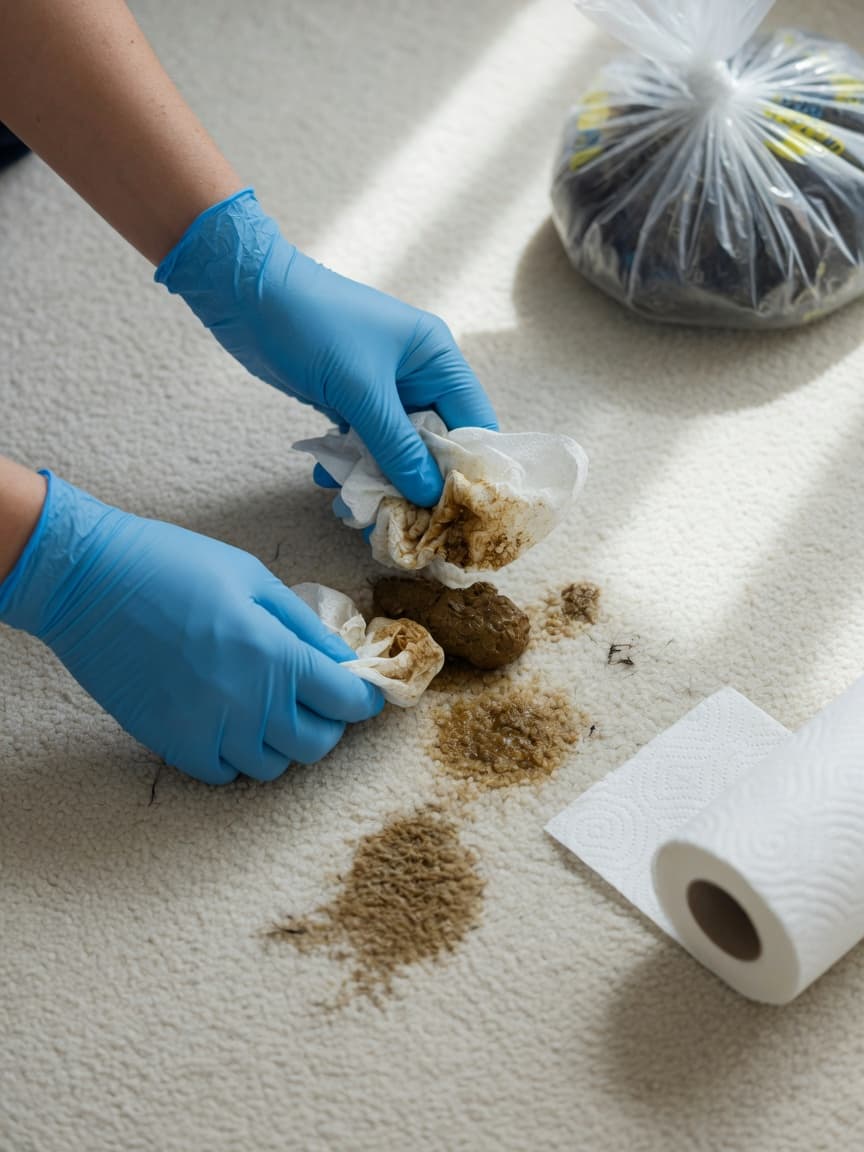
The first priority is removing the solid waste carefully to avoid spreading contamination further into the carpet fibres.
- Put on disposable gloves and, if you're sensitive to odours, consider wearing a mask
- Use a paper towel or disposable cloth to pick up the bulk of the faeces
- Place the soiled material directly into a plastic bag and seal it immediately
- If the stool is firm, you can use a plastic dustpan and brush for cleaner removal
- Dispose of the waste in your outdoor bin rather than flushing it (unless specifically appropriate for your system)
Step 2: Blot Away Moisture
Once you've removed the solid waste, absorb any remaining moisture using absorbent materials.
- Use fresh paper towels or old absorbent cloth to gently blot the affected area
- Press down firmly but avoid rubbing, which can push the soiling deeper into carpet fibres
- Work from the outer edges of the stain towards the centre to prevent spreading
- Change your cloth frequently and continue until the area is as dry as possible
Step 3: Apply an Enzymatic Cleaner
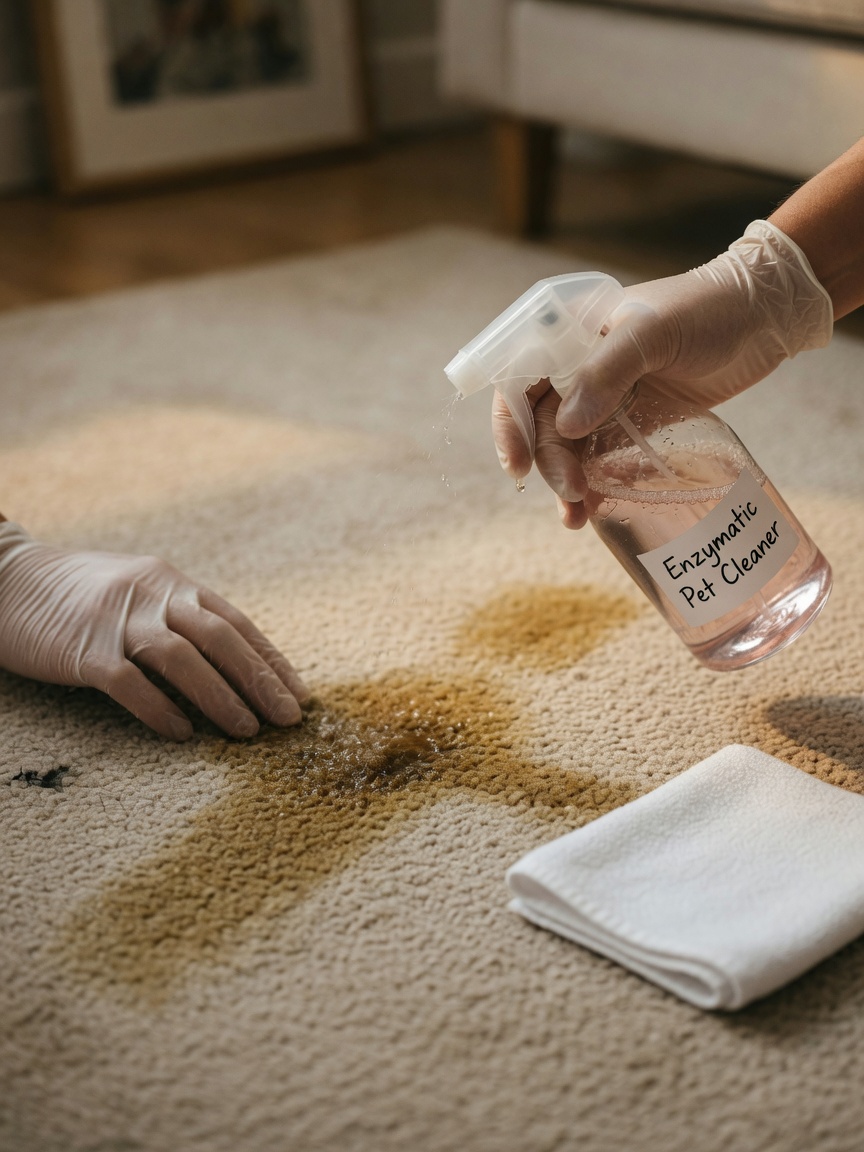
Enzymatic cleaners are your secret weapon for completely eliminating odour-causing bacteria and any remaining organic material. These products contain natural enzymes that break down the proteins in faeces, ensuring thorough sanitation.
- Choose a pet-safe enzymatic cleaner specifically designed for biological stains
- Follow the manufacturer's instructions carefully regarding dilution and application
- Apply the cleaner generously to the affected area and slightly beyond
- Allow it to sit for the recommended time (usually 10-15 minutes, sometimes longer)
- Blot thoroughly with clean cloths, working from the centre outwards
- Rinse with cool water and blot again to remove all cleaner residue
Step 4: Deep Clean the Carpet
For stubborn stains or strong odours, a deeper clean may be necessary. You can use a carpet cleaning machine or tackle it manually with hot water and cleaning solution.
- Use a carpet cleaning machine with hot water extraction for best results
- Alternatively, mix a solution of one part white vinegar with three parts water
- Apply the solution and allow it to sit for 5-10 minutes
- Blot thoroughly and repeat if necessary
- Use clean water to rinse away all vinegar solution
Step 5: Ensure Thorough Drying
Proper drying is crucial to prevent mould growth and eliminate remaining odours.
- Open windows to improve air circulation
- Use fans to speed up the drying process
- Consider using a dehumidifier in damp climates
- Avoid walking on the damp carpet until completely dry
Preventing Future Accidents
Once your carpet is clean, focus on preventing recurrence. Ensure your dog has regular outdoor toilet breaks, address any underlying health issues with your vet, and consider using washable puppy pads in training areas. If accidents persist, consult your veterinarian to rule out urinary tract infections, digestive issues, or other medical concerns.
Key Takeaways
Act quickly, remove solids first, use enzymatic cleaners for thorough sanitation, and ensure complete drying to keep your home fresh and hygienic. With patience and the right techniques, your carpet will be spotless again.