ForPetsHealthcare
Dogs

How to Find the Right Dog Harness for Your Dog

By Julia WrenfieldUpdated August 4, 20264 min read
Evidence-based · Sources checked
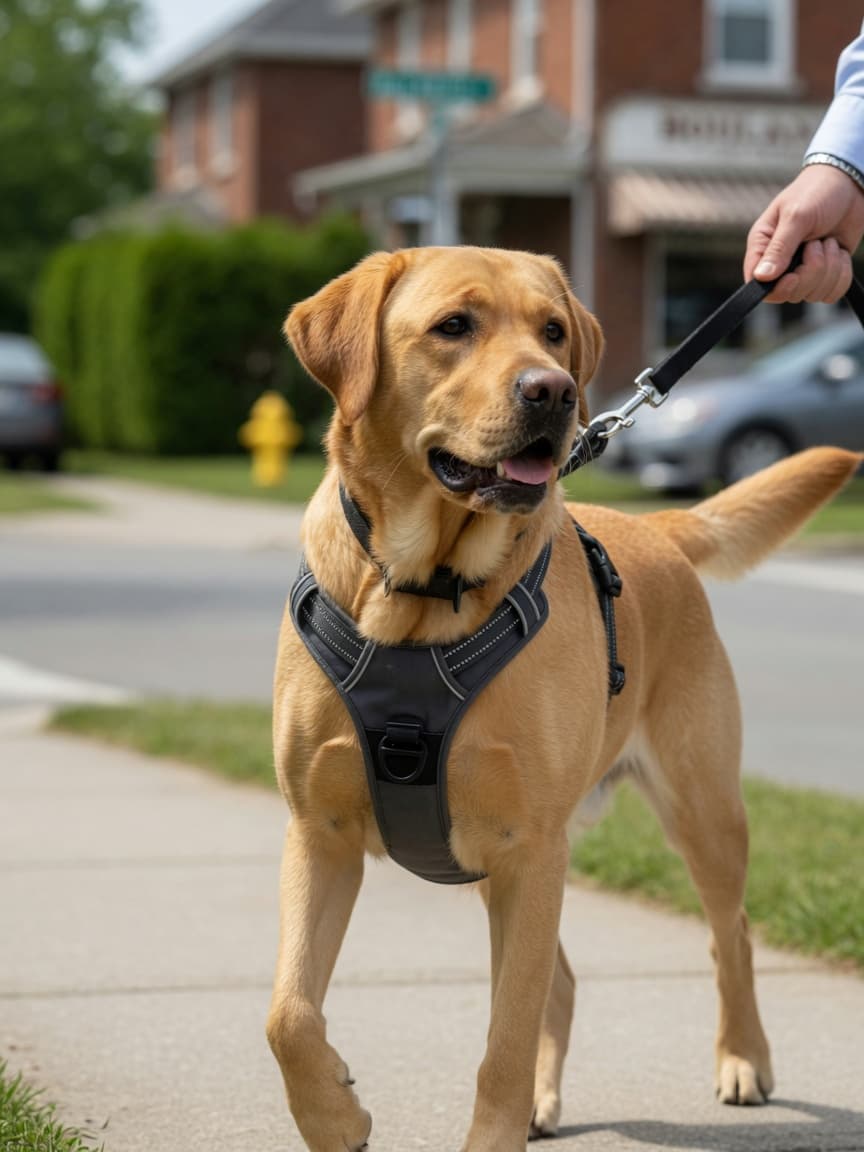
{"en": "Golden retriever wearing a properly fitted black harness, standing outdoors ready for a walk", "es": "Golden retriever usando un arn\u00e9s negro bien ajustado, de pie al aire libre listo para caminar", "fr": "Golden retriever portant un harnais noir bien ajust\u00e9, debout \u00e0 l'ext\u00e9rieur pr\u00eat pour une promenade", "de": "Golden Retriever tr\u00e4gt ein gut sitzendes schwarzes Geschirr, steht drau\u00dfen und ist zum Spaziergang bereit", "nl": "Golden retriever draagt een goed passend zwart tuig, staat buiten klaar voor een wandeling", "pt": "Golden retriever usando um arn\u00eas preto bem ajustado, em p\u00e9 ao ar livre pronto para caminhar", "it": "Golden retriever che indossa un'imbracatura nera ben aderente, in piedi all'aperto pronto per una passeggiata"}

Choosing the right dog harness is one of the most important decisions you'll make for your pet's comfort, safety, and training success. Unlike collars, which concentrate pressure on the neck, a well-fitted harness distributes weight evenly across your dog's chest and shoulders, making it an excellent choice for dogs of all sizes and ages. Whether you have a spirited Labrador, a delicate toy breed, or a rescue dog still learning to walk on lead, finding the perfect harness can transform your daily walks and strengthen your bond with your furry companion.

Understanding Your Dog's Individual Needs

Before shopping for a harness, consider your dog's specific requirements. Assess their size, breed characteristics, and behavioural tendencies. Does your dog pull excessively during walks? Is your pet prone to anxiety or escape attempts? Do they have a sensitive neck or respiratory issues? Dogs with flat faces, older dogs, or those recovering from injury particularly benefit from harnesses over traditional collars. Understanding these needs will guide you towards the most suitable option for your circumstances.

Types of Dog Harnesses Available
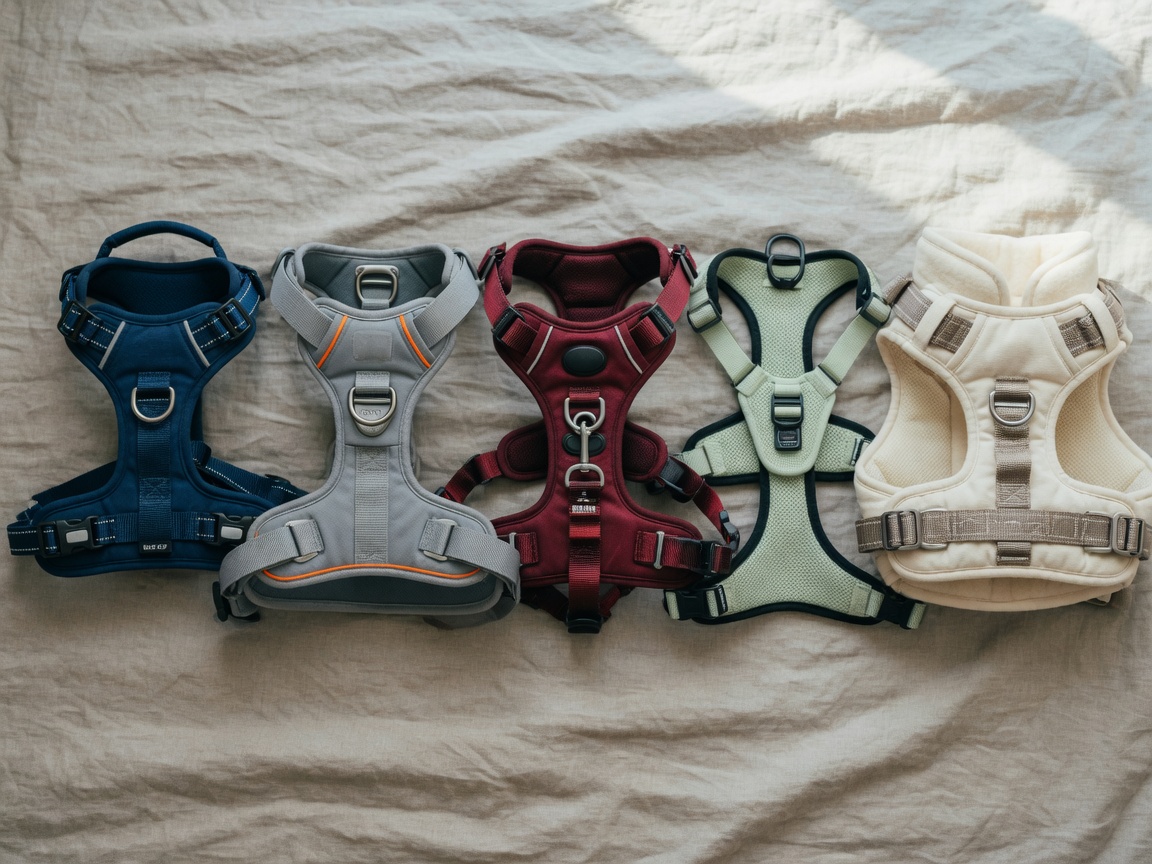
Five different types of dog harnesses displayed to show design variations
  • Back-clip harnesses: The lead attaches at the back, encouraging natural movement and ideal for well-trained dogs or small breeds.
  • Front-clip harnesses: The lead clips to the chest, providing better control and reducing pulling—perfect for strong dogs or those still learning loose lead skills.
  • No-pull harnesses: Designed specifically to discourage pulling with specialised chest plates and pressure points that gently redirect your dog's movement.
  • Step-in harnesses: Easy to put on, simply requiring your dog to step through leg holes—excellent for senior dogs or those uncomfortable with harnesses over their heads.
  • Vest harnesses: Provide maximum comfort and weight distribution, often preferred by dogs with anxiety or those requiring additional support.

Getting the Perfect Fit
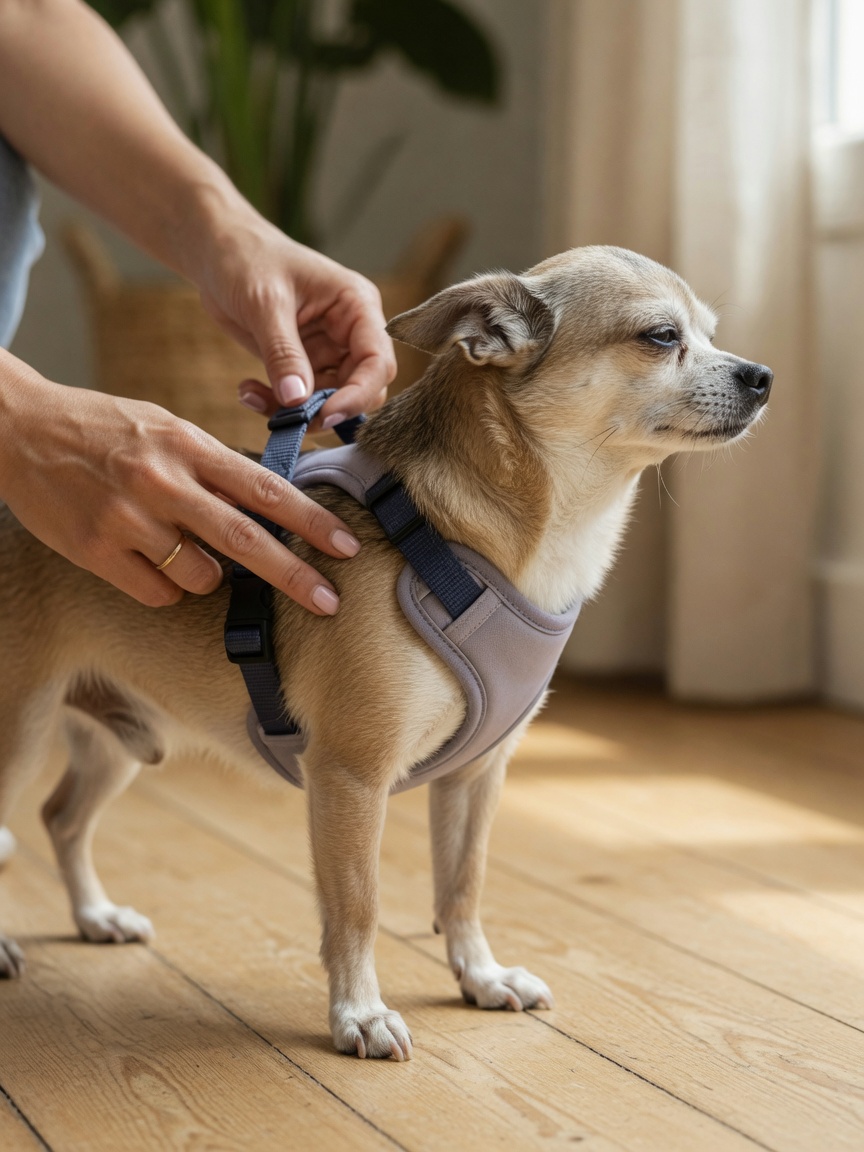
Senior Chihuahua being fitted with a properly adjusted harness showing the two-finger fit

Proper fit is absolutely essential for your dog's safety and comfort. A harness that's too loose risks your dog slipping free, whilst one that's too tight can cause discomfort and restrict movement. Follow these fitting guidelines:

  1. Measure your dog's chest and girth according to the manufacturer's specifications
  2. You should be able to fit two fingers comfortably between the harness and your dog's skin
  3. Ensure the harness doesn't chafe around the armpits or legs
  4. Check that your dog can move freely without restriction
  5. Test the fit with your dog standing, sitting, and moving

Take time to gradually introduce the harness to your dog. Let them wear it indoors for short periods before venturing outside, offering treats and praise to create positive associations.

Material and Durability Considerations

Quality materials matter significantly. Look for harnesses made from durable nylon, padded fabrics, or breathable mesh—particularly important if your dog has sensitive skin or lives in a warmer climate. Check that stitching is reinforced, especially around stress points where the lead attaches. Metal buckles should be rust-resistant, and reflective elements are valuable for walks during darker months.

Key Takeaways

Selecting the right harness requires considering your dog's size, temperament, and any specific health concerns. Invest time in understanding the different types available and prioritise proper fit above all else. Remember that the "best" harness is the one your dog wears comfortably and that suits your walking lifestyle. When properly chosen and fitted, a quality harness becomes an indispensable tool for safe, enjoyable walks and strengthens the special relationship you share with your beloved companion.

#how to find the right dog harness for your dog#dog health#dog nutrition#forpetshealthcare

Sources & further reading

This article is based on peer-reviewed veterinary research and reputable animal-health sources. Explore the underlying science in our Research Library.

Related articles

The 19 Best Animal Shelters in the Netherlands (2026)

the Netherlands's animal shelters, rescue associations and refuges save thousands of dogs, cats and other animals every year, almost always on tiny budgets and volunteer power. To build the most objective ranking possible, we analysed public Google reviews across more than 56 registered animal-prote…

Read more →

The 25 Best Animal Shelters in Italy (2026)

Italy's animal shelters, rescue associations and refuges save thousands of dogs, cats and other animals every year, almost always on tiny budgets and volunteer power. To build the most objective ranking possible, we analysed public Google reviews across more than 121 registered animal-protection org…

Read more →

The 48 Best Animal Shelters in Germany (2026)

Germany's animal shelters, rescue associations and refuges save thousands of dogs, cats and other animals every year, almost always on tiny budgets and volunteer power. To build the most objective ranking possible, we analysed public Google reviews across more than 152 registered animal-protection o…

Read more →

The 32 Best Animal Shelters in France (2026)

France's animal shelters, rescue associations and refuges save thousands of dogs, cats and other animals every year, almost always on tiny budgets and volunteer power. To build the most objective ranking possible, we analysed public Google reviews across more than 89 registered animal-protection org…

Read more →

The 8 Best Animal Shelters in Portugal (2026)

Portugal's animal shelters, rescue associations and municipal centros de recolha save thousands of dogs, cats and other animals every year, almost always on tiny budgets and volunteer power. To build the most objective ranking possible, we analysed public Google reviews across more than 86 registere…

Read more →

Sphynx Cat Skin care and hygiene: Causes, Signs & Care

Sphynx cats have little to no coat, which means the skin itself takes on jobs that fur normally does — insulation, oil dispersal, and barrier protection — leaving it prone to greasiness, blocked pores, fungal infections, and sunburn. The single most important thing to know is that a Sphynx's skin ne…

Read more →
Disclaimer:This article is for informational purposes only and does not constitute veterinary advice. Always consult a qualified veterinarian for your pet's health concerns.

Free newsletter

Pet health tips, straight to your inbox

Weekly science-backed advice for dog & cat owners. No spam, unsubscribe anytime.