
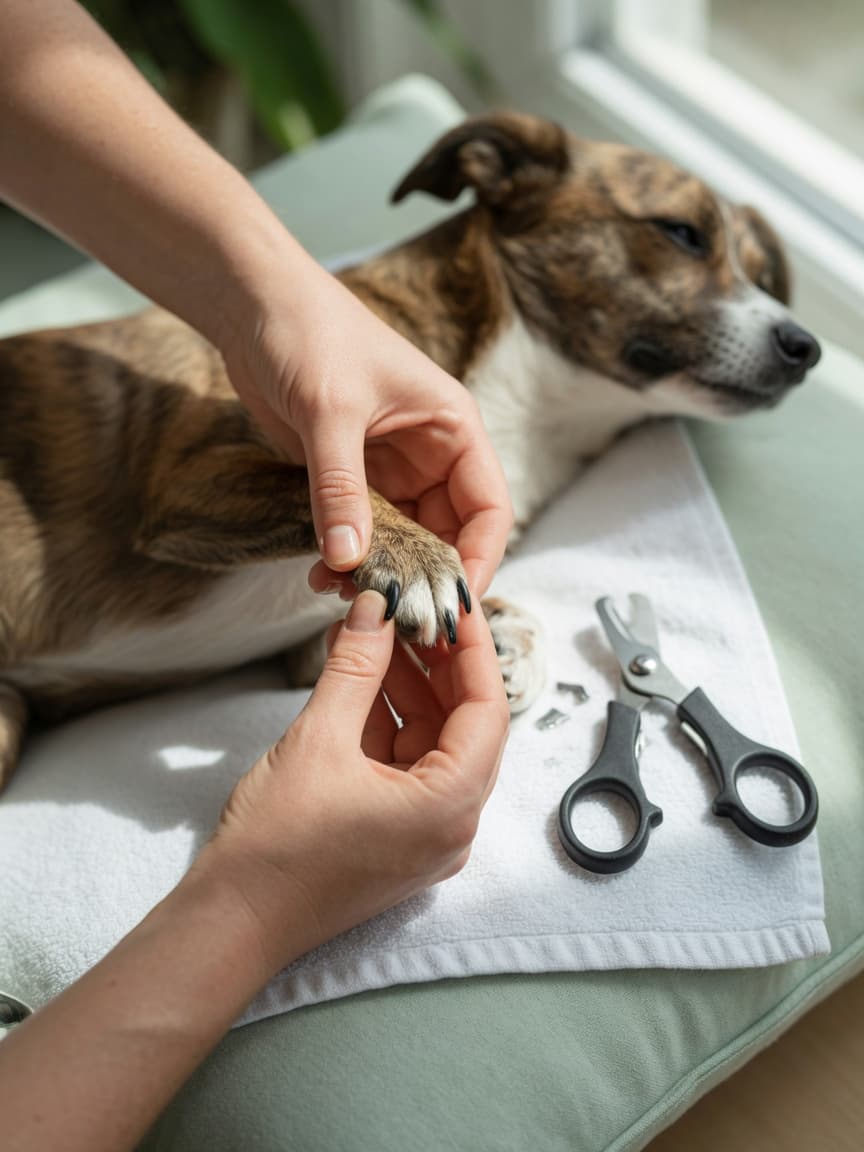
The Problem With Overgrown Nails
Nail care is one of the most neglected aspects of home dog grooming, yet the consequences of skipping it are surprisingly serious. When nails grow too long, they alter the way a dog bears weight through its paws, placing abnormal pressure on the joints of the toes, pasterns, and even the hips and spine over time. Long nails also snag on carpets, splinter painfully, and in extreme cases curl back into the paw pad.
A good rule of thumb: if you can hear your dog's nails clicking on a hard floor, they are already too long. Most dogs need their nails trimmed every three to four weeks, though activity level and surface type affect how quickly nails wear down naturally.
Choosing the Right Tool for the Job
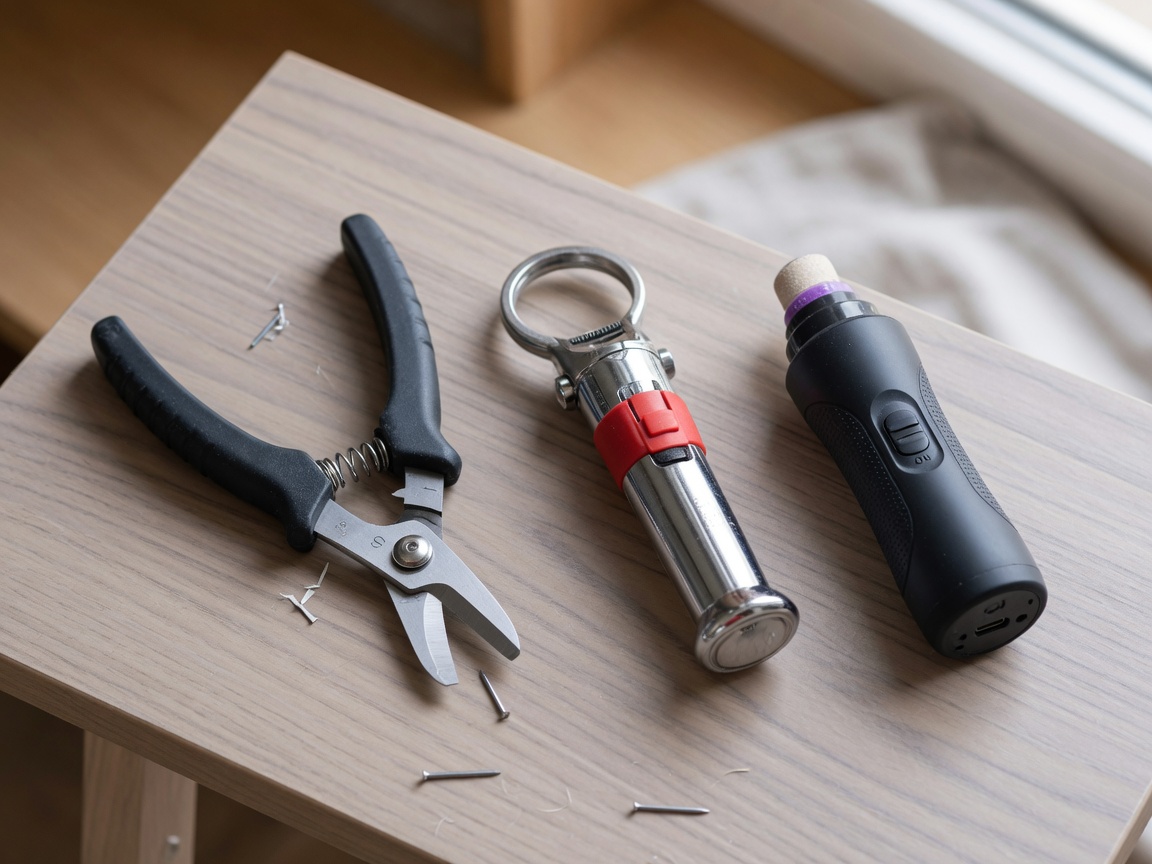
The tool you use matters more than most people expect. There are three main options available to home groomers.
Scissor-Style Clippers
These work exactly as they sound — two blades that pass each other to cut. They give excellent control and are particularly suitable for medium to large dogs. Brands like Safari and Millers Forge are long-standing favourites among professional groomers and veterinary nurses.
Guillotine Clippers
A loop sits around the nail and a single blade cuts through when you squeeze the handle. These are better suited to small and toy breeds with thinner nails. They can crush rather than cut if the blade is even slightly dull, so replacing blades regularly is essential.
Nail Grinders
Battery-operated grinders file the nail down gradually using a rotating abrasive head. They eliminate the risk of cutting too deep and leave a smoother finish, but the vibration and noise can unsettle nervous dogs. Dremel makes a pet-specific model that runs quietly at lower speeds, which many dogs tolerate better than the sound of clippers.
Whichever tool you choose, keep it sharp. Blunt clippers crush and splinter the nail rather than cutting cleanly, which is painful and more likely to cause cracking.
Understanding the Quick
The quick is the blood vessel and nerve that runs through the centre of each nail. Cutting into it causes bleeding and discomfort — and in many dogs, a single bad experience is enough to make future nail sessions a battle.
On dogs with pale or white nails, the quick is visible as a pinkish shadow when you hold the paw up to the light. Aim to cut a few millimetres below where that shadow ends. On dark or black nails, the quick is invisible from the outside. In this case, trim small amounts at a time and watch the cross-section of the nail as you go. When you see a small dark dot appear at the centre of the cut surface, you are approaching the quick and should stop.
How to Prepare Your Dog

For dogs who have never had their nails trimmed at home, rushing straight in with clippers is likely to cause anxiety that takes weeks to undo. A gradual desensitisation approach works far better.
- Spend several sessions simply handling your dog's paws — picking them up, touching the toes, pressing gently on each nail
- Introduce the clippers by letting your dog sniff them, then touching them to the paw without cutting
- Reward every step generously with high-value treats
- Trim just one or two nails per session at first, then gradually work up to a full trim
Some dogs do better lying on their side. Others are more comfortable sitting between their owner's legs. Experiment to find what works for your individual dog, and always work in good lighting so you can see clearly.
Step-by-Step Nail Trimming Technique
Once your dog is comfortable with the process, a full nail trim should take no more than ten minutes.
Positioning
Hold the paw firmly but gently, separating the toes so you have a clear view of each nail. Do not squeeze. If your dog pulls their paw back, wait calmly and try again rather than tightening your grip, which increases anxiety.
Angle and Cut
Hold the clippers at a 45-degree angle to the nail rather than cutting straight across. This mimics the natural wear angle and reduces the chance of splitting. Cut in a single, swift motion. Hesitating mid-cut can cause the nail to crush rather than sever cleanly.
The Dewclaws
Do not forget the dewclaws — the thumb-like nails located on the inner side of the front legs, and sometimes the back legs too. Because they do not make contact with the ground, they never wear down naturally and can grow long enough to curl into the skin if left unchecked.
If You Cut the Quick
It happens to experienced groomers and veterinary nurses alike. Stay calm. Apply styptic powder — a clotting agent available from any pet shop — directly to the nail tip and press with a clean cloth for thirty seconds. Cornflour works as an emergency alternative. The bleeding is almost always superficial and stops quickly. Reassure your dog, give a treat, and if possible, take a short break before continuing.
A single incident of cutting the quick will not cause lasting harm, but it does make it more important to keep subsequent sessions positive and reward-rich so your dog does not associate the experience with pain.
When to Ask for Professional Help
If your dog's nails are severely overgrown, the quick will have grown forward along with the nail. In this situation, a single trim will not be sufficient and cutting back to a normal length will require multiple sessions over several weeks to allow the quick to recede gradually. A veterinary nurse or professional groomer can guide you through this process safely.