
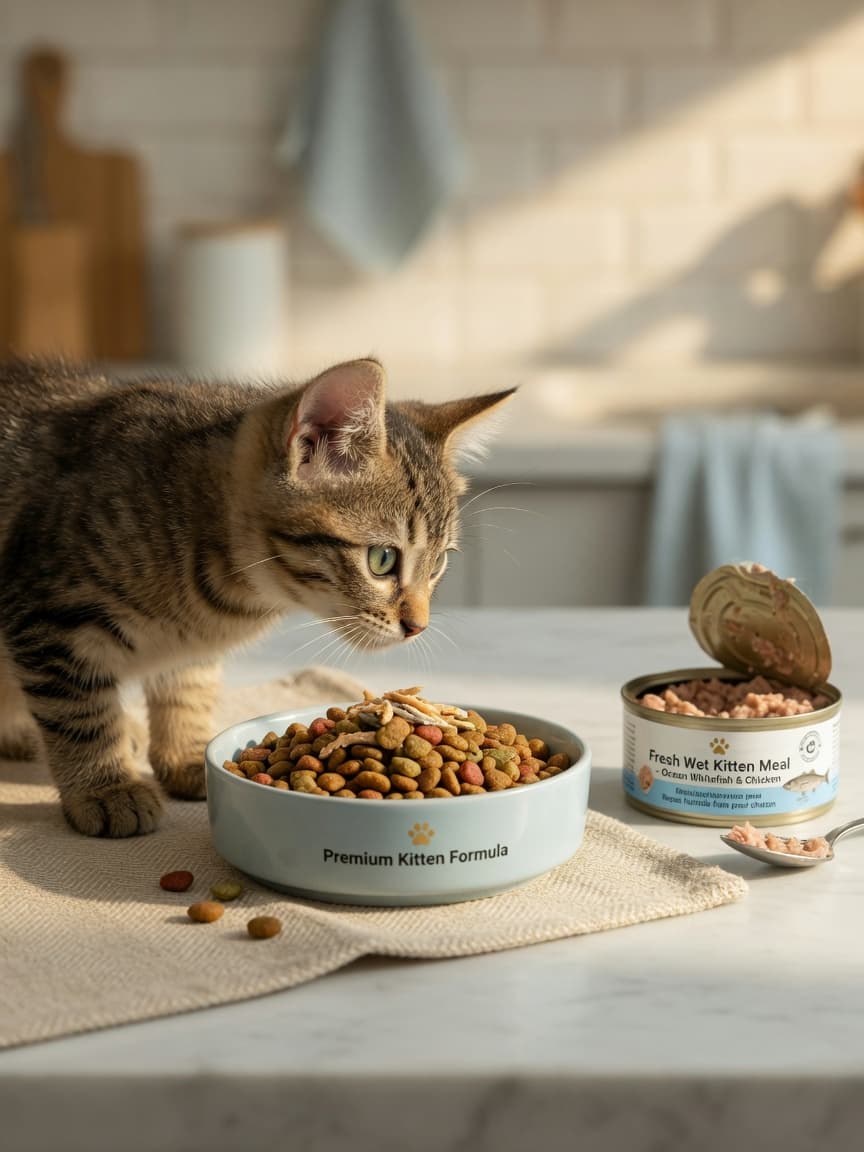
Choosing the right food for your kitten is one of the most important decisions you'll make as a pet parent. During their first year of life, kittens experience rapid growth and development, requiring specific nutrients to support their developing bones, muscles, and immune systems. A well-balanced diet during these crucial months sets the foundation for lifelong health. Understanding what to look for in kitten food—and what to avoid—will help you make an informed choice that keeps your feline friend thriving.
Understanding Your Kitten's Nutritional Needs
Unlike adult cats, kittens require significantly higher levels of certain nutrients. They need more protein to support muscle development, additional calories to fuel their active metabolism, and specific minerals like calcium and phosphorus for bone growth.
- Protein: Kittens require 30-40% protein in their diet, compared to 26-30% for adult cats
- Fat: Essential for energy and skin health; aim for at least 9% fat content
- Taurine: A critical amino acid that supports heart and eye development
- Calcium and phosphorus: Vital for skeletal development in proper ratios
- DHA: An omega-3 fatty acid that supports brain and vision development
Wet Food vs Dry Food: Making the Right Choice
Both wet and dry kitten foods can be nutritionally complete, but they each have distinct advantages. Wet food typically contains more moisture, which is beneficial for hydration and particularly helpful for kittens. Dry food is convenient, helps with dental health through chewing, and is often more economical. Many pet nutritionists recommend a combination of both—offering wet food at least once daily alongside high-quality dry kibble.
Consider your lifestyle, your kitten's preferences, and your budget when deciding between them. Some kittens naturally prefer one texture over another, so observe what your pet enjoys most.
Reading Labels and Identifying Quality Ingredients
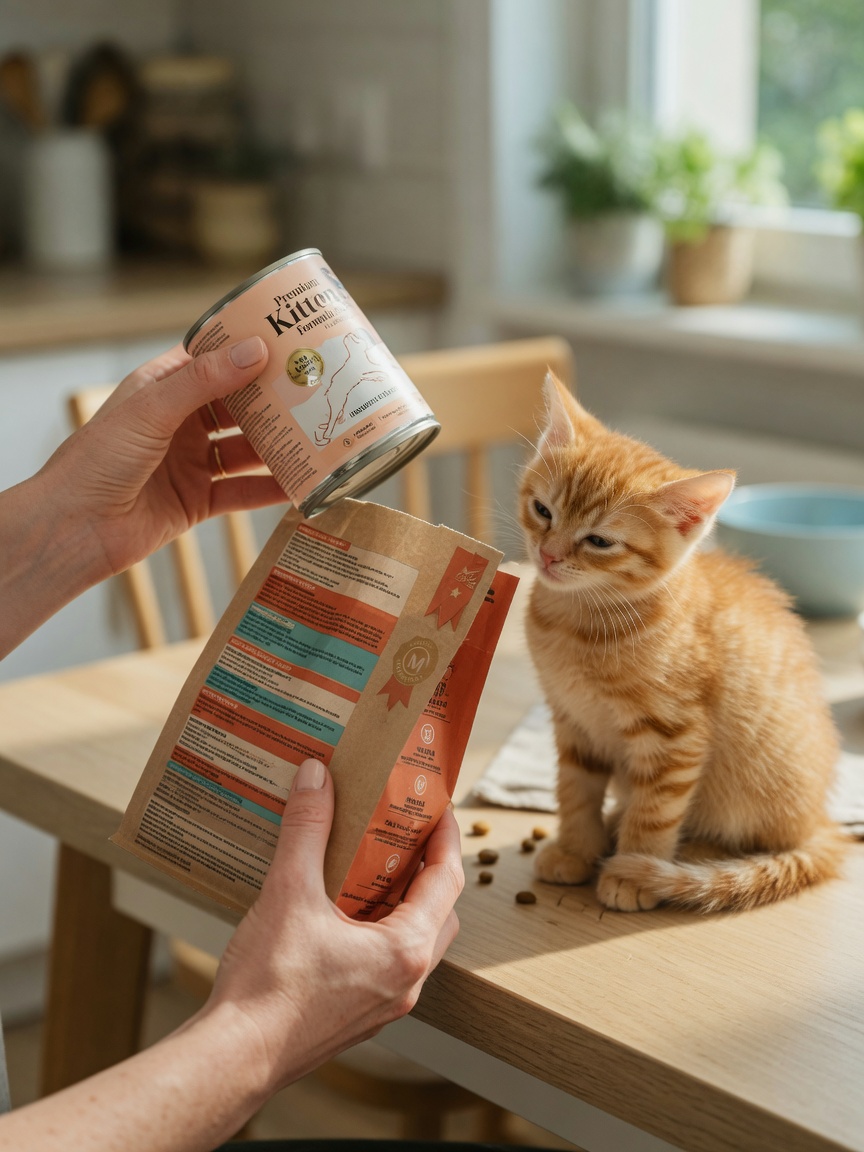
Learning to read kitten food labels empowers you to make better choices. Look for foods with named meat sources listed as the first ingredient—such as chicken, turkey, or fish—rather than vague terms like "meat by-products" or "animal derivatives."
- Check the guaranteed analysis for protein, fat, and fibre percentages
- Verify the food meets AAFCO (Association of American Feed Control Officials) standards for kittens
- Identify potential allergens or sensitivities your kitten may have
- Avoid foods with excessive fillers, artificial colours, and preservatives
- Look for the FEDIAF (European Pet Food Industry Federation) statement where applicable
Age-Specific Feeding Guidelines
Kittens at different developmental stages have different nutritional requirements. Weaning typically begins at 4-8 weeks of age, though many breeders start introducing softened kitten food earlier. Until twelve weeks, kittens benefit from specialised "baby" kitten formulations. Between three and twelve months, transition to junior or regular kitten food, then to adult food after one year (or 18 months for larger breeds).
Transitioning Your Kitten to New Food
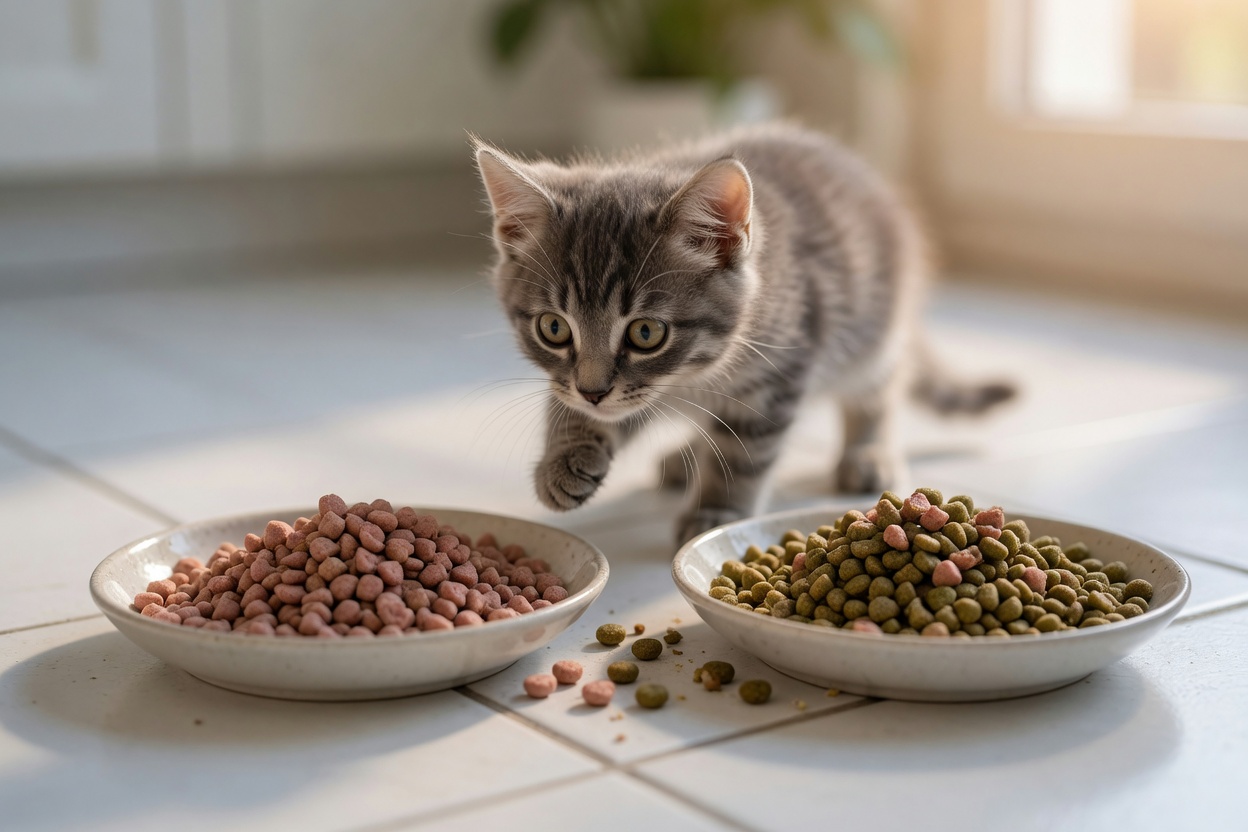
Sudden dietary changes can cause digestive upset. When introducing new food, follow this gradual transition over 7-10 days:
- Days 1-2: Mix 75% old food with 25% new food
- Days 3-4: Use equal parts old and new food
- Days 5-6: Mix 25% old food with 75% new food
- Days 7+: Serve 100% new food
When to Consult Your Veterinarian
If your kitten has specific health concerns, allergies, or digestive sensitivities, seek professional guidance. Your vet can recommend prescription or therapeutic diets tailored to your kitten's individual needs.
Key Takeaways
Selecting the best kitten food means prioritising high-quality protein, ensuring complete nutrition, reading labels carefully, and choosing foods appropriate for your kitten's age. Whether you choose wet, dry, or a combination of both, consistency and gradual transitions are essential. Regular communication with your veterinarian ensures your kitten receives optimal nutrition during these critical developmental months, setting the stage for a healthy, happy adult life.