
Why Taking Your Dog's Temperature Matters
When your dog seems unwell — lethargic, shivering, hot to the touch, or simply not themselves — knowing their body temperature gives you genuinely useful information. A thermometer reading tells you whether a fever is present, how severe it is, and whether you are dealing with something that can be monitored at home or something that needs immediate veterinary attention.
Feeling a dog's nose or ears, as popular wisdom suggests, gives you no reliable information whatsoever about internal body temperature. The only accurate ways to check are with a thermometer. This guide explains how to do that safely and correctly at home.
What Is a Normal Dog Temperature?
The normal body temperature range for a healthy adult dog is 38.3 to 39.2 degrees Celsius (101 to 102.5 degrees Fahrenheit). This is somewhat higher than the normal human temperature of around 37 degrees Celsius, which is why dogs often feel warm to the touch even when perfectly healthy.
Puppies, elderly dogs, and very small breeds may sit at slightly different points within this range. A single reading that falls at the edge of normal is less informative than a pattern of readings over time, so it is worth learning your individual dog's baseline when they are healthy.
Key temperature thresholds to remember:
- Below 37.5°C (99.5°F): hypothermia — warming needed and vet contact advised
- 38.3–39.2°C (101–102.5°F): normal healthy range
- 39.5°C (103.1°F) or above: low-grade fever — monitor closely
- 40°C (104°F) or above: significant fever — contact your vet promptly
- 41°C (105.8°F) or above: emergency — seek veterinary care immediately
What You Will Need

For an accurate temperature reading at home, you need:
- A digital thermometer — ideally one designated for rectal use in pets, though a standard digital human thermometer also works
- Petroleum jelly (Vaseline) or a water-based lubricant to make insertion comfortable
- A helper to keep your dog calm and still if possible
- Treats for rewarding your dog afterwards
Do not use an old-fashioned glass mercury thermometer, as these can break and are dangerous. Digital thermometers give a reading in under sixty seconds and are inexpensive from any pharmacy.
The Rectal Method: Step-by-Step
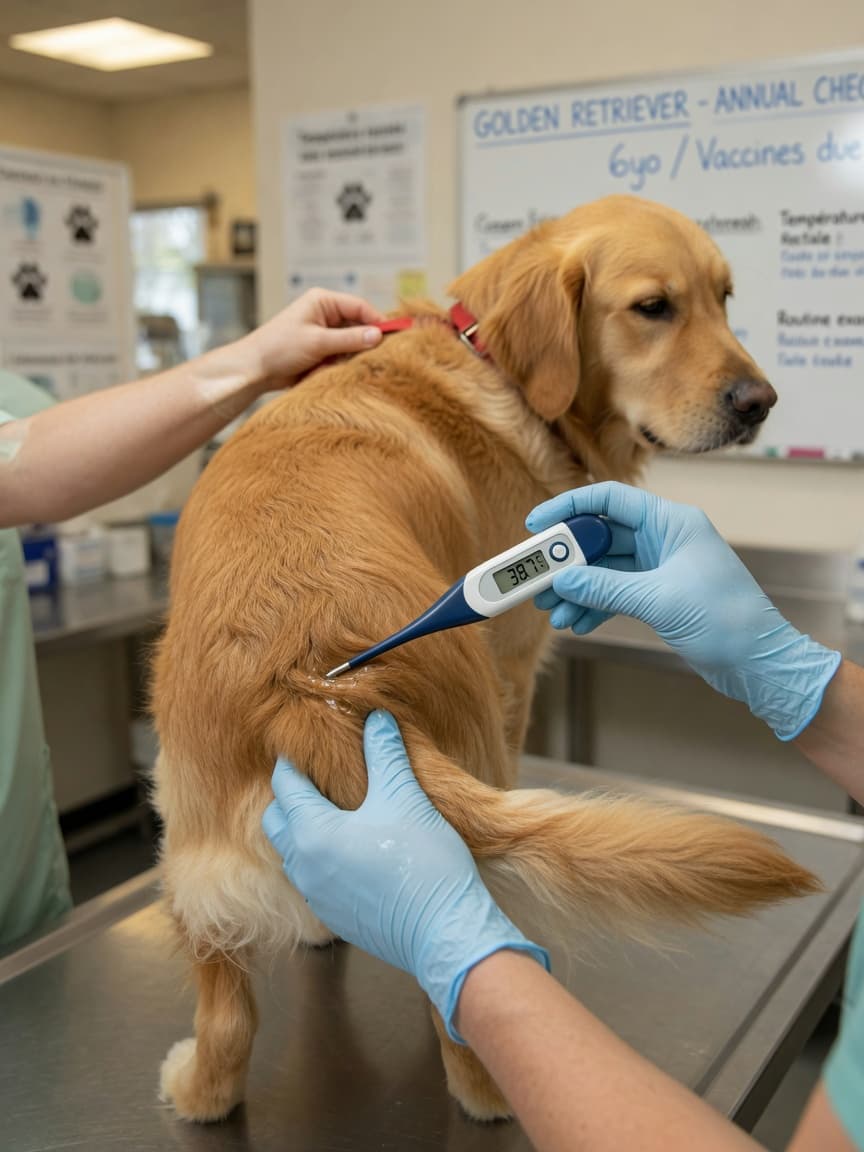
The rectal method is the gold standard for accuracy and the one your vet will use. It sounds uncomfortable but, when done gently and correctly, most dogs barely react to it.
- Turn the thermometer on and confirm it is ready to use.
- Apply a generous amount of petroleum jelly or lubricant to the tip of the thermometer — at least a centimetre of coverage.
- Have your helper gently hold your dog in a standing position or lying on their side. Keeping them calm and still is the most important part.
- Lift the tail gently and locate the anus.
- Insert the thermometer tip gently into the rectum approximately 2.5 centimetres (about one inch). Do not force it; if you encounter resistance, stop.
- Hold the thermometer in place for the full time indicated by the manufacturer — usually around 60 seconds for most digital models, though some fast-read models take less.
- Remove the thermometer gently and read the display immediately.
- Wipe the thermometer clean with an antiseptic wipe and wash your hands.
- Give your dog a treat and plenty of praise.
If your dog is very resistant to the rectal method or if you are not comfortable performing it, an ear thermometer is a reasonable alternative.
Ear Thermometers
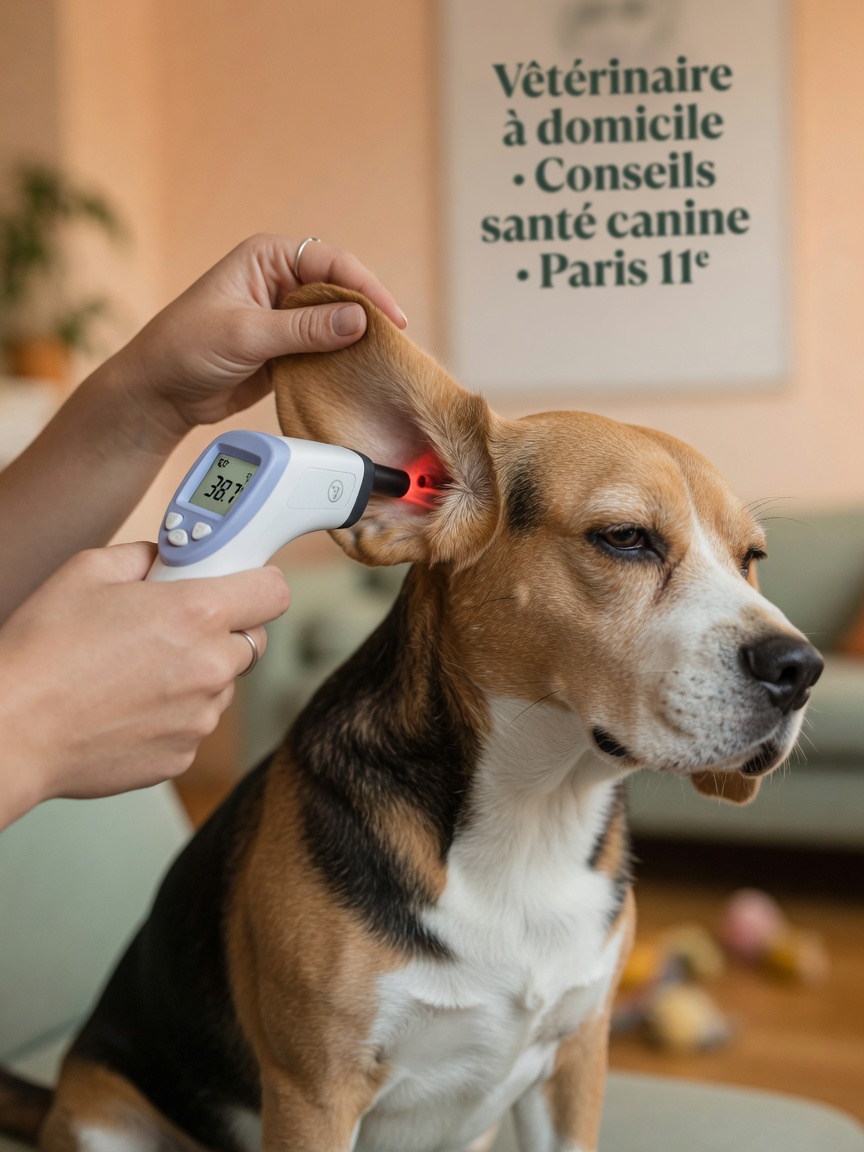
Infrared ear thermometers designed for use in pets are available from many vets and online pet suppliers. They measure the infrared heat generated by the eardrum and surrounding tissue and give a reading in a few seconds with no insertion required beyond the outer ear canal.
Ear thermometers are significantly more convenient and less stressful for both dog and owner than the rectal method. However, they are less accurate. Incorrect positioning in the ear canal, a build-up of wax, or an ear infection can all cause false readings. For a general sense of whether your dog has a fever, an ear thermometer is useful. For a precise reading when you are genuinely concerned about your dog's health, a rectal reading is more reliable.
Always use a thermometer specifically designed for pet ears rather than a human ear thermometer, as the shape of the dog's ear canal differs significantly from that of a human.
Methods That Do Not Work Reliably
Several methods that are commonly suggested for checking a dog's temperature are unfortunately unreliable and should not be used to make any health decisions.
Axillary (armpit) temperature — placing a thermometer under the front leg — typically reads around one degree Celsius lower than the true internal temperature and varies inconsistently between individuals. It is not accurate enough to be clinically useful.
Forehead thermometers designed for humans are completely unsuitable for dogs. The infrared sensor is calibrated for the human forehead, and the fur, varying skin thickness, and different anatomy of a dog's head mean readings are meaningless.
Feeling the skin, ears, or nose gives a subjective impression at best. Dry or wet noses are normal in both healthy and unwell dogs. A dog can feel warm to the touch yet have a normal internal temperature, particularly after exercise or in warm weather.
Recognising Fever Without a Thermometer
While a thermometer is the only way to confirm a fever, certain signs suggest your dog's temperature may be elevated even before you measure it:
- Lethargy or unusual quietness
- Loss of appetite
- Shivering or trembling despite being in a warm environment
- Warm, dry skin, particularly around the ears and paws
- Rapid breathing or panting at rest
- Redness of the eyes or gums that appear darker than usual
- Vomiting or signs of nausea
These signs alone are reason to take a temperature reading and contact your vet if anything concerns you.
When to Seek Veterinary Care Immediately
Contact your vet or an emergency clinic without delay if:
- Your dog's temperature reads above 40°C (104°F)
- Your dog's temperature reads below 37.5°C (99.5°F)
- A fever above 39.5°C is accompanied by vomiting, diarrhoea, difficulty breathing, collapse, or seizures
- Your dog has a known underlying health condition and any temperature reading falls outside the normal range
- Your dog has been exposed to toxins, extreme heat, or cold temperatures
A high fever in dogs can cause organ damage if left untreated. Never attempt to reduce a dog's fever by giving human paracetamol or ibuprofen — both are toxic to dogs and can be fatal. Cool water applied to the paws and the area around the groin can provide mild temporary relief while you seek veterinary attention, but professional treatment is always needed for a significant fever.