
A Small Tube With a Big Job
Spot-on treatments are among the most commonly used parasite preventatives in the UK, yet a significant proportion of pet owners apply them incorrectly — reducing their effectiveness and in some cases causing skin reactions. The application process takes under a minute, but the details matter.
Understanding How Spot-On Treatments Work
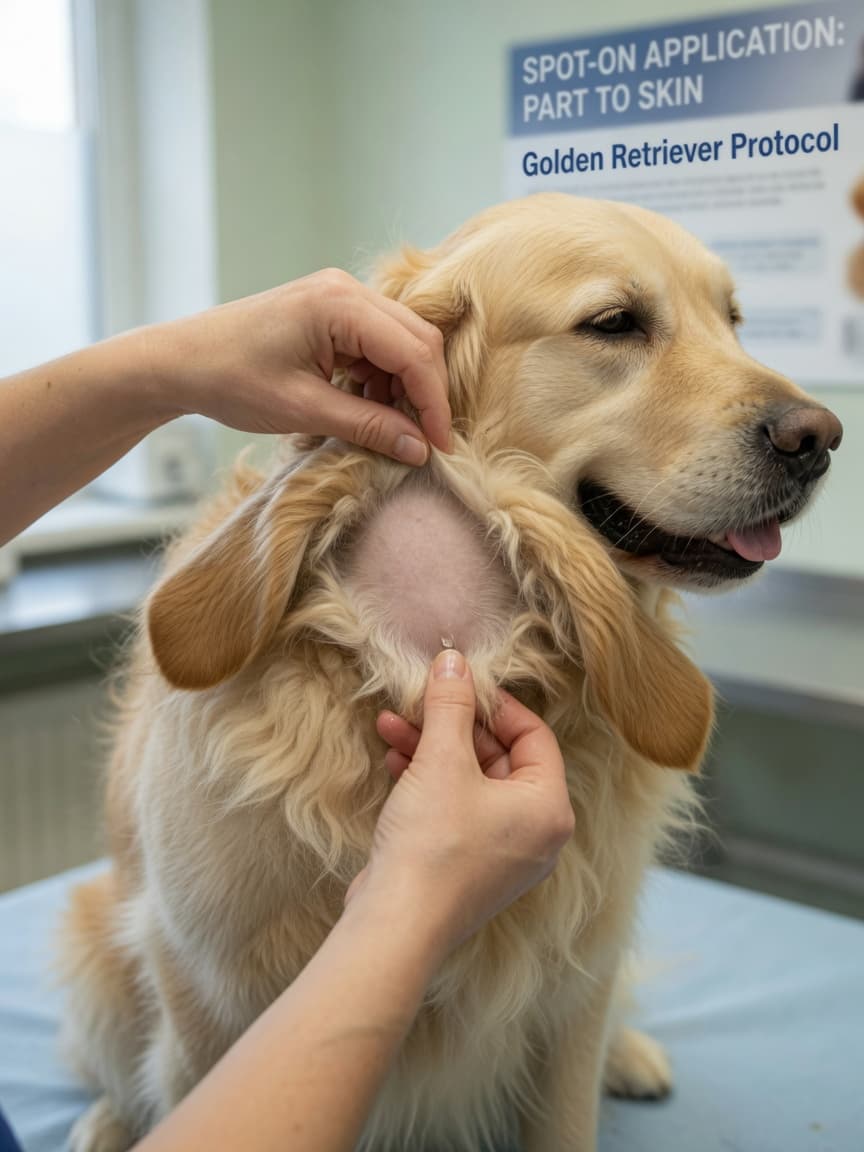
Spot-on products are formulated to spread across the skin's surface via the natural oils of the coat, rather than absorbing into the bloodstream in the way oral treatments do. This is why placement and skin contact are critical. Applying the product to the fur rather than the skin is one of the most common mistakes, and it renders many products significantly less effective.
Choosing the Right Product
Spot-on treatments vary considerably in their active ingredients and in whether they are licensed for dogs, cats, or both. This distinction is not cosmetic — some dog-specific products, particularly those containing permethrin, are acutely toxic to cats. If you have a multi-pet household, consult your vet before purchasing and keep treated dogs away from cats until the product has fully dried.
Step-by-Step Application
Before You Begin
Check that your pet's skin is dry and free from broken skin or irritation at the application site. Do not apply after bathing — wait at least 48 hours, or check the product's specific guidance. Have the tube ready to open before you position your pet.
Finding the Application Site
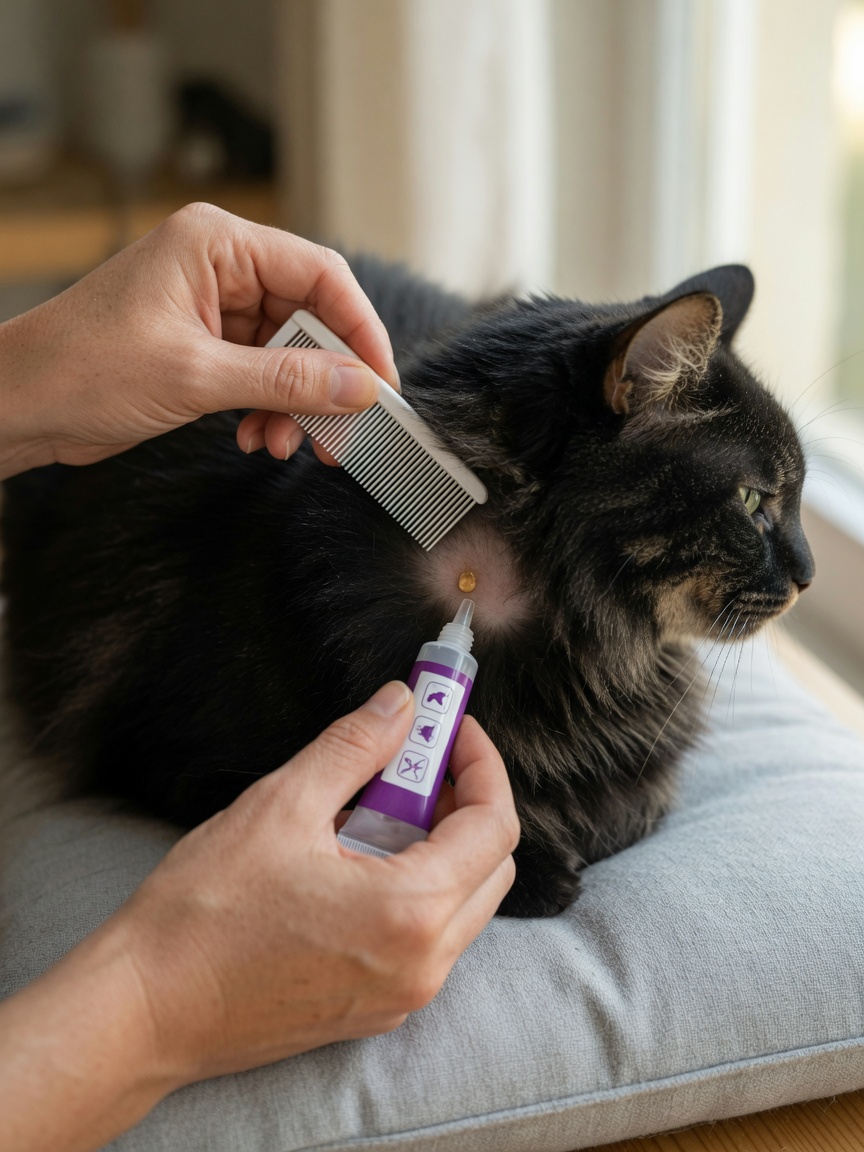
The standard site is the back of the neck, at the base of the skull, between the shoulder blades. This location is chosen because the animal cannot reach it to lick it off. For larger dogs, some products recommend applying at multiple points along the spine — check the package insert for your specific product.
Parting the Coat
Use two fingers to part the fur down to the skin. You need to see bare skin, not a layer of coat. This step is particularly important for thick-coated breeds. If the fur springs back before you've applied the product, use a fine-toothed comb to hold the parting open.
Applying the Product
Snap or twist open the tube as directed — most require the tip to be pressed firmly against itself. Hold the tube upright and squeeze the entire contents directly onto the exposed skin in one spot, or spread it across two to three skin points if instructed. Do not rub it in.
After Application
Keep children and other pets away from the treated area until it has dried completely, which typically takes 24 to 48 hours. Avoid stroking the application site yourself, and wash your hands thoroughly after handling the tube. A greasy or slightly damp patch at the application site is normal and will resolve as the product distributes.
Some animals experience temporary hair thinning or mild skin irritation at the application site. This usually resolves on its own, but if you notice persistent redness, intense scratching, or any systemic signs such as lethargy or vomiting, contact your vet promptly.
Timing and Frequency
Most spot-on products are labelled for monthly application, but this can vary depending on the active ingredient and the parasites being targeted. Applying too frequently increases the risk of adverse reactions; applying too infrequently leaves gaps in protection. Mark the date of each treatment in your calendar or use a pet health app to maintain a consistent schedule.
Practical Summary
- Always apply directly to skin, not to the coat.
- Part the fur thoroughly before applying — visible skin is non-negotiable.
- Never use a dog-specific product on a cat without explicit veterinary advice.
- Do not apply to wet skin or within 48 hours of bathing.
- Keep the area dry and avoid stroking the site for 24 to 48 hours.
- Apply the full tube contents — partial doses reduce effectiveness.
- Contact your vet if you observe any unusual reaction at or beyond the application site.