
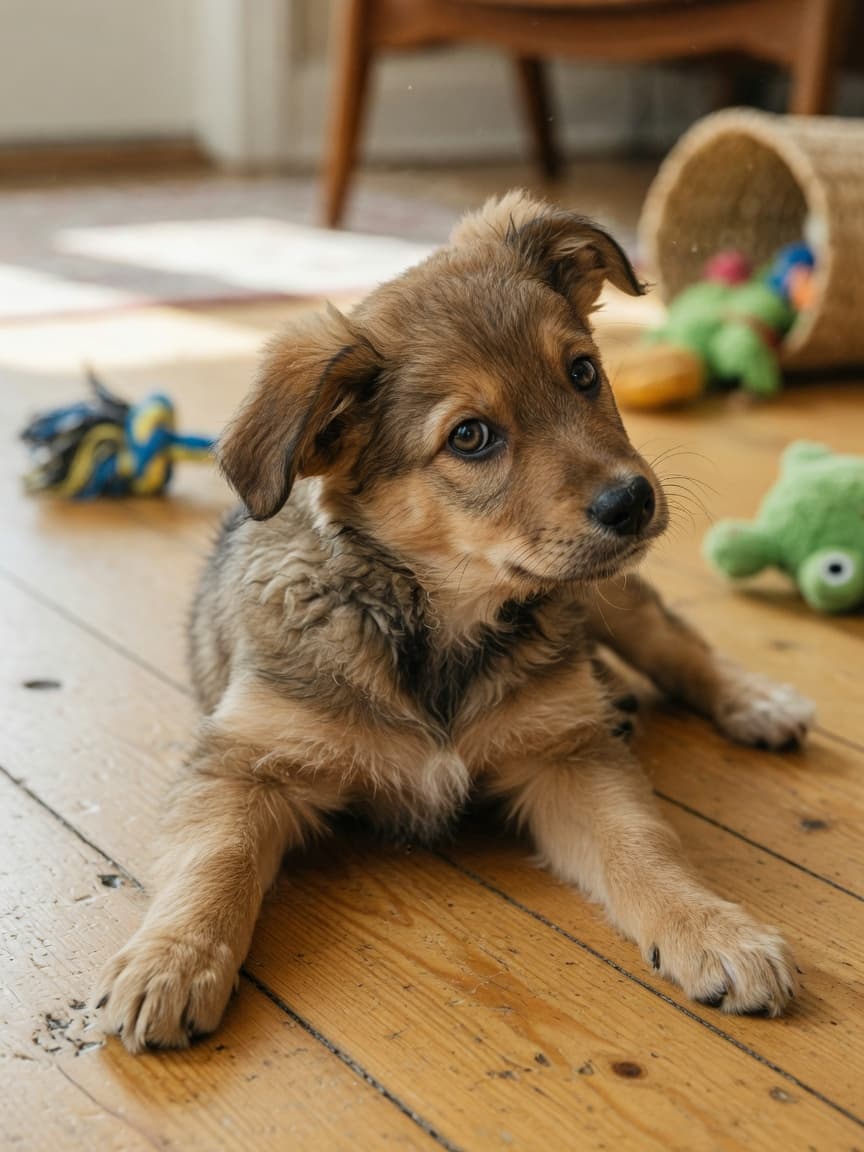
Understanding how your puppy's coat develops is essential for providing proper grooming care and recognising potential health issues early. From the moment your puppy is born, their coat is already undergoing remarkable changes. Whether you have a long-haired Collie, a short-coated Labrador, or a wiry-coated Terrier, the fundamental growth process is fascinatingly similar across all breeds. In this guide, we'll explore the science behind coat growth and share practical tips to support your puppy's healthy development.
The Puppy Coat Growth Timeline
Puppies are born with a soft, downy coat called the "puppy coat" or primary coat. This initial coat provides minimal protection, which is why newborn puppies rely heavily on their mother's warmth and their littermates for temperature regulation. Between 3 and 4 months of age, your puppy begins shedding this puppy coat as their adult coat starts emerging beneath it.
This shedding process, known as "blowing their coat," typically reaches its peak between 6 and 12 months old. Some breeds experience this change more dramatically than others. Double-coated breeds like Golden Retrievers and German Shepherds shed considerably more than single-coated breeds like Poodles or Portuguese Water Dogs.
Understanding Hair Growth Cycles
Your puppy's individual hairs go through three distinct growth phases:
- Anagen (Growth Phase): The hair actively grows from the follicle. This phase can last several months depending on breed and coat type.
- Catagen (Transition Phase): Hair growth slows and the follicle shrinks. This brief phase typically lasts 2-3 weeks.
- Telogen (Rest Phase): The hair stops growing and eventually sheds. New hair begins forming beneath it, and the cycle repeats.
Environmental factors such as daylight exposure, temperature changes, and seasonal variations influence these cycles. You'll notice increased shedding during spring and autumn as your puppy's body naturally prepares for seasonal coat changes.
What About Whiskers and Guard Hairs?
Whiskers, or vibrissae, are specialised hairs with sensory receptors at their base. Unlike regular coat hairs, whiskers grow throughout your puppy's life and don't follow the same shedding cycles. They're incredibly important for spatial awareness and navigation, especially in dim lighting. Never trim your puppy's whiskers, as this removes their sensory guidance system.
Guard hairs are longer, coarser hairs that form the outer protective layer of your puppy's coat. These typically develop later than the softer undercoat, giving your puppy's adult coat its distinctive appearance and texture by around 12-18 months of age.
Nutrition's Role in Coat Development
Healthy coat growth depends significantly on proper nutrition. Puppies require adequate protein, omega-3 and omega-6 fatty acids, and essential vitamins and minerals to support hair follicle development.
- Ensure your puppy receives high-quality puppy food formulated for their specific size and breed
- Look for foods listing meat as the primary ingredient
- Include sources of fish oil or flaxseed to support skin and coat health
- Provide fresh water daily to support overall bodily functions
- Avoid sudden diet changes, which can trigger skin issues and coat problems
Grooming Tips for Growing Coats
Regular grooming supports your puppy's coat development and helps you monitor skin health:
- Brush your puppy 2-3 times weekly to remove loose fur and distribute natural oils
- Use appropriate tools for your puppy's coat type—slicker brushes for longer coats, rubber curry brushes for short coats
- Start grooming sessions early to help your puppy become comfortable with handling
- Bath your puppy every 4-6 weeks with gentle, puppy-specific shampoo
- Inspect skin regularly for signs of dryness, irritation, or parasites
Key Takeaways
Your puppy's coat transformation from soft downy fur to a lustrous adult coat is a natural, predictable process. By understanding growth cycles, maintaining proper nutrition, practising regular grooming, and being patient with shedding seasons, you'll support your puppy's healthy coat development. If you notice excessive hair loss, skin irritation, or delayed coat development, consult your veterinarian to rule out underlying health issues. Remember, every breed develops at its own pace, and with consistent care, your puppy will grow into their beautiful adult coat.