
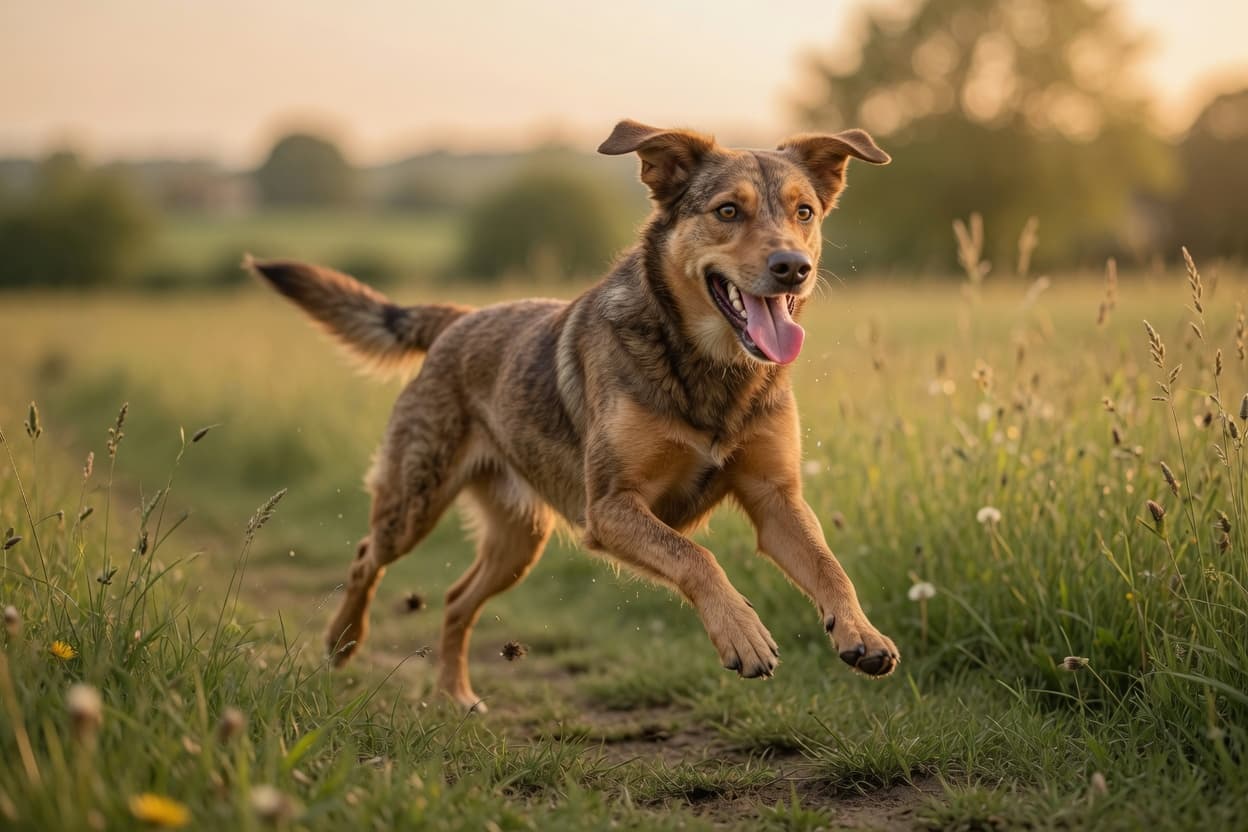
Have you ever wondered why your dog bolts across the park like a furry missile? Whether you're chasing after an enthusiastic springer spaniel or watching your greyhound's athletic prowess, canine running speed is absolutely fascinating. Understanding how fast dogs can run isn't just trivia—it's crucial knowledge for keeping your pet safe, providing adequate exercise, and appreciating just how remarkable their bodies truly are.
The Range of Canine Running Speeds
Dogs are surprisingly fast creatures, though their speed varies dramatically depending on breed, age, and fitness level. Most healthy adult dogs can run at speeds between 32 and 40 kilometres per hour for short distances. However, this figure masks enormous variation across different breeds.
Sighthounds, specifically bred for hunting and chasing, consistently outperform other breeds. Greyhounds hold the impressive title of fastest dog breed, capable of reaching speeds up to 70 kilometres per hour in short bursts. Whippets, salukis, and Afghan hounds also rank amongst the speediest canines, with many achieving 60 kilometres per hour or more.
Breed Differences Explained
Not all dogs are built for speed. Understanding your dog's natural predisposition helps set realistic exercise expectations:
- Sighthounds (Greyhounds, Whippets, Salukis): Purpose-bred for speed and endurance; can reach 60-70 km/h
- Sporting breeds (Labrador Retrievers, Spaniels): Athletic and energetic; typically 48-56 km/h
- Herding breeds (Border Collies, Australian Shepherds): Built for agility and quick direction changes; around 48 km/h
- Working breeds (Boxers, Rottweilers): Powerful but less specialised for pure speed; 40-48 km/h
- Toy breeds (Chihuahuas, Dachshunds): Much slower; typically 24-32 km/h
- Giant breeds (Great Danes, Mastiffs): Limited speed due to body mass; usually 24-40 km/h
Factors That Influence Running Speed
Your individual dog's running ability depends on several interconnected factors:
Age: Young dogs (2-7 years) typically run fastest, whilst puppies and senior dogs experience reduced speed capacity. Senior dogs may run at only 50-70% of their prime speed.
Physical fitness: A well-exercised, lean dog runs considerably faster than an overweight or sedentary one. Excess weight significantly reduces acceleration and top speed.
Health status: Joint problems, heart conditions, or respiratory issues can dramatically limit running ability. Always consult your vet before engaging in vigorous exercise with older dogs.
Ground conditions: Soft grass allows faster running than sand or gravel. Wet ground reduces speed compared to dry terrain.
Safe Exercise Guidelines for Your Dog
Knowing your dog can run fast doesn't mean they always should. Here's how to provide appropriate exercise safely:
- Match exercise intensity to your dog's breed and age rather than forcing them to match human runners
- Avoid intense exercise in puppies under 12 months—their growth plates aren't fully developed
- Provide regular, moderate-intensity exercise rather than occasional sprints
- Always warm up with a gentle walk before more vigorous activity
- Ensure your dog has constant access to fresh water
- Exercise during cooler parts of the day in warm weather
- Watch for signs of fatigue: excessive panting, lagging behind, or reluctance to continue
When Running Becomes Risky
Some dogs should avoid high-speed running altogether. These include dogs with hip dysplasia, heart conditions, respiratory problems, or joint disease. Brachycephalic breeds (flat-faced dogs like Bulldogs and Pugs) struggle with cooling and oxygen intake, making them particularly vulnerable to overheating during vigorous exercise.
Key Takeaways
Your dog's running capability is a marvellous adaptation shaped by thousands of years of selective breeding. Whilst greyhounds might sprint past most mammals, every dog deserves exercise matched to their individual needs and limitations. Rather than chasing maximum speed, focus on providing consistent, appropriate exercise that keeps your dog healthy, happy, and age-appropriate. Remember: a well-exercised dog is a well-behaved dog, but a carefully managed exercise programme beats unstructured sprinting every time.