
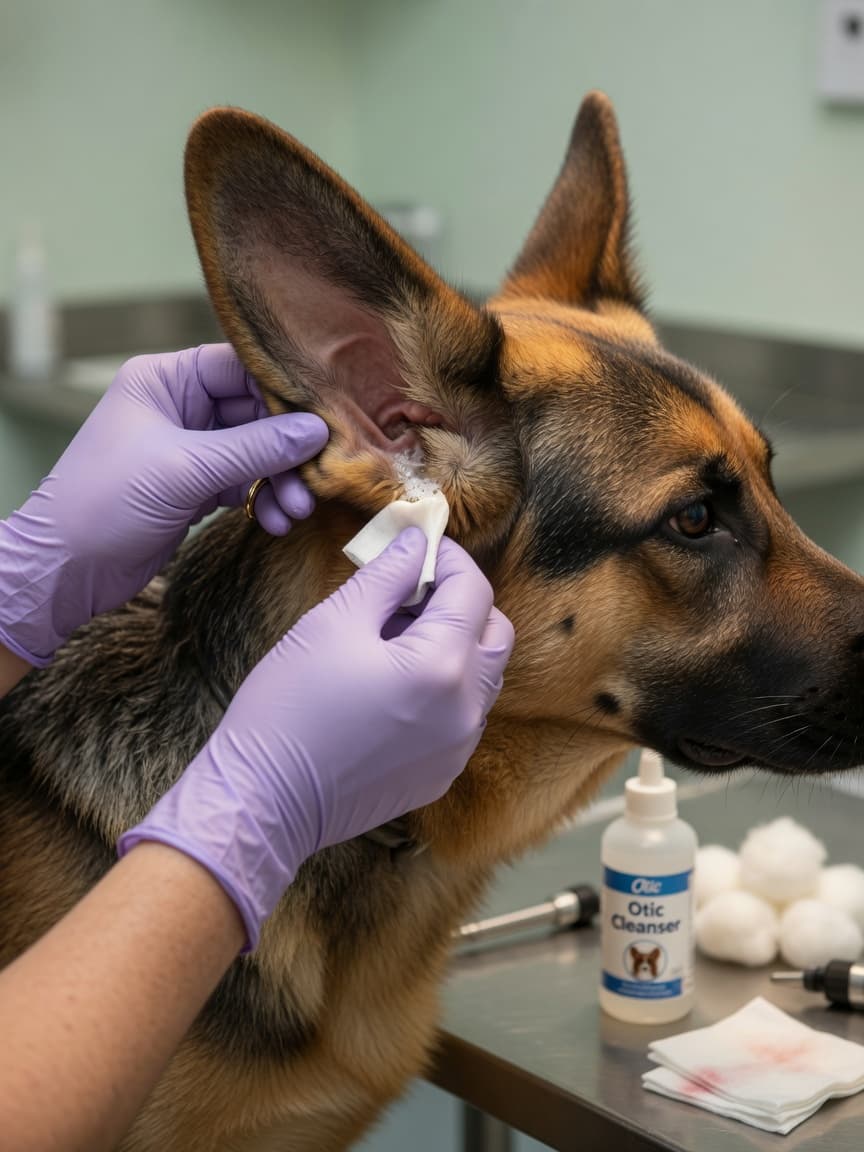
The German Shepherd's Ear Structure
The German Shepherd Dog is immediately recognisable in part by its large, erect, wedge-shaped ears — a defining breed characteristic that also plays a role in their ear health. Unlike floppy-eared breeds whose ear canals are frequently moist and poorly ventilated, the upright ears of an adult German Shepherd allow relatively good airflow into the ear canal. This does not make them immune to ear problems, but it does mean that ear infections are generally less common than in breeds such as Cocker Spaniels or Basset Hounds.
The ear canal of a dog is shaped differently from a human's — it forms an L-shape, with a vertical canal leading down from the ear opening and then a horizontal canal leading to the eardrum. This anatomy means debris, wax, and moisture can accumulate at the bend, which is why regular cleaning and inspection matter even in a well-ventilated ear.
Puppy Ears: Erect vs Floppy During Development
German Shepherd puppies are not born with erect ears. Most puppies have soft, floppy ears for the first several weeks of life, and the ears typically begin to stand between eight and twenty weeks of age. It is entirely normal for ears to go up and down during teething (roughly twelve to twenty weeks), as the body temporarily diverts calcium and other resources to tooth development.
If a puppy's ears have not stood fully erect by around five months of age, it is worth mentioning to your vet or a reputable breeder. The German Shepherd Dog League of Great Britain (gsdleague.co.uk) offers guidance on ear development and can advise on whether any intervention is appropriate — in most cases, correct nutrition and patience are all that is needed.
During the floppy phase, ears should be checked and cleaned more frequently than in adults, as they trap more moisture and debris.
How Often to Clean Your German Shepherd's Ears
For most healthy adult German Shepherds, ear cleaning every two to four weeks is sufficient. Dogs that swim regularly, live in dusty environments, or have a history of ear problems may need more frequent attention — weekly cleaning is appropriate in these cases.
Never clean ears more often than necessary. Over-cleaning disrupts the natural flora of the ear canal and can actually increase the risk of infection by removing protective wax and irritating the delicate skin lining the canal.
Step-by-Step Ear Cleaning Routine
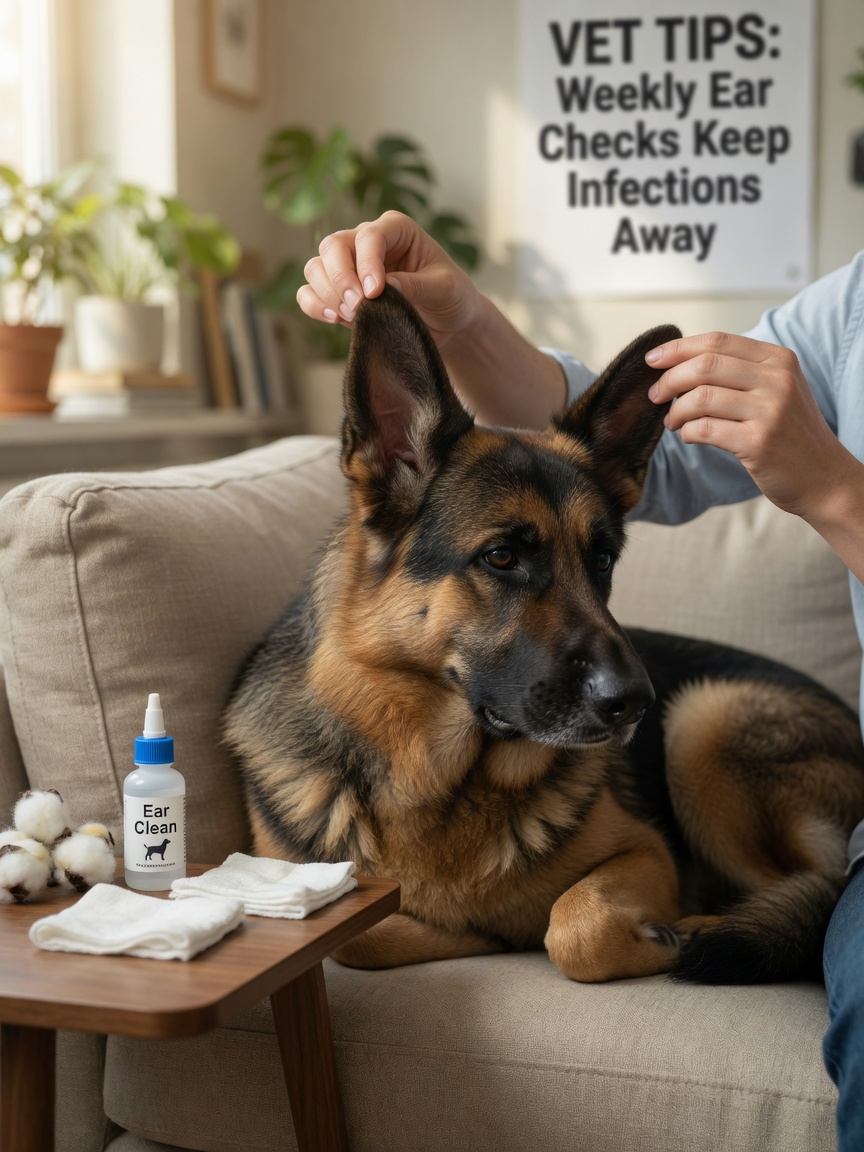
Cleaning your German Shepherd's ears at home is straightforward when done correctly. You will need a veterinary-approved ear cleaning solution and cotton wool balls or gauze pads. Do not use cotton buds (Q-tips) inside the ear canal — these can push debris deeper and risk damaging the eardrum.
- Settle your dog in a calm, comfortable position — many owners find it easiest to have the dog sitting beside them or between their knees
- Gently lift the ear flap and inspect the visible portion of the ear canal for redness, discharge, or unusual odour
- Apply a veterinary ear cleaner liberally into the ear canal — enough to fill it — then gently massage the base of the ear for twenty to thirty seconds; you should hear a squelching sound as the solution loosens debris
- Allow your dog to shake their head — this brings loosened debris up into the outer ear
- Use cotton wool to wipe away any visible debris from the outer ear and ear flap; only clean as far as your finger can comfortably reach
- Repeat on the other ear and reward with a treat
Zooplus stocks a range of veterinary ear cleaning solutions suitable for regular home use, including products from Virbac and Beaphar that are widely recommended by UK vets. These are gentle enough for routine maintenance and help prevent wax build-up.
Signs of Ear Infection
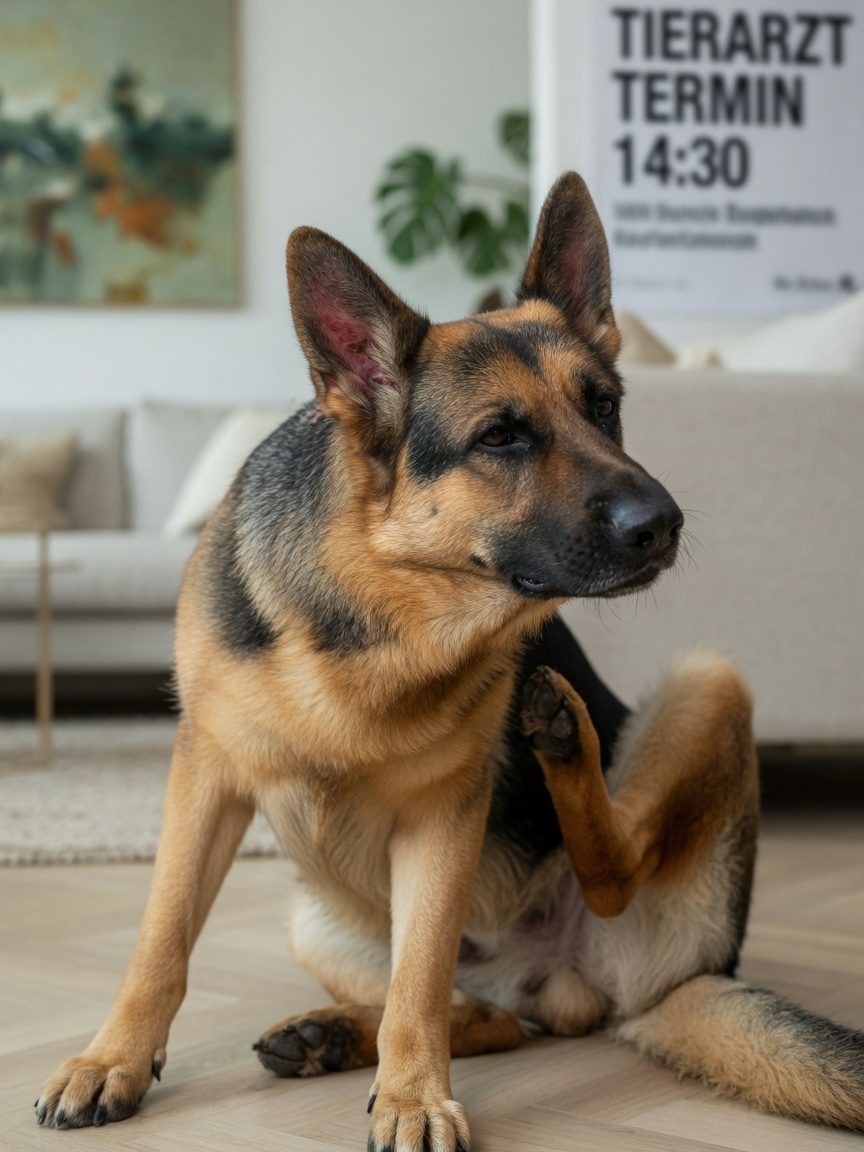
German Shepherds can develop bacterial or yeast ear infections, and early identification leads to faster, less costly treatment. Watch for the following signs:
- Persistent scratching at one or both ears
- Head shaking or tilting the head to one side
- Visible redness or swelling inside the ear
- Dark brown or yellow discharge
- A distinctive musty or yeasty odour from the ear
- Sensitivity or pain when the ear is touched
- Crusting around the ear opening
If you notice any combination of these signs, do not attempt to self-treat with over-the-counter products before getting a diagnosis. Bacterial and yeast infections require different treatments, and using the wrong product can worsen the condition or mask symptoms, making accurate diagnosis more difficult.
Ear Mites
Ear mites (Otodectes cynotis) are tiny parasites that live in the ear canal and feed on ear wax and skin oils. They are more common in dogs that have contact with cats or other animals, and they are highly contagious between pets in the same household. Signs include intense scratching, head shaking, and a distinctive dark, coffee-ground-like discharge in the ear.
Ear mites are diagnosed by a vet examining a sample of ear discharge under a microscope. Treatment typically involves a prescription topical product applied inside the ear or a spot-on treatment. All pets in the household should be treated simultaneously to prevent reinfection.
Ear Haematoma
An aural haematoma is a collection of blood between the cartilage and skin of the ear flap, caused by the blood vessels rupturing — usually as a result of vigorous and repeated head shaking or scratching. The ear flap swells noticeably and feels soft and fluid-filled to the touch. This is not a life-threatening condition but it is painful and requires veterinary attention.
Treatment involves draining the haematoma and addressing the underlying cause — usually an ear infection or mite infestation. Without treatment, haematomas can resolve on their own but often result in permanent thickening or distortion of the ear flap, sometimes described as a "cauliflower ear."
When to See a Vet
Contact your vet promptly if you notice any of the following:
- Signs of infection as described above
- Your dog is in obvious discomfort around the ear area
- A swollen or fluid-filled ear flap
- Discharge that is bloody or has a very strong smell
- Neurological signs such as loss of balance or unusual eye movements alongside ear symptoms
- Ear problems that recur frequently despite treatment
Recurring ear infections in German Shepherds are sometimes a sign of an underlying allergy — food or environmental — and may require investigation beyond the ear itself. Your vet may recommend allergy testing or a dietary elimination trial if infections keep coming back.
Summary
Consistent, gentle ear care is one of the simplest ways to protect your German Shepherd's health. Regular inspections, appropriate cleaning every two to four weeks with a quality ear solution, and prompt attention to any signs of problems will keep most dogs free from serious ear issues throughout their lives. For breed-specific health guidance, the German Shepherd Dog League of Great Britain is an excellent resource for owners at any stage of the journey.