

French Bulldogs are one of the breeds most prone to intervertebral disc disease (IVDD) because their bodies are built around chondrodystrophy — a genetic trait that causes abnormal, early-ageing cartilage and discs. This means the cushioning discs between their spinal bones can bulge or rupture suddenly, sometimes after nothing more dramatic than a jump off the sofa. The single most important thing to know is this: any sudden change in your Frenchie's back, walking, or willingness to move should be treated as a possible emergency, because with IVDD, speed of treatment often determines whether a dog walks again.
Why French Bulldogs Are Prone to Back Problems
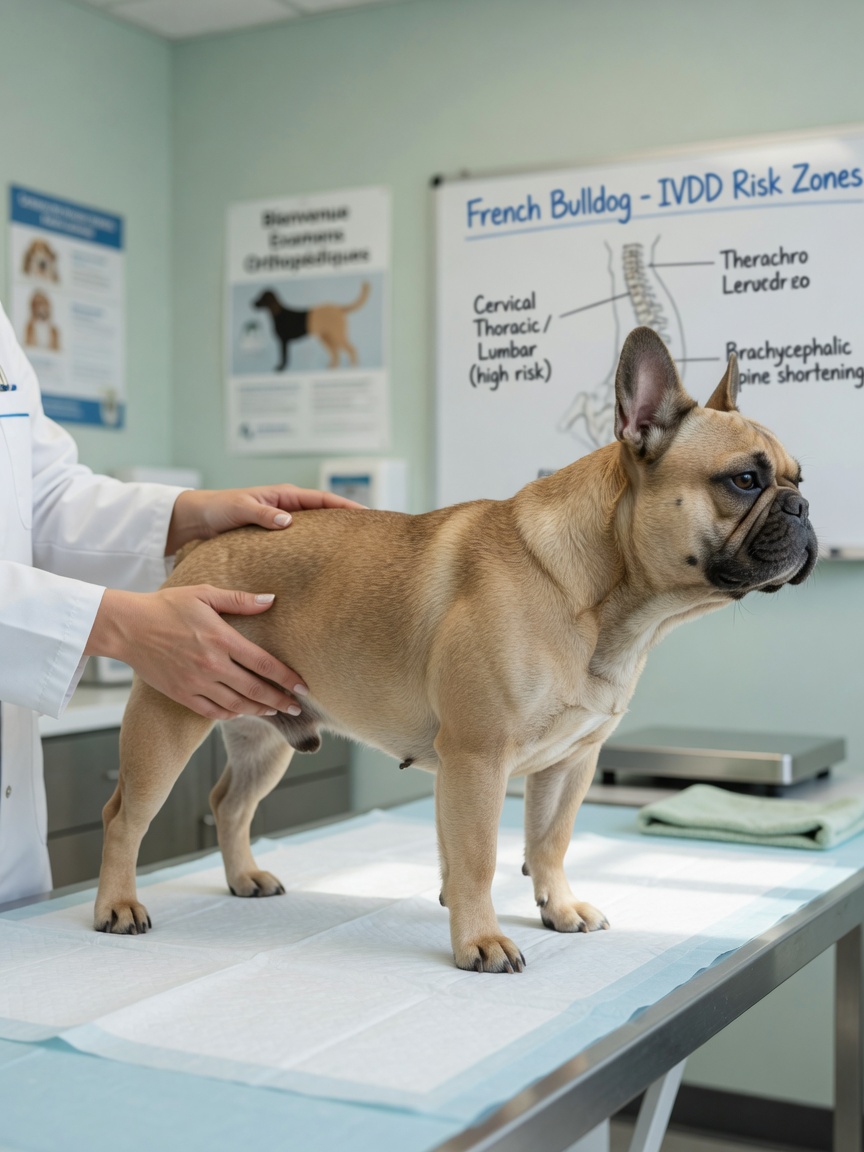
French Bulldogs belong to a group of breeds known as chondrodystrophic dogs — others include Dachshunds, Pugs, and Bulldogs. This is the same genetic trait responsible for their short legs and compact bodies, and it affects far more than limb length. It causes the intervertebral discs, which normally act as shock-absorbing cushions between the vertebrae, to degenerate prematurely. Instead of remaining soft and flexible, the discs mineralise (calcify) at a young age, becoming brittle and prone to sudden rupture or bulging into the spinal canal.
This condition, IVDD, most commonly affects the middle to lower back (thoracolumbar spine) in French Bulldogs, though the neck can also be involved. When a disc herniates, it can put pressure on the spinal cord, causing pain, weakness, incoordination, or in severe cases, paralysis.
Frenchies are also frequently affected by other spinal abnormalities that can occur alongside or independently of IVDD, including:
- Hemivertebrae — wedge- or butterfly-shaped vertebrae that form abnormally during development, sometimes causing a visibly kinked or twisted spine (often seen as part of "screw tail").
- Spinal instability or malformation in the mid-back region, which can contribute to compression of the spinal cord over time.
Their body shape compounds the problem. A long back relative to short legs, combined with a heavy, barrel-shaped chest, places uneven mechanical stress on the spine. Add to this a tendency toward obesity and reduced exercise tolerance (often linked to their brachycephalic airways), and you have a breed whose skeleton is working against it from a young age.
Early Signs and Symptoms to Watch For
IVDD symptoms can appear gradually or come on with alarming speed. Because French Bulldogs are stoic and often reluctant to show pain openly, owners need to watch for subtle changes as much as obvious ones.
- Reluctance to jump onto furniture, into the car, or up stairs
- A hunched back or lowered head carriage
- Yelping or snapping when picked up or touched near the back
- Stiffness, especially after rest
- A wobbly, uncoordinated, or "drunken" gait in the back legs
- Dragging or scuffing of the paws, or knuckling over
- Reduced appetite or general lethargy
- Trembling or shaking without an obvious cause
- Reluctance to toilet normally, or accidents in a previously house-trained dog
Any one of these, even if mild, is worth a same-day conversation with your vet. Milder disc bulges can sometimes be managed conservatively if caught early, whereas waiting can allow a partial injury to progress to something far more serious.
When It's an Emergency
Some signs mean you should go straight to a vet or emergency clinic, not wait for a routine appointment. These include:
- Sudden inability to use the back legs, or dragging them
- Loss of bladder or bowel control
- Crying out in pain that doesn't settle
- A dog that is unwilling to move at all, held rigid, or collapsed
- Loss of sensation in the back legs or tail (your vet can check this, but a dog that doesn't react at all to a gentle pinch on a toe is a red flag)
With severe spinal cord compression, there is often a narrow window — commonly discussed in terms of hours rather than days — where surgical decompression gives the best chance of recovery. Every hour of delay can matter, so if in doubt, treat it as urgent.
Diagnosis
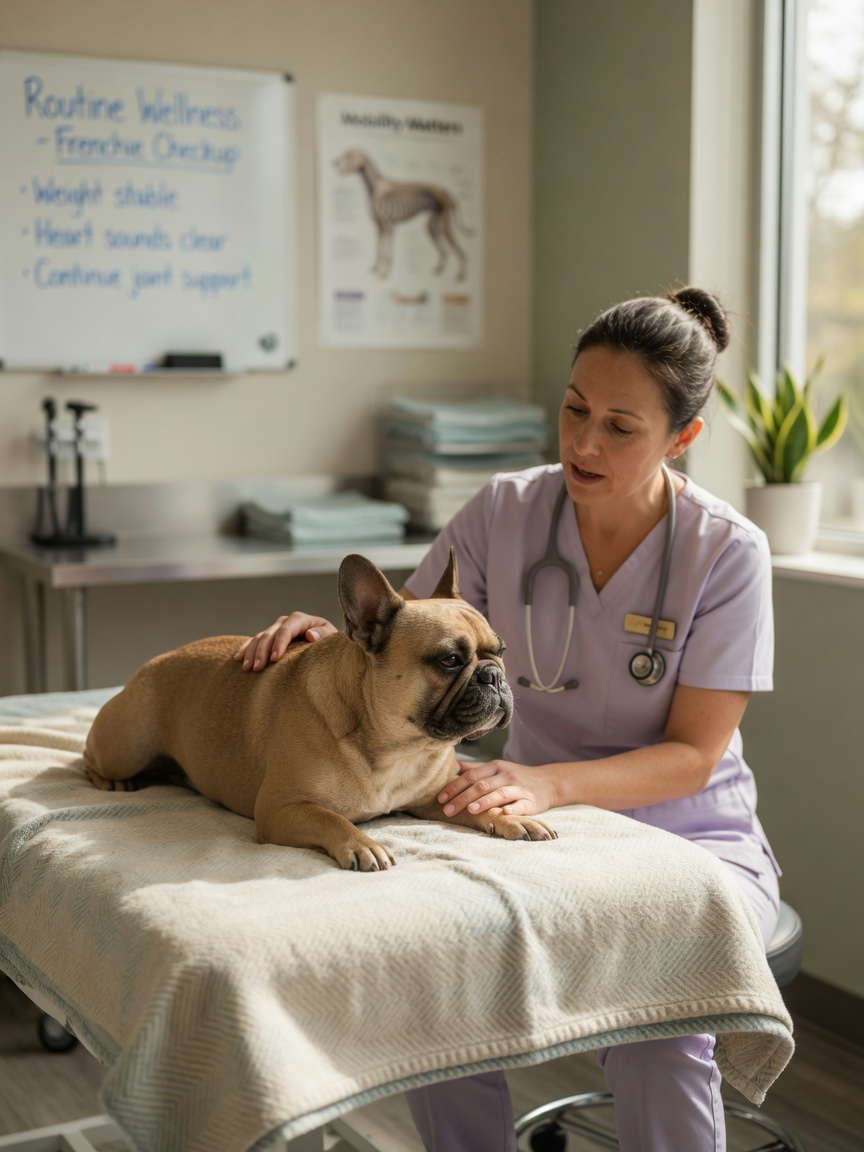
A vet will start with a full neurological examination, checking reflexes, pain response, and the ability to sense where the paws are in space (proprioception). This helps localise roughly where along the spine the problem sits and gives an early sense of severity.
Definitive diagnosis of IVDD requires advanced imaging, because X-rays alone cannot show soft tissue or spinal cord compression clearly. The gold standard is an MRI scan, which gives a detailed picture of the discs, spinal cord, and any compression. CT scans are sometimes used, particularly alongside myelography, when MRI isn't available. These scans usually require referral to a specialist veterinary neurologist or a practice with advanced imaging, and often involve general anaesthesia.
Management and Treatment Options
Treatment depends heavily on severity, measured largely by how much neurological function remains.
- Conservative (medical) management — strict crate rest for several weeks, anti-inflammatory or pain medication, and sometimes muscle relaxants. This may be appropriate for dogs with pain but no significant loss of movement or sensation, though recurrence is possible.
- Surgical decompression — for dogs with significant weakness, paralysis, or loss of deep pain sensation, surgery to remove the offending disc material and relieve pressure on the spinal cord offers the best chance of recovery, ideally performed promptly.
- Rehabilitation — physiotherapy, hydrotherapy, and controlled exercise programmes play a major role in recovery after both surgical and conservative treatment, helping rebuild strength and coordination.
- Ongoing supportive care — for dogs with lasting deficits, this may include mobility aids, bladder management, and adapted home environments.
Recovery varies enormously between individual dogs. Some regain full function within weeks; others are left with permanent weakness or need ongoing support. A veterinary neurologist is best placed to give a realistic prognosis based on your dog's specific scan findings and neurological status.
Prevention and Daily Care
You cannot change your French Bulldog's genetics, but you can meaningfully reduce mechanical stress on their spine day to day.
- Maintain a lean body weight. Excess weight is one of the most significant modifiable risk factors for back problems in this breed.
- Use ramps or steps for sofas, beds, and cars rather than allowing repeated jumping.
- Switch to a harness rather than a collar, reducing strain on the neck and upper spine.
- Avoid rough play that involves twisting, jumping, or being caught mid-air.
- Keep exercise regular but moderate — consistent, gentle activity supports muscle tone around the spine better than occasional bursts of intense exercise.
- Provide good footing at home; slippery floors increase the risk of slips that can trigger disc injury.
- Attend regular veterinary check-ups, including discussion of back health, especially as your dog ages.
If you're still researching the breed's wider health picture, the French Bulldog breed guide covers other common conditions worth understanding alongside spinal health.
Cost and Prognosis Realism
IVDD care can be genuinely expensive. Advanced imaging, specialist referral, and spinal surgery are significant costs, and rehabilitation and follow-up add further expense over weeks to months. Pet insurance taken out while your dog is young and healthy, before any back symptoms appear, can make a real difference if surgery is later needed.
Prognosis is closely tied to how quickly treatment begins and how severe the neurological signs are at diagnosis. Dogs that retain the ability to feel deep pain in their back legs generally have a better outlook than those that have lost it entirely. Recurrence is also possible, since chondrodystrophic dogs often have disease affecting multiple discs, not just the one that caused the initial episode.
Frequently Asked Questions
Can a French Bulldog recover fully from IVDD?
Many dogs do recover well, particularly those treated promptly with mild to moderate symptoms. Dogs with severe paralysis or loss of deep pain sensation have a more guarded prognosis, though some still regain useful function with surgery and rehabilitation. Recovery is individual, so it's best discussed with the treating vet or neurologist based on your dog's scans.
Is surgery always necessary?
No. Dogs with mild signs — pain but no significant weakness — may be managed conservatively with strict rest and medication. Surgery becomes more strongly recommended when there's significant weakness, paralysis, or loss of sensation, where it offers the best chance of a good outcome.
Should I avoid stairs and jumping altogether?
Complete avoidance isn't usually necessary, but minimising repeated jumping on and off furniture and controlling access to stairs (via ramps, barriers, or carrying) reduces cumulative strain on a spine that's already predisposed to disc problems. Small, consistent adjustments matter more than occasional total restriction.
This article is for general information only and does not replace professional veterinary advice. Always consult a vet for accurate diagnosis and treatment of your dog's individual condition.