

French Bulldogs are prone to a cluster of eye problems largely because of their flat-faced (brachycephalic) skull shape, which leaves their eyes shallow-set, exposed, and vulnerable to injury and disease. The single most important thing to know is that eye problems in this breed can go from mild to sight- or eye-threatening within hours, so any sudden squinting, redness, cloudiness, or discharge deserves same-day veterinary attention rather than a "wait and see" approach.
Why French Bulldogs Are So Prone to Eye Problems
The French Bulldog's charming flat face is the direct cause of most of its eye troubles. Breeding for a short muzzle has also shortened and flattened the eye sockets, meaning the eyeballs sit more prominently forward and are less protected by bone, eyelid, and tear film than in a longer-nosed dog. This anatomy underlies several well-recognised predispositions in the breed:
- Corneal ulcers and abrasions – shallow orbits mean the cornea is more exposed to trauma, dust, and drying, making scratches and ulcers common.
- Ulcerative keratitis in brachycephalic dogs – sometimes complicated by exposure and reduced blinking, this can progress quickly.
- Entropion – inward rolling of the eyelid, common in wrinkly, short-faced breeds, which causes eyelashes and fur to rub against the cornea.
- Macroblepharon and eyelid conformation issues – an unusually large or loose eyelid opening can leave more of the eye exposed and prone to drying.
- Cherry eye (prolapse of the third eyelid gland) – the gland behind the third eyelid can pop out of position, appearing as a pink lump in the corner of the eye.
- Dry eye (keratoconjunctivitis sicca) – reduced tear production or poor tear distribution, worsened by prominent eyes that don't blink fully.
- Pigmentary keratitis – chronic irritation can lead to dark pigment developing across the cornea, which may impair vision over time.
- Cataracts and progressive retinal issues – less specific to the breed's face shape but seen in French Bulldogs as in many purebred dogs, sometimes with a genetic component.
Because so many of these conditions share overlapping symptoms, owners often can't tell them apart at home — which is exactly why prompt veterinary assessment matters.
Early Signs and Symptoms to Watch For
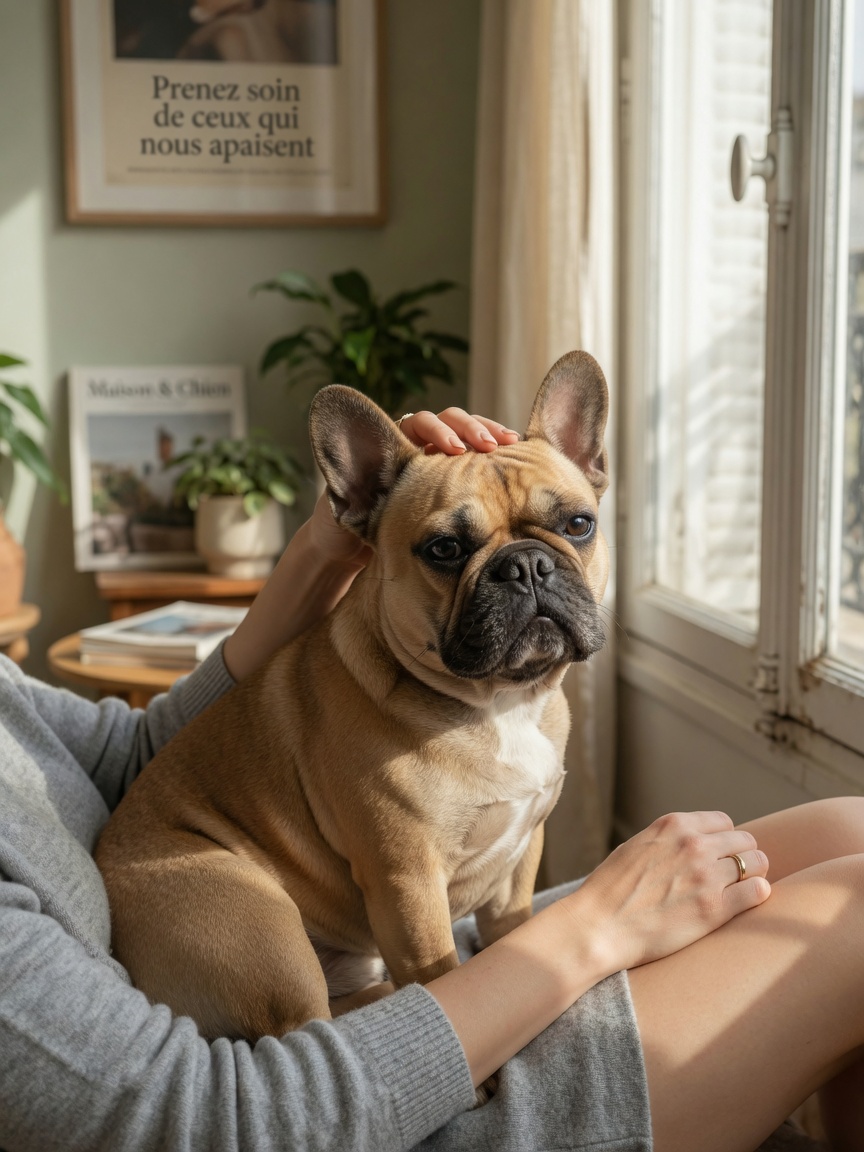
French Bulldog owners should get into the habit of looking closely at their dog's eyes regularly, as early signs are often subtle. Watch for:
- Squinting or holding one eye partially or fully closed
- Excessive blinking or pawing at the eye
- Redness of the white part of the eye or the rims
- Watery, mucousy, or yellow-green discharge
- A cloudy, blue-grey, or hazy appearance to the cornea
- A visible pink lump in the inner corner of the eye (possible cherry eye)
- Rubbing the face along furniture or carpets
- Reluctance to go outside in bright light, or apparent sensitivity to light
- One eye looking noticeably different in size, shape, or moisture compared with the other
Any of these signs, even if mild, warrant a phone call to your vet the same day. Eye issues in flat-faced breeds are notorious for worsening faster than owners expect.
When Is It an Emergency?
Some presentations need urgent same-day or emergency care rather than a routine appointment. Treat the following as urgent:
- Sudden, severe squinting with the eye held tightly shut
- The eyeball appears to bulge, protrude, or is visibly out of its socket (proptosis) — this is a true emergency in brachycephalic breeds and can happen with relatively minor trauma or even restraint around the neck
- A cloudy or white area appearing suddenly on the cornea
- Visible blood in the eye
- Sudden apparent blindness or bumping into objects
- Thick discharge combined with obvious pain
- Any suspected foreign body (grass seed, splinter) in or under the eyelid
Because French Bulldogs have prominent eyes and shallow sockets, they are also at heightened risk of proptosis (the eyeball popping forward out of the socket) during rough play, fights, or even being scruffed. This is always an emergency requiring immediate veterinary attention.
Diagnosis
Vets diagnose eye conditions in French Bulldogs using a combination of a thorough physical and ophthalmic examination, often supported by:
- Fluorescein staining – a dye applied to the eye that highlights corneal ulcers or abrasions under blue light
- Schirmer tear test – measures tear production to check for dry eye
- Tonometry – measures intraocular pressure to rule out glaucoma
- Slit-lamp examination – a magnified view of the cornea, lens, and front of the eye
- Referral to a veterinary ophthalmologist – for complex, recurrent, or deep ulcers, cataracts, or suspected retinal disease
Given how quickly some conditions in this breed can escalate, don't be surprised if your vet recommends immediate treatment alongside diagnostics rather than waiting for results before acting.
Management and Treatment Options
Treatment depends entirely on the specific diagnosis, but common approaches include:
- Medicated eye drops or ointments – antibiotic, anti-inflammatory, or lubricating, often applied multiple times daily for corneal ulcers or dry eye
- Surgical correction of entropion – a relatively straightforward procedure to reposition the eyelid and stop it rubbing on the cornea
- Cherry eye surgery – the prolapsed gland is typically repositioned (not removed, as removal raises the risk of dry eye later) rather than removed
- Tear stimulant medications – such as ciclosporin-based drops for keratoconjunctivitis sicca
- Protective collars (Elizabethan collars) – to prevent self-trauma while healing
- Surgical repair for deep or non-healing ulcers – including grafts or third eyelid flaps in severe cases
- Long-term management of pigmentary keratitis – ongoing lubrication and monitoring to slow progression
Most straightforward cases, such as a simple corneal abrasion or an early cherry eye, respond well to prompt treatment. More complex or recurrent problems may need ongoing management for the dog's lifetime.
Prevention and Daily Care
You can't change your French Bulldog's face shape, but you can reduce risk with sensible daily habits:
- Wipe away discharge and check the eyes daily as part of your grooming routine
- Keep facial folds clean and dry to reduce irritation near the eyes
- Avoid rough play that involves grabbing around the head or neck
- Use a harness rather than a collar to avoid pressure changes around the head and eyes
- Protect your dog from long grass, dusty environments, and direct wind (such as sticking their head out of car windows)
- Book regular veterinary check-ups, and mention any eye concerns promptly rather than waiting for the next routine visit
- Ask your vet whether lubricating drops might help if your dog's eyes look dry or prominent
If you're considering or have recently welcomed a French Bulldog, it's worth reading the French Bulldog breed guide to understand how their body shape influences several areas of health, not just their eyes.
Cost and Prognosis Realism
Eye problems in French Bulldogs range enormously in cost and outlook. A simple corneal abrasion treated early with drops may resolve within a week or two at modest cost. Entropion or cherry eye surgery involves a higher one-off cost but usually has a good, lasting outcome. Chronic conditions such as dry eye or pigmentary keratitis, however, often require lifelong medication and monitoring, which adds up over your dog's life. Severe or neglected ulcers can require emergency surgery and, in the worst cases, loss of the eye. The realistic takeaway is that early intervention is almost always cheaper and has a better prognosis than delayed treatment, which is a strong argument for acting quickly whenever you notice a problem.
Frequently Asked Questions
Why does my French Bulldog's eye look red and watery but they don't seem in pain?
Mild redness and watering can sometimes be due to environmental irritation, allergies, or early dry eye, but it can also be an early sign of an ulcer or infection that hasn't become painful yet. It's still worth having it checked promptly, as some serious conditions in this breed start subtly.
Is cherry eye an emergency, or can it wait for a routine appointment?
Cherry eye itself isn't usually an immediate emergency, but it shouldn't be ignored, as the exposed gland can become irritated, dry, or infected. Book an appointment within a few days rather than leaving it indefinitely.
Can I do anything at home before I get to the vet if my dog is squinting?
Avoid putting anything in the eye yourself unless your vet has specifically advised it, as some medications and home remedies can worsen certain conditions, particularly ulcers. Prevent your dog from rubbing the eye with their paw or on furniture, and contact your vet as soon as possible.
This article is for general informational purposes only and does not replace professional veterinary advice. Always consult your vet for an accurate diagnosis and appropriate treatment for your dog's individual condition.