
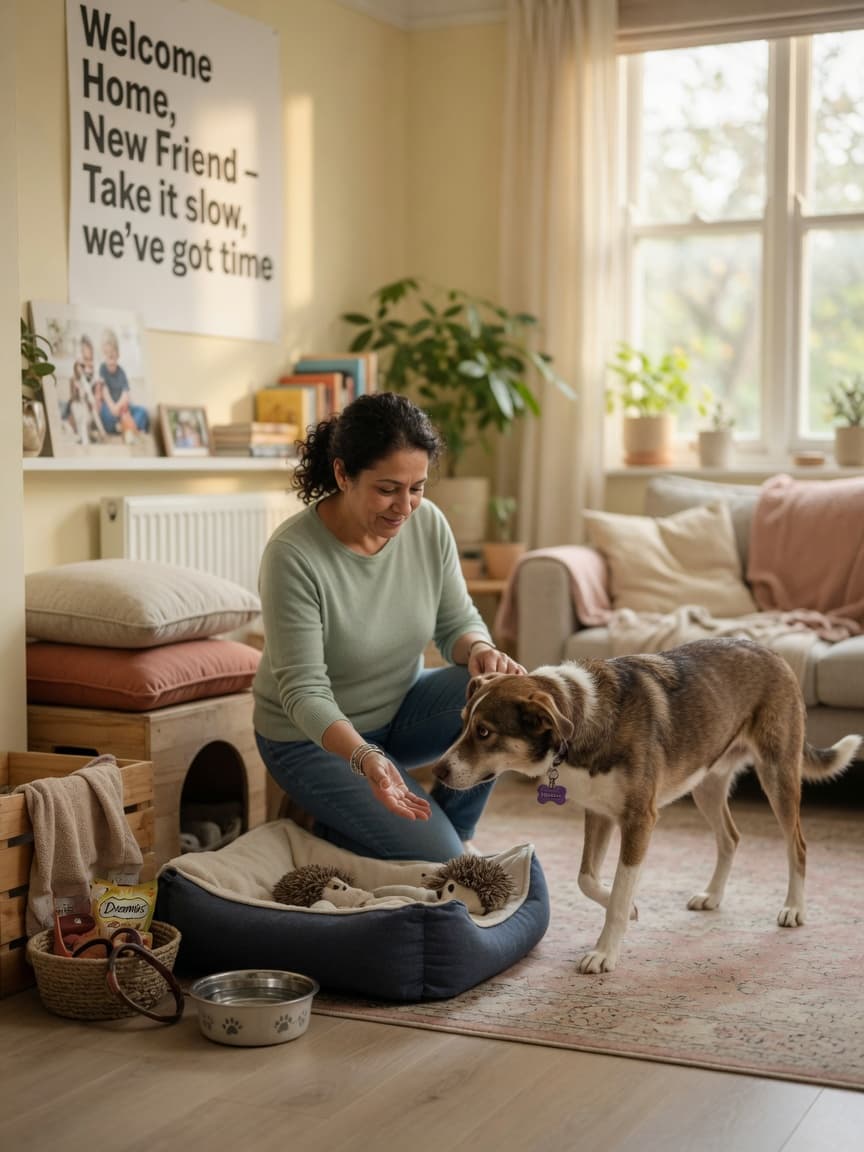
The Quiet Crisis Behind Rescue Centre Walls
UK rescue organisations routinely operate beyond capacity. During peak intake periods — summer, post-Christmas, following economic hardship — many centres face the impossible choice between turning animals away and compromising their welfare through overcrowding. Foster carers are not a luxury feature of the rescue system. They are the mechanism that keeps it functioning.
Fostering means temporarily housing an animal in your home while they await adoption, recover from illness or surgery, or decompress from a kennel environment. It is not adoption. It is not a trial run. It is a distinct, defined role that requires specific preparation and clear boundaries — and it is one of the most impactful things an animal lover can do without making a permanent commitment.
What Fostering Actually Involves
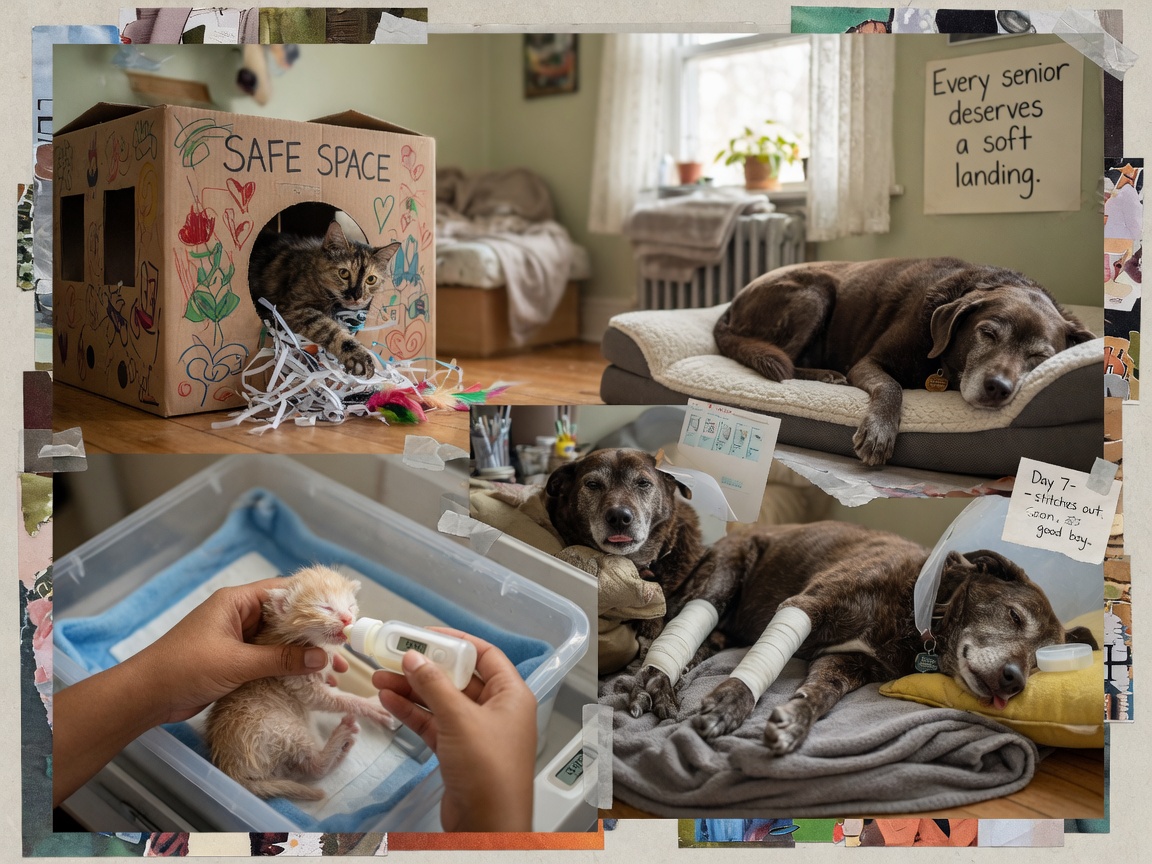
The types of foster placement
- Emergency fostering: short-notice, often 24 to 72 hours, for animals in immediate crisis
- Behavioural fostering: for animals who need a home environment rather than a kennel to decompress and be assessed accurately
- Medical fostering: for animals recovering from surgery, illness, or injury who need monitoring and medication management
- Neonatal fostering: for orphaned or rejected kittens or puppies requiring round-the-clock feeding
- Long-term fostering: for animals who are difficult to place — elderly, chronically ill, or with complex behavioural needs
When registering with a rescue organisation, be specific about which types of foster placement you can realistically offer. Honesty upfront prevents distressing outcomes for both you and the animal.
What the rescue organisation provides
Reputable rescues cover all veterinary costs for foster animals, provide food and essential supplies, offer guidance and support, and maintain liability for the animal throughout the placement. You are providing housing and care — they are providing everything else. If an organisation expects you to fund veterinary treatment from your own pocket, this is a serious red flag.
What You Need at Home
Physical space
You do not need a large house. You need a space where a foster animal can be contained safely, away from existing pets during an initial quarantine period. A spare bedroom, a utility room, or a large bathroom can serve as an adequate introduction space for cats. Dogs need secure outdoor access and a calm indoor zone.
Existing pets
Having existing pets does not disqualify you from fostering, but it does require honest assessment. A rescue organisation will match you with foster animals appropriate to your household. A household with a resident cat is unlikely to be placed with a dog-reactive foster dog, for example. Be transparent about your animals' histories and temperaments when you apply.
Time and emotional bandwidth
This is the honest part that organisations sometimes underemphasise. Fostering takes time — for feeding, observation, socialisation, and administrative communication with the rescue. Medical fosters and neonatal cases are particularly demanding. Assess your schedule realistically before committing, and do not underestimate the emotional weight of saying goodbye when the animal is adopted.
Preparing Your Home
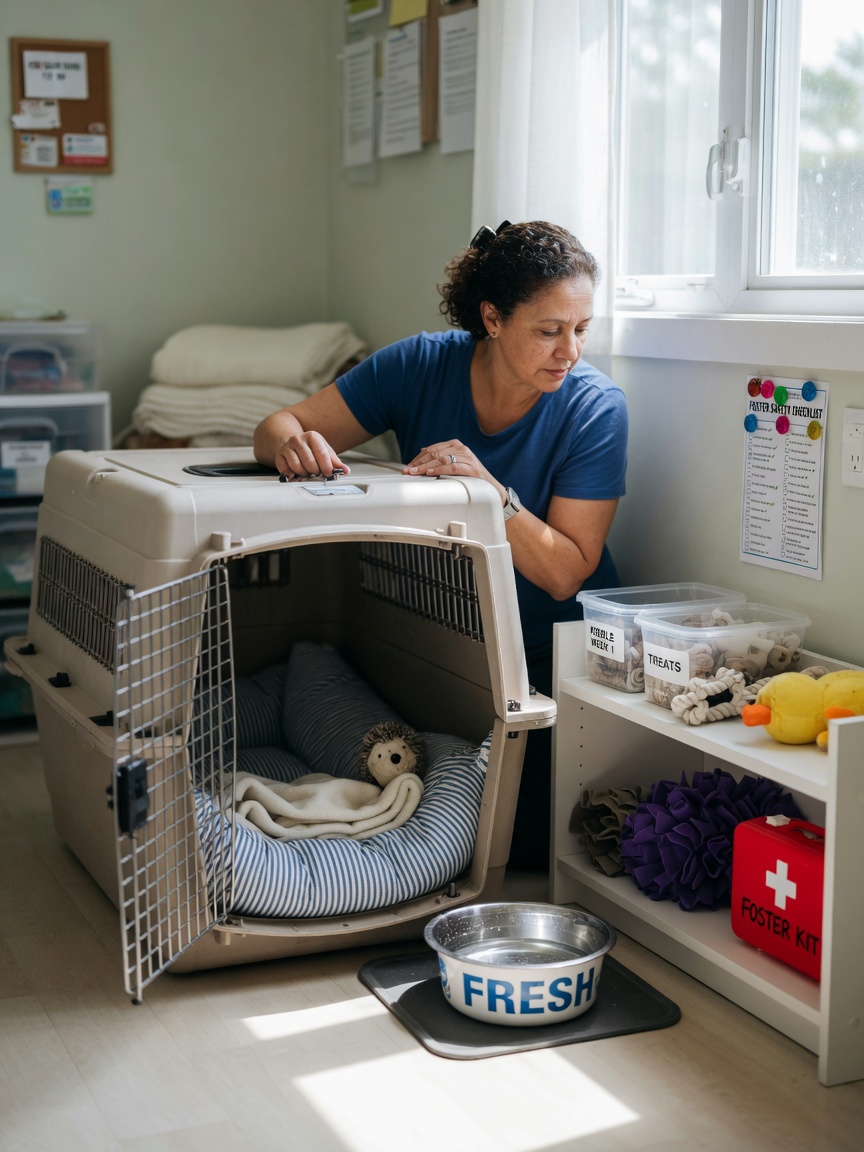
- Pet-proof the foster space: check for escape routes, toxic plants, accessible chemicals, and small ingestible items
- Purchase basic supplies before the animal arrives: appropriate food, bedding, a carrier or crate, and enrichment items
- Register with a local veterinary practice as a foster carer — some practices offer discounted rates for rescue fosters
- Create a quiet, low-stimulation zone away from the busiest areas of the house
- Brief all household members, including children, on appropriate interaction before the animal arrives
The First Days of a Foster Placement
Treat the first 48 to 72 hours as a decompression window. Allow the animal to explore their designated space without pressure. Observe appetite, toileting, and behaviour, and report anything unusual to your rescue contact. Many foster animals have come from chaotic environments and will appear shut down initially — this is normal and not indicative of long-term temperament.
Document everything. Good fosters provide rescue organisations with detailed notes on behaviour, preferences, fears, and social responses. This information becomes part of the animal's profile and helps match them to the right adopter more accurately than any kennel-based assessment could.
When Fostering Becomes Difficult
Foster failure — the affectionate term for adopting an animal you were meant to foster — is genuinely common. It is not a failure. It is a decision, and it should be made clearly rather than by default. If you are considering adopting your foster animal, discuss it openly with the rescue organisation rather than allowing the placement to simply extend indefinitely.
Equally, if a placement is not working — if the foster animal is causing significant distress to existing pets, if a behavioural need exceeds your capacity, or if your circumstances change — contact your rescue organisation promptly. There is no shame in returning an animal when the alternative is a placement that is failing everyone involved.
Getting Started
- Contact two or three local rescue organisations and ask about their foster programmes
- Complete a home visit and application honestly — this protects you as much as the animal
- Be specific about what types of foster placement suit your household and schedule
- Prepare your home before the first placement arrives, not during
- Keep detailed welfare notes throughout — your observations are genuinely valuable
- Build a relationship with a local vet who understands your foster role
- Know that returning a placement when it is not working is responsible, not irresponsible