
The Science Behind Why Aversive Training Harms More Than Behaviour
The debate around dog training methods has become increasingly evidence-based over the past two decades, and the evidence is unambiguous: training that relies on punishment, pain, or fear does not simply carry ethical concerns — it carries genuine physiological consequences for the dog. Understanding the biology behind this helps move the conversation away from preference and into the realm of welfare science.
What Counts as Punishment-Based Training
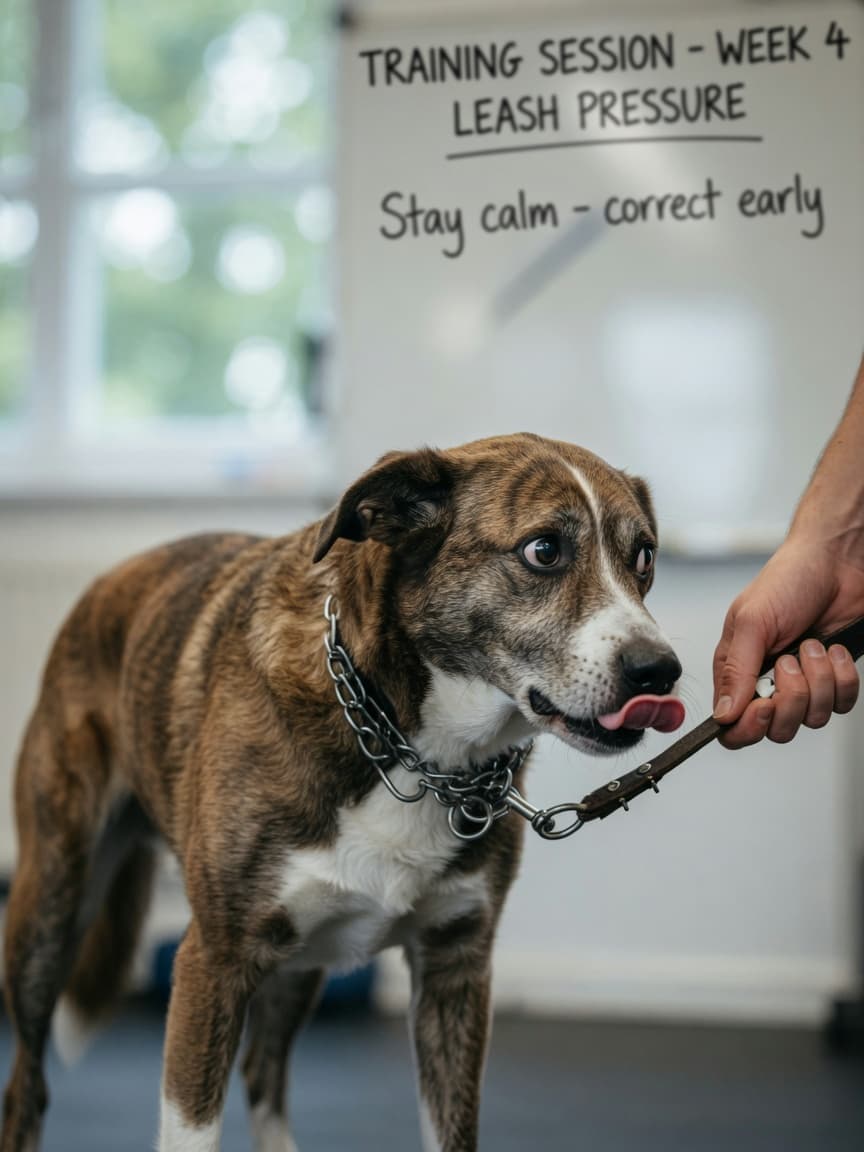
Punishment-based, or aversive, training encompasses a wide range of tools and techniques. At the more obvious end sit prong collars, choke chains, and electronic shock collars. But aversive methods also include alpha rolls, scruff shakes, leash corrections delivered with sufficient force to cause discomfort, and any training approach in which the primary motivator is the dog's desire to avoid something unpleasant rather than their motivation to earn something rewarding.
The key mechanism here is fear conditioning. The dog learns to perform or inhibit a behaviour not because they understand what is wanted and find engagement rewarding, but because incorrect behaviour has been associated with an aversive outcome. The distinction matters enormously when you look at what is happening neurologically and hormonally during that learning process.
Cortisol and the Trained Dog's Stress Response

Multiple peer-reviewed studies have now measured salivary cortisol levels in dogs trained using different methods. A landmark study published in the journal Applied Animal Behaviour Science compared dogs trained with shock collars, dogs trained with prong or choke collars, and dogs trained using reward-based methods. The shock collar and punishment groups showed significantly higher cortisol levels both during and after training sessions, as well as more stress-related behaviours including yawning, lip-licking, lowered body posture, and reduced playfulness.
Elevated cortisol is not merely a marker of an unpleasant experience in the moment. As explored in the context of chronic stress, persistently raised cortisol suppresses immune function, disrupts gut health, delays wound healing, and compromises cardiovascular regulation. A dog who attends regular training sessions built around aversive methods is not simply learning commands with an unpleasant side effect — they are being subjected to a recurring physiological stress event.
Learned Helplessness and Its Physical Manifestations
When punishment is unpredictable or unavoidable — when the dog cannot determine a reliable way to make the aversive stimulus stop — a state known as learned helplessness can develop. First described in landmark animal behaviour research by Martin Seligman, learned helplessness produces a characteristic shutdown response: the animal stops trying to respond, becomes passive, and shows blunted emotional expression.
In dogs, learned helplessness is sometimes misread as obedience. The dog is still, compliant, not pulling or jumping. But the stillness comes not from understanding and trust but from a nervous system that has learned that effort is futile. Physiologically, this state is associated with dysregulated stress hormone systems, altered pain sensitivity, suppressed appetite, and depressed immune function. The compliant dog may look trained but is often a dog in chronic psychological distress.
Pain, Injury, and Association
Prong and choke collars function by creating discomfort or pain around the trachea and cervical spine. The intended mechanism is that the dog avoids the aversive sensation by walking calmly or responding to commands. The unintended consequences are well-documented: tracheal damage, cervical disc injury, and nerve impingement have all been reported in dogs trained regularly with these devices.
Beyond direct physical injury, there is the problem of association. Dogs do not have access to human explanations. When a dog on a lead receives a sharp collar correction as another dog passes by, the most salient piece of information in that moment may not be the handler's intended message but rather the pain and the presence of the other dog. In this way, aversive corrections frequently create or worsen leash reactivity — the very problem they are often used to address.
The Microbiome and Behavioural Health
Emerging research into the gut-brain axis in companion animals is revealing just how thoroughly psychological state affects physical health at a microbial level. Dogs experiencing chronic stress from aversive handling show measurable shifts in gut microbiota, with reductions in beneficial bacterial populations and increased inflammatory markers in intestinal tissue. These shifts are associated with digestive upset, food sensitivities, and altered immune responses.
Interestingly, some of these microbiome changes appear to persist even after the aversive training is discontinued, suggesting that the damage is not simply reset when training methods change. This does not mean recovery is impossible — the gut microbiome is adaptable — but it underscores that the effects of aversive training are not purely psychological or immediate.
What Force-Free Training Does Instead

Reward-based training activates the dog's dopaminergic system — the circuitry associated with motivation, anticipation, and pleasure. Dogs trained with positive reinforcement show lower baseline cortisol, higher engagement during training sessions, greater confidence in novel environments, and improved ability to recover from startling events. They also generalise learning more effectively, meaning behaviours learned in one context transfer more reliably to real-world situations.
- Lower salivary cortisol during and after training sessions
- Fewer stress-related behaviours such as lip-licking and yawning
- Greater enthusiasm at the start of training — dogs actively solicit sessions
- Better performance in novel environments with unfamiliar distractions
- Stronger human-animal bond, associated with reduced baseline anxiety
Choosing a Trainer: What to Look For
The dog training industry remains largely unregulated in most countries. Anyone can call themselves a dog trainer regardless of qualification or methodology. When seeking professional help, look for trainers who hold accreditation from organisations that require demonstrated competency in animal learning theory — such as the Association of Professional Dog Trainers or the Certification Council for Professional Dog Trainers. Ask directly whether they use any aversive tools or techniques, and walk away from any trainer who uses the phrase "balanced training" as a euphemism for mixing reward with punishment.
Force-free training is not the soft option. It demands skill, timing, and a thorough understanding of reinforcement schedules and behaviour shaping. What it does not require is causing a dog distress in order to achieve results. For a dog's behavioural outcomes and their physical health alike, the evidence firmly supports that this is the right approach.