
How Feline Epilepsy Differs From Canine Epilepsy
Epilepsy in cats is less common than in dogs, but it is by no means rare. The single most important distinction between the two species is this: in cats, structural epilepsy — seizures caused by an identifiable underlying disease — is more common than idiopathic epilepsy, where no cause can be found. This is the reverse of the situation in dogs, where idiopathic (genetic) epilepsy predominates. For this reason, thorough investigation of the cause of seizures in a cat is always warranted and should not be skipped simply because the cat appears otherwise well.
Common Underlying Causes in Cats
Metabolic Causes
Metabolic disturbances are an important and treatable cause of feline seizures. Hepatic encephalopathy — in which the liver fails to adequately clear toxins from the blood, leading to brain dysfunction — can be caused by a portosystemic shunt (an abnormal blood vessel bypassing the liver, more common in young cats) or by acquired liver disease in older individuals. Hypoglycaemia (low blood sugar), hyponatraemia (low sodium), and uraemia (kidney failure causing toxic accumulation in the blood) can all cause seizure activity.
Infectious and Inflammatory Causes
Feline infectious peritonitis (FIP), caused by a mutated feline coronavirus, can affect the brain and cause seizures — the neurological form of FIP should always be considered, particularly in young cats. Toxoplasma gondii infection can cause encephalitis and seizures. Cryptococcus neoformans, a fungal infection, is a relevant cause in some European regions. Feline immunodeficiency virus (FIV) can lead to central nervous system disease and seizures in chronically infected cats.
Vascular Causes
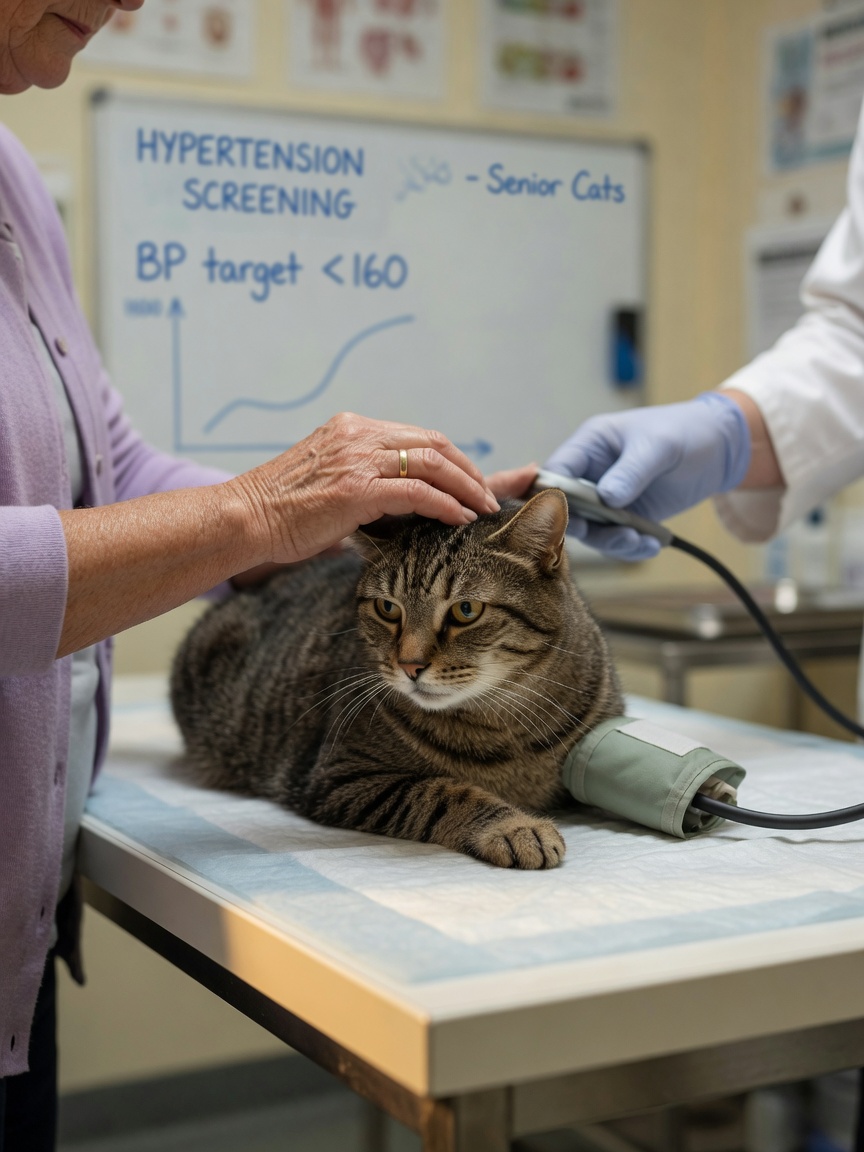
Hypertension-related cerebrovascular accidents — effectively strokes caused by chronically elevated blood pressure — are a very common and often overlooked cause of seizures in middle-aged and older cats. Hypertension in cats is strongly associated with chronic kidney disease (CKD) and hyperthyroidism, both of which are common in older cats. Feline ischaemic encephalopathy can also occur, and in some geographical areas Cuterebra larval migration through brain tissue is a recognised cause.
Structural Brain Disease
Meningioma is the most common brain tumour in cats. It typically affects the frontal lobes, grows slowly, and in some cases can be surgically removed — making it unique among brain tumours in the relatively favourable surgical outcomes possible in cats compared to other species. Brain lymphoma is another structural cause to consider.
Toxins
Permethrin toxicity deserves special emphasis. Many dog flea products contain permethrin — a synthetic pyrethroid insecticide — at concentrations that are safe for dogs but profoundly toxic to cats. Applying a dog permethrin product to a cat, or allowing a recently treated dog to groom or sleep closely with a cat, can cause severe and life-threatening seizures and muscle tremors. This is a common and entirely preventable emergency in UK and European veterinary practice. If a cat develops acute-onset tremors or seizures and there is any possibility of contact with a dog flea product, this must be communicated to the vet immediately.
Idiopathic Epilepsy in Cats
Idiopathic epilepsy — seizures with no identifiable underlying cause — does occur in cats, though it is a diagnosis of exclusion. All other causes must be carefully investigated and excluded before this label can be applied. Certain breeds may have a higher prevalence, but this is less well characterised in cats than in dogs. Cats with idiopathic epilepsy can generally be managed well long-term with appropriate medication.
How Seizures Present in Cats

Seizures in cats may look somewhat different from those seen in dogs. Focal seizures are relatively common in cats and can be subtle — facial twitching, rhythmic chewing or salivation, dilated pupils, sudden vocalisation, or episodes of apparently unprovoked aggression or exaggerated affection. These can easily be mistaken for behavioural changes rather than neurological events. Generalised tonic-clonic seizures do occur and are more readily recognised.
The post-ictal phase in cats includes disorientation, temporary blindness, and apparent confusion that can last from minutes to several hours. Cats often hide during and after a seizure. Owners who suspect their cat is having seizures — particularly if episodes are subtle — should try to video an episode on their phone; footage is invaluable to the consulting vet.
Emergency Situations
The same emergency criteria that apply to dogs apply equally to cats. A seizure lasting more than five minutes, or two or more seizures without full recovery between them, constitutes status epilepticus and is a life-threatening emergency requiring immediate veterinary care. Cluster seizures — two or more seizures within 24 hours — also require urgent attention. Emergency treatment involves intravenous diazepam or midazolam to stop seizure activity. Do not attempt to manage either of these situations at home without veterinary guidance.
What to Do During a Feline Seizure
The principles are the same as for dogs. Do not restrain the cat. Do not place your hands near the cat's mouth — a seizing cat can bite severely without any intention to do so. Clear the area around the cat to prevent injury. Dim lights and reduce noise as much as possible. Time the seizure accurately. Keep yourself calm. Contact your vet if the seizure lasts more than two to three minutes or if the cat does not recover fully between episodes. Reassure the cat quietly during the post-ictal phase once the seizure has ended.
Diagnosis
Diagnostic work-up for a cat presenting with seizures should include a full blood panel to assess organ function and identify metabolic causes, measurement of blood pressure (essential in any adult cat with seizures — hypertension is common and treatable), FeLV and FIV testing, urinalysis, and abdominal and thoracic imaging to look for systemic disease or evidence of infection. Where available and clinically indicated, MRI of the brain provides the most detailed assessment of structural pathology. CSF analysis can be performed following MRI if inflammatory or infectious central nervous system disease is suspected.
Treatment
Treatment of the underlying cause is the most important principle in feline epilepsy management. Controlling hypertension, managing hyperthyroidism, treating FIP with antiviral medication (GS-441524, now available in many countries), or surgically resecting a meningioma — these interventions address the seizures at their root cause.
Where anticonvulsant medication is needed, the following are used in cats:
- Phenobarbital: The most commonly used anticonvulsant in cats. Cats metabolise phenobarbital differently to dogs — lower doses are often effective and dosing intervals may differ. Regular monitoring of blood levels and liver function is required.
- Levetiracetam: Increasingly used in cats due to its favourable safety profile. Standard formulations require dosing three times daily, which can be challenging; extended-release formulations may allow less frequent dosing.
- Potassium bromide: This drug must never be used in cats. It causes severe and potentially fatal bronchopneumonia in felines and is absolutely contraindicated.
Monitoring and Prognosis
Regular blood pressure monitoring, blood panels, and a seizure diary are important components of long-term management. Prognosis in feline epilepsy depends almost entirely on the underlying cause. Hypertension-related seizures that are well controlled with antihypertensive medication can carry an excellent prognosis. FIP, once uniformly fatal, now has effective antiviral treatment options in many cases. Idiopathic epilepsy in cats is often manageable long-term. Working closely with a veterinary surgeon — and in complex cases a specialist veterinary neurologist — gives the best chance of a good quality of life for cat and owner alike.