
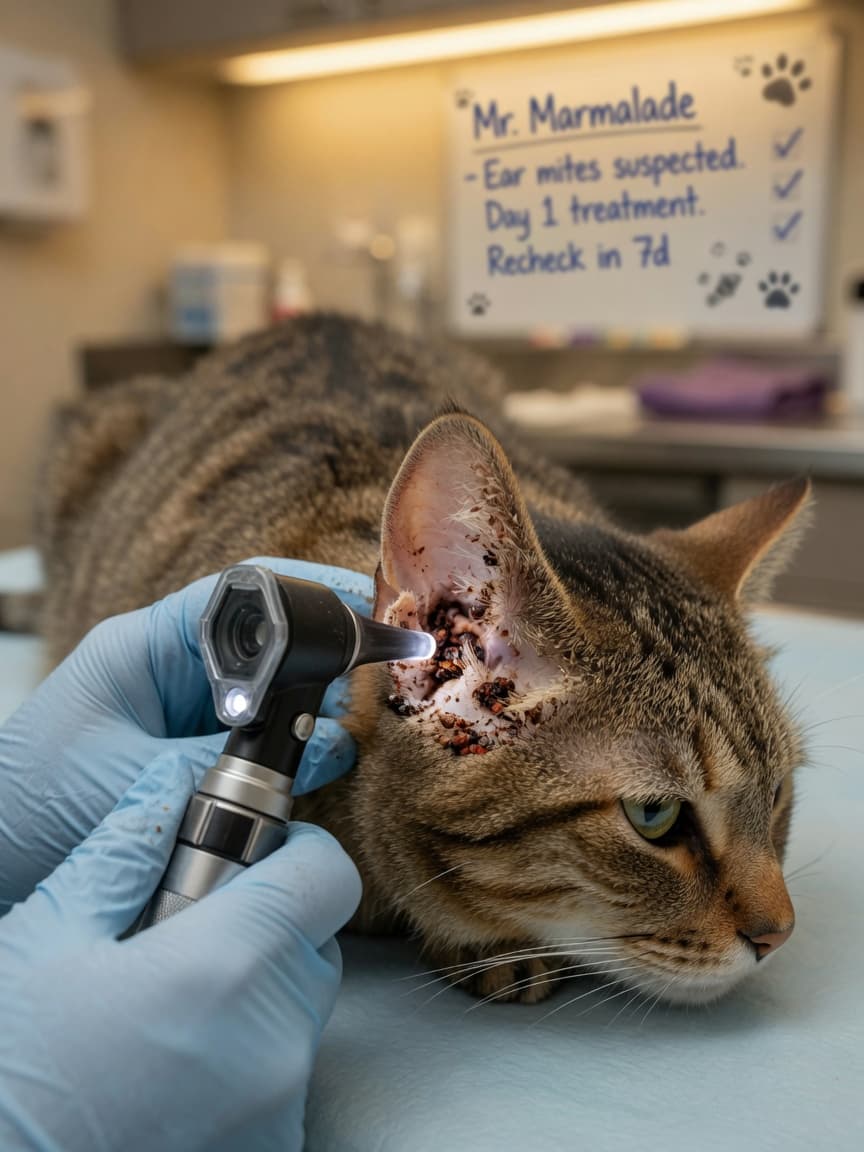
That Dark Debris in Your Cat's Ears Is Not Ordinary Dirt
If you have noticed your cat shaking its head repeatedly, scratching furiously at one or both ears, or if a glance inside reveals a build-up of dark, crumbly material, there is a reasonable chance you are looking at an ear mite infestation. Otodectes cynotis is the species responsible for the vast majority of ear mite cases in cats, and while it is not life-threatening, an untreated infestation can lead to significant discomfort, secondary infections, and in severe cases, permanent damage to the ear canal.
Understanding Ear Mites
Ear mites are microscopic, eight-legged parasites that live primarily in the ear canal, though they can also colonise the skin around the head and neck. They feed on the skin debris, wax, and oils inside the ear, and their presence triggers an intense inflammatory response in the host. The dark, coffee-ground-like debris commonly seen in infected ears is a combination of ear wax, dried blood, mite waste, and the mites themselves.
The mite's full life cycle — from egg to adult — takes approximately three weeks and occurs entirely on the host. This means an infestation can escalate quickly, and all animals in a household are at risk of exposure.
Symptoms in Cats
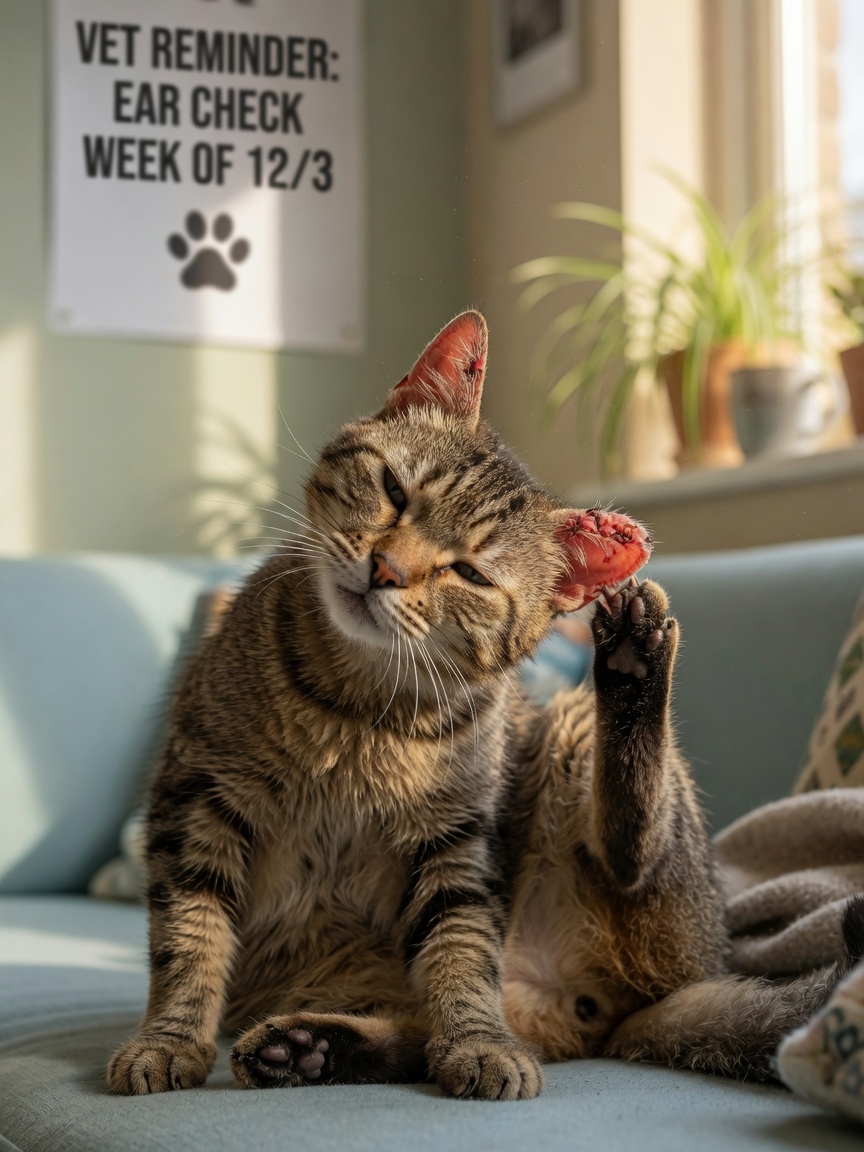
- Intense, persistent scratching at one or both ears
- Frequent and vigorous head shaking
- Dark brown or black crumbly debris visible in the ear canal
- Redness and inflammation of the outer ear and ear flap
- An unpleasant odour from the ear
- Sores, scabs, or hair loss around the ears and head from self-trauma
- Head tilting in more advanced or complicated cases
Scratching can be so vigorous that cats cause haematomas — blood blisters — on the ear flap, or create open wounds that become secondarily infected. If you notice any swelling of the ear flap or signs of pain when touching the ears, seek veterinary attention promptly.
Confirming the Diagnosis
While the symptoms above are strongly suggestive, other conditions — including bacterial ear infections, yeast infections, and foreign bodies — can present similarly. Your vet will examine the ear canal using an otoscope and may take a swab of the debris to view under a microscope, where the mites are clearly identifiable. A correct diagnosis is important because the treatment for ear mites differs from that for bacterial or fungal infections, and using the wrong product will not resolve the problem.
Treatment Options
Topical Treatments
Most ear mite treatments in cats involve topical medications applied directly to the ear canal or to the skin at the back of the neck. Prescription spot-on products containing selamectin or moxidectin are commonly used and are highly effective. These also provide broader parasite protection, which is particularly useful if the household includes dogs, as ear mites spread readily between species.
Ear Cleaning
Before applying treatment, a thorough but gentle ear clean is usually recommended to remove the accumulated debris. This improves contact between the medication and the mite population. Use a vet-recommended ear cleaning solution and follow your vet's guidance on technique — vigorous cleaning of an already inflamed ear can cause additional discomfort.
Duration of Treatment
Because eggs are not always killed by initial treatment, a repeat application is typically needed after two to four weeks to target newly hatched mites. Follow your vet's instructions on timing carefully. Products that claim to resolve an infestation in a single application usually have a residual action that covers the egg-to-adult lifecycle.
Preventing Reinfestation

This is the step most owners overlook. Ear mites can survive for a short period off the host — on bedding, soft furnishings, and grooming equipment — and can be reintroduced to a treated cat from an untreated animal in the same household.
- Treat all cats and dogs in the household simultaneously, even if only one animal shows symptoms
- Wash all pet bedding, blankets, and soft toys at 60°C
- Clean grooming tools thoroughly after use
- Monitor all treated animals for returning symptoms over the following four to six weeks
- For cats that go outdoors and have frequent contact with other animals, discuss ongoing parasite prevention with your vet
Ear mites are highly contagious between cats, so multi-cat households and those with cats that socialise outdoors are particularly prone to recurring infestations without diligent treatment of every animal in contact.
Practical Summary
- Dark debris, head shaking, and persistent ear scratching are the key warning signs
- Always confirm the diagnosis with your vet — not all ear problems are mites
- Use a vet-prescribed treatment appropriate for your cat's weight and age
- Clean the ears before treatment to improve efficacy
- Treat every pet in the household to prevent reinfection
- Wash bedding and soft furnishings to reduce environmental contamination
- Follow up with your vet if symptoms persist after a full treatment course