
Can a Fox Truly Become a Pet? Science Has Been Trying to Answer This for 60 Years
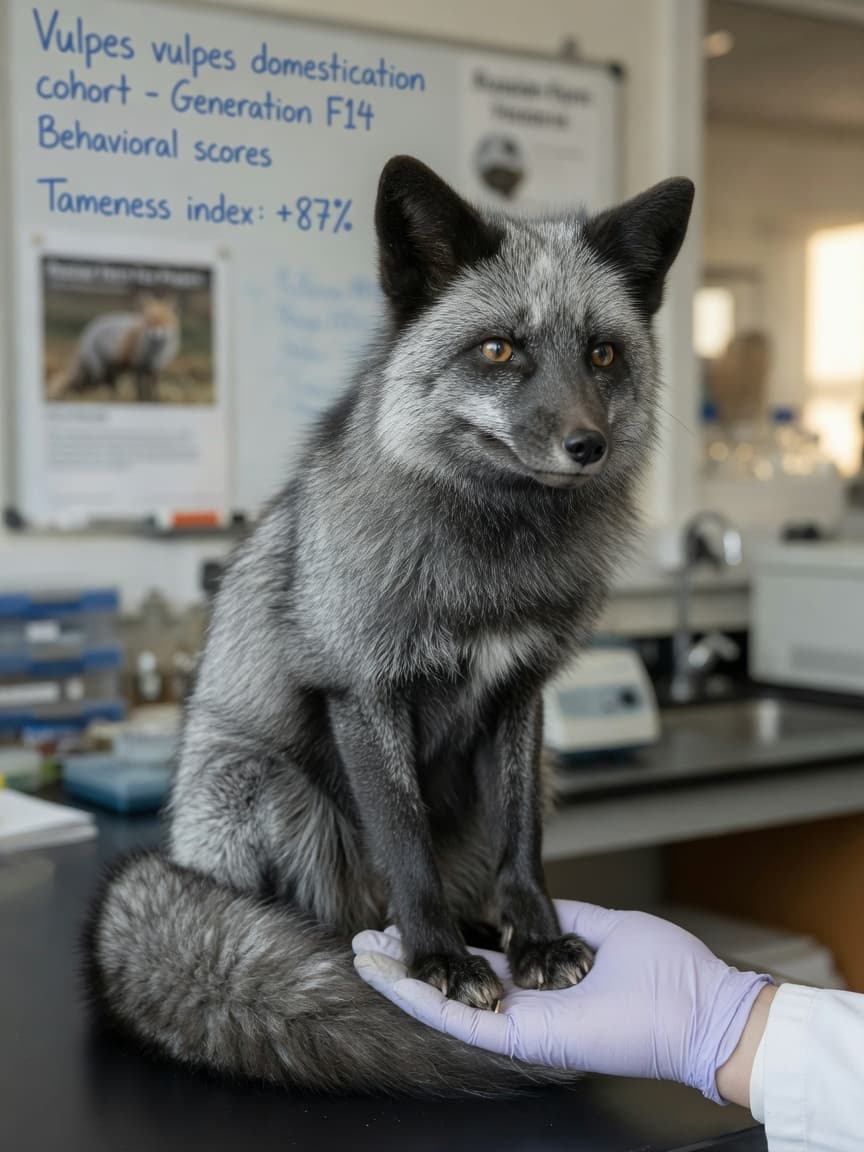
In 1959, Soviet geneticist Dmitry Belyaev began one of the most extraordinary experiments in the history of animal domestication science. Working at the Institute of Cytology and Genetics in Novosibirsk, Belyaev and his colleague Lyudmila Trut began selectively breeding silver foxes for one trait only: tolerance of humans. Within a handful of generations, something remarkable happened. The foxes did not merely become less fearful — they began to exhibit physical and behavioural traits characteristic of domestic dogs: floppy ears, curled tails, piebald colouration, and a tendency to seek human contact and play. The experiment continues today and has produced what are often called domesticated foxes or Siberian domesticated foxes. What does this mean for someone considering a fox as a pet?
What the Belyaev Experiment Actually Demonstrated
The silver fox experiment provided compelling evidence that domestication is not simply a cultural or training process — it involves genuine genetic change that occurs faster than previously thought possible. By selecting only for behavioural tameness across generations, Belyaev's team inadvertently produced a suite of correlated physical changes, now referred to as the domestication syndrome. These changes appear to be linked to alterations in the regulation of stress hormones and neural crest cell development during embryogenesis.
This is significant for understanding why taming a wild-caught or conventionally bred fox does not produce the same animal. Habituation — the reduction of fear through repeated exposure — is categorically different from domestication. A habituated wild fox may tolerate human presence; a domesticated fox actively seeks it. The genetic underpinning is different, and so is the behavioural outcome.
Obtaining a Domesticated Silver Fox
The domesticated silver foxes from Novosibirsk have, in limited numbers, been sold to private owners, primarily in the United States and Russia. A small number of breeders in other countries have attempted to establish breeding programmes using stock derived from the original lines. The animals are significantly more expensive than conventionally bred foxes, with prices historically ranging from several hundred to several thousand US dollars depending on availability and lineage verification.
Verifying that an animal sold as a "domesticated" or "Siberian" fox is genuinely derived from the Belyaev programme is difficult. The market for exotic foxes is not rigorously regulated, and fraudulent claims about domestication lineage are a real concern. Prospective buyers should request detailed provenance documentation and, where possible, genetic verification. The absence of trustworthy documentation should be treated as a significant warning sign.
How Domesticated Foxes Differ from Wild Foxes in Practice
Behaviour
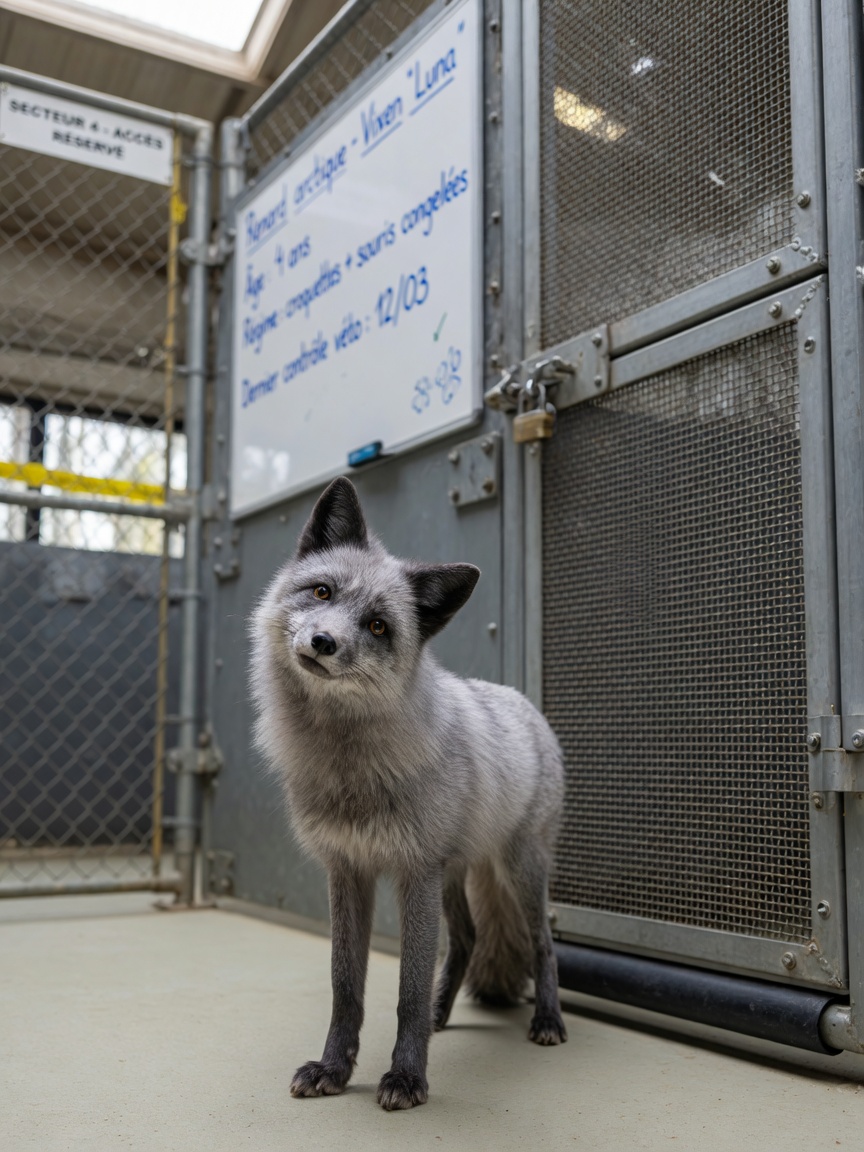
Genuine domesticated silver foxes display dog-like social behaviours: they approach humans voluntarily, engage in play, and respond to human emotional cues in ways that wild foxes do not. They are markedly less fearful and less prone to stress-related aggression in human company. However, they are not dogs. Their communication systems, social structures, and sensory worlds are different, and their care requirements reflect this.
What Has Not Changed
Domestication has altered the foxes' social relationship with humans, but it has not eliminated their fundamental fox biology. They retain powerful prey drives, scent-marking behaviours, and digging instincts. They are still nocturnal or crepuscular. They still vocalise in ways — barks, screams, and high-pitched calls — that are not compatible with residential settings without careful management. Escape behaviour remains a concern, and any outdoor access must be in a fully secured enclosure. Their urine has a strong, distinctive musky odour that many people find unpleasant and that is difficult to eliminate from soft furnishings.
Legal and Practical Considerations
In the United Kingdom, foxes — including domesticated varieties — are not regulated under the Dangerous Wild Animals Act 1976. However, this does not mean there are no legal considerations. Import regulations apply if bringing animals from Russia or other countries, and CITES regulations may be relevant depending on the provenance of the animals. Local authority regulations can apply in specific circumstances. In the United States, fox ownership legality varies by state regardless of domestication status — a domesticated silver fox is still legally a fox in most jurisdictions, and many states that ban fox ownership make no exception for domesticated lines.
Veterinary care requires an exotic mammal specialist. Vaccines are not standardised for foxes in the same way as for domestic carnivores. Parasitic disease, dental issues, and gastrointestinal problems are documented health concerns. Identifying a vet with relevant experience before acquiring the animal is essential — and consulting that vet about appropriate care protocols from the outset is strongly advisable.
What the Experiment Means for Animal Science — and for You
The Belyaev experiment remains one of the most important studies in the science of domestication. It has reshaped our understanding of how wild animals become domestic ones and has provided insights relevant to understanding dogs, cats, and the history of human-animal relationships. For someone considering a domesticated fox as a pet, it provides genuine grounds for cautious optimism that such animals can form meaningful bonds with humans.
But the experiment also demonstrates, implicitly, how far from domesticated most foxes remain. Sixty-plus years of intensive selection produced animals substantially more manageable than their wild counterparts — and yet still not domestic animals in the sense that dogs are. The commitment required to keep even a genuinely domesticated fox well is substantial.
Summary
- The Belyaev domesticated silver fox is a real and scientifically significant animal, but provenance verification is essential — fraudulent claims in the exotic pet market are common.
- Domesticated foxes genuinely differ from habituated wild foxes in behaviour, but they retain core fox biology including prey drive, scent marking, and vocalisation.
- Legal status varies by country and US state regardless of domestication — always verify your local legal position.
- Veterinary access requires an exotic mammal specialist; identify one before acquiring the animal.
- Strong odour, noise, escape risk, and space requirements remain relevant even with domesticated animals.
- The experiment offers a compelling scientific lesson; ownership offers a genuine but demanding relationship that should not be entered into lightly.
- Consult an exotic animal vet for specific dietary, housing, and health guidance before and throughout ownership.