
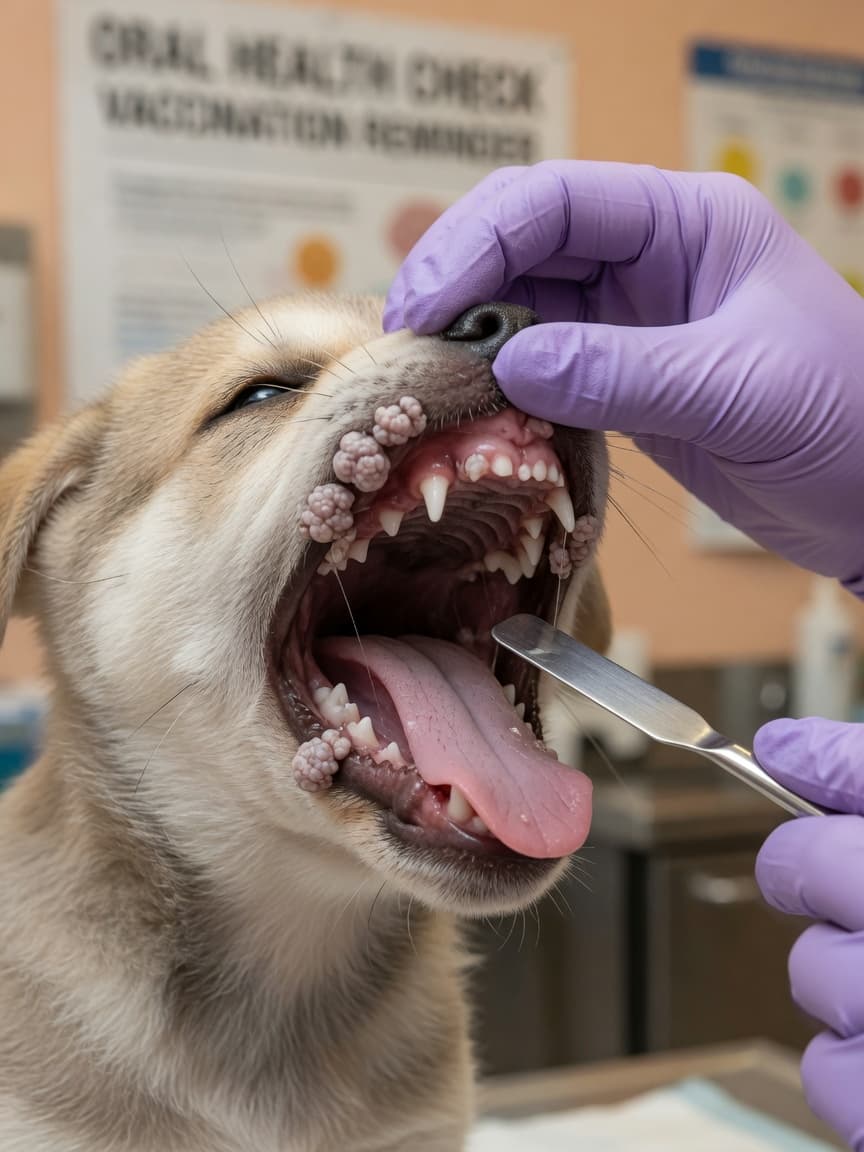
What Are Dog Warts?
Warts in dogs are caused by canine papillomaviruses (CPVs), a group of DNA viruses that infect the skin and mucous membranes. Unlike the informal use of the word "wart" in human medicine, where the term covers a range of benign skin growths, dog warts in the clinical sense specifically refer to virus-induced papillomas. They are benign proliferations of skin cells triggered by papillomavirus infection and, in most cases, are self-limiting — meaning the dog's own immune system will eventually clear the infection and the lesions will resolve without any intervention.
There are multiple strains of canine papillomavirus, and the clinical presentation varies depending on which strain is involved and where on the body the infection takes hold. The most commonly encountered form is canine oral papillomatosis, caused by Canine Oral Papillomavirus (COPV).
Canine Oral Papillomavirus: The Classic Presentation
Canine oral papillomatosis is most commonly seen in young dogs, typically under two years of age. Puppies and adolescent dogs have a less mature immune response compared to adult dogs, making them more susceptible to papillomavirus infection. Dogs that are immunosuppressed — due to illness, certain medications such as corticosteroids or ciclosporin, or underlying immune-mediated conditions — are also at higher risk regardless of age.
The lesions of oral papillomatosis appear on and around the mouth, including the lips, gums, tongue, palate, and the mucous membranes inside the cheeks. They have a distinctive cauliflower-like appearance — pale grey or pink, roughened, and irregular — that makes them readily identifiable to an experienced vet. In early stages they may appear as small smooth plaques that gradually develop their characteristic frond-like texture as they mature.
How Contagious Are Canine Papillomas?
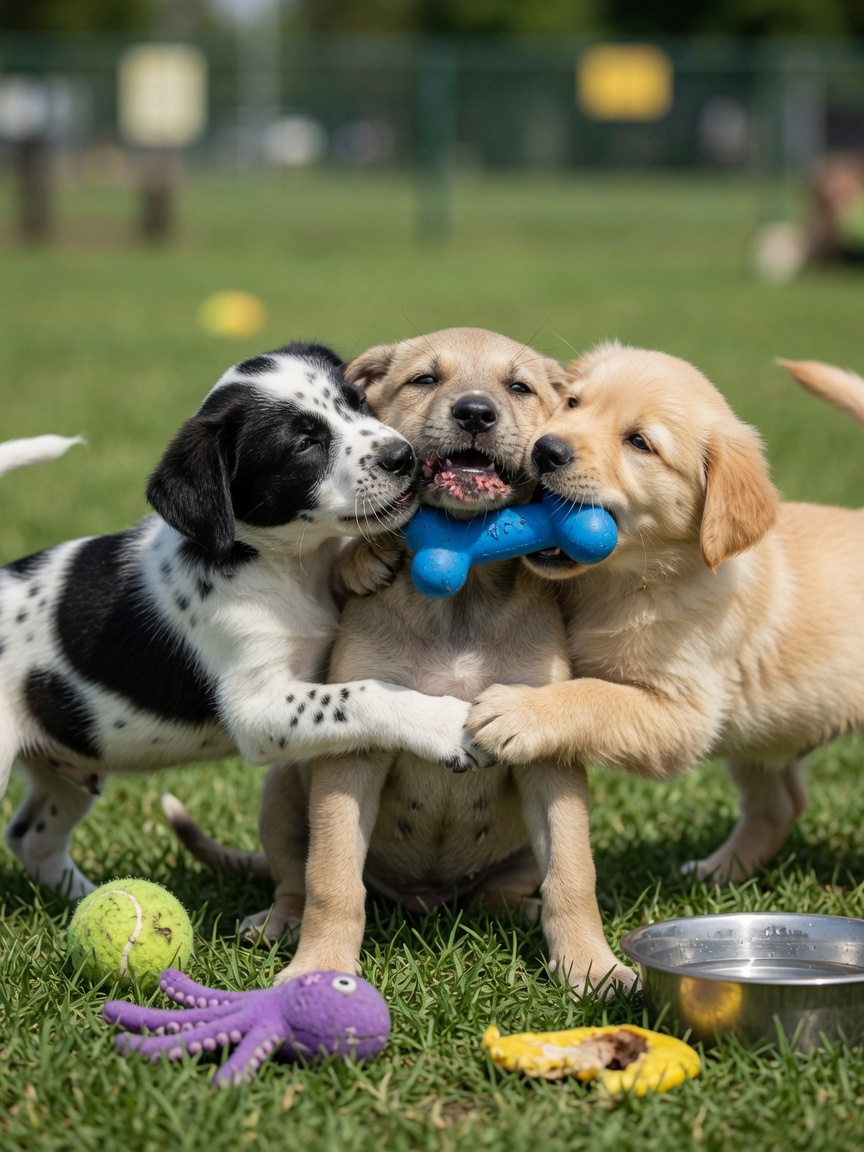
Canine papillomavirus is highly contagious between dogs. Transmission occurs through direct contact between dogs — sniffing, play-biting, shared toys, and water bowls are all potential routes. The virus can also survive for short periods on environmental surfaces, making contaminated objects a secondary transmission route, though direct dog-to-dog contact is the primary means of spread.
Outbreaks in groups of young dogs are common, particularly in kennels, puppy classes, doggy day-care facilities, and busy dog parks. If your young dog develops oral papillomas after attending such a setting, recent contact with an infected dog is the likely explanation. During active infection, it is advisable to avoid close contact with other dogs — particularly other young or immunocompromised dogs — until the lesions have fully resolved.
An important reassurance for owners: canine papillomaviruses are species-specific. They cannot be transmitted to humans or to other animal species in the household. You cannot catch warts from your dog, and your cat is not at risk.
The Natural Course: Why Most Cases Resolve Without Treatment
In immunocompetent dogs, oral papillomas are self-limiting. As the dog's immune system mounts a response to the papillomavirus, the lesions typically begin to regress spontaneously. Resolution usually occurs over a period of one to five months from the time of initial appearance, with an average of around two to three months in most cases.
Once a dog has recovered from a papillomavirus infection, it generally develops lasting immunity to that particular viral strain, making recurrence uncommon. Owners sometimes find the appearance of the lesions alarming, particularly when the mouth is heavily affected, but a dog that is eating, drinking, and behaving normally can typically be monitored through the natural resolution process without significant concern.
When Is Treatment Necessary?
Although most cases resolve without intervention, there are situations in which treatment becomes appropriate or necessary:
- Severe or extensive lesions causing difficulty eating, swallowing, or breathing
- Secondary bacterial infection of the papillomas leading to oral pain or systemic illness
- Lesions that show no signs of regression after several months, particularly in immunosuppressed dogs
- Rapid enlargement of individual lesions suggesting a more atypical papillomavirus strain
When treatment is indicated, options include:
Surgical Removal
Individual lesions or small numbers of warts can be excised under general anaesthesia. Crushing multiple papillomas during surgery may stimulate an immune response that accelerates regression of remaining lesions — a phenomenon observed clinically though the mechanism is not fully understood. Surgical removal is generally effective for individual problematic lesions but is not practical when a dog has numerous warts throughout the oral cavity.
Cryotherapy
Cryotherapy — the application of liquid nitrogen to freeze the wart tissue — can be used to treat accessible lesions, particularly those on the skin surface. It requires a cooperative patient and may need to be repeated.
Interferon
In severe cases or in immunosuppressed dogs where the condition is not self-resolving, interferon — an immune-modulating medication — may be prescribed. Both injectable and oral interferon preparations have been used in dogs with variable reported success. Azithromycin, an antibiotic with immunomodulatory properties, has also been used off-label in some cases with anecdotal reports of benefit, though evidence from controlled trials is limited.
Cutaneous Papillomas: A Different Presentation
Beyond the classic oral form, papillomaviruses can also cause skin lesions in dogs. Cutaneous papillomas tend to appear as firm, raised, pigmented growths on the skin, often described as having a roughened or keratinised surface. Unlike oral papillomas, cutaneous papillomas are less likely to regress spontaneously and may persist long-term. They most commonly appear around the eyes, feet, and groin area in older dogs. Any persistent or changing skin growth should be examined by a vet to rule out other causes, as cutaneous papillomas can occasionally be difficult to distinguish from other skin tumours without cytology or biopsy.
Summary
- Dog warts are caused by canine papillomaviruses and are most common in young dogs
- Oral papillomas have a classic cauliflower appearance and affect the mouth and lips
- The virus is highly contagious between dogs but cannot infect humans or cats
- Most cases in healthy dogs resolve within one to five months as immunity develops
- Treatment — surgery, cryotherapy, or interferon — is reserved for severe or non-resolving cases
- Cutaneous papillomas are harder and less likely to self-resolve than oral forms
Written by Sarah Bennett, pet health writer at ForPetsHealthcare.