
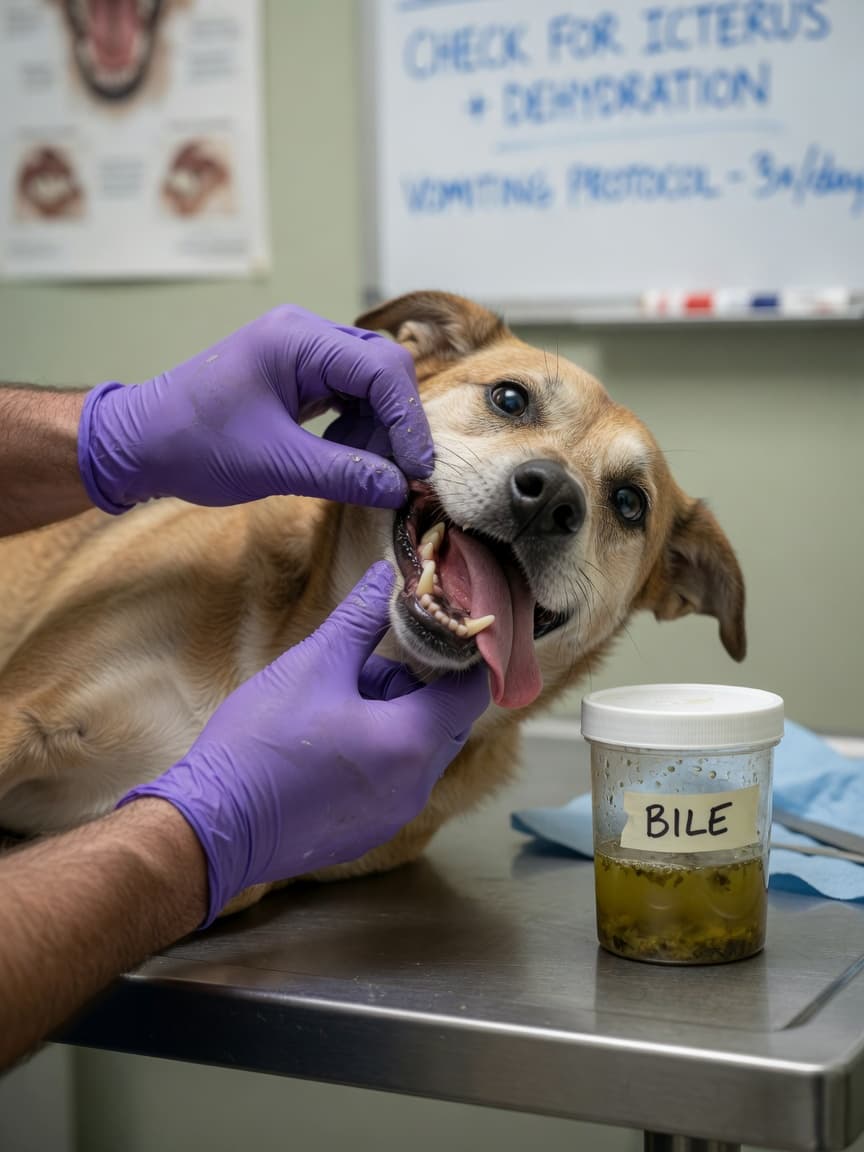
Why the Appearance of Vomit Actually Matters
It is not the most pleasant topic, but examining what your dog has brought up is one of the most useful diagnostic clues available to you before you reach the phone to call your vet. The colour, consistency, timing, and frequency of vomiting all point toward different causes, and understanding what you are looking at can help you make a much more informed decision about the urgency of the situation.
Vomiting in dogs involves an active, effortful process — the abdominal muscles contract forcefully to expel stomach contents. This distinguishes it from regurgitation, which is passive and occurs without heaving. Making that distinction matters, because regurgitation and vomiting have very different causes.
Vomiting Versus Regurgitation
Regurgitation happens when undigested food or fluid is brought back up shortly after eating, without apparent effort and without the pre-vomiting signs of nausea such as drooling, lip-licking, or restlessness. The material typically looks like a tube of undigested food because it has not yet reached the stomach. Regurgitation is associated with oesophageal problems such as megaoesophagus, oesophageal obstruction, or gastro-oesophageal reflux rather than stomach or intestinal disease.
True vomiting, by contrast, involves stomach contractions, visible retching, and the expulsion of partially digested stomach contents. The two can look similar to a new dog owner, but the distinction is clinically important and worth describing carefully when you speak to your vet.
What Different Types of Vomit Indicate
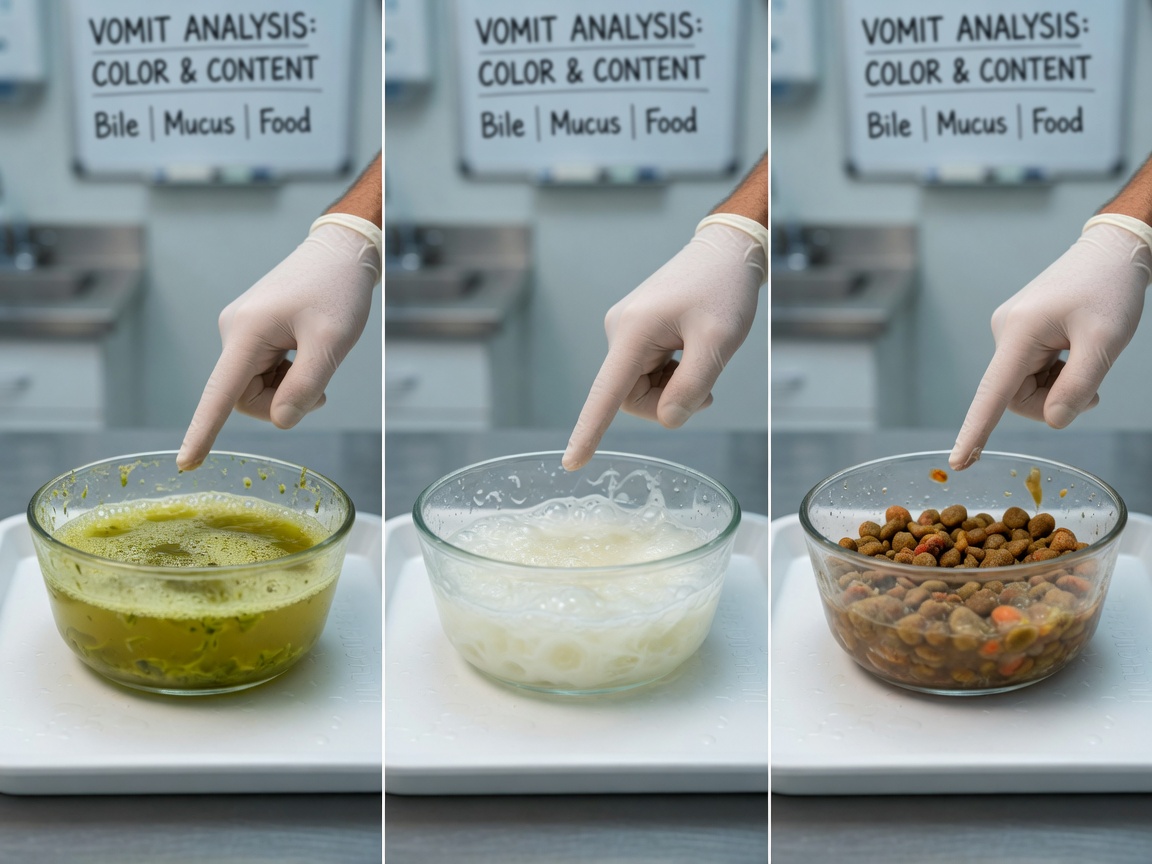
Yellow or Greenish Foam
Yellow or green vomit is typically bile — a digestive fluid produced by the liver and stored in the gallbladder that normally enters the small intestine to assist with fat digestion. When a dog's stomach is empty for an extended period, bile can reflux back into the stomach and cause irritation, which the dog then expels as foamy yellow vomit, usually in the early morning before breakfast. This pattern is commonly called bilious vomiting syndrome, and it is generally benign. Feeding a small late-evening meal often resolves it.
White or Clear Foam
White, frothy vomit usually indicates that the dog is bringing up stomach acid and mucus, often on an empty stomach. Occasional episodes are not alarming, but repeated white foam vomiting, particularly when accompanied by a distended abdomen or obvious discomfort, warrants immediate veterinary attention as it can be associated with bloat (gastric dilatation-volvulus), which is a life-threatening emergency.
Undigested or Partially Digested Food
Vomiting food shortly after a meal — within 30 minutes to an hour — typically suggests the stomach has not emptied properly. This can result from eating too quickly, eating too much at once, or a condition called delayed gastric emptying. Dogs who wolf down their food frequently vomit immediately afterwards. Slow-feeder bowls and puzzle feeders are effective at reducing eating speed and the associated vomiting episodes.
Digested or Dark Brown Vomit
Dark brown vomit that resembles coffee grounds is a significant warning sign. The appearance indicates the presence of digested blood, which suggests bleeding somewhere in the upper gastrointestinal tract — the stomach or upper small intestine. This requires prompt veterinary evaluation. Similarly, if the vomit has a strong faecal odour, it may indicate an intestinal obstruction, which is a surgical emergency.
Bloody Vomit
Fresh red blood in vomit can be alarming, but the significance depends on the quantity and context. Small streaks of bright red blood may simply result from the strain of repeated vomiting causing minor tears in the oesophagus or stomach lining. A large amount of frank blood, or blood combined with other worrying symptoms, requires emergency veterinary care immediately.
Grass and Plant Material
Dogs frequently eat grass, and grass-eating followed by vomiting is one of the most commonly witnessed behaviours in domestic dogs. The evidence on why dogs eat grass is mixed — some studies suggest fewer than 25% of grass-eating episodes result in vomiting, and many dogs appear to eat grass when feeling perfectly well. It is not reliably a sign that the dog is feeling nauseous beforehand, though this theory persists. Occasional grass vomiting is not a cause for concern unless it becomes frequent or is accompanied by other symptoms.
Acute Versus Chronic Vomiting
A single episode of vomiting in a dog who otherwise seems bright, alert, and interested in food is rarely cause for immediate alarm. Two to three episodes in one day in an otherwise healthy adult dog warrants monitoring. Persistent vomiting over 24 hours, or vomiting that returns repeatedly over days or weeks, is chronic and requires investigation.
Chronic vomiting is associated with a broader range of conditions including inflammatory bowel disease, chronic pancreatitis, kidney disease, liver disease, hyperthyroidism (uncommon in dogs but possible), and gastrointestinal tumours. These conditions will not resolve with home care and require blood tests, urinalysis, imaging, and sometimes endoscopy or biopsy for diagnosis.
When Vomiting Is an Emergency
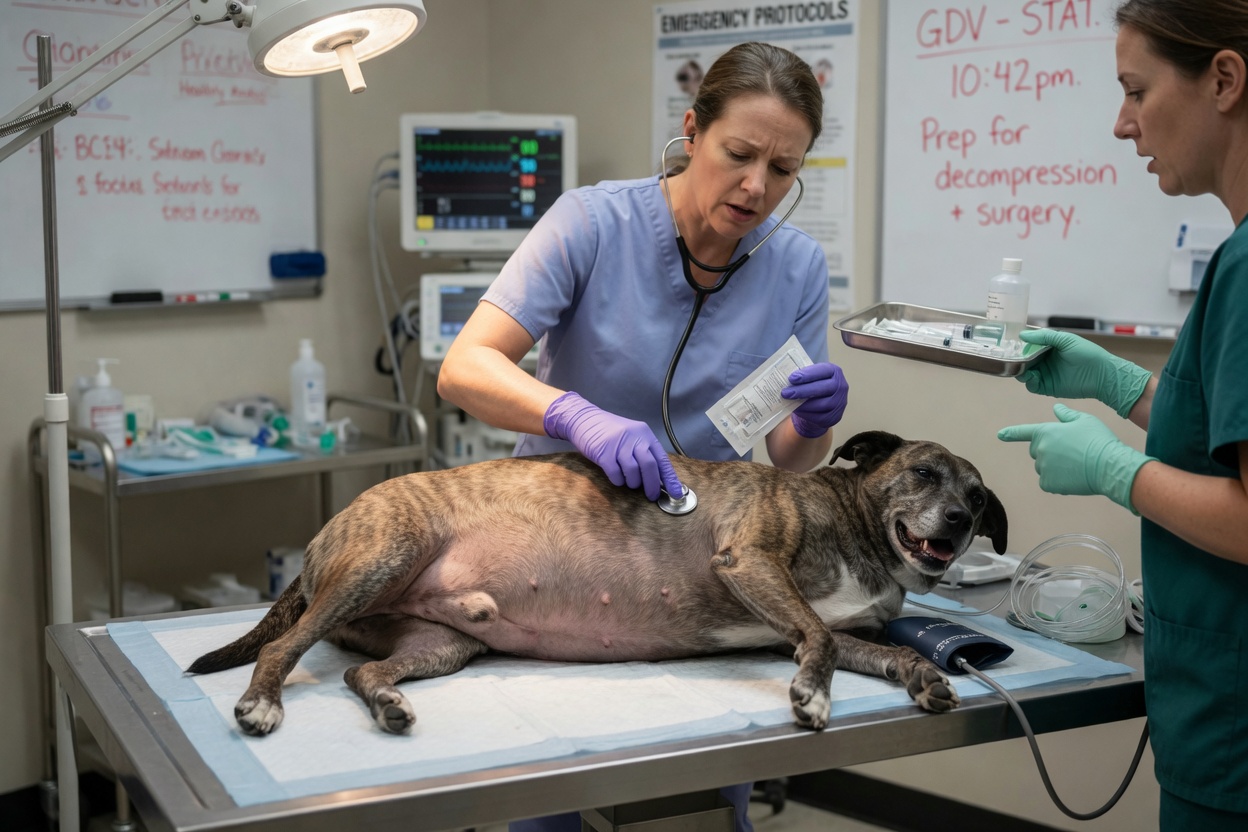
- Repeated unproductive retching with a bloated abdomen — suspect GDV immediately
- Blood in vomit beyond minor streaks
- Signs of pain, restlessness, or collapse alongside vomiting
- Suspected ingestion of a toxin, medication, or foreign object
- Vomiting and diarrhoea together with lethargy or signs of dehydration
- No improvement after 24 hours of home care
- Any vomiting in a puppy under 12 weeks of age
Supporting Recovery at Home
For a mild, isolated episode, withhold food for two to four hours to allow the stomach to settle, ensuring water remains available in small amounts. If your dog can hold water down, offer a small bland meal of boiled rice and chicken. If vomiting recurs after eating, stop food and contact your vet.
Never administer human anti-nausea medications without veterinary guidance. Many human medications are toxic to dogs, and even safe medications require appropriate dosing based on weight and health status. Your vet can prescribe canine-appropriate antiemetics such as maropitant when needed.