
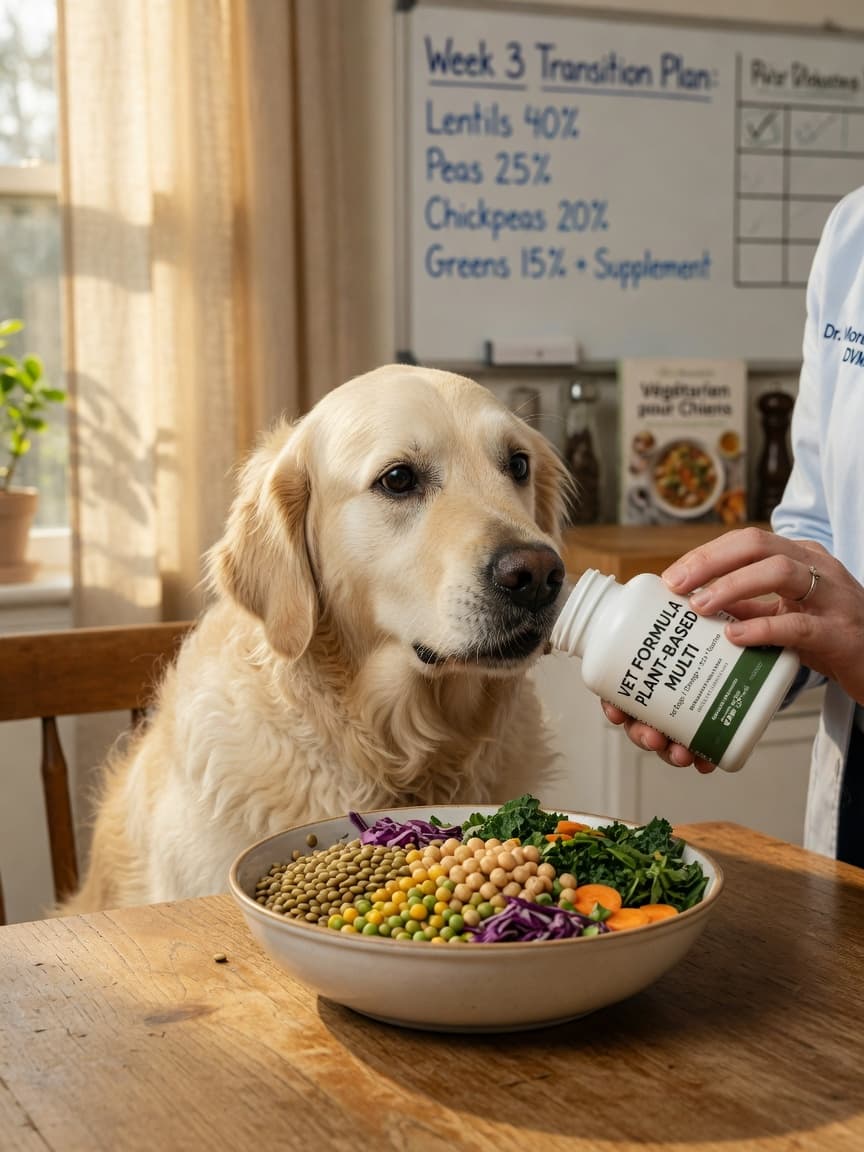
Can Dogs Survive on a Plant-Based Diet?
The question of whether dogs can eat a vegetarian or vegan diet sits at the intersection of animal nutrition science, ethical lifestyle choices and companion animal welfare. It is a topic that generates strong opinions on both sides, and one where the science is nuanced enough to be frequently misrepresented in both directions — both by those who claim plant-based diets are perfectly safe for dogs, and by those who insist they are categorically harmful.
The starting point is species classification. Dogs are omnivores. Unlike cats, which are obligate carnivores and have a physiological requirement for certain nutrients found only in animal tissue, dogs evolved alongside humans over thousands of years and have developed the digestive and metabolic capacity to derive nutrition from both animal and plant sources. Dogs express amylase (the enzyme that digests starch) in their intestines and have multiple copies of the amylase gene — an adaptation consistent with a diet that has historically included plant material. This means that, in principle, a carefully formulated plant-based diet can meet a dog's nutritional requirements.
The key phrase is "carefully formulated." A vegan or vegetarian diet for a dog is not a matter of removing meat from a bowl and filling it with vegetables. It requires precise nutritional planning, specific supplementation and — ideally — professional oversight to reduce the risk of deficiency and disease.
Taurine, L-Carnitine and the Link to Dilated Cardiomyopathy
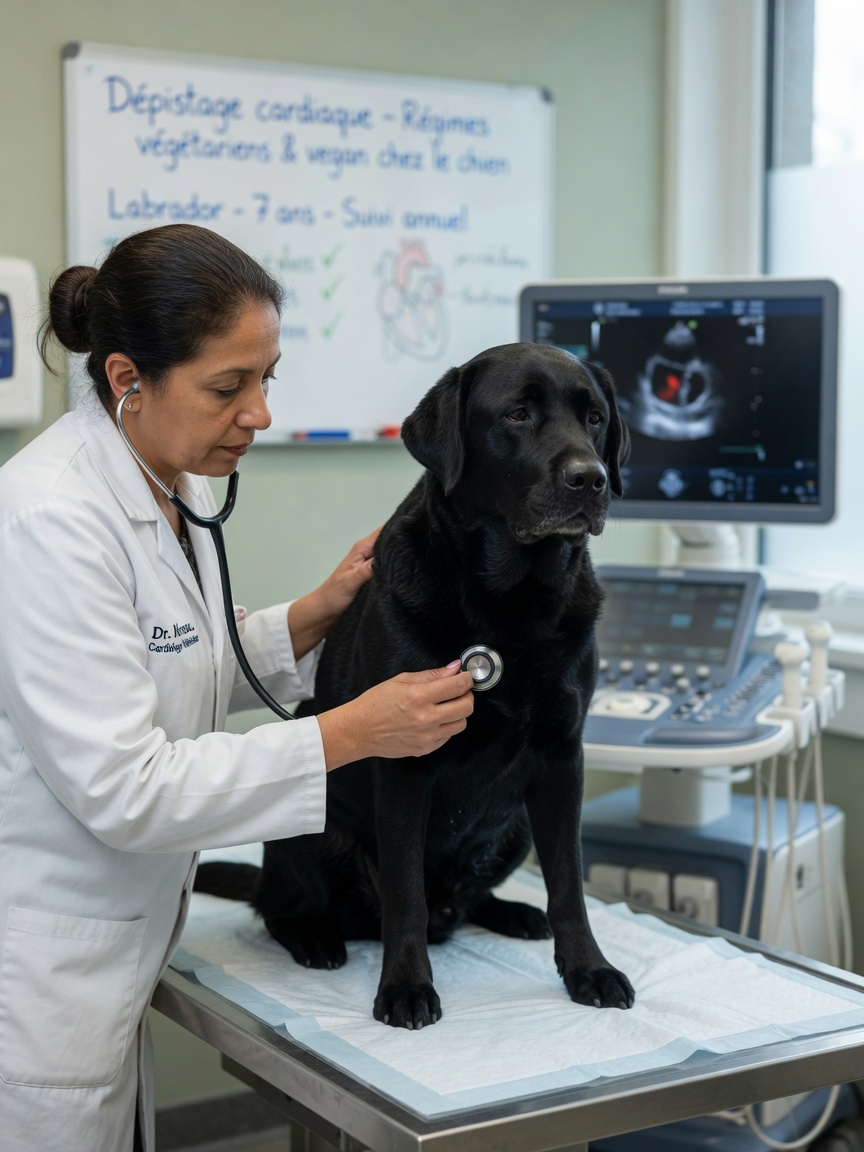
In 2018 and the years that followed, the United States Food and Drug Administration (FDA) published a series of reports investigating a potential link between certain grain-free and legume-heavy diets and an increased incidence of dilated cardiomyopathy (DCM) in dogs — including breeds not previously considered genetically predisposed to the condition. DCM is a serious cardiac disease in which the heart muscle progressively weakens and the chambers dilate, reducing the heart's ability to pump blood effectively. Without treatment, it leads to congestive heart failure.
The investigation focused particularly on two nutrients: taurine and L-carnitine. Both are amino acid derivatives with critical roles in cardiac muscle function. Unlike cats, dogs can synthesise taurine from dietary precursors — specifically the amino acids methionine and cysteine — but their synthetic capacity is limited and can be overwhelmed if dietary intake of precursors is insufficient or if the diet contains compounds that interfere with taurine metabolism.
Plant-based proteins — particularly legumes such as lentils, peas and chickpeas — are high in dietary fibre and contain compounds that may impair taurine absorption or alter its enterohepatic cycling. Diets heavily reliant on plant protein rather than animal-derived amino acid sources may therefore deplete circulating taurine and L-carnitine levels over time, even if the diet appears protein-adequate on a crude analysis.
Vegetarian and vegan dog diets, which by definition exclude or minimise animal-derived protein sources, are theoretically at risk of contributing to this depletion. This does not mean such diets inevitably cause DCM — the causative pathway has not been definitively established and the FDA investigation remains ongoing — but it does mean that taurine and L-carnitine status should be monitored in dogs fed plant-based diets, and that supplementation should be considered as part of any plant-based diet formulation.
Other Nutritional Challenges in Plant-Based Dog Diets

Beyond taurine and L-carnitine, plant-based diets for dogs require careful attention to a range of other nutrients that are either absent from plant sources or present in forms with lower bioavailability:
- Vitamin B12 (cobalamin): found almost exclusively in animal-derived foods. Deficiency causes neurological damage and anaemia. Plant-based dog diets must be supplemented with B12.
- Vitamin D3: the form of vitamin D most efficiently utilised by dogs is D3 (cholecalciferol), which is derived from animal or lichen sources. Plant-derived vitamin D2 (ergocalciferol) is less efficiently converted by dogs. Supplementation with D3 from appropriate sources is required.
- Omega-3 fatty acids: the long-chain omega-3 fatty acids EPA and DHA, which support brain, eye and joint health, are found primarily in oily fish and fish oil. Plant sources provide ALA (alpha-linolenic acid), which dogs convert to EPA and DHA inefficiently. Supplementation with algae-derived EPA and DHA — a vegan-compatible source — is recommended.
- Zinc and iron: whilst present in plant foods, zinc and iron from plant sources are less bioavailable than from animal sources due to the presence of phytates. Adequate supplementation or the use of chelated mineral forms improves absorption.
- Calcium-to-phosphorus ratio: achieving the correct mineral balance without bone meal or other animal-derived calcium sources requires careful formulation using plant-based calcium supplements.
Commercial Vegan Dog Foods
A small but growing number of commercial vegan dog foods are available in the UK market. Products such as v-dog (originating from the USA) and Benevo (a UK-based brand) are formulated as complete diets and labelled to meet AAFCO or FEDIAF nutritional standards. These products supplement with synthetic taurine, L-carnitine, B12, D3 and other nutrients to compensate for the absence of animal-derived ingredients.
It is important to note that meeting a nutrient profile on paper (nutrient analysis) is not the same as demonstrating that a diet is adequate in practice. The gold standard for pet food adequacy is an AAFCO or FEDIAF feeding trial, in which the diet is fed to real animals over a defined period and blood chemistry, body condition and clinical health are monitored. When evaluating any commercial vegan dog food, it is worth asking whether the product has been validated by feeding trials or by calculation only, as this makes a meaningful difference to confidence in its adequacy.
Even with a well-formulated commercial vegan diet, routine veterinary monitoring — including periodic blood chemistry panels that include taurine levels and cardiac assessment — is advisable for dogs maintained on plant-based feeding long term.
The Importance of Veterinary Nutritionist Involvement
Whether you are considering a commercially available vegan dog food or wish to prepare meals at home, professional guidance from a veterinary nutritionist is strongly recommended before transitioning your dog to a plant-based diet. A board-certified veterinary nutritionist can:
- Assess your individual dog's health status, breed predispositions and life stage requirements
- Evaluate the adequacy of any commercial product you are considering
- Formulate a balanced homemade plant-based diet if that is your preference, with specific ingredient quantities and supplementation protocols
- Establish a monitoring plan including blood work and cardiac checks
- Adjust the diet over time as your dog ages or their health status changes
Without this professional foundation, a plant-based diet for a dog carries a meaningful risk of nutritional deficiency that may not become clinically apparent for months or years — by which time significant and sometimes irreversible organ damage may have occurred.
A Critical Note: Cats Cannot Be Vegan
If you share your home with both dogs and cats and are considering plant-based feeding for your household, it is essential to understand that what may be achievable for a dog is categorically not appropriate for a cat. Cats are obligate carnivores with hard-wired physiological requirements for nutrients that can only be obtained from animal tissue. They cannot synthesise taurine, arachidonic acid or vitamin A (retinol) from plant precursors. They have extremely limited capacity for carbohydrate metabolism. A vegan diet for a cat will result in severe nutritional deficiencies and is incompatible with the animal's long-term health and survival. There is no qualified veterinary nutritionist who would endorse a vegan diet for a cat, and the WSAVA and all major veterinary nutrition bodies are unequivocal on this point. If you are committed to plant-based feeding for ethical reasons, that commitment can only extend to your dogs — never to your cats.