ForPetsHealthcare
Dogs

Dog Resource Guarding: What It Is and How to Address It

By Julia WrenfieldUpdated August 4, 20261 min read
Evidence-based · Sources checked
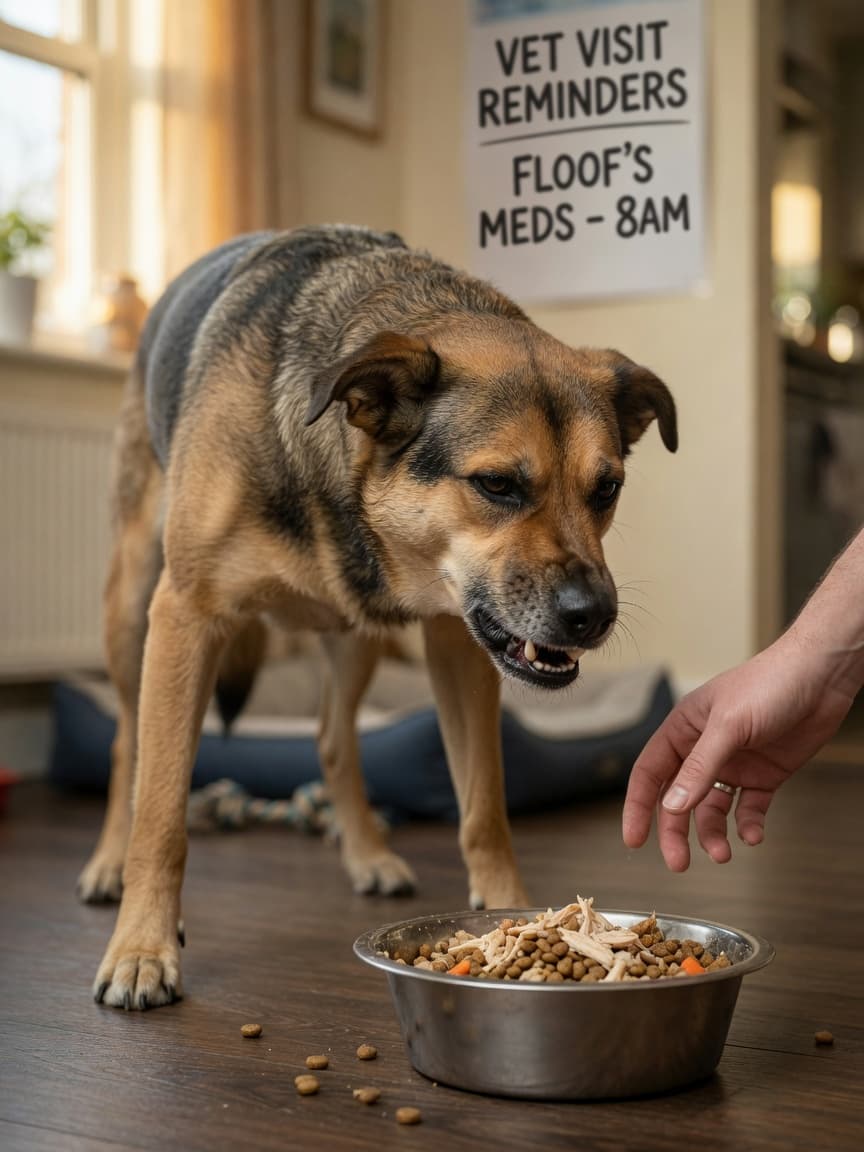
{"en": "Dog growling while eating from bowl, displaying resource guarding behavior during mealtime", "es": "Perro gru\u00f1endo mientras come de su plato, mostrando comportamiento de protecci\u00f3n de recursos", "fr": "Chien grognant en mangeant dans son bol, montrant un comportement de garde des ressources", "de": "Hund knurrt w\u00e4hrend des Essens aus seiner Sch\u00fcssel und zeigt Ressourcenschutzverhalten", "nl": "Hond gromt terwijl hij eet uit zijn kom en toont hulpbron-beschermingsgedrag", "pt": "Cachorro rosnando enquanto come de sua tigela, exibindo comportamento de prote\u00e7\u00e3o de recursos", "it": "Cane che ringhia mentre mangia dalla ciotola, mostrando comportamento di guardia delle risorse"}
Resource guarding is normal canine behaviour that becomes dangerous when directed at humans.

What Dogs Guard

  • Food bowls
  • High-value treats and chews
  • Toys, sleeping spots
  • Stolen items

Warning Signs

  • Stiffening when approached during eating
  • Growling, snapping, lunging

What NOT to Do

Never punish growling - it removes the warning and increases bite risk.

Trade-Up Game

Dog accepting a high-value treat trade-up from owner's hand during positive resource guarding training exercise

Approach with a higher-value treat and offer a trade. Your dog learns that you approaching predicts something better.

#dog resource guarding how to address#dog health#dog nutrition#forpetshealthcare

Sources & further reading

This article is based on peer-reviewed veterinary research and reputable animal-health sources. Explore the underlying science in our Research Library.

Related articles

The 19 Best Animal Shelters in the Netherlands (2026)

the Netherlands's animal shelters, rescue associations and refuges save thousands of dogs, cats and other animals every year, almost always on tiny budgets and volunteer power. To build the most objective ranking possible, we analysed public Google reviews across more than 56 registered animal-prote…

Read more →

The 25 Best Animal Shelters in Italy (2026)

Italy's animal shelters, rescue associations and refuges save thousands of dogs, cats and other animals every year, almost always on tiny budgets and volunteer power. To build the most objective ranking possible, we analysed public Google reviews across more than 121 registered animal-protection org…

Read more →

The 48 Best Animal Shelters in Germany (2026)

Germany's animal shelters, rescue associations and refuges save thousands of dogs, cats and other animals every year, almost always on tiny budgets and volunteer power. To build the most objective ranking possible, we analysed public Google reviews across more than 152 registered animal-protection o…

Read more →

The 32 Best Animal Shelters in France (2026)

France's animal shelters, rescue associations and refuges save thousands of dogs, cats and other animals every year, almost always on tiny budgets and volunteer power. To build the most objective ranking possible, we analysed public Google reviews across more than 89 registered animal-protection org…

Read more →

The 8 Best Animal Shelters in Portugal (2026)

Portugal's animal shelters, rescue associations and municipal centros de recolha save thousands of dogs, cats and other animals every year, almost always on tiny budgets and volunteer power. To build the most objective ranking possible, we analysed public Google reviews across more than 86 registere…

Read more →

Sphynx Cat Skin care and hygiene: Causes, Signs & Care

Sphynx cats have little to no coat, which means the skin itself takes on jobs that fur normally does — insulation, oil dispersal, and barrier protection — leaving it prone to greasiness, blocked pores, fungal infections, and sunburn. The single most important thing to know is that a Sphynx's skin ne…

Read more →
Disclaimer:This article is for informational purposes only and does not constitute veterinary advice. Always consult a qualified veterinarian for your pet's health concerns.

Free newsletter

Pet health tips, straight to your inbox

Weekly science-backed advice for dog & cat owners. No spam, unsubscribe anytime.