
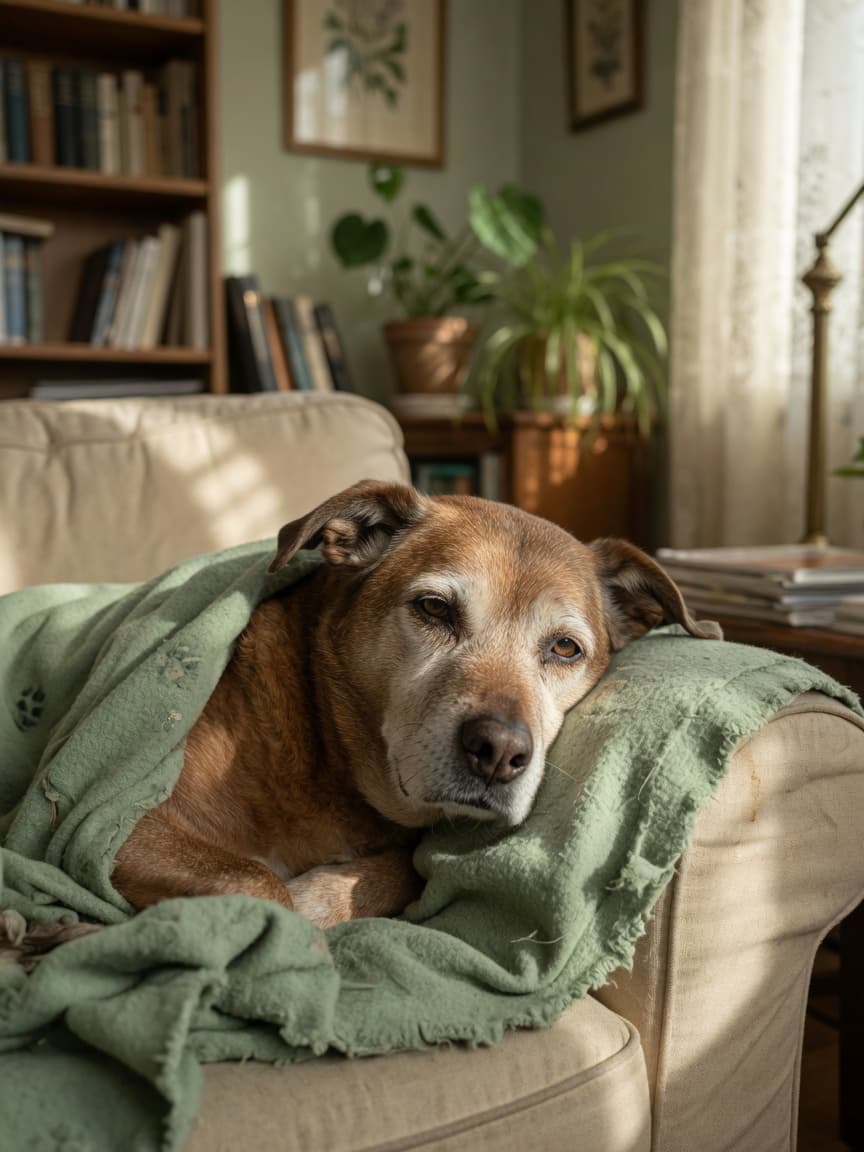
What Is Canine Cognitive Dysfunction?
Canine cognitive dysfunction syndrome, often abbreviated to CDS, is a neurodegenerative condition that affects older dogs in ways that are strikingly similar to Alzheimer's disease in humans. Pathologically, the parallels are meaningful: the brains of dogs with CDS show accumulation of beta-amyloid plaques, neurofibrillary tangles, and oxidative damage consistent with the changes observed in human dementia research.
Despite being relatively common — studies estimate that between 14 and 35 percent of dogs aged eight years and older show clinical signs — CDS remains significantly underdiagnosed. Owners frequently attribute signs to normal ageing, and the condition is not always screened for in routine veterinary consultations. Understanding what to look for, and why early identification matters, can meaningfully improve an affected dog's quality of life.
How Old Is Old Enough to Worry?
The age at which CDS typically becomes clinically apparent varies with body size, largely because larger breeds age more rapidly than smaller ones. Giant breeds such as Great Danes and Irish Wolfhounds may show signs from as young as six or seven years. Medium and large breeds commonly show signs from around eight to ten years. Small and toy breeds, with their extended lifespans, may not develop clinical signs until eleven or twelve years of age or later.
The condition is progressive. Early signs are subtle and easy to dismiss. Advanced signs can be profoundly disruptive to the dog's daily functioning and to the owner's relationship with their animal. This makes early detection genuinely important.
Recognising the Signs: The DISHA Framework
Veterinary behaviourists commonly use the DISHA framework to organise the clinical signs of CDS. The acronym covers the principal domains in which cognitive decline manifests:
Disorientation
This is often the first sign owners notice, even if they do not immediately connect it to cognitive decline. The dog appears confused in familiar environments — standing in the middle of a room looking uncertain, getting stuck in corners and appearing unable to work out how to reverse, failing to recognise familiar people or other pets in the household, or staring blankly at walls or into space for extended periods.
Interaction Changes
Relationships change. A dog who was previously affectionate and sociable may become withdrawn, failing to greet family members, losing interest in play, or appearing not to recognise people they have lived with for years. Conversely, some dogs become clingier as the world becomes less comprehensible and familiar humans represent a source of security.
Sleep-Wake Cycle Disruption
This is one of the most disruptive manifestations for owners and one of the most reliable indicators of CDS. Affected dogs frequently reverse their sleep cycles, sleeping heavily through the day and becoming restless, vocal, and agitated at night. Nocturnal vocalisation — howling, whining, or barking seemingly without cause — is distressing for the whole household and is a significant factor in owner quality of life.
House Soiling
A dog who has been reliably housetrained for years and begins eliminating indoors is exhibiting a significant behavioural change that warrants investigation. In CDS, house soiling typically results from disorientation rather than loss of physical bladder control — the dog simply does not remember or cannot locate where they are supposed to go. It is important to rule out urinary tract infections, incontinence, and mobility problems before attributing this sign to cognitive causes.
Activity Changes
Some dogs with CDS become less active, more lethargic, and appear to lose interest in activities and environments they previously enjoyed. Others show increased and apparently purposeless activity — repetitive pacing, circling, or wandering. Both represent departures from baseline behaviour that signal neurological change.
Diagnosis and What to Expect from Your Vet
There is no single definitive test for CDS. Diagnosis is primarily clinical, based on the history you provide, observation of the dog, and exclusion of other medical conditions that can produce similar signs. These include hypothyroidism, hypertension, brain tumours, hearing and vision loss, chronic pain, and hepatic encephalopathy. Your vet will likely recommend blood work, urinalysis, and potentially imaging to work through the differential diagnosis.
Cognitive assessment tools adapted for use in veterinary practice — including owner-completed questionnaires such as the Canine Cognitive Dysfunction Rating Scale — can help quantify the degree of impairment and track progression over time.
Treatment Options
Selegiline
Selegiline (Anipryl in some markets) is the only licensed pharmaceutical treatment for CDS in dogs in a number of countries. It works by inhibiting monoamine oxidase B, increasing dopamine levels in the brain. Clinical trials show improvement in a proportion of affected dogs, particularly those in earlier stages of the disease. It is well-tolerated in most patients.
Dietary Intervention
Prescription diets formulated for cognitive support contain antioxidants including vitamins C and E, mitochondrial cofactors such as L-carnitine and alpha-lipoic acid, and omega-3 fatty acids, particularly DHA. Research supports the use of these diets as part of a multimodal approach, with studies showing measurable improvements in cognitive testing in affected dogs.
Environmental Enrichment
Cognitive engagement has a neuroprotective effect. Continuing to provide appropriate mental and physical stimulation — adjusted for the dog's current capacity — may slow progression. Maintaining routine is particularly important, as predictable schedules reduce the disorientation and anxiety that compound cognitive decline.
Supplements
A number of supplements with varying evidence bases are used in CDS management, including medium-chain triglyceride oil, phosphatidylserine, and SAM-e. Discuss these with your vet in the context of your individual dog's needs and any other medications they are taking.
Living with a Dog with CDS
Management of CDS is about quality of life, not cure. Keeping the environment consistent and predictable, maintaining familiar routines, using nightlights to reduce nocturnal disorientation, providing calm reassurance without reinforcing distress, and having honest conversations with your vet about the dog's welfare as the condition progresses are all part of the long-term picture.
CDS does not progress at the same rate in all dogs, and some individuals live comfortably with managed symptoms for considerable time. Monitoring changes, returning to your vet regularly, and adjusting management as the disease evolves gives your dog the best possible experience of their later years.