

Understanding Cancer in Dogs
Receiving a cancer diagnosis for your dog is one of the most difficult moments any owner can face. It is important to know that you are not alone — cancer affects approximately one in four dogs during their lifetime, and it is the leading cause of death in dogs over the age of ten. Whilst this statistic is sobering, it also reflects decades of progress in veterinary medicine. Cancers that were once considered untreatable can now be managed, and many dogs go on to live comfortable, happy lives following a diagnosis.
Early detection remains the single most powerful tool available to owners and veterinarians alike. The sooner a tumour or abnormality is identified, the greater the range of treatment options and the better the likely outcome. Organisations such as WSAVA (the World Small Animal Veterinary Association) and FECAVA (the Federation of European Companion Animal Veterinary Associations) both recommend regular veterinary health checks for all dogs, with increased frequency as dogs age — precisely because the likelihood of cancer rises significantly in senior animals.
This guide explains the ten warning signs that every dog owner should be aware of, outlines the most common cancer types seen in dogs, and walks through the diagnosis and treatment journey in plain language. If you are concerned about your dog right now, please contact your veterinarian without delay.
10 Warning Signs of Cancer in Dogs
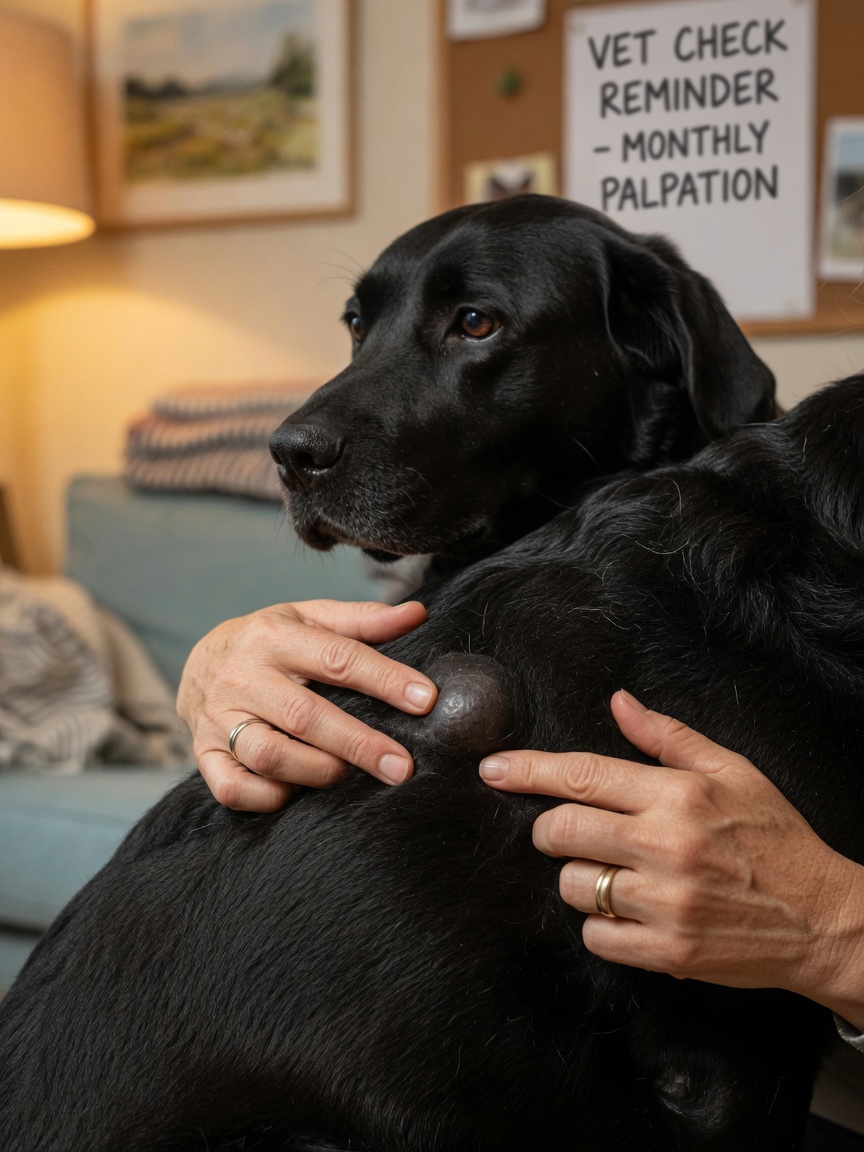
Many of the signs below can also indicate other health conditions, which is why veterinary assessment is always necessary. However, seeing one or more of these signs — especially in an older dog — warrants prompt attention.
1. Unexplained Lumps or Bumps
Any new lump, swelling, or growth on or beneath your dog's skin should be examined by a veterinarian. Not all lumps are cancerous — lipomas (fatty lumps) are common and usually benign — but a rapidly growing lump, or one that changes in texture or colour, requires urgent investigation. Run your hands over your dog regularly so you become familiar with what is normal for them.
2. Unexplained Weight Loss
If your dog is losing weight without a change in diet or exercise routine, this is a significant warning sign. Cancer can alter metabolism and cause the body to use energy differently, resulting in muscle wasting and weight loss even when appetite appears normal.
3. Loss of Appetite
A dog that suddenly loses interest in food, or that eats noticeably less than usual over several days, should be seen by a veterinarian. Reduced appetite can accompany many illnesses, but in conjunction with other signs on this list it may indicate an underlying cancer.
4. Difficulty Eating or Swallowing
Tumours in or around the mouth, throat, or oesophagus can make eating painful or physically difficult. Watch for reluctance to chew, dropping food, excessive drooling, or gagging when eating.
5. Bleeding or Unusual Discharge
Any unexplained bleeding from the nose, mouth, ears, rectum, or urinary tract should be assessed immediately. Unusual discharge — whether bloody, cloudy, or foul-smelling — from any body orifice or existing wound is equally concerning.
6. Difficulty Breathing
Laboured breathing, persistent coughing, or wheezing that is not attributable to exercise or excitement can indicate a tumour in the chest or lungs. If your dog is struggling to breathe at rest, this constitutes a veterinary emergency.
7. Persistent Lameness or Stiffness
Whilst lameness in older dogs is often associated with arthritis or joint disease, it can also be caused by bone cancer (osteosarcoma), particularly in large and giant breeds. Stiffness or swelling around a limb that does not improve with rest or standard anti-inflammatory medication warrants further investigation.
8. Offensive Odour
An unusual or particularly strong smell coming from your dog's mouth, ears, or skin — beyond normal doggy odour — can sometimes indicate a tumour. Oral tumours, for example, frequently cause a distinctive, unpleasant smell.
9. Difficulty Urinating or Defecating
Straining to urinate or defecate, producing small amounts, or showing signs of pain when doing so may point to a tumour affecting the bladder, prostate, or bowel. Blood in the urine or stool should always be reported to your veterinarian promptly.
10. Lethargy and Exercise Intolerance
All dogs have quieter days, but a sustained change in energy levels — a dog that no longer wants to walk, play, or engage with the family — can signal that something is wrong. When lethargy is combined with any other signs on this list, a veterinary appointment should be arranged without delay.
Common Cancers in Dogs
There are many types of cancer that can affect dogs. Three of the most frequently encountered in veterinary practice are:
Mast Cell Tumour
Mast cell tumours are the most common skin tumours in dogs, accounting for a significant proportion of all canine skin cancers. They can appear anywhere on the body and vary enormously in their behaviour — some are slow-growing and easily treated with surgery, whilst others are aggressive and require multimodal treatment. Any new skin lump should be assessed, as mast cell tumours cannot be reliably distinguished from benign lumps by appearance alone.
Osteosarcoma
Osteosarcoma is the most common primary bone cancer in dogs and is seen most frequently in large and giant breeds such as Great Danes, Irish Wolfhounds, Rottweilers, and Labrador Retrievers. It typically affects the long bones of the limbs and is unfortunately often aggressive. Signs include lameness, visible swelling around a bone, and significant pain. Early diagnosis is critical, as osteosarcoma can spread rapidly to the lungs.
Lymphoma
Lymphoma affects the lymphatic system and can present in various forms, the most common of which involves enlargement of the lymph nodes throughout the body. It is one of the more treatable canine cancers — many dogs respond well to chemotherapy protocols and can achieve remission for a year or longer. WSAVA-aligned oncology guidelines recommend early staging and prompt commencement of treatment for the best outcomes.
How Cancer in Dogs Is Diagnosed
If your veterinarian suspects cancer, they will recommend a series of diagnostic tests to confirm the diagnosis, identify the cancer type, and determine how far it has spread — a process known as staging.
Fine needle aspirate: A small needle is used to collect cells from a lump or enlarged lymph node. The sample is examined under a microscope. This is a quick, minimally invasive first step.
Biopsy: A small tissue sample is surgically removed and sent to a pathologist for detailed analysis. This provides a definitive diagnosis and grade for many tumour types.
Imaging: X-rays, ultrasound, and CT scans allow veterinarians to visualise tumours inside the body, assess the size and location of a mass, and check for spread to organs such as the lungs or liver.
Staging: Once a diagnosis is confirmed, staging determines how advanced the cancer is. This guides treatment decisions and helps give a realistic picture of prognosis.
Treatment Options
The treatment recommended will depend on the type of cancer, its stage, your dog's overall health, and your wishes as an owner. Your veterinarian may refer you to a specialist oncologist — increasingly available across Europe — for advice on the most appropriate approach.
Surgery: Surgical removal of a tumour is often the first and most effective treatment, particularly when the cancer is localised and has not spread.
Chemotherapy: Used for cancers such as lymphoma and mast cell disease, chemotherapy in dogs is generally better tolerated than in humans. Most dogs maintain a good quality of life during treatment.
Radiation therapy: Available at specialist centres, radiotherapy is used to target tumours that cannot be fully removed surgically, or as an adjunct to surgery.
Palliative care and pain management: When curative treatment is not possible or desired, the focus shifts to maintaining comfort and quality of life. Effective pain relief, appetite support, and gentle activity can make a significant difference to how a dog feels day to day.
Quality of Life with Cancer
A cancer diagnosis does not automatically mean the end of a good life for your dog. Many dogs live comfortably for months or even years following diagnosis, particularly when their pain is well managed and their needs are met with care and attention. ESCCAP (the European Scientific Counsel Companion Animal Parasites) and other leading bodies emphasise a whole-animal, welfare-centred approach to treatment — meaning that your dog's comfort, happiness, and dignity are central to every decision.
Focus on the things your dog enjoys: favourite walks at a gentler pace, familiar routines, quiet time with family. Monitor their appetite, mobility, and demeanour, and maintain open communication with your veterinary team. You know your dog best, and your observations are invaluable.
When to Seek Urgent Veterinary Advice
Some situations require immediate veterinary attention and should not wait for a routine appointment:
A lump that has grown rapidly over a matter of days
Sudden collapse or extreme weakness
Difficulty breathing at rest
Uncontrolled bleeding
Severe and sudden pain
If you are ever in doubt, contact your veterinarian. It is always better to have a concern assessed and find it to be nothing serious than to delay when time matters.
Facing a potential cancer diagnosis in your dog is frightening, and it is entirely natural to feel overwhelmed, grief-stricken, or uncertain about what to do next. The most important step is to seek information and support — from your veterinary team, from specialist oncologists, and from the many pet owner communities that understand exactly what you are going through. You do not have to navigate this alone.