
Dilated Cardiomyopathy in Dobermanns: What Every Owner Must Know
Dilated cardiomyopathy (DCM) is a disease of the heart muscle in which the ventricles become enlarged and weakened, reducing the heart's ability to pump blood effectively. In most breeds, DCM is a relatively uncommon diagnosis. In the Dobermann, it is the norm rather than the exception. Research suggests that approximately 58% of Dobermanns will develop the condition during their lifetime, making it the single most important health concern in the breed.
Understanding DCM — how it progresses, how it is detected early, and how it is managed — is not merely useful knowledge for Dobermann owners. It is essential.
How DCM Develops: The Occult Phase

One of the most dangerous aspects of DCM in Dobermanns is the lengthy period during which the disease is present but invisible to the naked eye. This is known as the occult phase. During this stage, the dog appears completely healthy, shows no outward symptoms, and behaves normally. Yet inside the heart, structural changes are already underway: the ventricular walls are thinning, the chambers are enlarging, and the muscle's contractile function is declining.
The occult phase in Dobermanns can last for months or years. Without specialist screening, the first indication that anything is wrong may be sudden collapse or, tragically, sudden cardiac death — which can occur even before overt heart failure develops. This is why routine screening is so critical in this breed.
Detecting DCM in the Occult Phase
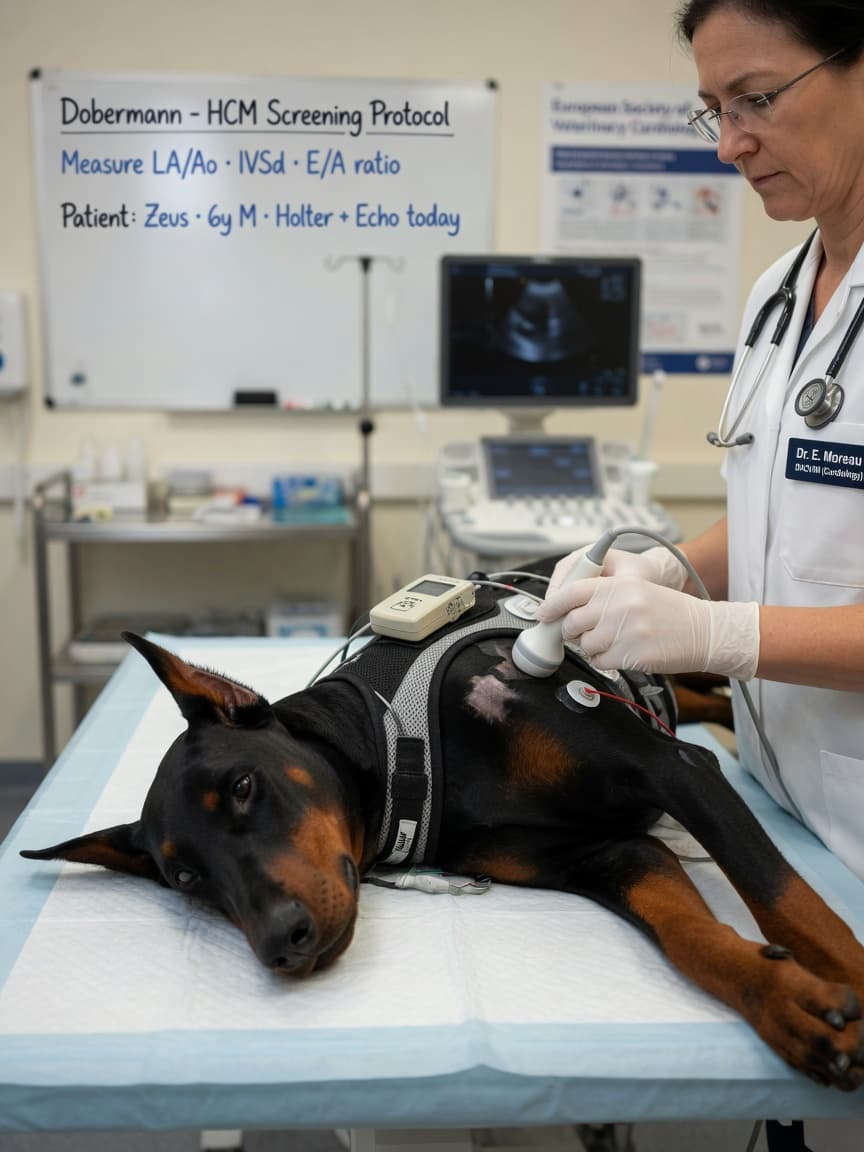
Two diagnostic tools are used together to identify occult DCM in Dobermanns:
- Echocardiogram (cardiac ultrasound): Allows a cardiologist to visualise the heart chambers, measure their dimensions, and assess the strength and efficiency of contraction. Enlargement of the left ventricle and reduced fractional shortening are hallmarks of DCM.
- Holter monitor: A portable ECG device worn by the dog — usually in a specially fitted vest — for a continuous 24-hour period. It records every heartbeat across a full day and night, detecting ventricular premature contractions (VPCs) which are abnormal electrical impulses that can precede dangerous arrhythmias. Some Dobermanns have significant numbers of VPCs detectable on Holter monitoring long before any structural changes appear on echocardiogram.
Crucially, neither test alone is sufficient. A Dobermann can have a structurally normal heart on echo but show significant arrhythmias on Holter, and vice versa. Both are needed to capture the full picture.
Annual Holter Screening: When to Start
The current recommendation from veterinary cardiologists specialising in the breed is that annual Holter monitoring should begin at three years of age in all Dobermanns. Some cardiologists recommend starting echocardiographic assessment at the same time. Screening should continue annually for life.
The rationale for starting at age three is based on the typical age of onset of detectable changes. While DCM can occasionally occur in younger dogs, the majority of cases begin to manifest detectable abnormalities from middle age onwards. Early detection allows for intervention before the dog progresses to overt heart failure or becomes at risk of sudden death.
Sudden Cardiac Death
Sudden cardiac death is a devastating reality for a subset of Dobermanns with DCM. It occurs when a ventricular arrhythmia — such as ventricular fibrillation or a rapid run of ventricular tachycardia — causes the heart to stop pumping effectively without warning. The dog may collapse and die within seconds, sometimes without any prior clinical signs that would have alerted the owner.
Dogs with high VPC counts on Holter monitoring, or those with runs of ventricular tachycardia, are considered at elevated risk. Anti-arrhythmic medications such as sotalol or mexiletine (or a combination) may be prescribed in these cases to reduce the frequency and severity of arrhythmias and lower the risk of sudden death. Close monitoring and regular reassessment are required when anti-arrhythmic therapy is used.
Treatment in the Occult Phase: The PROTECT Study
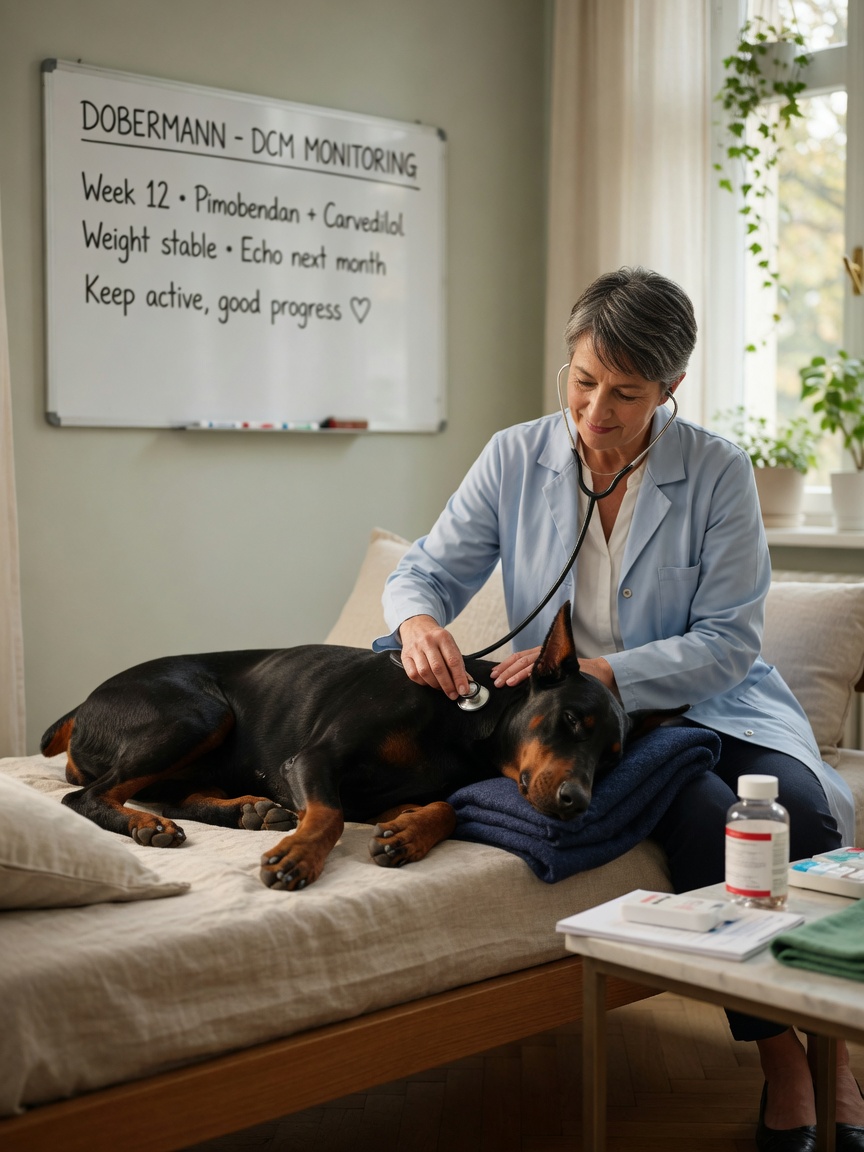
One of the most significant advances in the management of occult DCM in Dobermanns came from the PROTECT study (Preclinical Occult DCM: pimobendan treatment in Dobermanns). This clinical trial demonstrated that treatment with pimobendan — a medication that both strengthens the heart muscle and dilates blood vessels — in dogs with occult DCM (confirmed on echocardiogram but without clinical signs) significantly delayed the onset of heart failure and extended survival time.
Dogs in the PROTECT study who received pimobendan during the occult phase experienced a median delay to heart failure of approximately 9 months compared to those receiving a placebo. This is a meaningful extension of quality life, and the study results changed prescribing practice substantially. Pimobendan is now widely recommended for Dobermanns in the occult phase once echocardiographic changes consistent with DCM are confirmed.
When congestive heart failure does develop, additional medications are added — typically diuretics to remove excess fluid, and ACE inhibitors to reduce the workload on the heart.
DCM in Other Large and Giant Breeds
While the Dobermann is the breed most severely affected by DCM, the condition is not exclusive to them. Several other large and giant breeds are at significantly elevated risk:
Great Dane
The Great Dane is one of the most commonly affected giant breeds. DCM in Great Danes tends to present at a younger age than in some other breeds and can progress rapidly. Annual cardiac screening is strongly recommended from around two years of age. The giant size of the breed means that the heart is under considerable demands even in health, and the consequences of DCM are severe.
Irish Wolfhound
The Irish Wolfhound is another giant breed with a well-documented predisposition to DCM. The condition is a leading cause of the already short lifespan seen in the breed. Irish Wolfhound breed clubs actively promote cardiac screening programmes, and owners are encouraged to begin annual echocardiographic and Holter monitoring from around two years of age.
Other breeds with an elevated DCM risk include the Boxer (which develops a related condition called arrhythmogenic right ventricular cardiomyopathy), the Scottish Deerhound, the Newfoundland, and the Cocker Spaniel.
Living With a Dobermann: Practical Steps
If you own or are considering owning a Dobermann, there are several practical steps you should take:
- Register with a veterinary practice that has experience with the breed and access to specialist cardiology referral
- Begin annual Holter monitoring at three years of age, combined with echocardiographic assessment
- Learn to recognise early warning signs such as exercise intolerance, occasional fainting (syncope), or unexplained lethargy
- Discuss the results of each annual screen with your vet and ask specifically whether pimobendan or anti-arrhythmic therapy is appropriate
- If purchasing a puppy, enquire about the cardiac health history of parents and grandparents
DCM in Dobermanns is a serious condition, but early detection through consistent screening gives affected dogs the best possible chance of a longer, better-quality life. The combination of vigilant monitoring and timely treatment has genuinely improved outcomes for many dogs in this breed.