ForPetsHealthcare
Dogs

Do Indoor Cats Need Heartworm Prevention?

By Julia WrenfieldUpdated August 4, 20264 min read
Evidence-based · Sources checked
{"en": "Indoor cat resting on windowsill, highlighting heartworm prevention needs for indoor felines", "es": "Gato de interior descansando en el alf\u00e9izar de la ventana, destacando la necesidad de prevenci\u00f3n del gusano del coraz\u00f3n", "fr": "Chat d'int\u00e9rieur se reposant sur un rebord de fen\u00eatre, soulignant le besoin de pr\u00e9vention du ver du c\u0153ur", "de": "Hauskatze ruht auf einer Fensterbank und zeigt die Notwendigkeit der Herzwurmpr\u00e4vention", "nl": "Binnenkat rust op een vensterbank, wat het belang van hartwormprevention benadrukt", "pt": "Gato dom\u00e9stico descansando no peitoril da janela, destacando a necessidade de preven\u00e7\u00e3o de verme do cora\u00e7\u00e3o", "it": "Gatto domestico che riposa su un davanzale, evidenziando la necessit\u00e0 della prevenzione della filaria"}

Many cat owners assume their indoor felines are safe from heartworm disease, but this common misconception could leave your beloved pet vulnerable. Whilst indoor cats face lower risk than outdoor cats, they're far from immune to this serious and potentially fatal condition. Understanding heartworm transmission, recognising the risks, and knowing when prevention is necessary are crucial aspects of responsible indoor cat care.

Understanding Feline Heartworm Disease

Heartworm disease is caused by the parasitic worm Dirofilaria immitis, transmitted through mosquito bites. Unlike dogs, cats are not ideal hosts for these parasites, which means they're naturally more resistant. However, this resistance doesn't equal immunity. When cats do contract heartworm, the disease is often more severe because their smaller bodies struggle to accommodate the adult worms, and diagnosis is considerably more challenging.

How Indoor Cats Get Heartworms

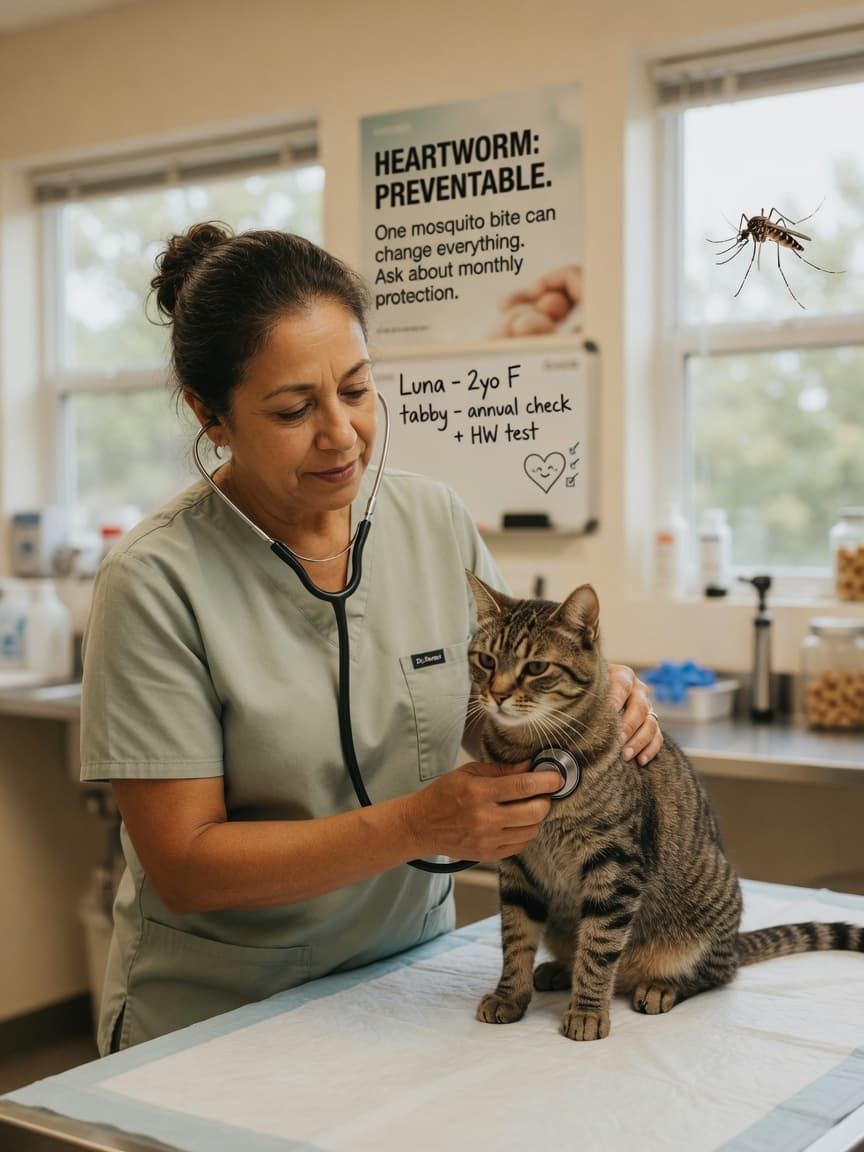
Indoor cat resting by an open window where a mosquito can be seen, illustrating how mosquitoes enter homes and expose indoor cats to heartworm

The primary misconception is that indoor cats cannot be exposed to mosquitoes. In reality:

  • Mosquitoes can enter homes through open doors, windows, and cracks
  • A single infected mosquito bite is sufficient for transmission
  • Indoor cats may venture outdoors occasionally or be taken to veterinary surgeries where exposure is possible
  • Some cats live semi-indoors with outdoor access during warmer months

Mosquito season varies by region, but in many parts of Europe, the risk extends from late spring through autumn, with peaks during warm, humid weather.

Symptoms of Heartworm in Cats

Detecting heartworm in cats is notoriously difficult because symptoms often mimic other conditions. Watch for:

  • Persistent coughing or respiratory distress
  • Lethargy and decreased activity levels
  • Loss of appetite and weight loss
  • Vomiting or gagging
  • Collapse or sudden death in severe cases

Tragically, some cats show no symptoms whatsoever until the disease becomes critical. This unpredictability makes prevention far preferable to treatment.

When Should Indoor Cats Receive Prevention?

Your veterinarian is the best person to assess your individual cat's risk, but prevention is generally recommended if:

  1. You live in an area with documented heartworm presence in cats
  2. Your home has mosquitoes or is located near standing water
  3. Your cat has any outdoor access, supervised or otherwise
  4. You frequently travel with your cat to heartworm-endemic regions

Higher-risk areas include parts of Southern Europe, coastal regions, and wetland areas where mosquito populations thrive. If you're unsure about your local heartworm prevalence, your veterinary practice can provide specific guidance based on your postcode and circumstances.

Prevention Options Available
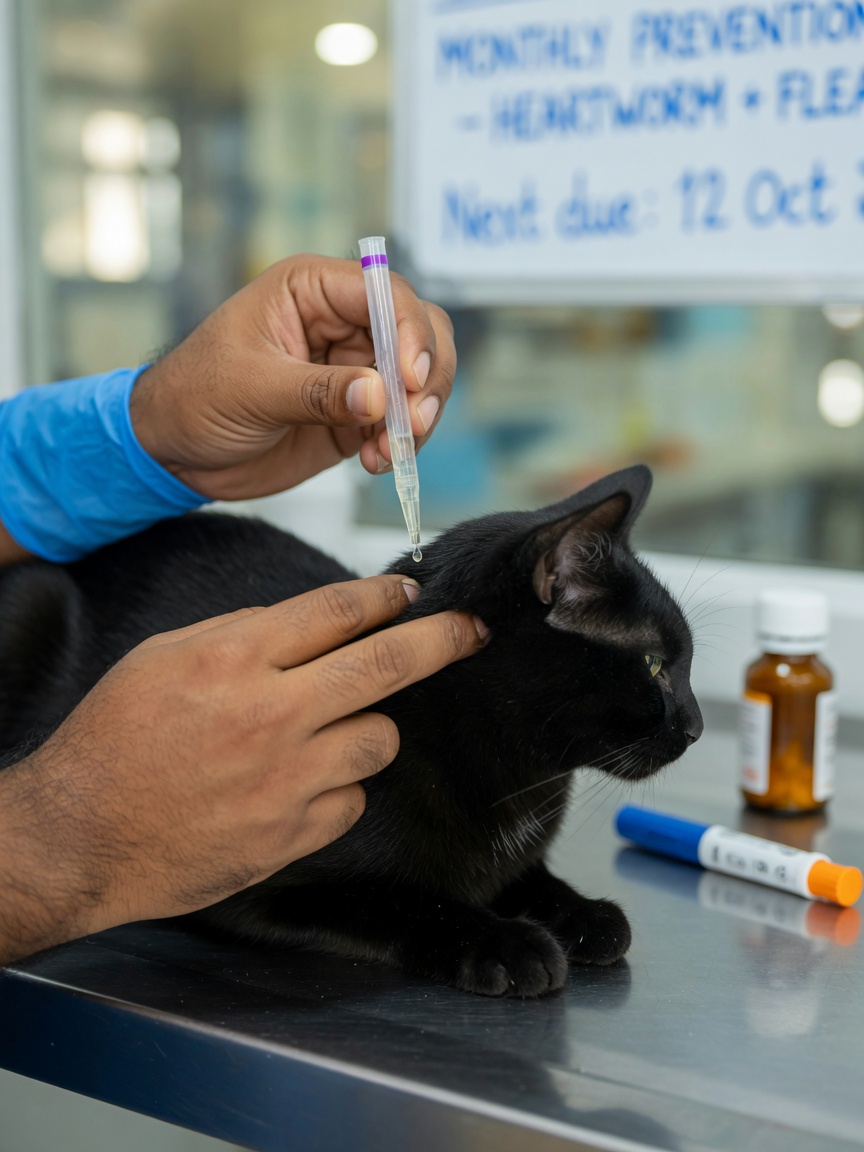
Veterinary technician applying topical heartworm prevention to a black cat's neck during a clinic visit, demonstrating monthly prevention application

Modern heartworm prevention for cats is straightforward and effective. Options include:

  • Monthly topical treatments: Applied to the skin, these are easy to administer and often provide additional parasite protection
  • Injectable prevention: A microchip-style injection given by your vet, lasting six or twelve months
  • Oral medications: Monthly tablets, though less commonly used for cats due to administration challenges

Many heartworm preventatives also protect against other parasites, making them an efficient part of your cat's overall health regimen.

Key Takeaways

Whilst indoor cats face lower heartworm risk than their outdoor counterparts, they're not completely protected. A single mosquito entering your home poses a genuine threat to an unprotected cat. The decision to use prevention should be made in consultation with your veterinarian, who can assess your specific circumstances and local risk factors. Given the severity of untreated heartworm disease in cats and the ease of prevention, most veterinary professionals recommend protecting indoor cats living in moderate-to-high-risk areas. Prevention is always more straightforward, safer, and more cost-effective than treating established heartworm disease in felines.

#do indoor cats need heartworm prevention#cat health#feline nutrition#forpetshealthcare

Sources & further reading

This article is based on peer-reviewed veterinary research and reputable animal-health sources. Explore the underlying science in our Research Library.

Related articles

The 19 Best Animal Shelters in the Netherlands (2026)

the Netherlands's animal shelters, rescue associations and refuges save thousands of dogs, cats and other animals every year, almost always on tiny budgets and volunteer power. To build the most objective ranking possible, we analysed public Google reviews across more than 56 registered animal-prote…

Read more →

The 25 Best Animal Shelters in Italy (2026)

Italy's animal shelters, rescue associations and refuges save thousands of dogs, cats and other animals every year, almost always on tiny budgets and volunteer power. To build the most objective ranking possible, we analysed public Google reviews across more than 121 registered animal-protection org…

Read more →

The 48 Best Animal Shelters in Germany (2026)

Germany's animal shelters, rescue associations and refuges save thousands of dogs, cats and other animals every year, almost always on tiny budgets and volunteer power. To build the most objective ranking possible, we analysed public Google reviews across more than 152 registered animal-protection o…

Read more →

The 32 Best Animal Shelters in France (2026)

France's animal shelters, rescue associations and refuges save thousands of dogs, cats and other animals every year, almost always on tiny budgets and volunteer power. To build the most objective ranking possible, we analysed public Google reviews across more than 89 registered animal-protection org…

Read more →

The 8 Best Animal Shelters in Portugal (2026)

Portugal's animal shelters, rescue associations and municipal centros de recolha save thousands of dogs, cats and other animals every year, almost always on tiny budgets and volunteer power. To build the most objective ranking possible, we analysed public Google reviews across more than 86 registere…

Read more →

Sphynx Cat Skin care and hygiene: Causes, Signs & Care

Sphynx cats have little to no coat, which means the skin itself takes on jobs that fur normally does — insulation, oil dispersal, and barrier protection — leaving it prone to greasiness, blocked pores, fungal infections, and sunburn. The single most important thing to know is that a Sphynx's skin ne…

Read more →
Disclaimer:This article is for informational purposes only and does not constitute veterinary advice. Always consult a qualified veterinarian for your pet's health concerns.

Free newsletter

Pet health tips, straight to your inbox

Weekly science-backed advice for dog & cat owners. No spam, unsubscribe anytime.