
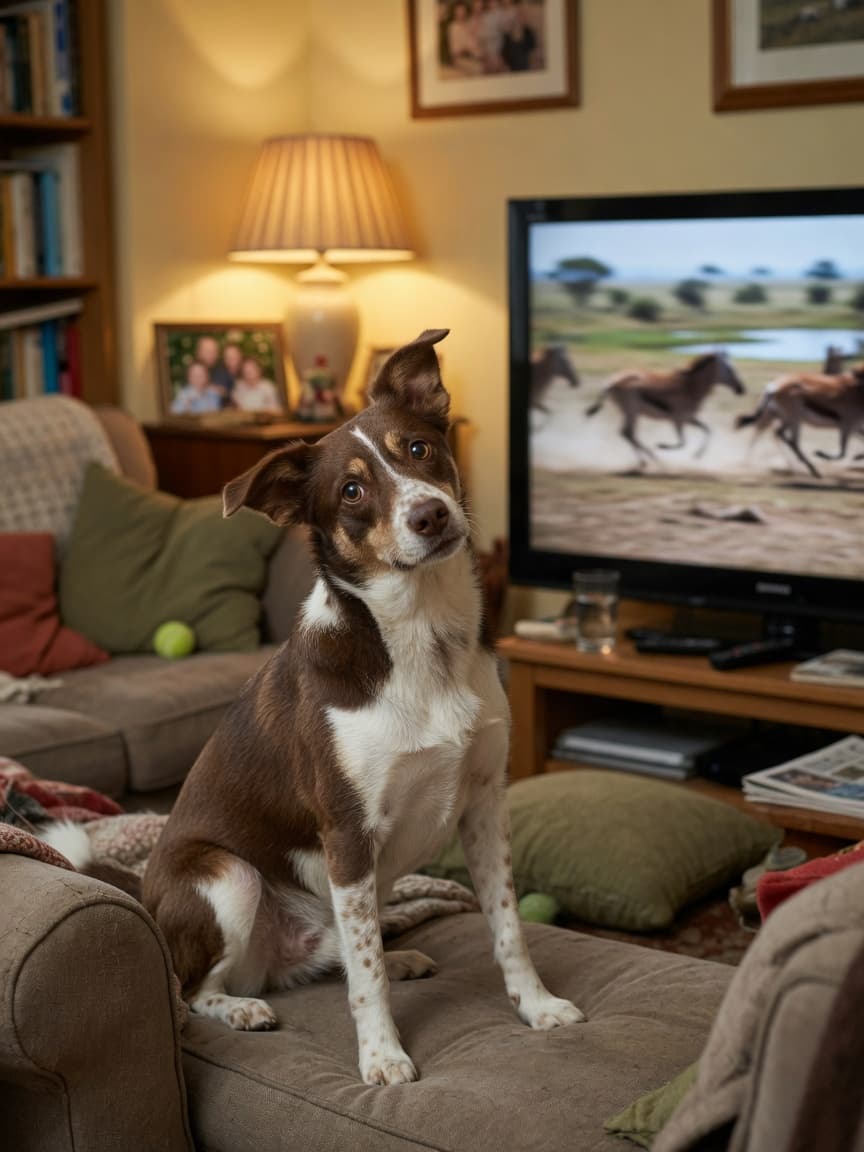
Have you ever noticed your dog tilting their head at the television, seemingly mesmerised by the moving images? It's a common sight in households across Europe, and it raises a fascinating question: do dogs actually watch TV, or are they simply responding to sounds and light? The answer is more nuanced than a simple yes or no. Dogs do perceive what's on screen, though their experience of television differs significantly from ours. Understanding how your dog processes visual media can help you make informed decisions about screen time and choose content that may genuinely interest your furry companion.
How Dogs See the World Differently

Dogs possess a fundamentally different visual system to humans. Whilst we see the world in vivid colour and fine detail, dogs see primarily in shades of blue and yellow. Their perception of colour is similar to a person with red-green colour blindness. Additionally, dogs have a higher flicker fusion rate than humans, meaning they perceive rapidly changing images differently. Where we see a smooth motion picture, dogs may initially perceive a series of individual frames.
However, modern televisions have higher refresh rates than older models, which means today's dogs are more likely to perceive TV as continuous motion rather than a flickering image. This is why many dogs seem more engaged with contemporary screens than they might have been a decade ago.
Do Dogs Actually Pay Attention to TV Content?
Research suggests that some dogs do show genuine interest in television, particularly certain types of content. Studies have revealed that dogs respond more attentively to footage featuring other animals, especially other dogs. They may recognise canine body language, barking sounds, and movement patterns that trigger their natural instincts.
The level of engagement varies considerably between individual dogs. Factors influencing this include:
- Age and cognitive development
- Breed and natural prey drive
- Individual temperament and personality
- Previous exposure to screens
- What else is happening in the environment
Younger dogs and those with higher prey drives tend to show more interest in moving objects on screen. Border Collies and other herding breeds, for instance, may become particularly engaged with footage of running animals.
Types of Content Dogs Find Engaging
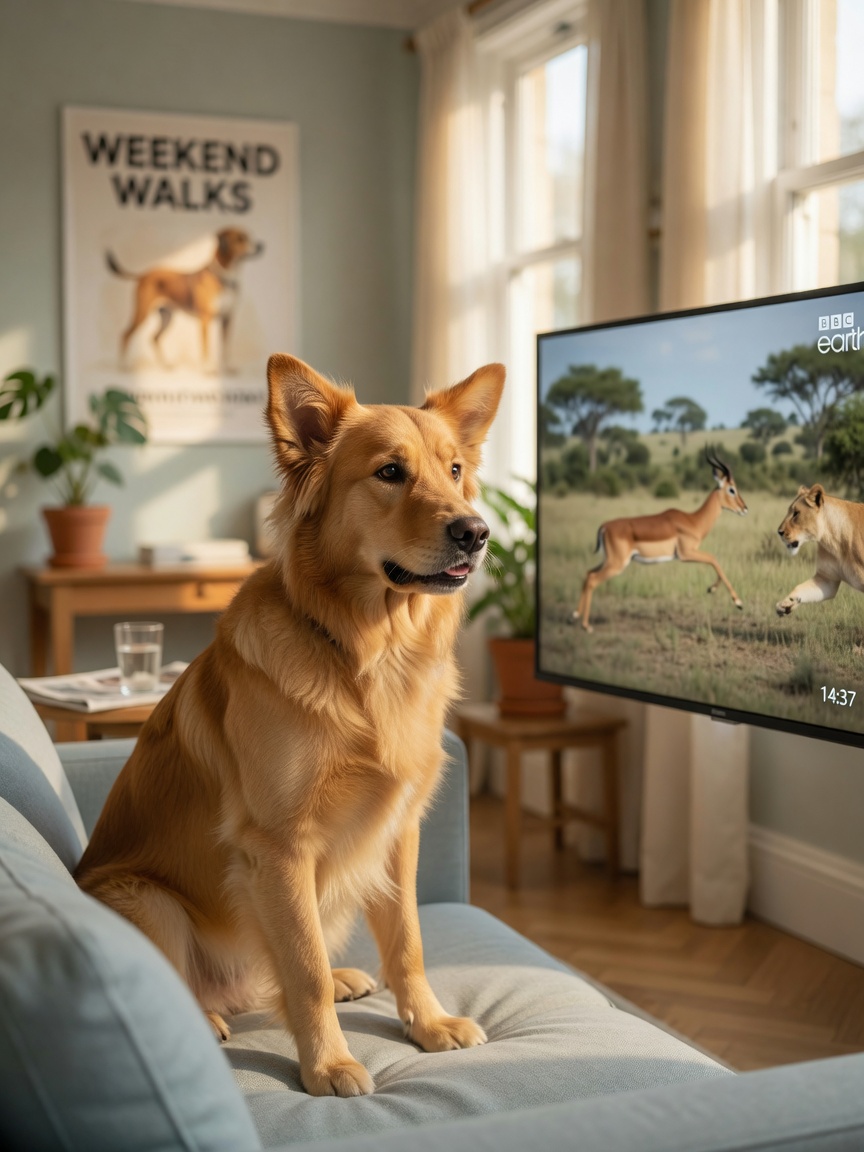
If you're considering allowing your dog to watch television, certain content types are more likely to capture their attention:
- Animal documentaries – Footage of other dogs, cats, birds, and wildlife often generates the most interest
- Dog-specific programming – Channels and streaming services have created content specifically designed for canine viewers
- Nature programmes – Scenes with movement and natural sounds appeal to their instincts
- Game shows with movement – Fast-paced content with bright colours and sound effects may hold attention
Conversely, slow dialogue-heavy dramas or news programmes rarely capture sustained canine interest.
Is TV Watching Beneficial or Harmful?
Occasional television viewing is unlikely to cause harm to your dog. However, it shouldn't replace essential physical exercise, mental stimulation, and social interaction. Dogs require approximately 30 minutes to 2 hours of daily exercise depending on their breed and age, along with regular training and play.
Excessive screen time may contribute to sedentary behaviour, which increases the risk of obesity and associated health problems. Additionally, sudden loud sounds from television could trigger anxiety in noise-sensitive dogs.
Creating a Balanced Viewing Experience
If your dog enjoys watching TV, consider these guidelines:
- Limit viewing to occasional sessions rather than continuous daily viewing
- Choose content specifically designed for dogs or animal-focused programming
- Maintain comfortable viewing distance (not too close to the screen)
- Ensure the volume level is appropriate and not distressing
- Use TV as an occasional enrichment activity, not a substitute for exercise
- Observe your dog's behaviour for signs of stress or overstimulation
Key Takeaways
Dogs do perceive television, and some genuinely engage with certain types of content. However, their visual experience differs substantially from ours due to differences in colour perception and flicker fusion rates. Whilst occasional TV watching can provide harmless entertainment and mental stimulation, it cannot replace the physical exercise, training, and human interaction that dogs need to thrive. Use television judiciously as one element of your dog's enrichment routine, prioritising active play and outdoor adventures as the foundation of a healthy, happy life for your canine companion.