
The Hidden Problem Behind Many Sick Rabbits
Dental disease is estimated to affect the majority of domestic rabbits at some point in their lives, yet it remains one of the most underdiagnosed conditions in this species. A rabbit's teeth never stop growing — and when that growth goes wrong, the consequences ripple through every aspect of the animal's health, from appetite and weight to eye infections and GI stasis.
The challenge is that rabbits are stoic. By the time an owner notices something is wrong, dental disease is often already well advanced.
Understanding Rabbit Dental Anatomy
Rabbits have 28 teeth in total, including incisors at the front and a set of cheek teeth — premolars and molars — further back. All of these teeth are hypsodont, meaning they grow continuously throughout the rabbit's life, typically at a rate of two to three millimetres per week.
In a healthy rabbit eating an appropriate diet, the natural wear from chewing fibrous hay keeps this growth in check. Problems arise when that wear is uneven, insufficient, or when the teeth are not properly aligned — a condition known as malocclusion.
Types of Dental Disease in Rabbits
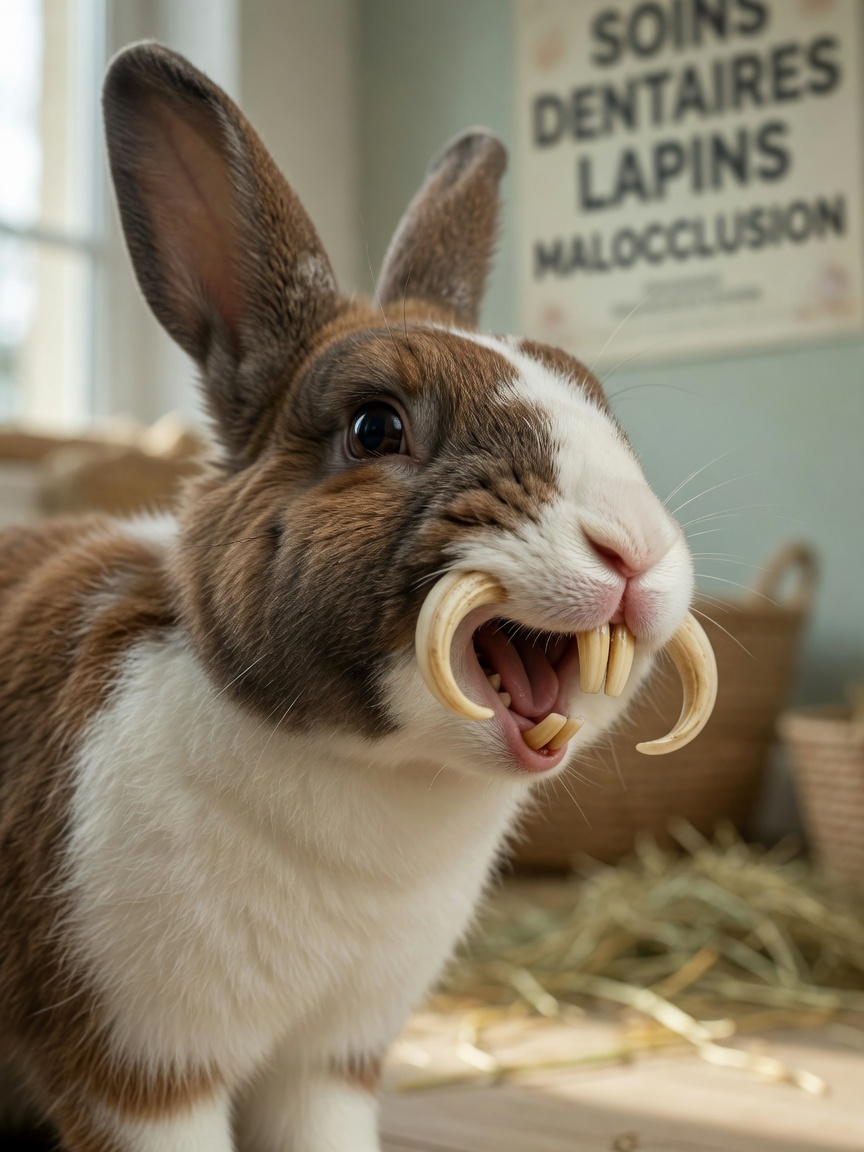
Incisor Malocclusion
This is the most visible form of dental disease because the front teeth can be seen without specialist equipment. When upper and lower incisors do not meet correctly, they overgrow and may curl, preventing the rabbit from grooming, eating, or closing its mouth properly. In some cases, teeth grow into the soft tissue of the mouth.
Cheek Tooth Spurs and Overgrowth
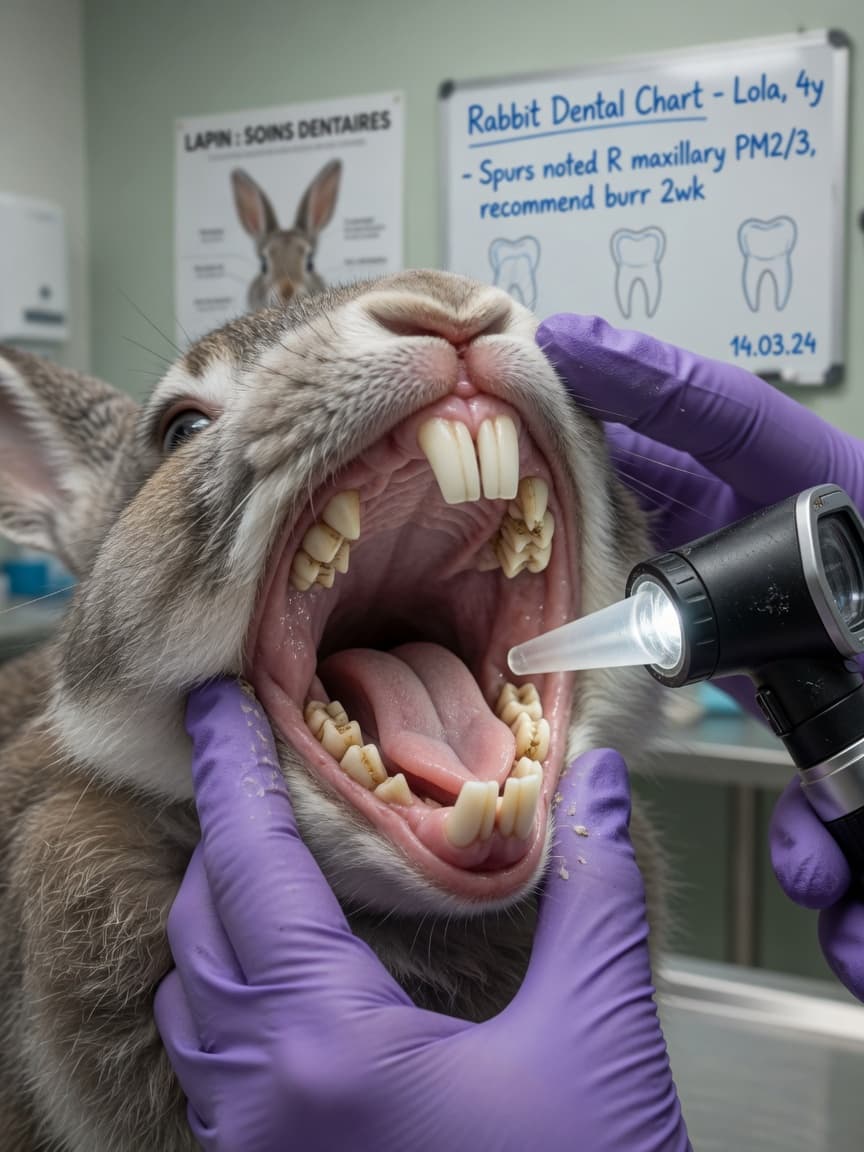
Far more common — and far more dangerous — is disease of the cheek teeth. These are not visible without an examination under sedation. Cheek teeth can develop sharp spurs that lacerate the tongue and cheeks, or they may overgrow to the point that upper and lower teeth meet incorrectly and form a bridge, locking the jaw.
Tooth Root Elongation
As cheek teeth grow in the wrong direction, the roots can press into surrounding bone and tissue. Upper cheek tooth roots sit close to the eyes; elongation in this area frequently causes chronic eye discharge, abscesses around the eye socket, and significant pain. Lower tooth root elongation can be felt as small hard lumps along the jawline.
Recognising the Signs
Because dental pain causes rabbits to reduce eating rather than stop entirely at first, early signs are subtle. Look for:
- Preference for softer foods and reduced hay consumption
- Weight loss despite appearing to eat
- Dropping food (called quidding) from the mouth while chewing
- Wet fur around the chin, dewlap, or chest from drooling
- Recurring eye discharge, especially if one-sided
- Facial swellings or lumps along the jaw
- Reluctance to be touched around the face
- Overgrown or misaligned front teeth visible to the naked eye
Any of these signs warrants a prompt veterinary examination. Do not assume a rabbit losing weight is simply picky about food.
Diagnosis and Treatment
Veterinary Assessment
A full dental examination in rabbits requires sedation. The mouth is small, the rabbit will not cooperate without it, and the cheek teeth simply cannot be assessed adequately in a conscious animal. Your vet will use an otoscope or specialised dental scope and may recommend skull X-rays or CT imaging to evaluate root health — particularly important if abscesses or eye problems are present.
Dental Procedures
Treatment depends on the severity of disease. Incisor malocclusion is sometimes managed by regular trimming, though extraction is frequently recommended as a more permanent solution — rabbits adapt well to life without incisors, using their lips to gather food instead. Cheek tooth spurs are filed down under anaesthesia in a procedure called a burr or float. Severely overgrown cheek teeth may require extraction, which is a complex procedure best performed by a vet with specialist small mammal experience.
Dental abscesses in rabbits are notoriously difficult to treat because rabbit pus is thick and does not drain the way it does in other species. Long-term antibiotic therapy and sometimes surgical removal of infected bone may be necessary.
Prevention: Diet Is Everything
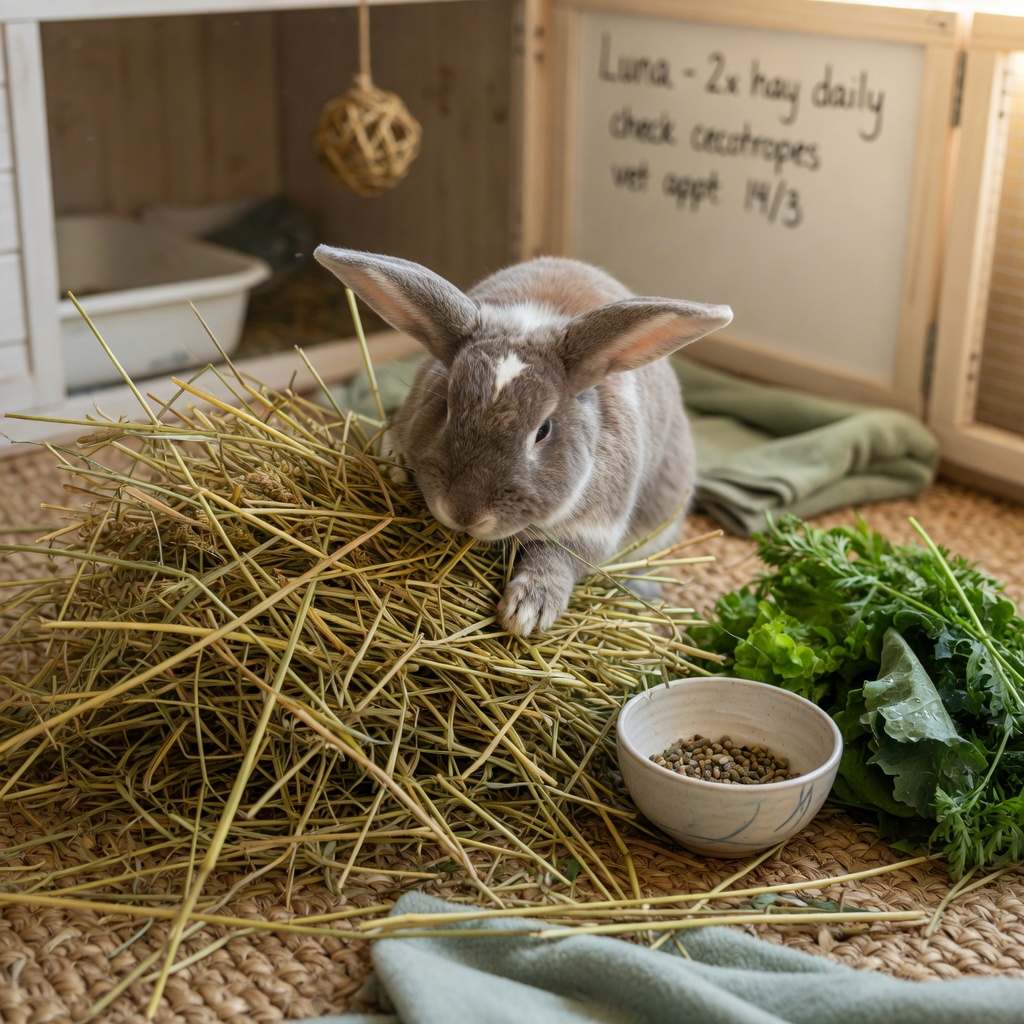
The single most effective preventive measure is a diet based predominantly on long-stemmed hay. The lateral grinding motion required to chew hay wears the cheek teeth evenly and continuously. Pellets, by contrast, require very little chewing and contribute minimally to dental wear.
- Offer unlimited timothy, meadow, or orchard grass hay as the dietary foundation
- Feed fresh leafy greens daily to encourage natural foraging behaviour
- Keep pellets to a small supplementary portion — no more than one to two tablespoons per kilogram of body weight per day
- Avoid muesli-style mixes, which allow selective feeding of low-fibre components
- Provide safe wooden chews or willow toys to encourage additional chewing activity
- Schedule annual dental checks with a rabbit-experienced vet, even in apparently healthy animals
Genetic predisposition also plays a role. Lop-eared breeds and flat-faced breeds such as Netherland Dwarfs have compressed skull anatomy that increases the likelihood of dental misalignment. Owners of these breeds should be especially vigilant and consider more frequent veterinary dental checks from an early age.
What Every Owner Should Remember
Dental disease in rabbits is progressive, painful, and closely linked to other serious conditions including GI stasis and chronic infection. The best outcomes belong to rabbits whose problems are caught early — which means owners who know the signs and do not delay seeking veterinary assessment.
Feed the right diet, monitor eating behaviour and weight regularly, and ensure your rabbit sees a vet who is experienced with small mammals at least once a year. These habits are the foundation of a rabbit that lives comfortably well into its senior years.