
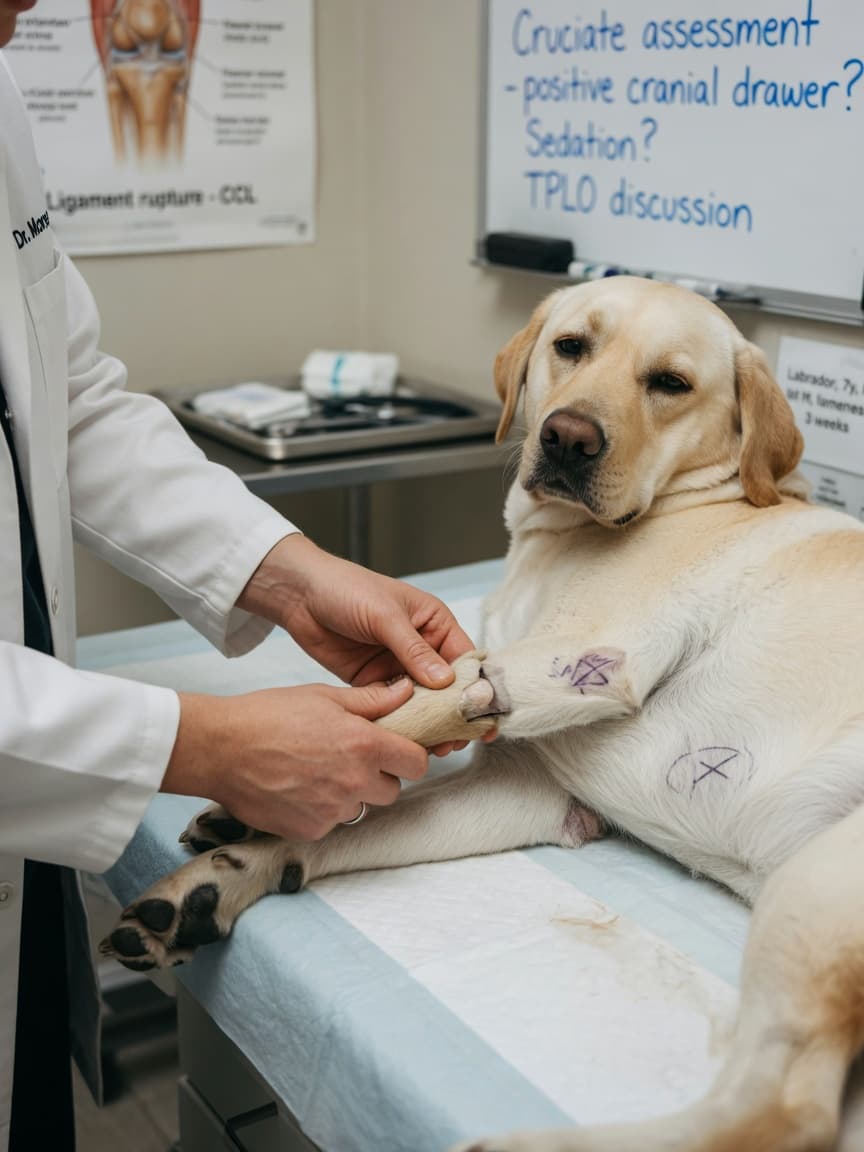
What Is a Cruciate Ligament Injury?
The cranial cruciate ligament (CCL) is one of the most important stabilising structures inside the canine knee, known as the stifle joint. It runs diagonally through the joint and prevents the tibia from sliding forward relative to the femur during movement. When this ligament is damaged or ruptures completely, the stifle becomes unstable, causing significant pain and lameness.
Cruciate ligament disease is the most common orthopaedic injury seen in dogs, and unlike the acute sporting injuries humans often experience, the condition in dogs is usually degenerative. This means the ligament weakens over time before eventually failing, which is why many dogs present with a history of subtle intermittent lameness before a full rupture occurs.
Which Dogs Are Most at Risk?
While any dog can suffer a cruciate ligament injury, certain breeds carry a significantly higher genetic predisposition. Labrador Retrievers, Rottweilers, Mastiffs, Newfoundlands, and Staffordshire Bull Terriers are among the most commonly affected. Obesity is a major contributing factor regardless of breed, as excess weight places chronic stress on the stifle joint.
Neutered dogs, particularly those neutered before skeletal maturity, have also been shown in studies to have a higher incidence of cruciate disease. This is thought to relate to changes in muscle mass, body composition, and possibly the hormonal influence on ligament integrity. Age plays a role too, with middle-aged to older dogs forming the majority of cases, though young large-breed dogs are not exempt.
Recognising the Signs
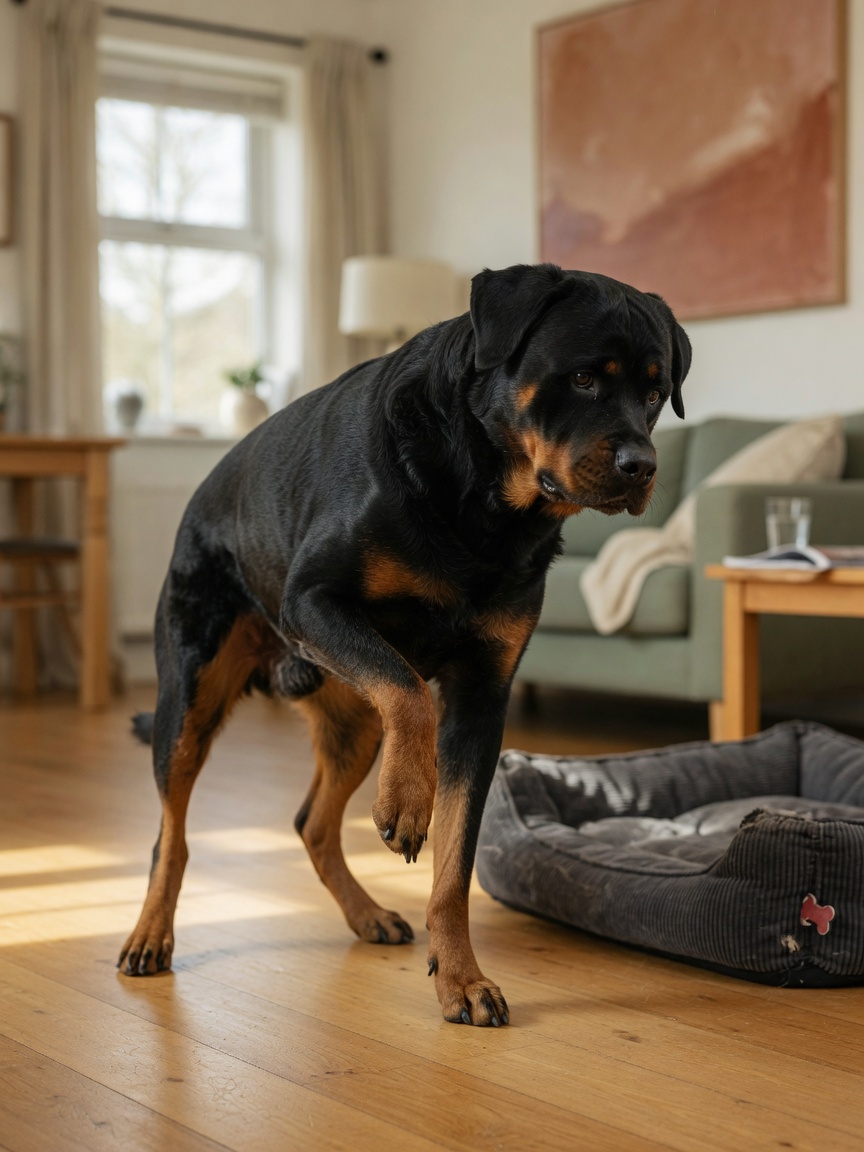
The clinical picture of a cruciate injury can vary depending on whether the rupture is partial or complete. With a partial tear, owners often notice intermittent hind limb lameness that seems to improve with rest only to return after exercise. The dog may be reluctant to rise from lying down, struggle on stairs, or hold the affected leg slightly raised when standing.
A complete rupture typically produces sudden, non-weight-bearing lameness. The dog will often refuse to put the leg down at all and may cry out in pain during the initial injury. Swelling around the stifle, muscle wasting in the affected limb, and a characteristic bony thickening on the inside of the joint known as a medial buttress are all physical signs a vet will look for during examination.
How Is It Diagnosed?
Diagnosis is made through a combination of physical examination and imaging. Your vet will perform specific orthopaedic tests including the cranial drawer test and tibial compression test, both of which assess stifle stability. In a relaxed or sedated dog, a positive result is strongly indicative of cruciate rupture.
Radiographs are taken to evaluate joint effusion, the degree of osteoarthritis already present, and to rule out other concurrent conditions. Advanced imaging such as MRI or CT scans may be recommended by specialist surgeons when planning complex cases or assessing partial tears more accurately.
Surgery Options
Surgical intervention is strongly recommended for most dogs, particularly those over 15 kilograms. Conservative management with strict rest and anti-inflammatory medication can provide some relief in small dogs, but long-term outcomes are generally better with surgery across all sizes.
TPLO (Tibial Plateau Levelling Osteotomy)
TPLO is currently the most widely performed technique and is considered the gold standard for medium to large-breed dogs. The procedure involves cutting and rotating the tibial plateau to change the biomechanics of the stifle, eliminating the forward thrust that makes the CCL necessary for joint stability. Long-term outcomes are excellent, with the majority of dogs returning to full function.
TTA (Tibial Tuberosity Advancement)
TTA works on a similar principle to TPLO but achieves joint stabilisation by advancing the tibial tuberosity, altering the direction of the patellar tendon. It carries a slightly different risk and complication profile and is favoured in certain anatomical configurations. Outcomes are comparable to TPLO in most studies.
Extracapsular Repair (Lateral Suture Technique)
This older technique involves placing a strong suture outside the joint to mimic the role of the ruptured ligament. It remains a valid option for smaller dogs and carries lower surgical costs, though it is generally considered less durable than osteotomy-based techniques in larger, more active dogs.
What to Expect During Recovery
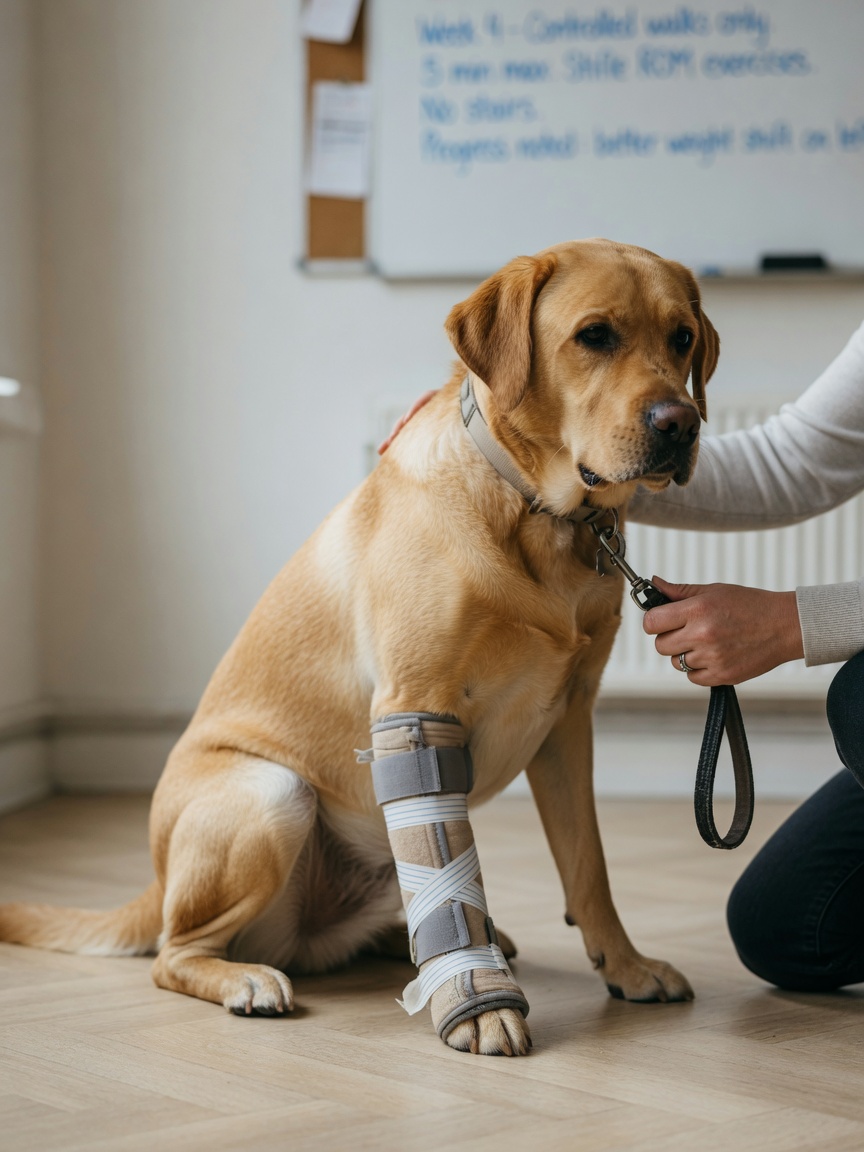
Recovery from cruciate surgery is a lengthy process that demands commitment from the owner. Most protocols involve a minimum of eight to twelve weeks of strict exercise restriction, progressing through controlled lead walks before returning to off-lead activity. During the initial period, dogs are typically confined to a small area and kept from jumping, running, or navigating stairs unsupported.
Pain management is critical throughout recovery and usually involves a multimodal approach including non-steroidal anti-inflammatory drugs (NSAIDs), sometimes combined with adjunct analgesics. Joint supplements containing omega-3 fatty acids, glucosamine, and chondroitin are frequently recommended to support cartilage health during the healing period.
Physiotherapy and Long-Term Management
Canine physiotherapy plays an increasingly important role in cruciate recovery. Hydrotherapy, passive range-of-motion exercises, and targeted muscle-building work all contribute to a faster, more complete return to function. Many specialist centres now offer formal rehabilitation programmes that run alongside the surgical recovery period.
It is important to be aware that dogs who rupture one cruciate ligament have a reported 40 to 60 per cent chance of rupturing the opposite limb within two years. Managing body weight carefully, maintaining muscle condition, and monitoring any changes in gait are all part of the long-term picture for these dogs. Arthritis will develop in the affected joint over time regardless of surgical success, making ongoing joint health management a lifelong commitment.