
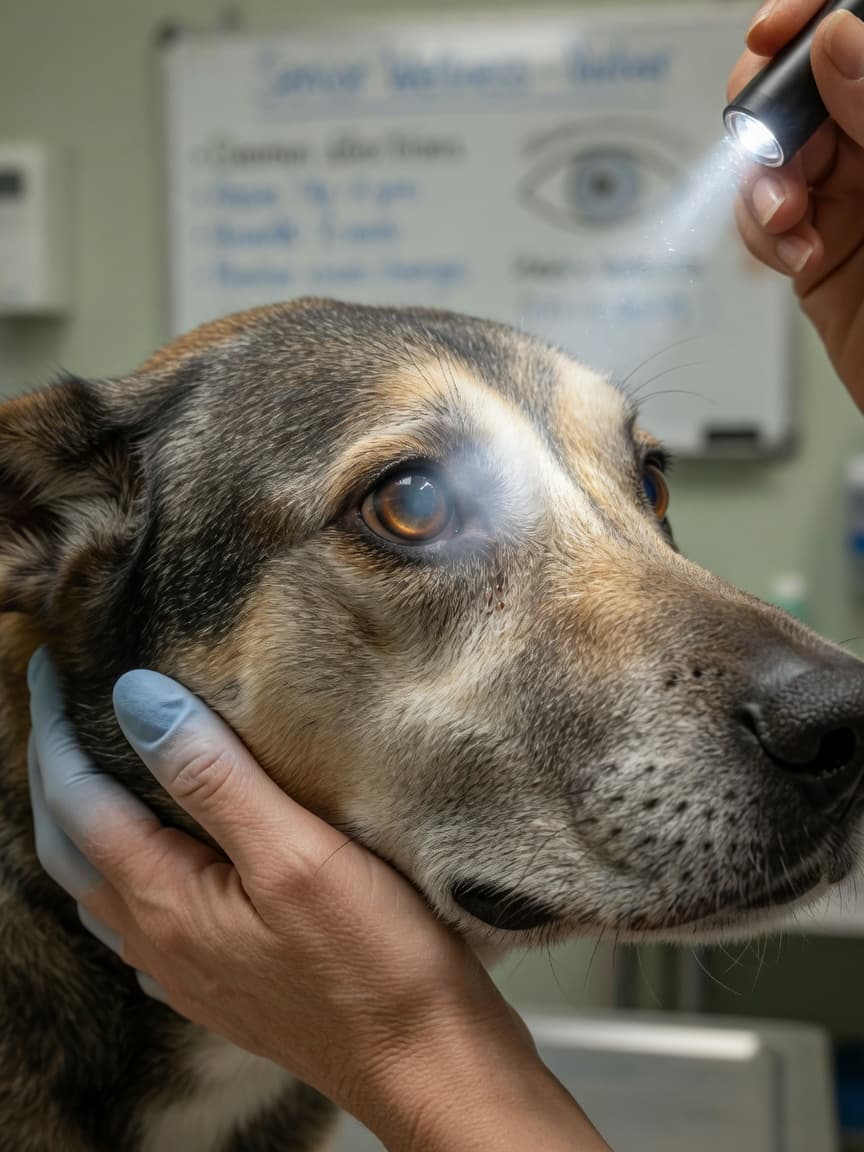
Why the Confusion?
If your dog's eyes have taken on a bluish, greyish, or cloudy appearance as they have aged, you may have found yourself wondering whether cataracts are to blame. It is a very common concern, and the answer is not always straightforward — because there is another condition that looks remarkably similar and is far more common in older dogs.
Nuclear sclerosis and cataracts are frequently confused by dog owners, and even occasionally misidentified by those without specific ophthalmology training. Understanding the difference matters because one is a benign part of normal ageing, while the other is a genuine ocular disease that can progress to blindness if left unmanaged.
What Is Nuclear Sclerosis?
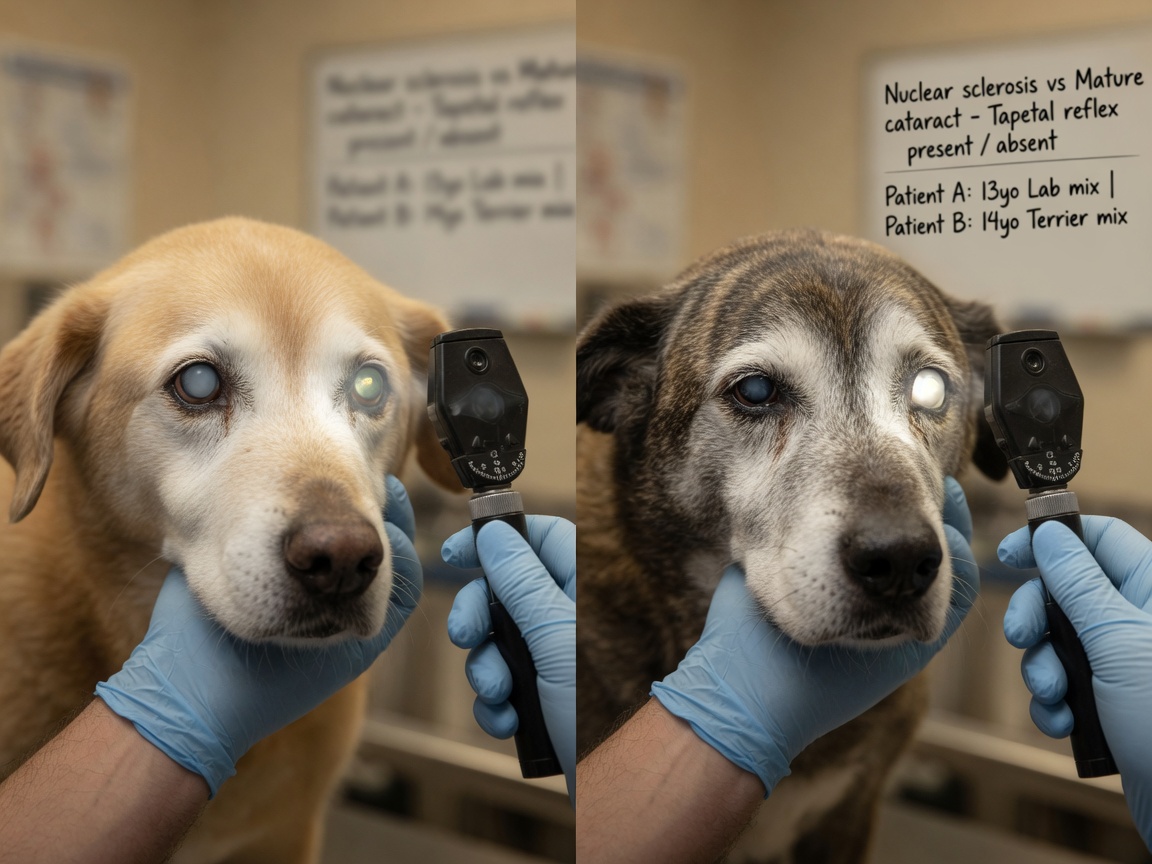
Nuclear sclerosis, sometimes called lenticular sclerosis, is an age-related change in the lens of the eye. As dogs age, the lens fibres within the eye become more densely packed and compressed towards the centre of the lens. This increases the optical density of the lens and causes it to appear hazy or bluish-grey when light reflects off it.
It is an almost universal finding in dogs over the age of seven, and by the time a dog reaches ten years of age, virtually all of them will have some degree of nuclear sclerosis. It is considered a normal part of the ageing process rather than a disease.
Importantly, nuclear sclerosis does not significantly affect a dog's vision. Dogs may experience some difficulty focusing on very close objects — similar to the reading glasses that many middle-aged humans eventually require — but their functional vision remains largely intact. It is not painful and does not progress to blindness.
What Are Cataracts?
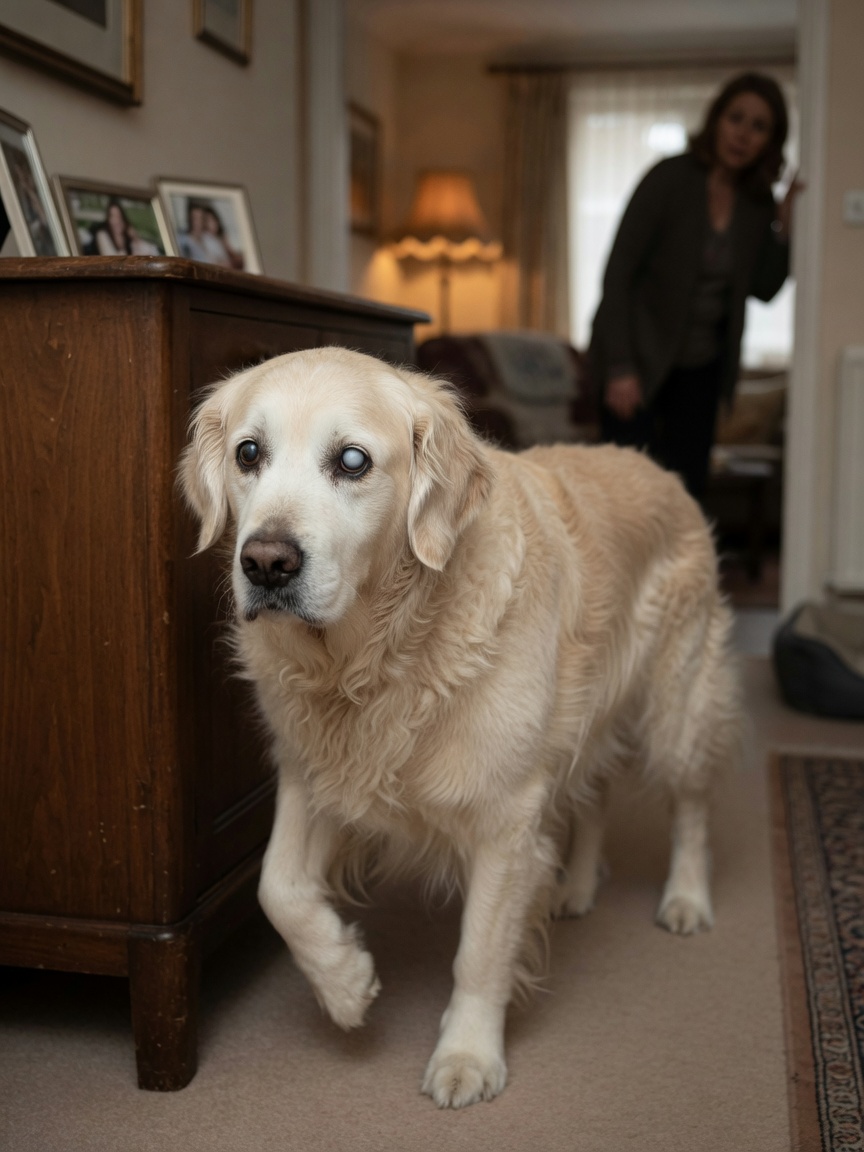
Cataracts are a distinctly different condition. A cataract is an opacity or clouding within the lens itself, caused by disruption to the normal structure of the lens fibres or lens proteins. Unlike nuclear sclerosis, cataracts can occur at any age and can develop for a variety of reasons.
Cataracts range in severity from very small, localised opacities that cause minimal visual disruption, to complete opacification of the entire lens, resulting in significant vision loss or blindness. Their appearance under direct lighting or during a veterinary examination tends to be whiter and more densely opaque than the blueish haze of nuclear sclerosis.
The most common cause of cataracts in dogs is genetic inheritance. Certain breeds have an established hereditary predisposition, including Poodles, Cocker Spaniels, Labrador Retrievers, Golden Retrievers, Siberian Huskies, and Boston Terriers, among others. Cataracts can also develop secondary to other conditions, most notably diabetes mellitus, which is responsible for a significant proportion of cataract cases in middle-aged and older dogs.
How to Tell Them Apart at Home
While a definitive diagnosis always requires a veterinary examination, there are some practical observations that can help you make an informed assessment before your appointment.
- Age of onset: Nuclear sclerosis almost exclusively appears in dogs over six or seven years of age and progresses gradually. Cataracts can appear at any age, including in puppies, and may develop more rapidly.
- Colour: Nuclear sclerosis tends to give the eye a soft, bluish-grey hue. Cataracts are typically whiter and more opaque in appearance.
- Location: Nuclear sclerosis affects the central nucleus of the lens symmetrically in both eyes. Cataracts may appear in one or both eyes, and can be localised to specific areas of the lens.
- Functional vision: Dogs with nuclear sclerosis usually navigate their environment confidently and do not bump into furniture or miss items. Dogs with significant cataracts may show signs of visual impairment — hesitating in dim light, misjudging distances, or appearing startled when approached from certain angles.
The Role of a Veterinary Examination
A standard examination with an ophthalmoscope allows your vet to shine a light through the lens and assess what lies behind it. With nuclear sclerosis, light passes through the lens and the tapetum (the reflective layer at the back of the eye) is still visible. With a dense cataract, the opacity blocks this tapetal reflection entirely.
If there is any doubt, or if the findings suggest cataracts, referral to a veterinary ophthalmologist is recommended. A specialist can perform a full slit-lamp examination and electroretinography to assess not just the lens but the health of the retina behind it, which is critical information if surgical treatment is being considered.
Treatment Approaches
Nuclear sclerosis requires no treatment. It is monitored periodically during routine check-ups to ensure it is not progressing into something more complex, but no intervention is needed. There are no drops or supplements proven to reverse or slow nuclear sclerosis.
Cataracts, depending on their severity and impact on quality of life, may be managed conservatively or surgically. Phacoemulsification — the technique used in human cataract surgery — is the gold standard treatment in dogs. It involves using ultrasound to break up and remove the cataract, followed by implantation of an artificial lens in most cases.
Success rates for cataract surgery in dogs are good, particularly when performed before significant secondary complications arise. Pre-operative retinal assessment is essential, as surgery will not restore vision if the retina is already compromised.
Living With an Older Dog's Changing Eyes
Watching your dog's eyes change with age can be concerning, but it is worth remembering that in the majority of cases, that cloudy appearance is nuclear sclerosis — a benign and universal part of growing older. With routine veterinary checks and awareness of the signs that distinguish cataracts from sclerosis, you are well placed to catch any genuine problems early and ensure your dog's vision is protected for as long as possible.