ForPetsHealthcare
Dogs

Cat Weight Management: How to Help Your Cat Lose Weight Safely

By Julia WrenfieldUpdated August 4, 20261 min read
Evidence-based · Sources checked
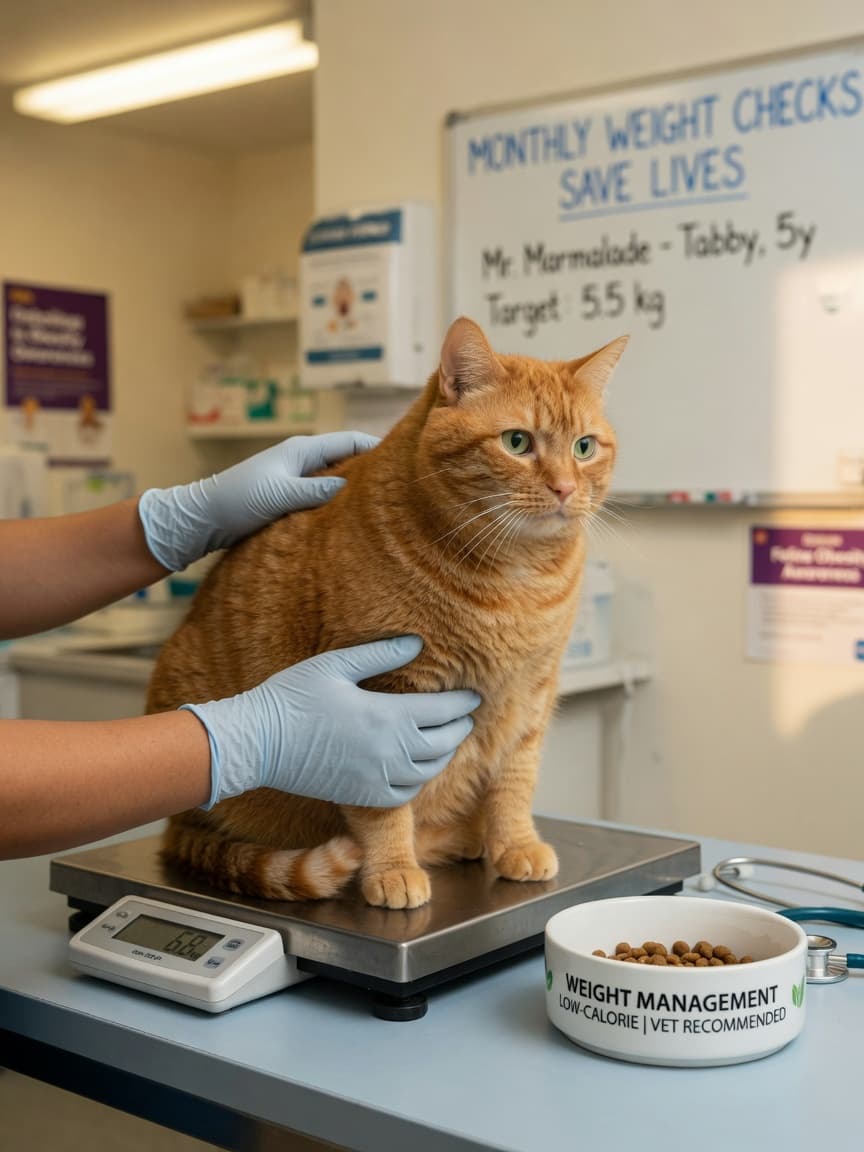
{"en": "Overweight tabby cat on a scale during veterinary weight management consultation", "es": "Gato tabby con sobrepeso en una balanza durante consulta veterinaria de control de peso", "fr": "Chat tigr\u00e9 en surpoids sur une balance lors d'une consultation v\u00e9t\u00e9rinaire de gestion du poids", "de": "\u00dcbergewichtige Tabby-Katze auf einer Waage bei veterin\u00e4rer Gewichtsmanagement-Beratung", "nl": "Overgewicht gestreepte kat op een weegschaal tijdens veterinaire gewichtsbeheer-consult", "pt": "Gato malhado com sobrepeso em uma balan\u00e7a durante consulta veterin\u00e1ria de controle de peso", "it": "Gatto tabby sovrappeso su una bilancia durante una consulenza veterinaria di gestione del peso"}

Obese cats are at risk of diabetes, joint disease, and fatty liver disease. Safe weight loss requires care.

Safe Weight Loss Rate

No more than 0.5-1% of body weight per week. Faster weight loss risks hepatic lipidosis — a potentially fatal condition.

The Plan
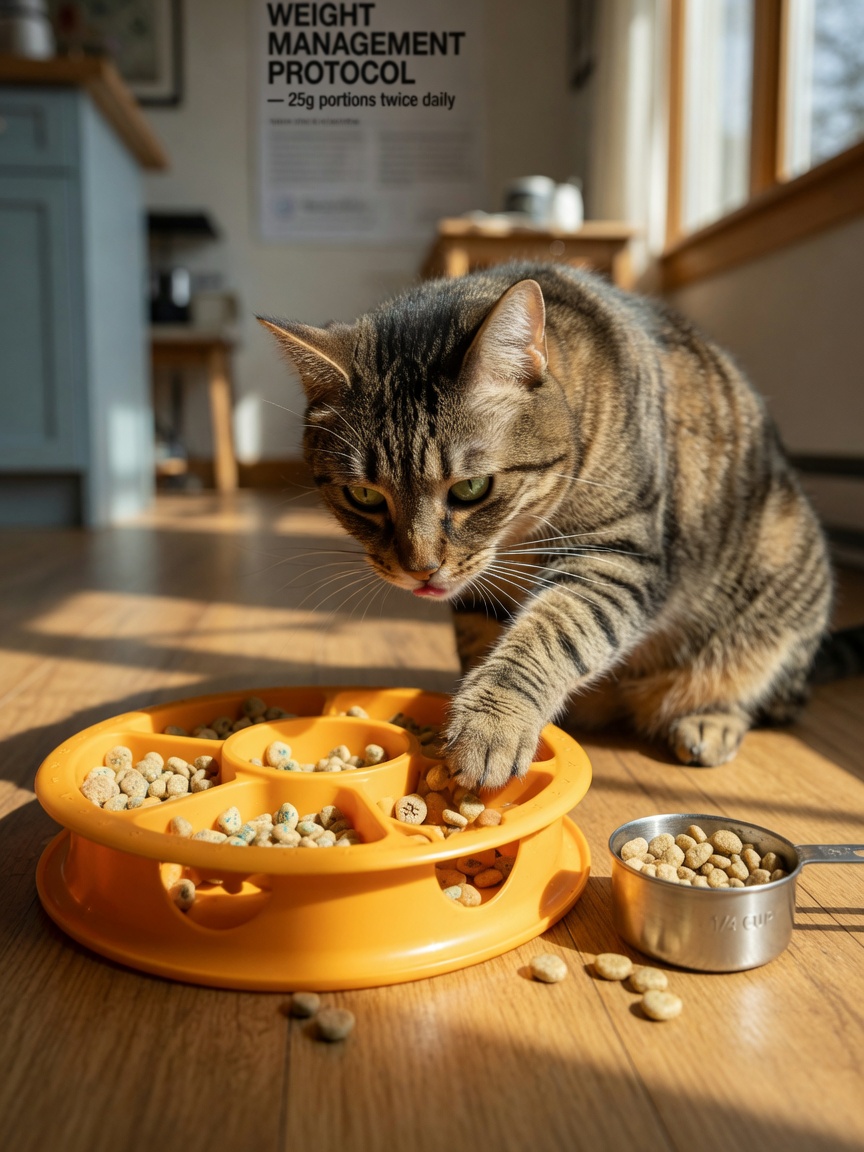
Cat using puzzle feeder for measured portion control during weight management diet
  1. Get target weight from your vet
  2. Switch to a veterinary weight management food
  3. Measure portions precisely
  4. Feed 2-3 small meals rather than free feeding
  5. Puzzle feeders increase activity and slow eating

Warning

If a fat cat stops eating during weight loss, contact your vet immediately. Hepatic lipidosis can develop within days.

#cat weight management#cat health#feline nutrition#forpetshealthcare

Sources & further reading

This article is based on peer-reviewed veterinary research and reputable animal-health sources. Explore the underlying science in our Research Library.

Related articles

The 19 Best Animal Shelters in the Netherlands (2026)

the Netherlands's animal shelters, rescue associations and refuges save thousands of dogs, cats and other animals every year, almost always on tiny budgets and volunteer power. To build the most objective ranking possible, we analysed public Google reviews across more than 56 registered animal-prote…

Read more →

The 25 Best Animal Shelters in Italy (2026)

Italy's animal shelters, rescue associations and refuges save thousands of dogs, cats and other animals every year, almost always on tiny budgets and volunteer power. To build the most objective ranking possible, we analysed public Google reviews across more than 121 registered animal-protection org…

Read more →

The 48 Best Animal Shelters in Germany (2026)

Germany's animal shelters, rescue associations and refuges save thousands of dogs, cats and other animals every year, almost always on tiny budgets and volunteer power. To build the most objective ranking possible, we analysed public Google reviews across more than 152 registered animal-protection o…

Read more →

The 32 Best Animal Shelters in France (2026)

France's animal shelters, rescue associations and refuges save thousands of dogs, cats and other animals every year, almost always on tiny budgets and volunteer power. To build the most objective ranking possible, we analysed public Google reviews across more than 89 registered animal-protection org…

Read more →

The 8 Best Animal Shelters in Portugal (2026)

Portugal's animal shelters, rescue associations and municipal centros de recolha save thousands of dogs, cats and other animals every year, almost always on tiny budgets and volunteer power. To build the most objective ranking possible, we analysed public Google reviews across more than 86 registere…

Read more →

Sphynx Cat Skin care and hygiene: Causes, Signs & Care

Sphynx cats have little to no coat, which means the skin itself takes on jobs that fur normally does — insulation, oil dispersal, and barrier protection — leaving it prone to greasiness, blocked pores, fungal infections, and sunburn. The single most important thing to know is that a Sphynx's skin ne…

Read more →
Disclaimer:This article is for informational purposes only and does not constitute veterinary advice. Always consult a qualified veterinarian for your pet's health concerns.

Free newsletter

Pet health tips, straight to your inbox

Weekly science-backed advice for dog & cat owners. No spam, unsubscribe anytime.