
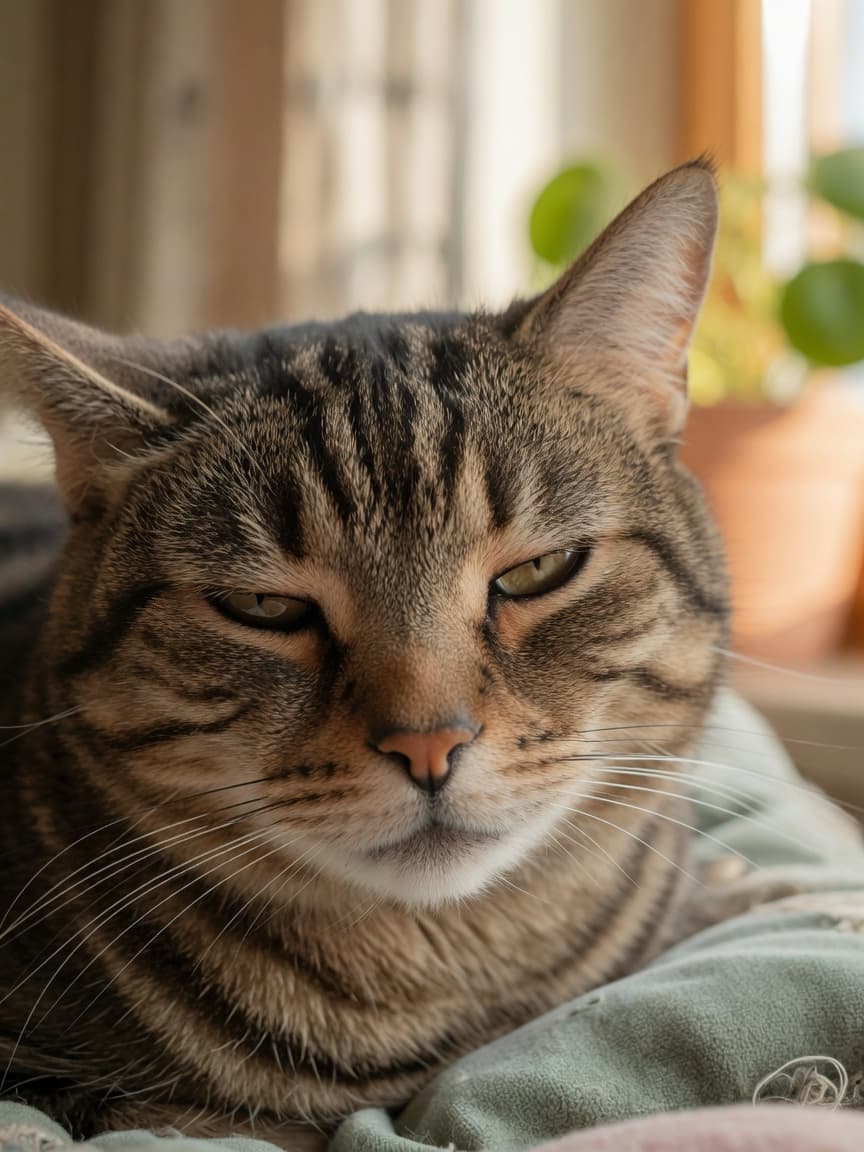
What Is the Cat Slow Blink?
If you have ever noticed your cat gazing at you and then slowly closing and opening their eyes — almost like a deliberate, unhurried wink — you have been on the receiving end of one of the most meaningful gestures in feline communication. Known variously as the "slow blink", the "cat kiss", or the "eye squint", this behaviour is widely understood by animal behaviourists to be a signal of relaxation, trust, and positive regard. Understanding it not only enriches your relationship with your cat — it gives you a way to communicate back.
The Science: What Research Tells Us
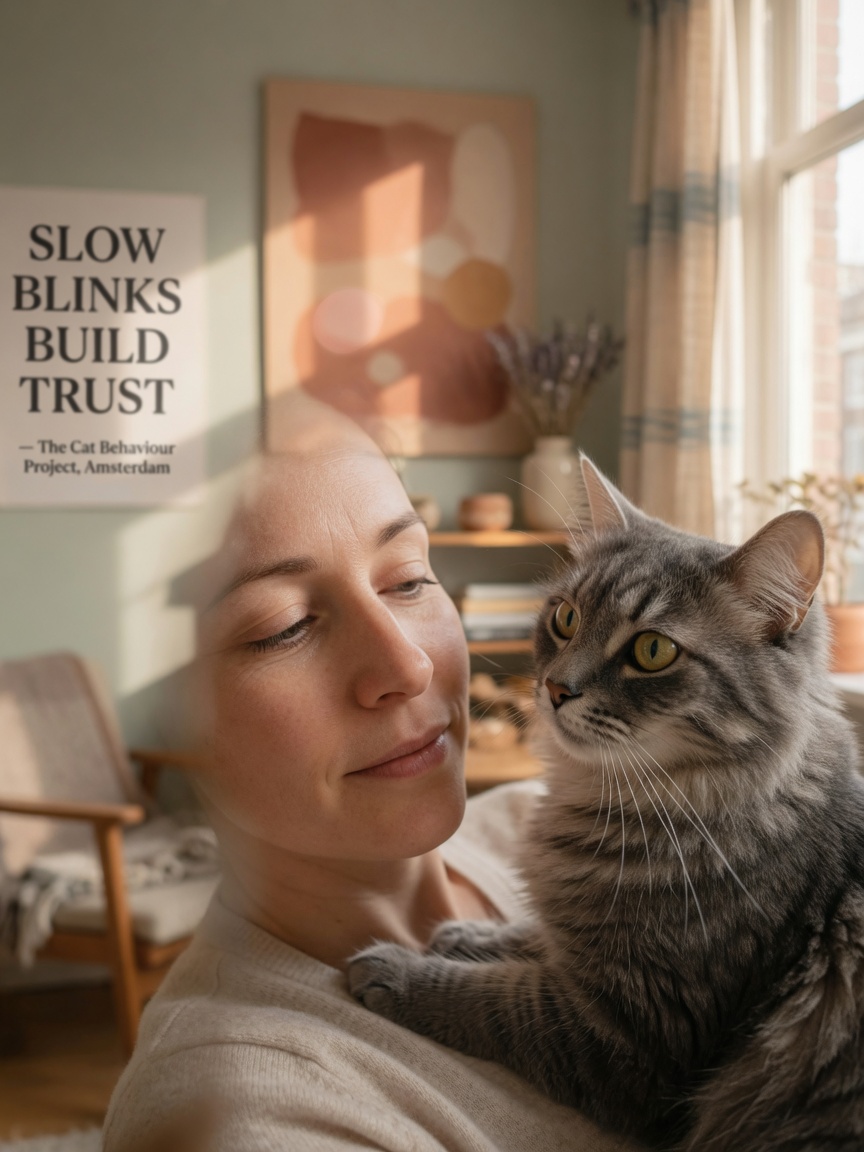
The slow blink moved from folk knowledge into the realm of empirical science in 2020, when researchers at the University of Sussex and the University of Portsmouth published a landmark study in the journal Scientific Reports. Led by Dr Tasmin Humphrey and Professor Karen McComb, the study set out to test whether the slow blink genuinely functions as a positive signal in cat-human interaction — and whether humans could use it to influence their cats' behaviour.
The results were compelling. In the first experiment, cats slow-blinked significantly more after their owners slow-blinked at them than in conditions where the owner maintained a neutral expression. In the second experiment, a stranger — rather than the cat's owner — slow-blinked at cats they had no prior relationship with. Not only did the cats reciprocate the slow blink more frequently, they were also more willing to approach the stranger following the gesture. The study concluded that the slow blink sequence functions as a form of positive emotional communication between cats and humans, and that humans can use it as a tool to establish rapport — even with unfamiliar cats.
Why Eye Contact Means Something Different to Cats
To understand why the slow blink carries such significance, it helps to understand how cats naturally use eye contact. In feline social language, sustained, direct eye contact is a signal of threat or challenge. When two cats are in conflict, they will hold each other's gaze. The cat that looks away first is signalling submission and de-escalation. Staring, in the cat's world, is not neutral — it is confrontational.
Against this backdrop, the slow blink becomes particularly meaningful. When a cat looks at you and then slowly, deliberately closes their eyes — at their most visually vulnerable — they are communicating that they do not perceive you as a threat. They feel relaxed enough to break the stare, and the soft closure of the eyes signals a kind of emotional openness. It is the opposite of a challenge. It is an invitation to trust.
This evolutionary context also explains why many cats are uncomfortable with prolonged eye contact from humans who are unfamiliar to them, and why forced eye contact — trying to stare a cat into affection — tends to produce the opposite of the desired effect.
How to Slow Blink Back at Your Cat
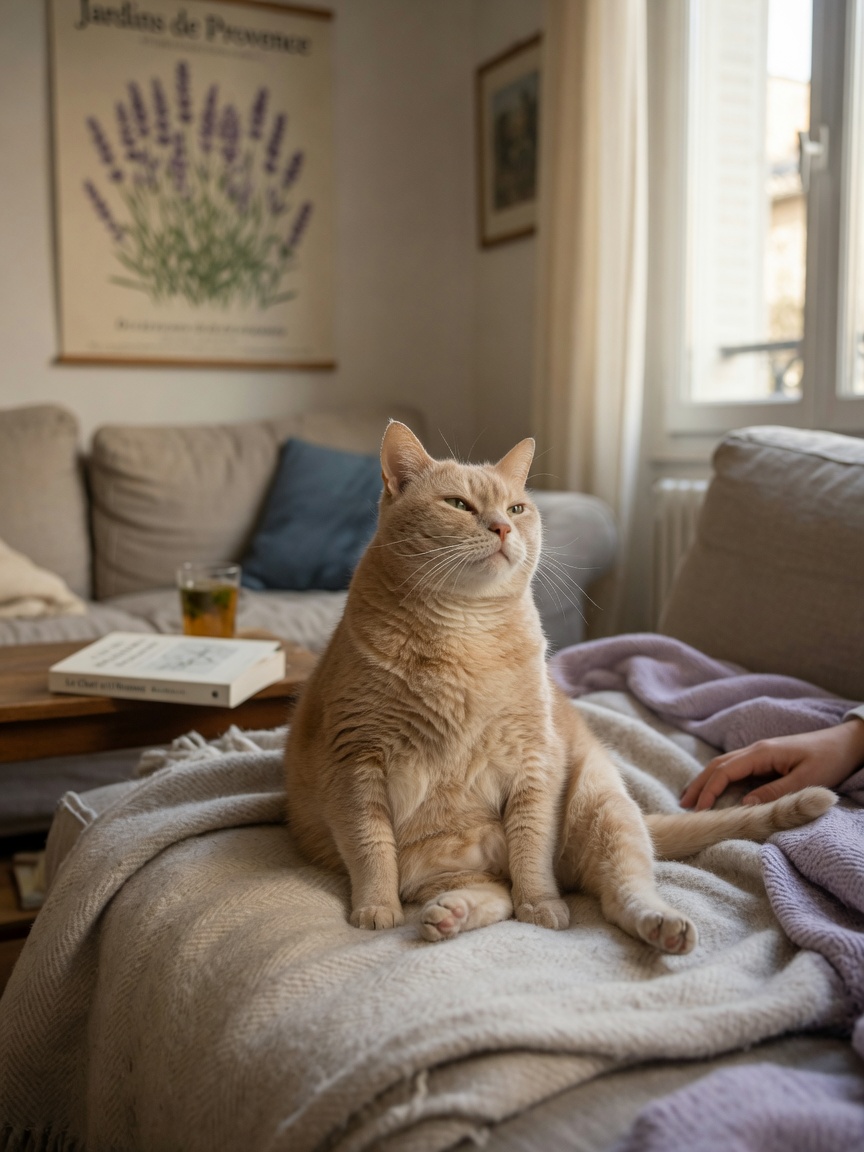
The technique described in Humphrey et al.'s research is simple and accessible to any cat owner. Here is how to do it effectively.
Step One: Choose the Right Moment
Wait until your cat is relaxed and already looking at you — not playing, not eating, and not in a state of alertness. A cat that is settled in a favourite spot, already half-squinting, is in the ideal state to receive and reciprocate the gesture.
Step Two: Relax Your Own Face
Tense or wide-open eyes can appear threatening to a cat. Before you begin, consciously relax your facial muscles. Allow your eyes to soften. You are not staring; you are simply making gentle, calm eye contact.
Step Three: Perform the Slow Blink
Slowly close your eyes halfway, hold them there for a moment or two, then slowly open them again. You can pair this with a slight turning away of your gaze — a further signal of non-threat. The movement should feel unhurried and deliberate, nothing like a normal blink.
Step Four: Wait and Observe
Do not stare expectantly at your cat after performing the gesture. Give them space and time. You may see a reciprocal slow blink within a few seconds, or your cat may choose to look away — which is itself a positive response, indicating relaxation rather than alertness. Some cats will approach you after the exchange.
Building a Habit of Positive Eye Contact
Regular, gentle slow-blinking interactions can meaningfully deepen the relationship between you and your cat over time. The gesture is particularly useful when introducing a new cat to the home, when visiting a cat at a rescue shelter, or when trying to build trust with a nervous or shy cat. Rather than reaching out to touch or pet an uncertain cat immediately, try sitting at their level and offering a slow blink first. Allowing the cat to set the pace of approach almost always produces better results than initiating physical contact on the human's terms.
When Cats Do Not Slow Blink
It is worth noting that not every cat slow-blinks readily, and the absence of the gesture does not necessarily indicate a problem. Some cats are naturally more reserved or less visually expressive. However, there are circumstances in which a marked change in a cat's willingness to make relaxed eye contact — or a new tendency to stare with wide, dilated pupils and a tense body posture — may signal stress, illness, pain, or discomfort. A cat in pain will often display general behavioural withdrawal, reduced interaction, and a loss of the small social gestures that characterise a relaxed animal. If your usually communicative cat becomes distant, avoids your gaze, or shows other changes in behaviour, a veterinary assessment is advisable.
Summary
The cat slow blink is not anthropomorphism — it is a scientifically documented form of positive interspecies communication. By understanding the evolutionary context of feline eye contact and learning to use the slow blink deliberately, you gain a subtle but powerful tool for building trust with your cat. It costs nothing, takes only a moment, and speaks directly in a language your cat already understands.