
What Is Feline Pyometra?
Pyometra is a serious, potentially fatal bacterial infection of the uterus. The word comes from the Latin for pus and womb — an accurate description of the condition, in which the uterus fills with purulent material as a result of bacterial infection. It is a disease of intact (unspayed) female cats, known as queens, and while it can occur at any age, it is most commonly seen in older queens who have had multiple oestrous cycles without becoming pregnant.
The condition is a veterinary emergency in its most severe forms. Without prompt treatment, the toxins produced by bacteria accumulate in the bloodstream, causing septicaemia, organ failure, and death. Any owner with an intact queen should be familiar with the signs of pyometra and seek veterinary attention without delay if they are observed.
Why Pyometra Develops: The Role of Progesterone
To understand pyometra, it helps to understand the hormonal environment that makes it possible. During each oestrous cycle, the uterus is exposed to progesterone — a hormone that prepares the uterine lining for potential pregnancy. Progesterone thickens the endometrium (the uterine lining), stimulates the uterine glands to produce secretions, and — critically — suppresses the local immune response within the uterus to prevent the body from attacking a potential embryo.
In queens that cycle repeatedly without conceiving, this cycle of progesterone stimulation and subsequent glandular changes can lead to a condition called cystic endometrial hyperplasia (CEH), where the uterine lining becomes abnormally thickened and cystic. The uterine glands become overactive, producing excessive secretions that pool within the uterine horns, and the suppressed local immunity makes it far easier for bacteria to establish an infection.
The main bacterial culprit is Escherichia coli, which ascends into the uterus from the vaginal flora during oestrus when the cervix is open. Other organisms including Staphylococcus, Streptococcus, and Klebsiella can also be involved, but E. coli is implicated in the majority of cases and tends to be particularly virulent in the uterine environment.
Open vs Closed Pyometra: A Critical Distinction
Pyometra is classified according to whether the cervix is open or closed, and this distinction has significant implications for clinical presentation and urgency.
Open Pyometra
In open pyometra, the cervix remains sufficiently dilated to allow drainage of the infected uterine contents to the outside. Owners typically notice a discharge from the vulva — which may be cloudy, yellowish, blood-tinged, or foul-smelling — and this is often the first sign that prompts a vet visit. The cat may also show increased thirst and urination, which occur because bacterial toxins (particularly E. coli endotoxins) interfere with the kidneys' ability to concentrate urine.
While open pyometra is still a serious condition requiring prompt treatment, the ability to drain means that the build-up of pressure and toxins within the uterus is somewhat mitigated. Cats with open pyometra may be less systemically unwell at presentation than those with the closed form.
Closed Pyometra
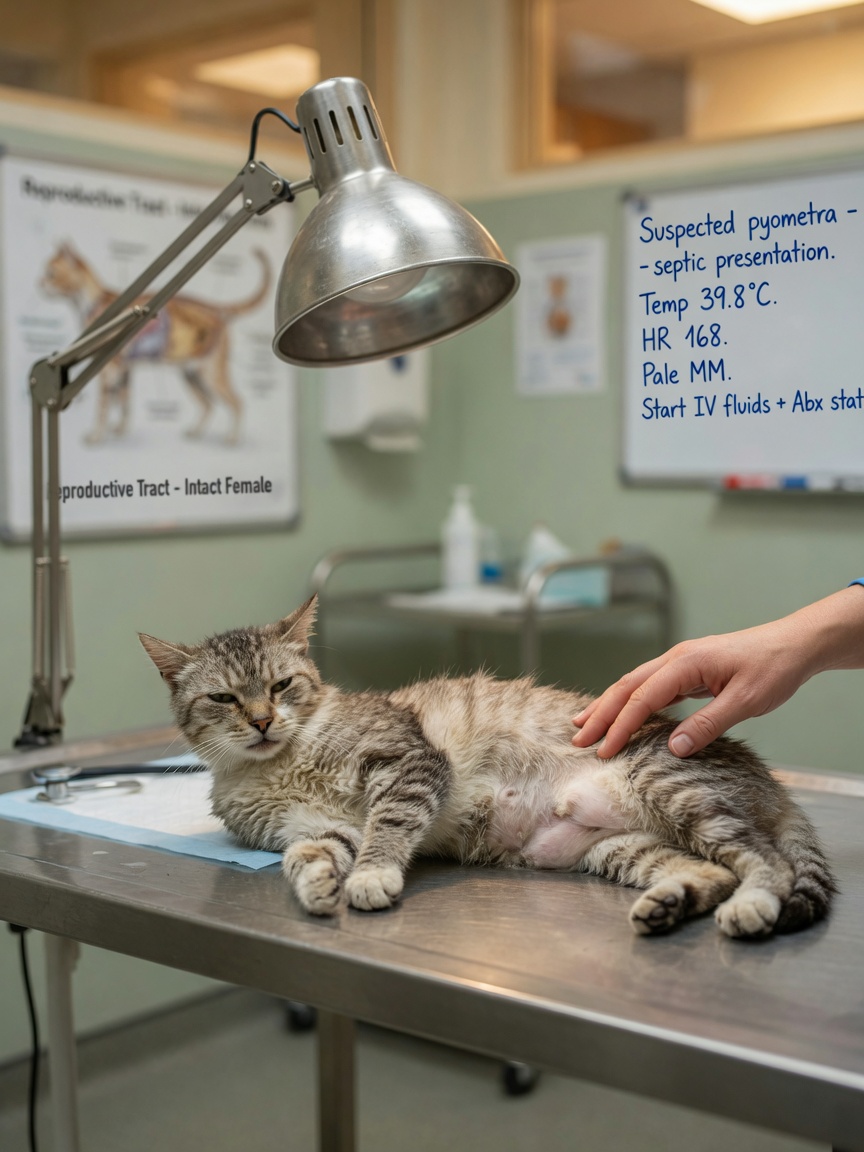
In closed pyometra, the cervix is tightly closed and infected material cannot drain. The uterus fills with purulent material under increasing pressure, and bacteria and their toxins are absorbed directly into the bloodstream. Cats with closed pyometra are frequently severely ill at presentation — lethargic, anorexic, collapsed, in pain, and showing signs of septic shock. There is no visible vaginal discharge to alert the owner, which can delay recognition of the problem.
Closed pyometra is an acute emergency. The risk of uterine rupture — which leads to bacterial peritonitis and is almost invariably fatal — is a real concern. These cats require immediate stabilisation and surgical intervention.
Diagnosis
A vet who examines an intact queen with compatible clinical signs will have a high index of suspicion for pyometra. Blood tests typically reveal an elevated white blood cell count (neutrophilia), often with toxic changes, elevated kidney parameters if renal involvement is present, and changes consistent with systemic inflammation.
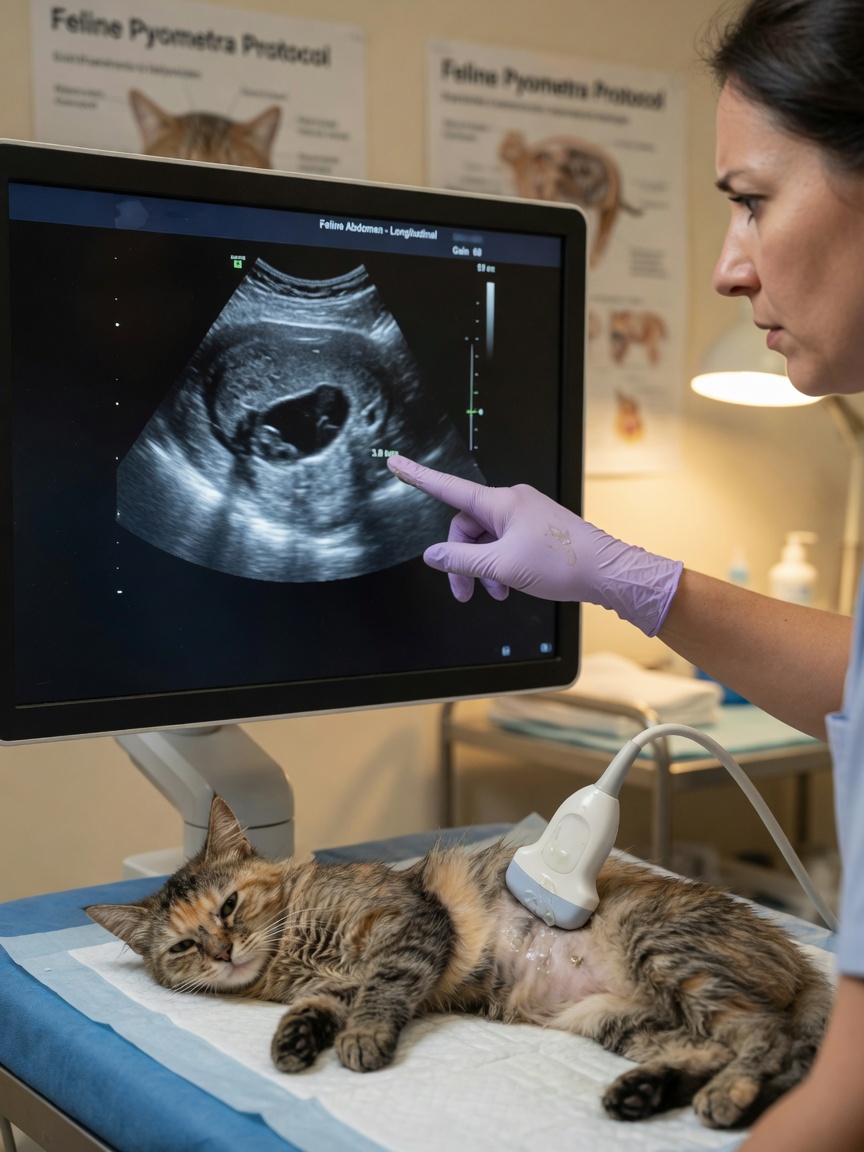
Abdominal ultrasound is the diagnostic tool of choice for confirming pyometra. It clearly demonstrates the fluid-filled, distended uterine horns, allows assessment of the severity of uterine involvement, and can identify any evidence of uterine rupture or peritoneal fluid. Radiography may also be used and can show a large, tubular soft tissue structure in the abdomen, though ultrasound provides superior detail. Open pyometra with obvious vaginal discharge may be diagnosed on clinical grounds without imaging, though imaging is still recommended to assess the extent of disease.
Treatment: Emergency Ovariohysterectomy
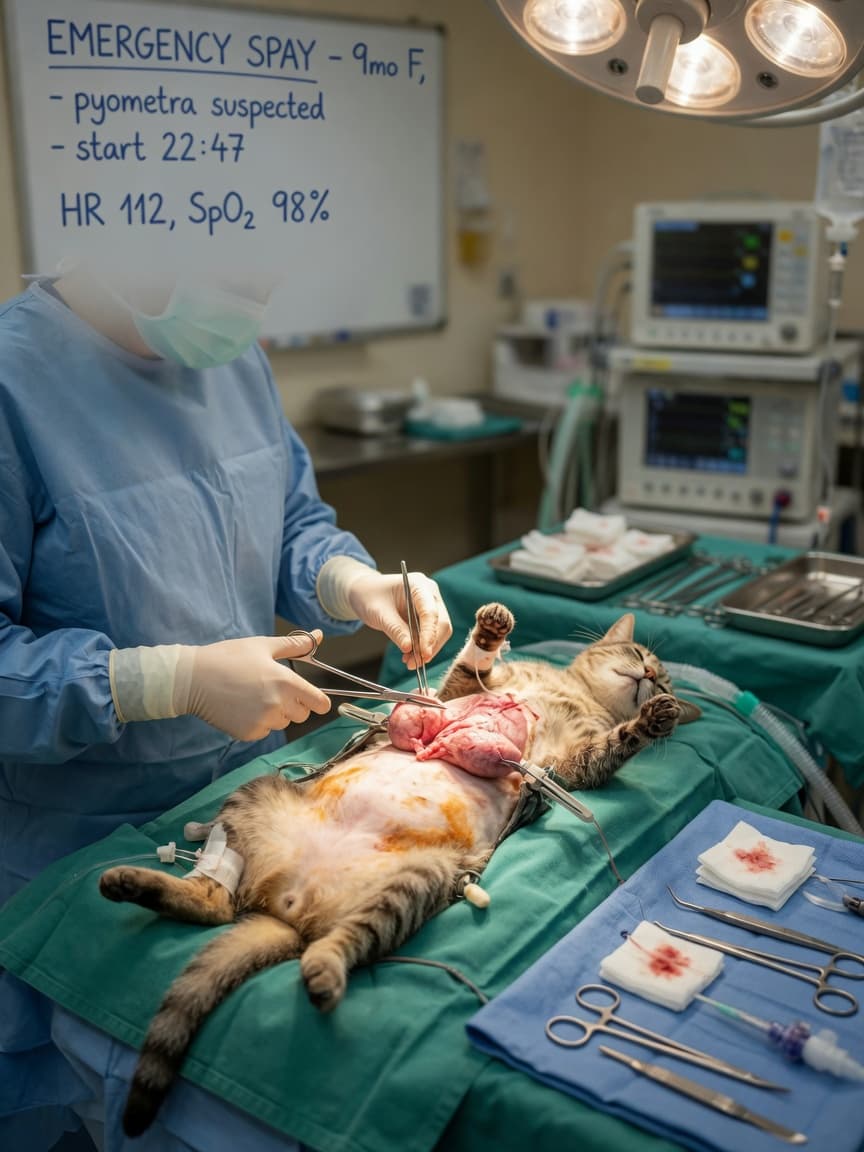
For the vast majority of queens with pyometra — particularly those that are not intended for future breeding — emergency ovariohysterectomy (OVH, or surgical spay) is the treatment of choice. Removing the entire reproductive tract eliminates the source of infection and toxins and, when performed before the condition becomes too advanced, gives the cat an excellent chance of a full recovery.
Preoperative stabilisation is essential, particularly in severely systemically ill cats. Intravenous fluid therapy to correct dehydration and restore blood pressure, alongside broad-spectrum intravenous antibiotics, should be initiated before surgery wherever possible. Operating on a cat in septic shock without stabilisation carries significantly higher anaesthetic and surgical risk.
Surgery on a pyometra uterus carries additional technical challenges compared to a routine spay — the uterus may be fragile, engorged, and at risk of rupture during handling. An experienced surgeon and a well-equipped surgical suite are important factors in a good outcome. Postoperative care includes continued antibiotics, pain management, and close monitoring of kidney function, as concurrent acute kidney injury is common.
Medical Management: Aglepristone and Antibiotics
In selected cases — specifically valuable breeding queens with open pyometra who are not critically ill — medical management may be considered as an alternative to surgery. The most evidence-based medical approach uses aglepristone, a progesterone receptor antagonist, combined with antibiotics.
Aglepristone works by blocking progesterone receptors in the uterus, promoting cervical relaxation and drainage, restoring uterine immune defences, and reducing the hormonal environment that sustains bacterial growth. When combined with appropriate antibiotics based on culture and sensitivity testing, resolution rates in open pyometra cases are reported in the range of 75-90% in some studies.
However, medical management carries significant caveats. It requires very close monitoring with repeat ultrasound examinations to confirm resolution. Relapse rates are higher than with surgery, particularly after subsequent oestrous cycles. Owners must be committed to monitoring their queen closely and returning to emergency surgery if the cat deteriorates. Many vets recommend that queens treated medically be spayed after their next season once they have completed any planned breeding programme.
- Pyometra is most common in intact older queens but can occur in any unspayed cat.
- Open pyometra causes visible vaginal discharge; closed pyometra causes rapid systemic collapse without discharge.
- Emergency OVH is the safest and most effective treatment for the majority of cases.
- Medical management with aglepristone is an option only for stable breeding queens with open pyometra, under close veterinary supervision.
- The best long-term prevention is neutering queens that are not required for breeding.