
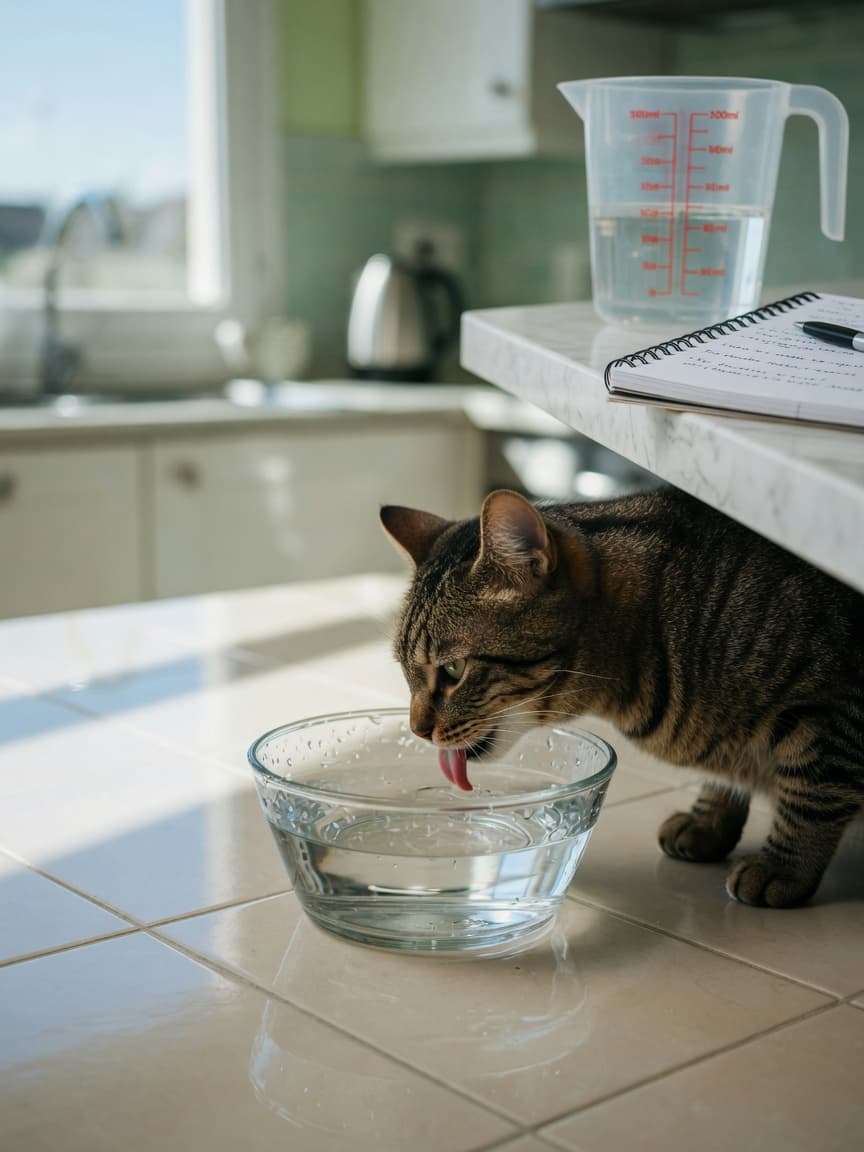
What Is Polydipsia in Cats?
Polydipsia is the medical term for excessive thirst. In cats, the clinical threshold is drinking more than 90 ml of water per kilogram of body weight per day. A 4 kg cat should drink no more than around 360 ml daily. If your cat consistently exceeds that amount, something is wrong and it needs investigating.
Polydipsia almost always appears alongside polyuria, meaning an abnormally large volume of urine. Together, these two signs are called PU/PD. The body either loses too much water through the kidneys first, triggering thirst to compensate, or a hormonal signal drives excessive drinking and the surplus is urinated out. Either way, PU/PD is a symptom, not a diagnosis. It tells you something is wrong — not what.
Why PU/PD Is a Symptom, Not a Diagnosis
Many owners assume a cat drinking too much simply needs less access to water, or that the cat is just a naturally heavy drinker. Neither is true. Polydipsia in cats is physiologically driven — the cat is not choosing to drink excessively. Restricting water access in a polydipsic cat risks rapid, serious dehydration and is never appropriate under any circumstances.
The drinking is the body compensating for an underlying condition. Identifying that condition requires laboratory work, not behavioural management. Bringing your cat to the vet with a log of your observations is the only correct next step.
Common Causes of Polydipsia in Cats
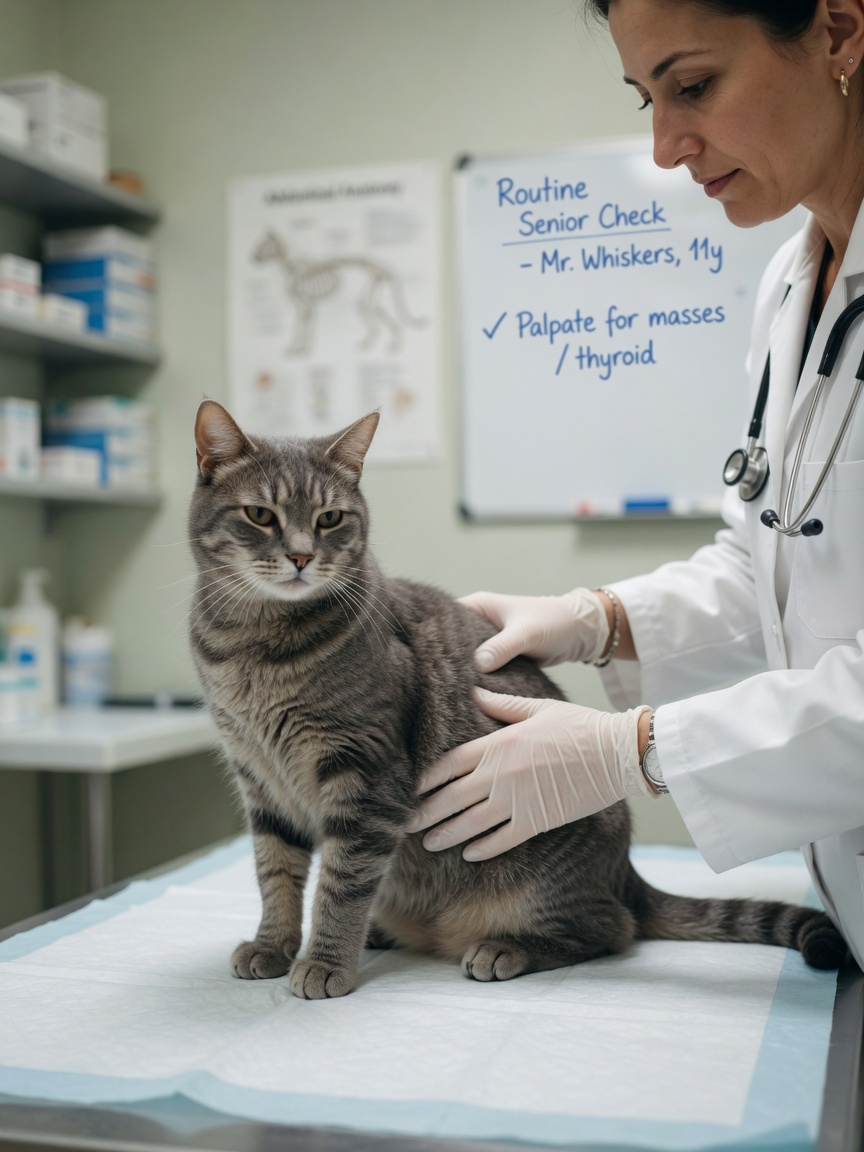
The differential diagnosis list for PU/PD in cats is well established. Most cases fall into a handful of categories, though the workup must rule out each one systematically.
Chronic Kidney Disease
CKD is the most common cause of PU/PD in cats, particularly in middle-aged and older animals. As the kidneys lose the ability to concentrate urine, the cat must drink more to compensate for increased fluid losses. Cats with CKD often also show weight loss, reduced appetite, and vomiting. CKD is staged using IRIS guidelines based on creatinine and SDMA levels.
Diabetes Mellitus
In diabetic cats, glucose accumulates in the blood and spills into the urine, carrying water with it through an osmotic effect. The result is heavy urination and strong compensatory thirst. Diabetic cats frequently show weight loss despite a good appetite, weakness in the hind limbs, and a plantigrade stance.
Hyperthyroidism
Caused by a benign thyroid tumour producing excess hormone, hyperthyroidism is common in cats over ten years old. Elevated thyroid hormone raises the glomerular filtration rate, leading to polyuria and secondary polydipsia. Affected cats typically also show weight loss despite ravenous appetite, vomiting, and hyperactivity.
Hypercalcaemia
Elevated blood calcium interferes with the kidney's ability to respond to antidiuretic hormone, causing the tubules to fail to reabsorb water properly. Causes in cats include idiopathic hypercalcaemia and lymphoma. It is a less common cause of PU/PD but must always be included in the initial panel.
Liver Disease
Hepatic insufficiency causes PU/PD through several mechanisms, including altered hormone metabolism and reduced urea production affecting renal concentration. Cats with liver disease may also show jaundice, ascites, and vomiting.
Pyometra
In entire female cats, uterine infection can trigger polydipsia. Bacterial toxins impair the kidney tubules' response to antidiuretic hormone. Pyometra is a surgical emergency and may also cause vaginal discharge, abdominal distension, and fever.
Hyperadrenocorticism
Cushing's disease is rare in cats but does occur, typically alongside insulin-resistant diabetes. Excess cortisol can cause classic PU/PD along with fragile skin and a poor coat.
How to Measure Your Cat's Water Intake at Home
Your vet will find it very useful if you can provide a reliable estimate of daily water consumption. Measuring at home is straightforward but requires consistency over at least two days.
- Use a single water bowl only and remove all other water sources.
- Each morning at the same time, measure a known quantity of fresh water into the bowl using a measuring jug. Record the amount in millilitres.
- The following morning, measure how much remains before adding fresh water. Subtract this from your starting amount to get the day's intake.
- Run a control bowl in a similar spot with no cat access to account for evaporation, and subtract that figure from your reading.
- Repeat for two or three days and calculate the average daily intake.
- Divide by your cat's weight in kilograms to get ml per kg per day.
If your cat eats wet food, bear in mind that it contains roughly 70 to 80 per cent water. Cats on entirely wet diets may drink very little from a bowl, making measurement harder. Tell your vet what your cat eats so the figures can be interpreted correctly.
What to Expect at the Vet
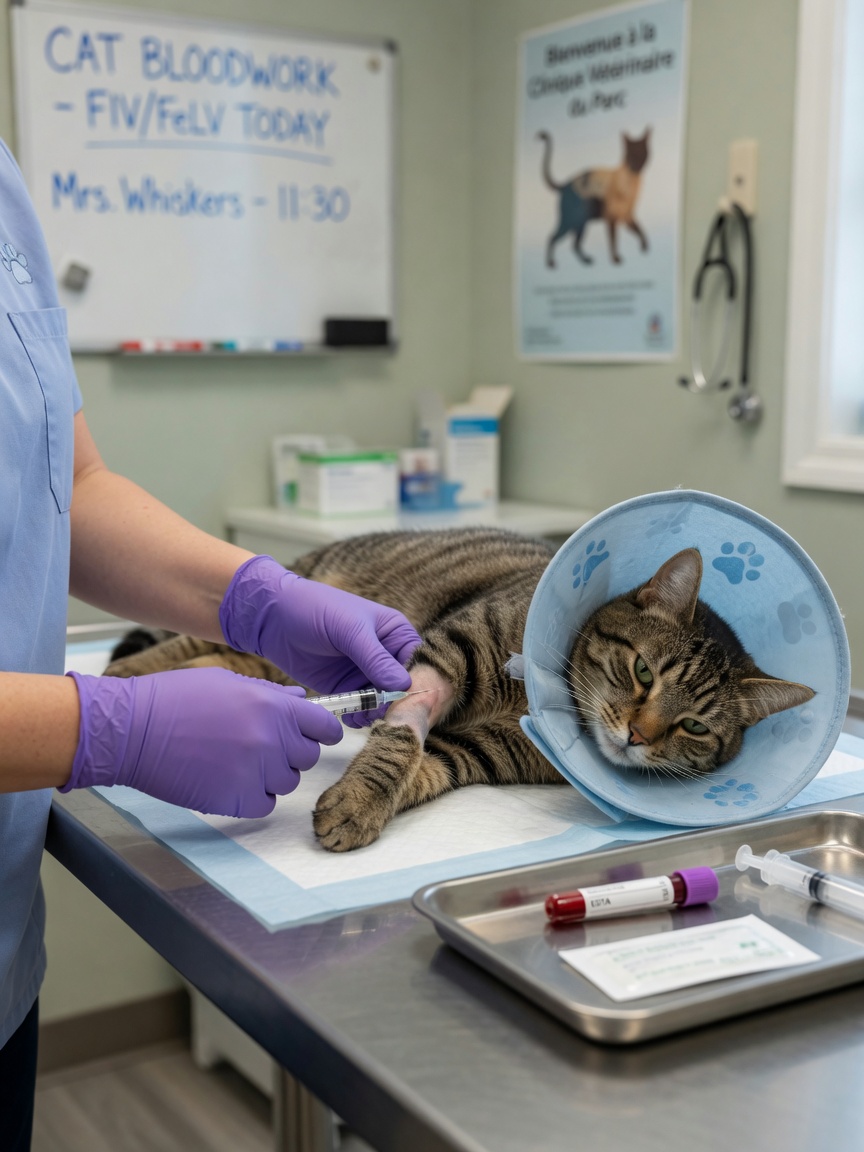
The first step in any PU/PD workup is a combined blood and urine panel. This typically includes a full biochemistry profile covering kidney values, liver enzymes, glucose, calcium, and total protein, alongside a complete blood count, thyroid hormone levels, and a urinalysis with urine specific gravity. Urine specific gravity is particularly important — it shows how concentrated the urine is and gives an immediate indication of kidney involvement.
Depending on initial results, further tests may include a urine culture, abdominal ultrasound, or hormonal assays. Your vet will guide next steps based on what the first-line results show.
Why You Must Never Restrict Your Cat's Water
Limiting a polydipsic cat's water access is one of the most dangerous things an owner can do. The drive to drink exists because the body genuinely needs that water to maintain basic function. Restricting access does not address the cause — it removes the compensatory mechanism, causing rapid and potentially fatal dehydration.
If you are concerned your cat is drinking too much, the only safe response is to contact your vet promptly. Early diagnosis of CKD, diabetes, or hyperthyroidism significantly improves outcomes and quality of life.