
What Is Inflammatory Bowel Disease in Cats?
Inflammatory bowel disease, commonly abbreviated to IBD, is a chronic condition in which the lining of a cat's gastrointestinal tract becomes persistently infiltrated by inflammatory cells. Unlike a single episode of vomiting or an acute stomach upset, IBD is an ongoing problem that does not resolve on its own and tends to worsen over time without treatment.
The disease can affect any part of the digestive tract, from the stomach and small intestine through to the large intestine. Depending on where inflammation is concentrated, cats may experience different combinations of symptoms. IBD is not a single disease but rather a group of conditions classified by the type of inflammatory cell involved and the region of the gut affected.
Older cats are most commonly diagnosed with IBD, though it can occur at any age. There is no confirmed single cause. Current evidence points to an abnormal immune response to normal gut contents — including dietary proteins, gut bacteria, or parasites — in cats that have a genetic predisposition to overreact.
How IBD Differs From Intestinal Lymphoma
One of the most important and challenging aspects of feline IBD is distinguishing it from low-grade intestinal lymphoma, a form of cancer. Both conditions produce almost identical clinical signs, and even imaging studies such as ultrasound cannot reliably tell them apart. The two conditions can look so similar that experienced vets often describe them as being on a continuum, and there is genuine debate about whether severe IBD may actually progress into lymphoma in some cats.
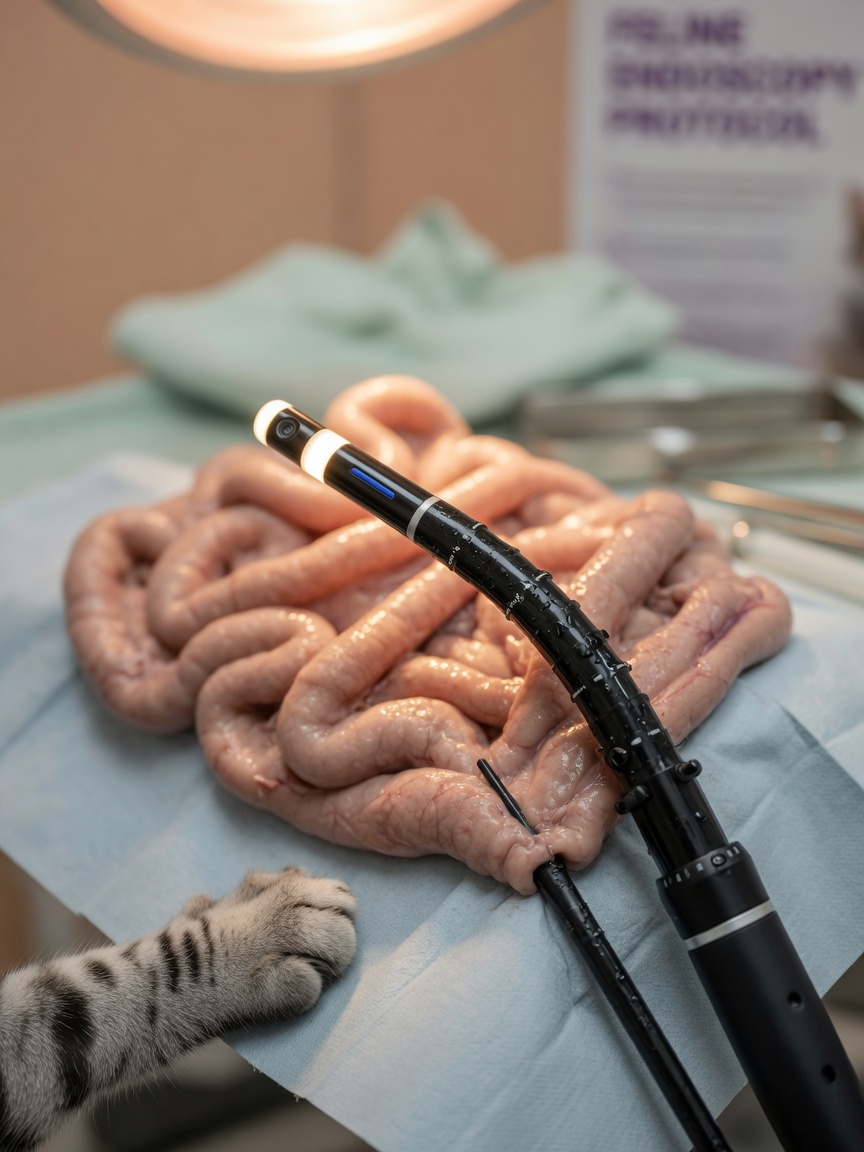
The only reliable way to differentiate IBD from intestinal lymphoma is through tissue biopsy. There are two routes to obtaining biopsy samples:
- Endoscopic biopsy, performed by passing a flexible camera through the mouth or rectum while the cat is under general anaesthetic. This is less invasive and carries a lower surgical risk, but the samples retrieved are shallow and may miss deeper layers of the gut wall.
- Full-thickness surgical biopsy, which requires an abdominal incision to cut directly through the gut wall and obtain deeper tissue. This carries greater surgical risk but provides more complete samples and is more likely to yield a definitive diagnosis.
Your vet will discuss which approach is most appropriate based on your cat's overall health, age, and the clinical picture. In some older or unwell cats, the risk of surgery may mean treatment is started based on a presumptive diagnosis rather than confirmed pathology.
Types of Feline IBD
IBD is classified according to the predominant type of inflammatory cell found in the biopsy sample. The classification matters because it gives vets information about likely severity and guides treatment decisions.
Lymphoplasmacytic IBD
This is by far the most common form. The intestinal lining is infiltrated by lymphocytes and plasma cells, which are white blood cells involved in immune responses. Lymphoplasmacytic IBD often responds well to dietary management combined with corticosteroids.
Eosinophilic IBD
In this form, eosinophils are the primary inflammatory cell. Eosinophilic IBD is sometimes associated with a hypersensitivity reaction, and a strict dietary trial using a novel or hydrolysed protein source is often a key part of management. Some cats also have concurrent eosinophilic inflammation in other organs.
Neutrophilic IBD
This is the least common form and may indicate a secondary infectious component. Neutrophils are the immune system's front-line responders to bacterial threats, and their presence in gut tissue raises the possibility of an underlying infection requiring investigation alongside anti-inflammatory treatment.
Signs of IBD in Cats
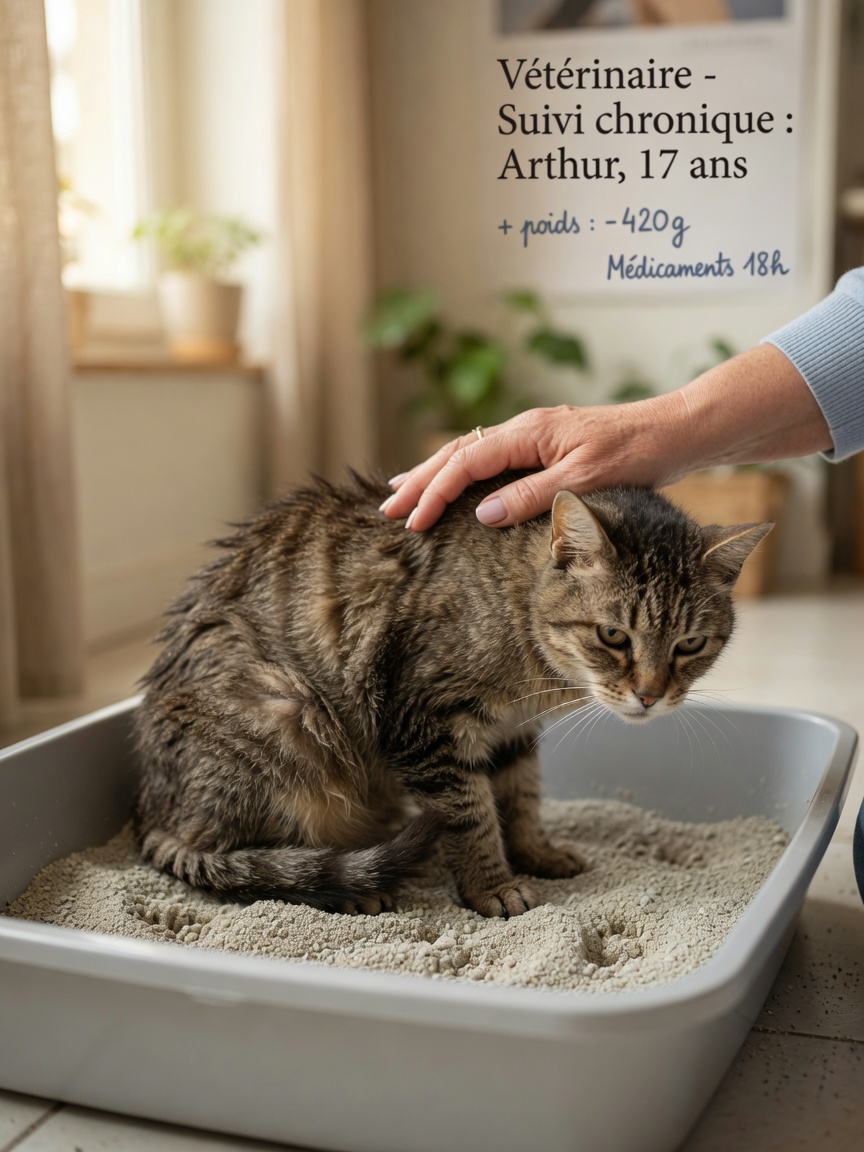
The hallmark of feline IBD is chronic, recurring gastrointestinal symptoms. Owners often describe a cat that has been gradually declining over months or even years before the problem is properly investigated. Common signs include:
- Chronic vomiting, which may occur several times a week or even daily
- Diarrhoea that is loose, watery, or contains mucus
- Progressive weight loss despite a reasonable or even increased appetite
- Poor coat condition, with fur that appears dull, unkempt, or patchy
- Reduced energy levels and general lethargy
- Occasional blood in stools
- Increased or decreased appetite depending on how nauseated the cat feels
Because these signs overlap with many other conditions — including hyperthyroidism, kidney disease, pancreatitis, and intestinal lymphoma — a thorough work-up is essential before assuming IBD is the cause.
Diagnosis: What to Expect at the Vet
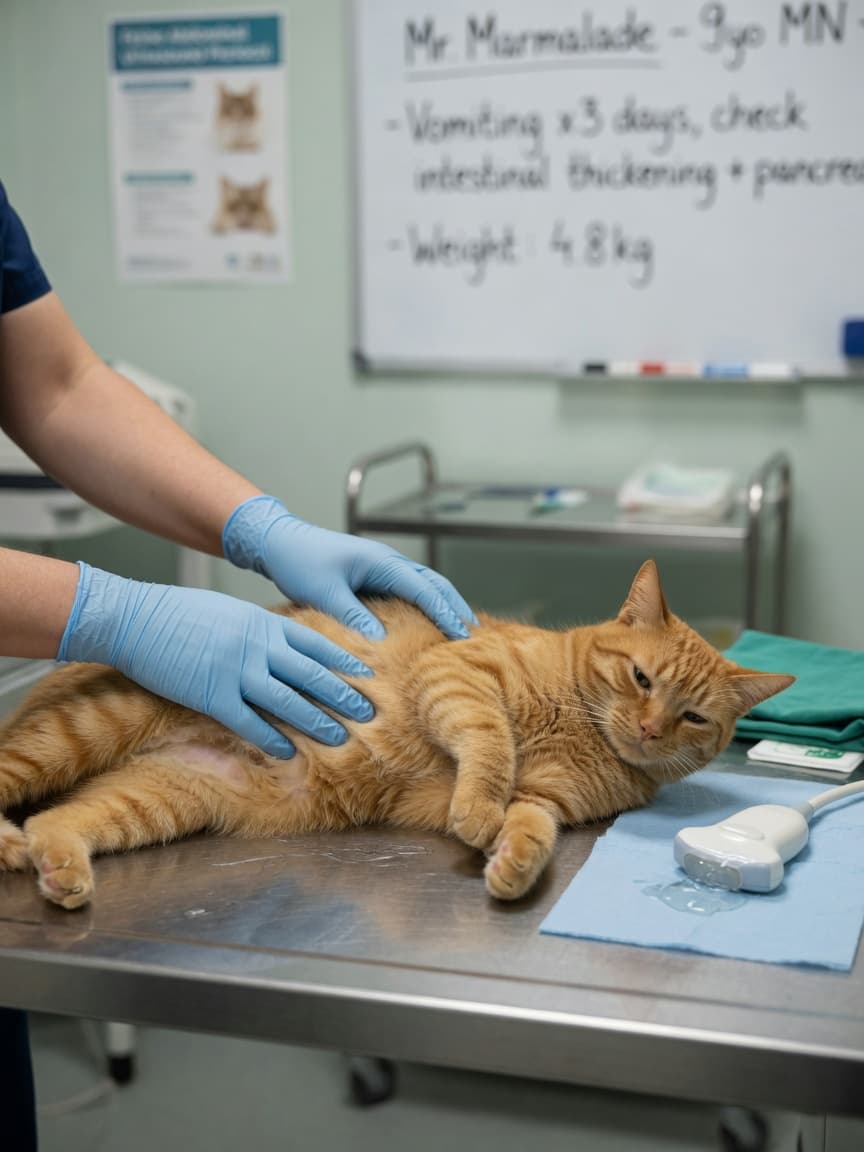
A diagnosis of IBD is never made on clinical signs alone. Your vet will typically run blood tests, a urine sample, and faecal analysis to rule out other causes. Ultrasound of the abdomen can reveal thickening of the intestinal wall and abnormal layering, which supports suspicion of IBD or lymphoma, but as noted above, cannot confirm which one.
A serum cobalamin level is often checked early in the work-up. Cobalamin, the form of vitamin B12 absorbed from the gut, is frequently low in cats with IBD because the disease damages the ileum, which is where B12 is absorbed. Low cobalamin is not only a marker of disease but also a treatable problem that, if left uncorrected, can make the cat feel significantly worse.
Treatment of Feline IBD
Prednisolone
The cornerstone of IBD treatment in cats is prednisolone, a corticosteroid that suppresses the abnormal immune response driving the inflammation. Cats are started on a moderate to high dose, which is then tapered gradually over weeks to months as the cat improves. Many cats end up on a low maintenance dose long term, or are managed with alternate-day dosing to minimise side effects. Prednisolone is generally well tolerated in cats, though some develop increased thirst, urination, and appetite at higher doses.
Chlorambucil
In cats with more severe IBD, or those who do not respond adequately to prednisolone alone, chlorambucil is added. Chlorambucil is a chemotherapy agent used at low doses as an immune-modulating drug. It is given at home, typically once every two weeks or on a short daily cycle, and is usually very well tolerated. It is also the preferred treatment for low-grade intestinal lymphoma, which is one reason the distinction between IBD and lymphoma — while important — does not always change the initial treatment plan dramatically.
Cobalamin Supplementation
Cats are notably poor converters of dietary B12 and depend heavily on intestinal absorption. When IBD damages the ileum, cobalamin deficiency develops and can cause lethargy, further appetite loss, and neurological symptoms. Supplementation is given by injection under the skin, typically weekly for several weeks and then monthly. Oral cobalamin supplements are available but are generally considered less reliable in cats with active gut disease. Correcting cobalamin levels often produces a noticeable improvement in energy and wellbeing, sometimes before the underlying IBD is fully controlled.
Dietary Trial
A dietary trial using a novel protein or a hydrolysed diet runs concurrently with medical treatment. Some cats improve substantially on diet alone, particularly those with eosinophilic IBD. The trial must be strict — no treats, flavoured medications, or other food sources — for a minimum of eight to twelve weeks to be meaningful. Common options include rabbit, venison, duck, or commercially hydrolysed protein diets where the proteins have been broken down to a size below the immune system's detection threshold.
Long-Term Outlook
IBD in cats is a manageable condition rather than a curable one. Most cats achieve a good quality of life with appropriate treatment, though they will require monitoring and ongoing medication. Regular vet check-ups, periodic blood tests to monitor organ function and cobalamin levels, and prompt attention to any relapse in symptoms are all part of long-term care. With the right combination of medication, supplementation, and diet, many cats live comfortably for years after diagnosis.