
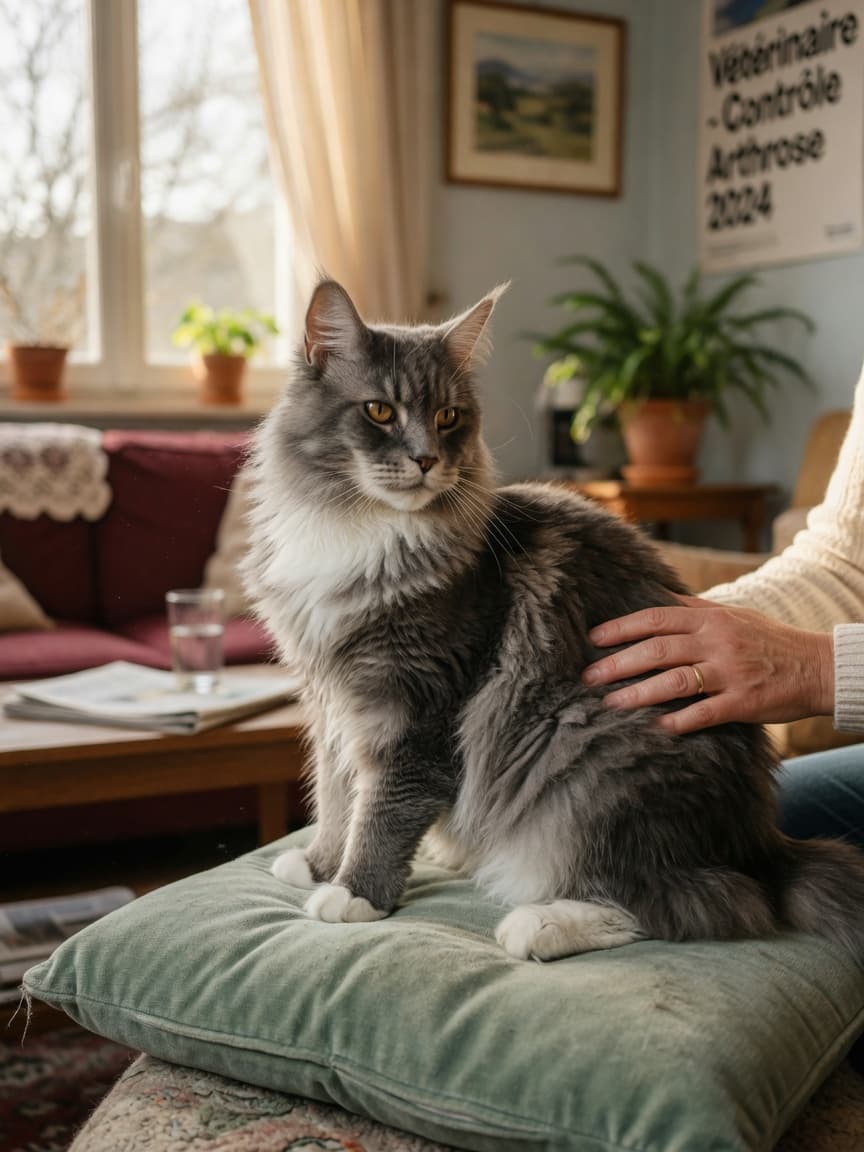
Hip Dysplasia in Cats: More Common Than You Realise
When most people think of hip dysplasia, they picture large-breed dogs struggling to rise from their beds. Yet hip dysplasia affects cats too, and the condition is significantly underdiagnosed. Research using radiographic screening has found hip dysplasia in up to 40 percent of certain pedigree breeds, a figure that surprises many owners and even some veterinary professionals. The reason so many cases go undetected comes down to a simple but important truth: cats are extraordinarily skilled at concealing pain.
Which Breeds Are Most at Risk
Hip dysplasia occurs when the ball of the femur does not fit snugly into the hip socket, causing abnormal movement, joint instability, and eventually arthritis. While any cat can develop the condition, certain pedigree breeds show a far higher prevalence than others. Maine Coons are among the most studied, with some surveys suggesting rates of hip dysplasia exceeding 18 percent in the breed. Persian, Devon Rex, and Siamese cats are also recognised as higher-risk populations.
Genetic factors are thought to play a significant role, and responsible breeders in Europe are increasingly screening breeding stock using established protocols. Body weight matters too: overweight cats place greater stress on already compromised joints, accelerating the progression of arthritis.
Why Cats Hide Their Pain So Effectively
Understanding why hip dysplasia is underdiagnosed in cats requires appreciating how differently cats express discomfort compared to dogs. A dog with painful hips will often vocalise, refuse to walk, or show obvious lameness. Cats evolved as both predator and prey, meaning any outward display of weakness carries survival risk. As a result, a cat with moderate to severe hip pain may simply move less, avoid jumping, or spend more time resting — changes that owners frequently attribute to age or a quiet temperament.
Veterinary pain researchers and bodies such as the WSAVA (World Small Animal Veterinary Association) and the IVAPM (International Veterinary Academy of Pain Management) have worked to develop better feline-specific pain assessment tools precisely because standard indicators used for dogs are unreliable in cats. These guidelines encourage vets to look for subtle behavioural and postural changes rather than waiting for obvious signs of distress.
Recognising the Signs
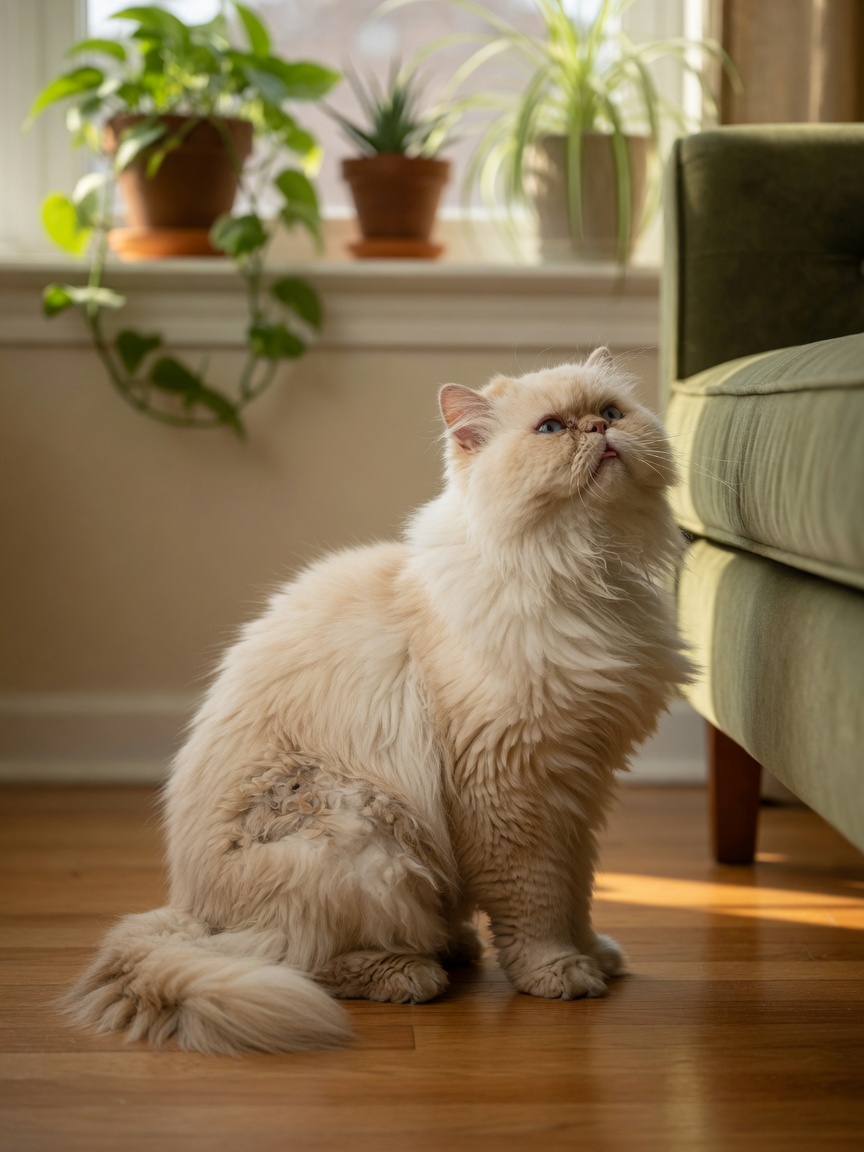
Because cats mask discomfort so effectively, owners need to look for indirect signs rather than outright limping. The following changes warrant a veterinary assessment:
- Reluctance or refusal to jump onto favourite surfaces such as sofas, windowsills, or beds
- Stiffness when rising after rest, particularly in cold weather
- An abnormal gait — a subtle swaying of the hindquarters, a bunny-hop when running, or shorter stride length
- Difficulty grooming the lower back, base of the tail, or hind limbs, leading to a matted or unkempt coat in those areas
- Irritability or uncharacteristic aggression when the hindquarters are touched
- Reduced activity levels or spending more time on the floor rather than elevated spots
- Visible muscle wastage over the hindquarters compared to the rest of the body
None of these signs alone confirms hip dysplasia, but a combination of them in a middle-aged or older cat — especially one of the higher-risk breeds — should prompt investigation.
Diagnosis: Radiographic Screening
Confirming hip dysplasia requires radiographic examination, typically taken under sedation or general anaesthesia to ensure the cat is relaxed and correctly positioned. Two internationally recognised protocols are used in cats: the OFA (Orthopaedic Foundation for Animals) standard view and the PennHIP method, which measures hip laxity more precisely and can identify dogs and cats at risk of developing arthritis even before obvious signs appear.
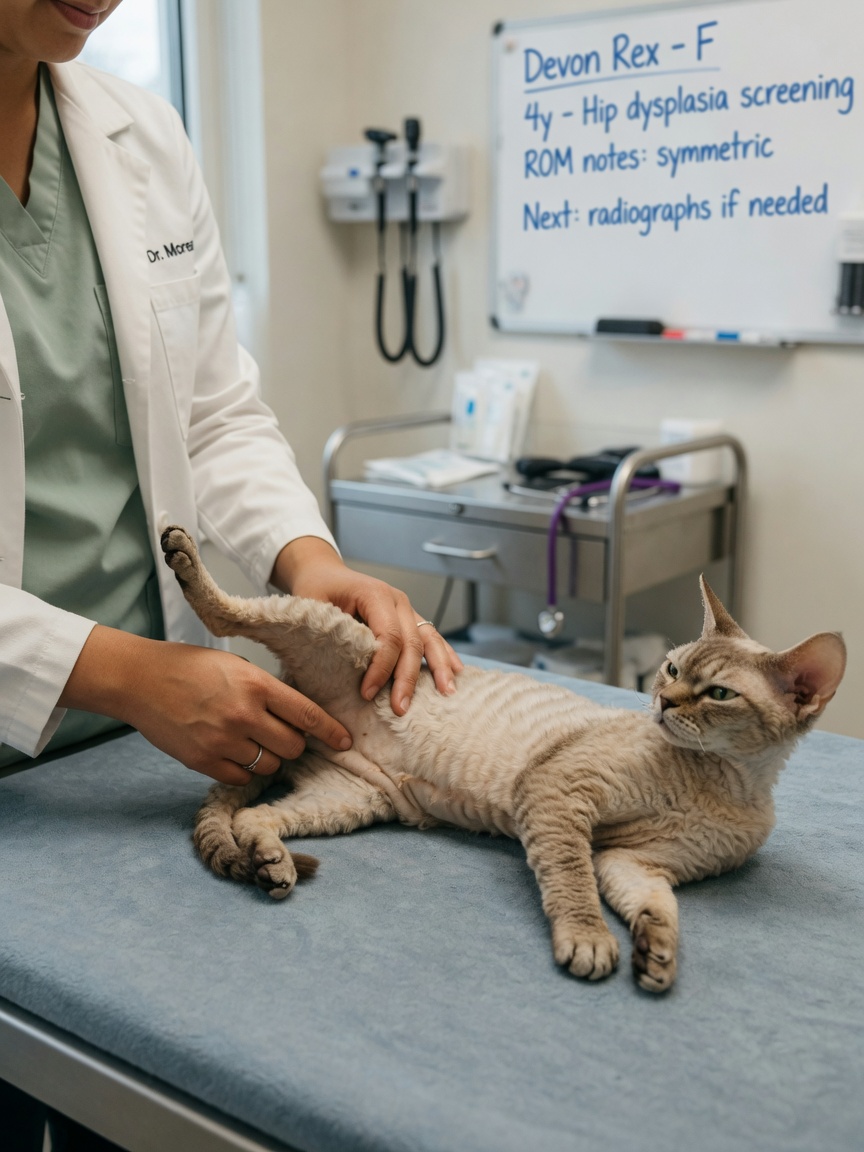
Your vet may also perform a thorough orthopaedic examination, assessing range of motion, pain response on hip extension, and muscle symmetry. Blood tests are generally not diagnostic for hip dysplasia itself but may be performed to rule out other causes of stiffness or to assess organ function before commencing long-term medication.
How Cats Cope Differently to Dogs
One reason cats are thought to manage hip dysplasia better than dogs is their lower body weight and more flexible musculature, which can compensate for joint instability to a greater degree. Cats also tend to self-limit their activity naturally, reducing joint loading. However, this same coping mechanism means the condition is often only identified once it has progressed to painful arthritis.
Treatment Options Available in the EU
Managing hip dysplasia in cats is a long-term commitment, and treatment is typically multimodal, combining several approaches.
Weight Management
Achieving and maintaining a healthy body weight is the single most impactful non-surgical intervention. Even modest weight loss reduces the mechanical load on affected joints and can significantly improve quality of life.
Pain Relief and Anti-Inflammatory Medication
Non-steroidal anti-inflammatory drugs (NSAIDs) are used with great caution in cats because of their sensitivity to these compounds compared to dogs or humans. However, meloxicam is licensed for long-term use in cats within the European Union, making it one of the few NSAIDs available for chronic pain management in this species. Treatment must be supervised by a vet, with regular blood monitoring to check kidney and liver function.
Physiotherapy and Environmental Adaptation
Feline physiotherapy is a growing field. Hydrotherapy, passive range-of-motion exercises, and laser therapy can all support joint health and reduce pain. At home, providing ramps or steps to help cats reach elevated resting spots without jumping reduces daily strain on the hips.
Joint Supplements
Omega-3 fatty acids and glucosamine-chondroitin preparations have some evidence of benefit in reducing joint inflammation and supporting cartilage health, though evidence in cats is less extensive than in dogs. Many vets consider them a safe addition to a broader management plan.
Surgery
In severe or refractory cases, surgical intervention may be considered. Femoral head and neck ostectomy (FHO) removes the femoral head entirely, allowing a false joint to form from surrounding scar tissue. Cats generally do well after FHO, particularly when younger and at a healthy weight, with many regaining near-normal function over time.
The Importance of Regular Veterinary Check-Ups
Given how effectively cats conceal pain, routine veterinary examinations are essential for early detection. Owners of higher-risk breeds should discuss hip screening with their vet from middle age onwards. Early identification means earlier intervention, a better quality of life for the cat, and often lower long-term treatment costs.
If you have noticed any of the subtle signs described above, do not wait for the problem to become obvious. A consultation with your vet, including a discussion of radiographic screening, is the most important first step.