
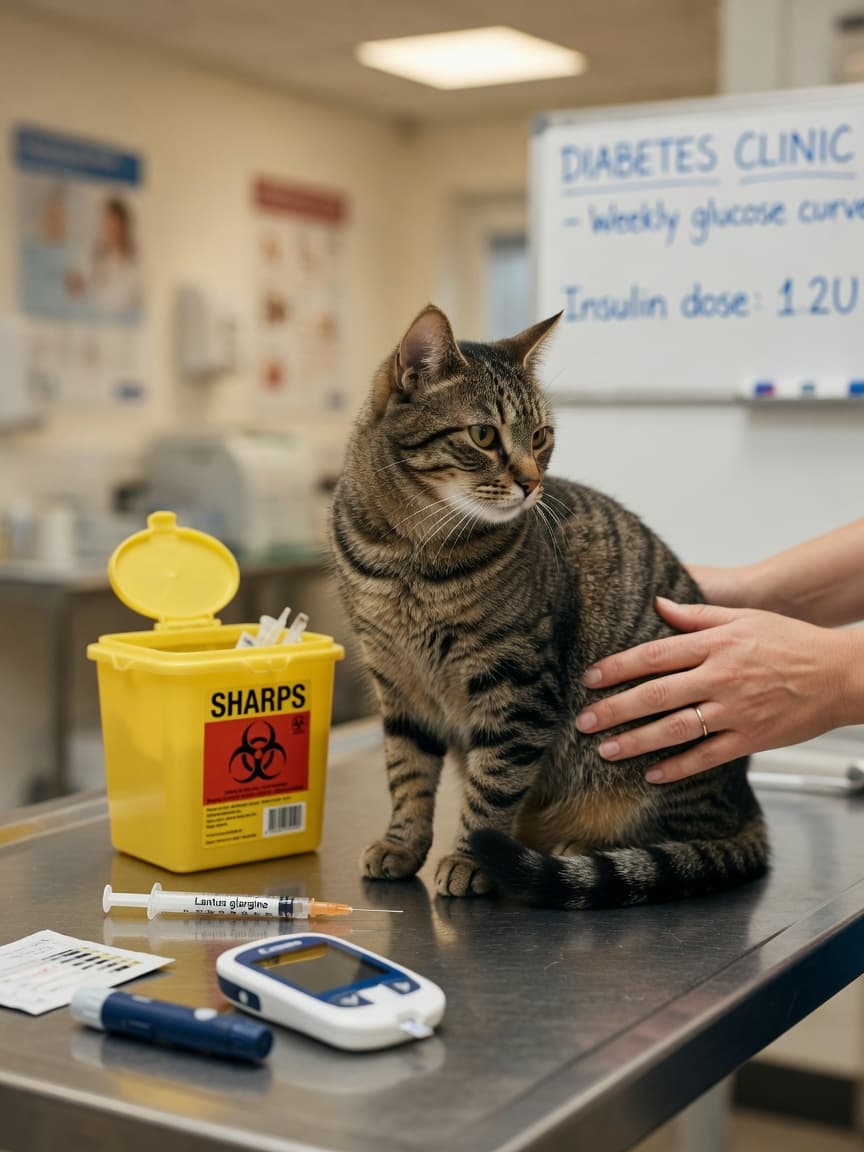
Understanding Feline Diabetes: How It Differs from Dogs
When a cat is diagnosed with diabetes, many owners assume the condition works the same as it does in dogs. In fact, feline diabetes is biologically quite different, and that difference has a significant impact on treatment goals and outcomes.
Dogs almost exclusively develop Type 1 diabetes, a condition in which the pancreas is permanently destroyed and can no longer produce insulin. Cats, on the other hand, most commonly develop Type 2 diabetes, a disease of insulin resistance. In Type 2 diabetes, the pancreas still produces insulin, but the body's cells fail to respond to it properly. Over time, the overworked pancreas becomes exhausted and output falls, but the root problem is resistance rather than destruction.
This distinction matters enormously. Because the pancreas in a diabetic cat is not necessarily permanently damaged, it is possible — with aggressive management — to restore normal glucose regulation entirely. This is known as diabetic remission, and it is achievable in 50 to 70 per cent of cats if the condition is caught early and treated correctly from the outset.
Why Diet Is the Foundation of Feline Diabetes Management
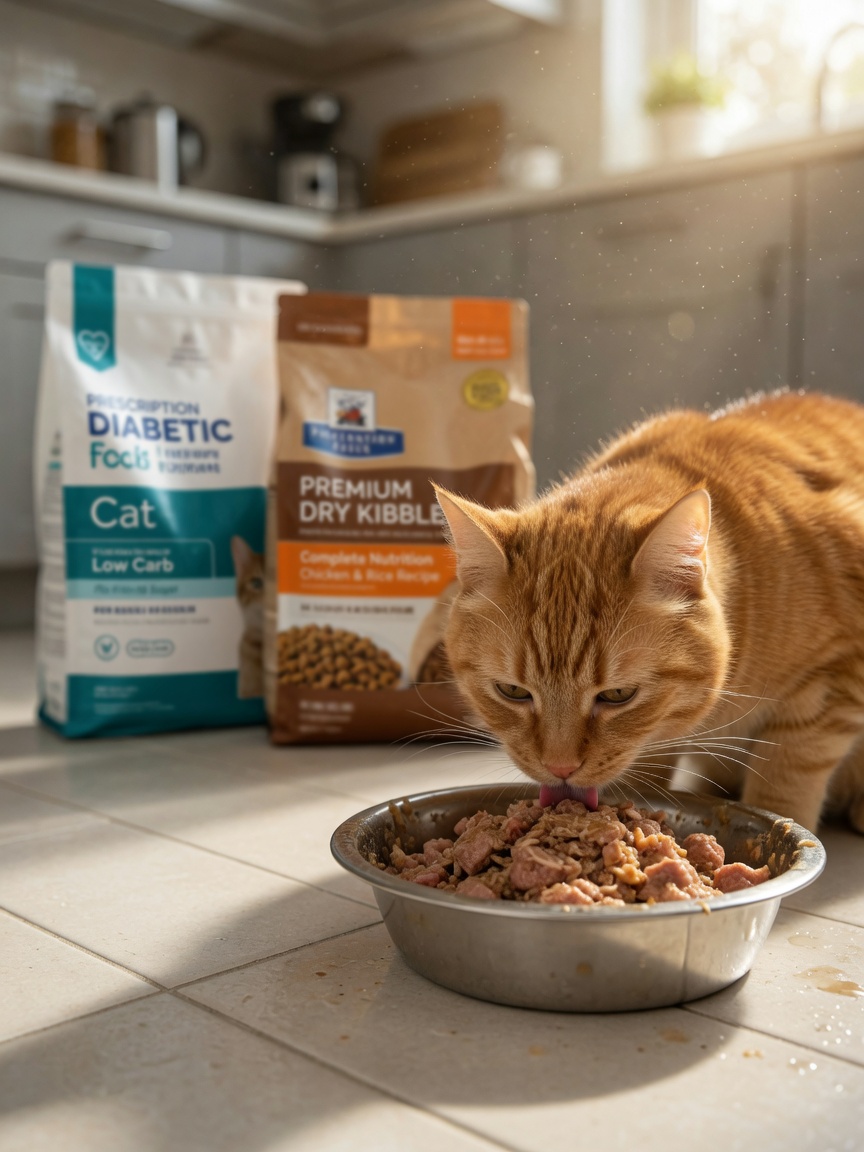
Before even discussing insulin, diet must be addressed. Cats are obligate carnivores, and their metabolism is designed to run on protein and fat rather than carbohydrates. Yet many commercial cat foods — particularly dry kibble — are high in starch and carbohydrates, which cause repeated glucose spikes throughout the day and place enormous strain on an already struggling pancreas.
Switching a diabetic cat to a high-protein, low-carbohydrate diet is not optional. It is arguably the single most important step in management. A low-carb diet reduces glucose spikes after meals, lowers the amount of insulin required, and takes pressure off the pancreatic beta cells — giving them a chance to recover.
Veterinary prescription diets specifically formulated for diabetic cats include:
- Purina Pro Plan Veterinary Diets DM (Dietetic Management) — available in both wet and dry formulations, though wet is strongly preferred
- Hill's Prescription Diet m/d — another high-protein, low-carbohydrate option available as wet or dry food
Wet food is generally preferred over dry in diabetic cats for two reasons: it has a higher moisture content (supporting kidney health) and typically contains fewer carbohydrates than equivalent dry diets. If a cat refuses wet food initially, a gradual transition over one to two weeks usually succeeds.
Owners should also be aware that changing diet will alter insulin requirements, sometimes substantially. Never change a diabetic cat's diet without informing your vet, as dose adjustments may be needed promptly.
Insulin Choice: Why Glargine (Lantus) Is Preferred
Not all insulin is equal in cats, and the choice of insulin has a direct bearing on whether remission is achievable.
Glargine insulin, sold under the brand name Lantus, is a long-acting, peakless (flat-curve) insulin that was originally developed for use in humans with Type 2 diabetes. It has become the preferred insulin for diabetic cats for exactly this reason. Its flat activity curve means it provides steady, consistent background coverage without sharp peaks that could cause dangerous glucose drops. This predictability makes it far safer for home management and also makes it easier to detect when a cat's own insulin production is resuming.
The so-called tight regulation or remission protocol — developed and refined by feline diabetes specialists — uses glargine combined with a low-carbohydrate diet and frequent home glucose monitoring to bring blood sugar down to near-normal levels consistently. This sustained normalisation of glucose is what allows the pancreas to recover and resume function.
Other insulins such as lente or PZI are still used in some cases, but glargine is now widely considered the first-line choice when remission is the goal.
Home Glucose Monitoring with AlphaTRAK
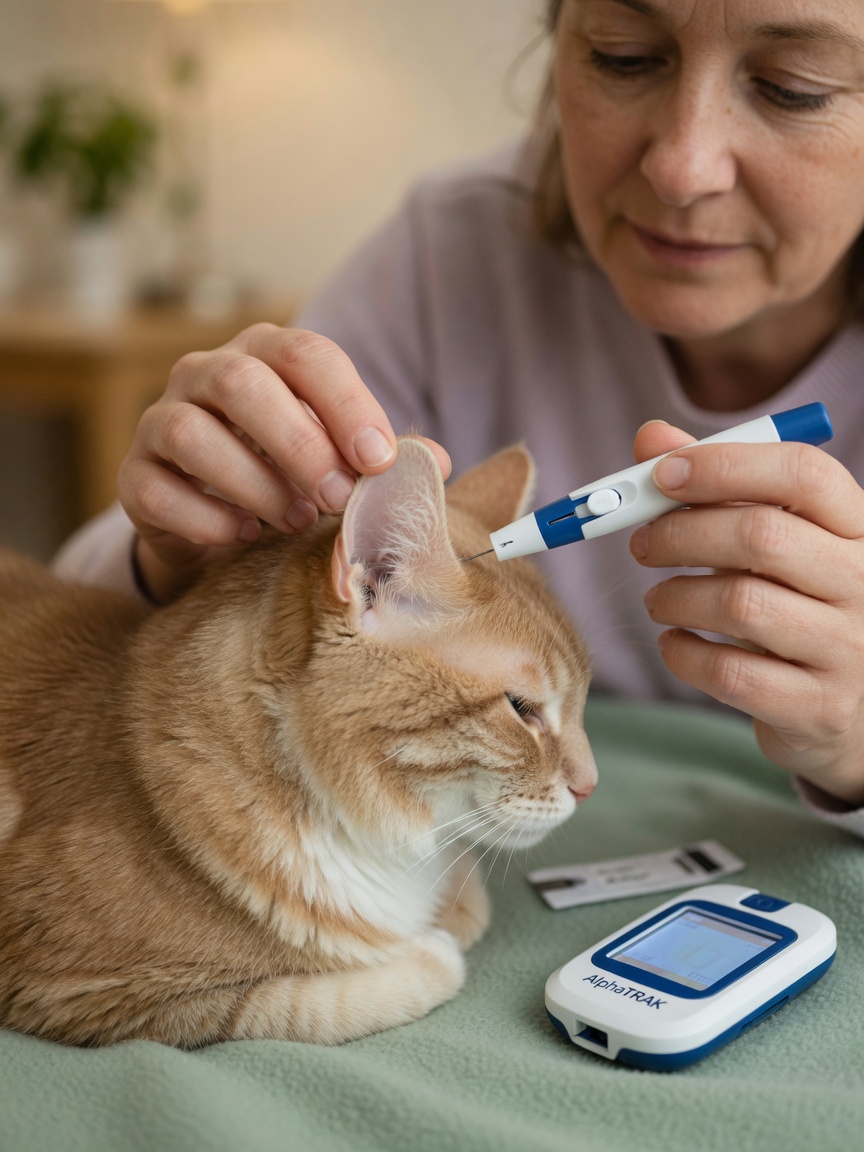
Monitoring blood glucose at home is an essential part of the remission protocol and dramatically improves outcomes. Cats are notoriously stressed at veterinary clinics, and stress alone can raise blood glucose levels substantially — a phenomenon known as stress hyperglycaemia. A single glucose reading taken at the surgery may be entirely misleading.
The AlphaTRAK glucometer is specifically calibrated for cats and dogs, making it far more accurate for feline use than human glucometers. Blood samples are taken from the pinna (the inner surface of the ear flap) using a small lancet. With a little practice, most owners find the process straightforward and minimally distressing for the cat.
Home monitoring allows owners to:
- Identify when glucose levels are falling too low and reduce the insulin dose before a crisis occurs
- Track the response to diet changes
- Detect the early signs of remission, when insulin requirements begin to drop off
- Build a glucose curve at home that reflects the cat's true physiology, free from stress artefact
Your vet will provide a target glucose range and guidance on when to adjust doses. Communication between owner and vet is especially important during the first weeks of management.
Recognising and Treating Hypoglycaemia
Hypoglycaemia — dangerously low blood sugar — is the most serious acute complication of insulin therapy. It can occur if a cat receives too much insulin, skips a meal, or goes into remission without the insulin dose being reduced in time.
Signs of hypoglycaemia in cats include:
- Weakness and wobbliness, particularly in the hind legs
- Disorientation or confusion
- Trembling or shaking
- Seizures in severe cases
- Unresponsiveness or collapse
If a cat shows any of these signs, this is a medical emergency. Do not attempt to give insulin. The immediate treatment is to apply a glucose source directly to the gums — Karo corn syrup is the most commonly recommended option, but any sugar solution or honey will work in an emergency. Apply a small amount to the gums and inner cheeks, allow it to be absorbed, and repeat every few minutes if the cat remains unresponsive. Even if the cat appears to improve, seek emergency veterinary care immediately.
Prevention is far better than emergency treatment. Regular home glucose monitoring, consistent mealtimes, and never giving insulin to a cat that has not eaten are the most important safeguards.
The Path to Remission
Remission is a realistic goal for many diabetic cats, particularly those diagnosed early, switched promptly to a low-carbohydrate diet, and managed with glargine insulin using a tight regulation protocol. Studies suggest that between 50 and 70 per cent of cats managed this way achieve remission within the first three to six months.
Remission means the cat no longer requires insulin injections to maintain normal blood glucose levels. It is not always permanent — some cats relapse, particularly if their diet changes or they gain weight — but for many, it represents a return to normal life. Even for cats that do not achieve full remission, modern management protocols allow diabetic cats to live long, comfortable lives with good quality of care at home.