ForPetsHealthcare
Dogs

Can Dogs Taste Spicy Foods? - Whole Dog Journal

By Julia WrenfieldUpdated August 4, 20263 min read
Evidence-based · Sources checked
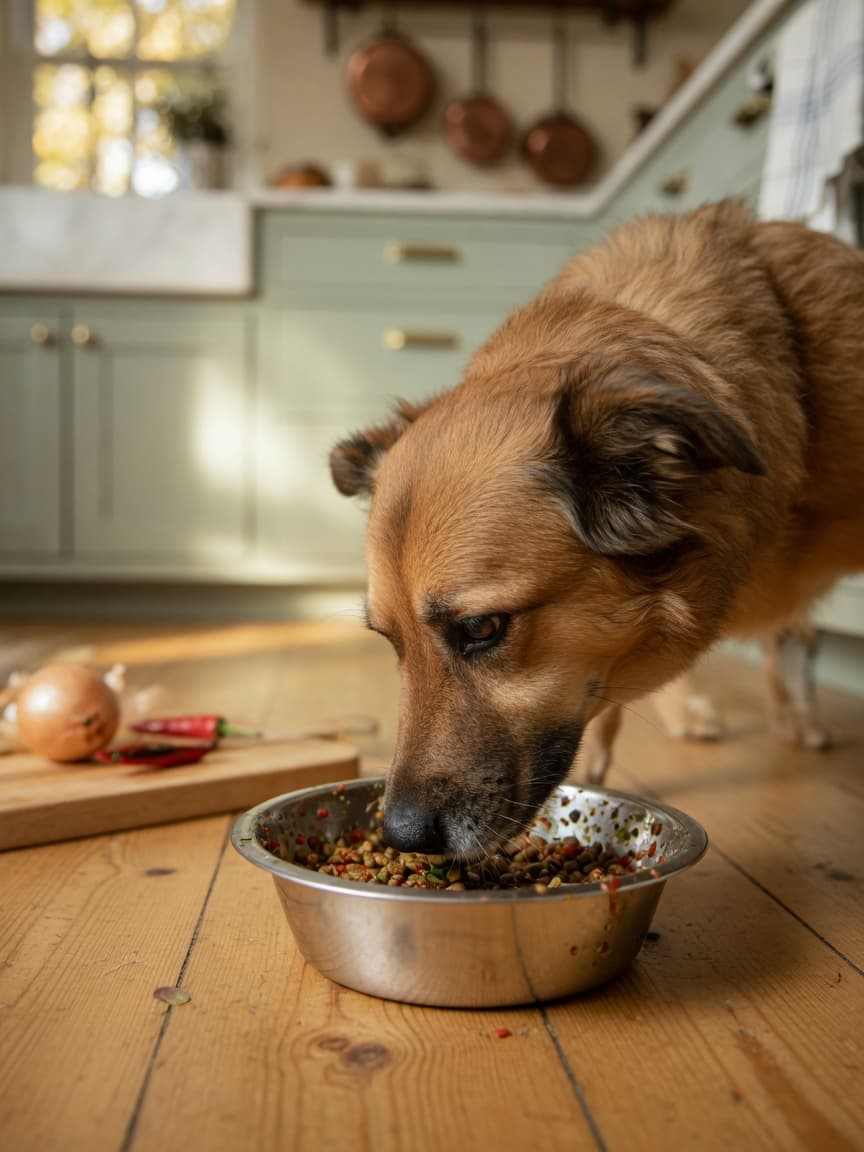
{"en": "Golden Retriever sniffing a bowl of spicy food, curious about whether dogs can taste heat and spices", "es": "Golden Retriever oliendo un plato de comida picante, curiosidad sobre si los perros pueden saborear el picor", "fr": "Golden Retriever renifle un bol de nourriture \u00e9pic\u00e9e, curiosit\u00e9 sur la capacit\u00e9 des chiens \u00e0 go\u00fbter le piquant", "de": "Golden Retriever schn\u00fcffelt an einer Sch\u00fcssel w\u00fcrziger Speisen, ob Hunde Sch\u00e4rfe schmecken k\u00f6nnen", "nl": "Golden Retriever snuffelt aan een kom pittig voedsel, onderzoekt of honden pittigheid kunnen proeven", "pt": "Golden Retriever cheirando uma tigela de comida picante, curiosidade se c\u00e3es conseguem saborear o calor", "it": "Golden Retriever annusa una ciotola di cibo piccante, curiosit\u00e0 se i cani riescono a gustare il calore"}

As a pet owner, you might wonder whether your dog can experience the fiery sensation of spicy food the way you do. The truth is more nuanced than a simple yes or no. Whilst dogs certainly have taste buds, their ability to perceive spicy flavours differs significantly from ours, and understanding this difference is crucial for keeping your furry friend safe in the kitchen.

How Dogs' Taste Buds Work Differently

Dogs possess approximately 1,700 taste buds compared to humans' 9,000. More importantly, their taste receptor distribution is fundamentally different from ours. Dogs can taste sweet, salty, bitter, and sour flavours, but they lack sufficient taste receptors for the specific compound that creates spiciness: capsaicin.

Capsaicin, found in chilli peppers and spicy foods, doesn't trigger the same burning sensation in dogs as it does in humans. However, this doesn't mean spicy foods are harmless for your pet. The danger lies elsewhere.

Why Spicy Foods Pose Health Risks

Even though dogs can't taste spiciness in the traditional sense, spicy foods can still cause significant digestive upset. The risks include:

  • Gastrointestinal irritation: Capsaicin and other spicy compounds can inflame the stomach lining and intestines, causing discomfort and pain
  • Vomiting and diarrhoea: These are common reactions when dogs consume spicy foods, leading to potential dehydration
  • Pancreatitis: Fatty spicy foods can trigger inflammation of the pancreas, a serious condition requiring veterinary care
  • Increased salivation and drooling: Some dogs experience excessive drooling after consuming spicy foods
  • Burning mouth and throat: Although dogs don't perceive spiciness as heat, they may still experience physical irritation

What About Mild Spices?

Not all spices are equally problematic. Whilst you should avoid giving your dog foods seasoned with chilli peppers, cayenne, or hot sauce, some mild spices used in cooking are generally safe in small quantities. However, the best approach is to err on the side of caution and keep your dog's food plain and unseasoned.

Some spices that are particularly dangerous include:

  1. Garlic and onions (toxic and can damage red blood cells)
  2. Nutmeg (can cause neurological issues)
  3. Chilli powder and cayenne
  4. Excessive salt (can cause sodium poisoning)

Signs Your Dog Has Eaten Spicy Food

If your dog has accidentally consumed spicy food, watch for these warning signs:

  • Excessive drooling or lip smacking
  • Vomiting or retching
  • Diarrhoea
  • Abdominal pain (restlessness, whining, or assuming a prayer position)
  • Loss of appetite
  • Lethargy or unusual behaviour

If your dog shows any of these symptoms and you suspect spicy food consumption, contact your veterinary surgeon promptly.

Safe Treat Alternatives

Your dog's palate is actually quite different from yours. They prefer simple, natural flavours and don't require complex seasoning to enjoy their meals. Consider these safe alternatives:

  • Plain cooked chicken or turkey
  • Unseasoned vegetables like carrots, green beans, and pumpkin
  • Plain rice or sweet potato
  • Unsalted, unsweetened peanut butter
  • Plain yoghurt

Key Takeaways

Whilst dogs cannot taste spiciness the way we do, spicy foods are still harmful to them. Keep your pet's diet plain and avoid sharing seasoned human food. When in doubt about whether a food is safe, consult your veterinary surgeon. Your dog's digestive health depends on maintaining their species-appropriate diet, and the safest approach is always to stick with specially formulated dog food and plain, wholesome treats. Remember, your dog's tail wags aren't for exciting flavours—they're for your loving companionship and care.

#can dogs taste spicy foods whole dog journal#dog health#dog nutrition#forpetshealthcare

Sources & further reading

This article is based on peer-reviewed veterinary research and reputable animal-health sources. Explore the underlying science in our Research Library.

Related articles

The 19 Best Animal Shelters in the Netherlands (2026)

the Netherlands's animal shelters, rescue associations and refuges save thousands of dogs, cats and other animals every year, almost always on tiny budgets and volunteer power. To build the most objective ranking possible, we analysed public Google reviews across more than 56 registered animal-prote…

Read more →

The 25 Best Animal Shelters in Italy (2026)

Italy's animal shelters, rescue associations and refuges save thousands of dogs, cats and other animals every year, almost always on tiny budgets and volunteer power. To build the most objective ranking possible, we analysed public Google reviews across more than 121 registered animal-protection org…

Read more →

The 48 Best Animal Shelters in Germany (2026)

Germany's animal shelters, rescue associations and refuges save thousands of dogs, cats and other animals every year, almost always on tiny budgets and volunteer power. To build the most objective ranking possible, we analysed public Google reviews across more than 152 registered animal-protection o…

Read more →

The 32 Best Animal Shelters in France (2026)

France's animal shelters, rescue associations and refuges save thousands of dogs, cats and other animals every year, almost always on tiny budgets and volunteer power. To build the most objective ranking possible, we analysed public Google reviews across more than 89 registered animal-protection org…

Read more →

The 8 Best Animal Shelters in Portugal (2026)

Portugal's animal shelters, rescue associations and municipal centros de recolha save thousands of dogs, cats and other animals every year, almost always on tiny budgets and volunteer power. To build the most objective ranking possible, we analysed public Google reviews across more than 86 registere…

Read more →

Sphynx Cat Skin care and hygiene: Causes, Signs & Care

Sphynx cats have little to no coat, which means the skin itself takes on jobs that fur normally does — insulation, oil dispersal, and barrier protection — leaving it prone to greasiness, blocked pores, fungal infections, and sunburn. The single most important thing to know is that a Sphynx's skin ne…

Read more →
Disclaimer:This article is for informational purposes only and does not constitute veterinary advice. Always consult a qualified veterinarian for your pet's health concerns.

Free newsletter

Pet health tips, straight to your inbox

Weekly science-backed advice for dog & cat owners. No spam, unsubscribe anytime.