
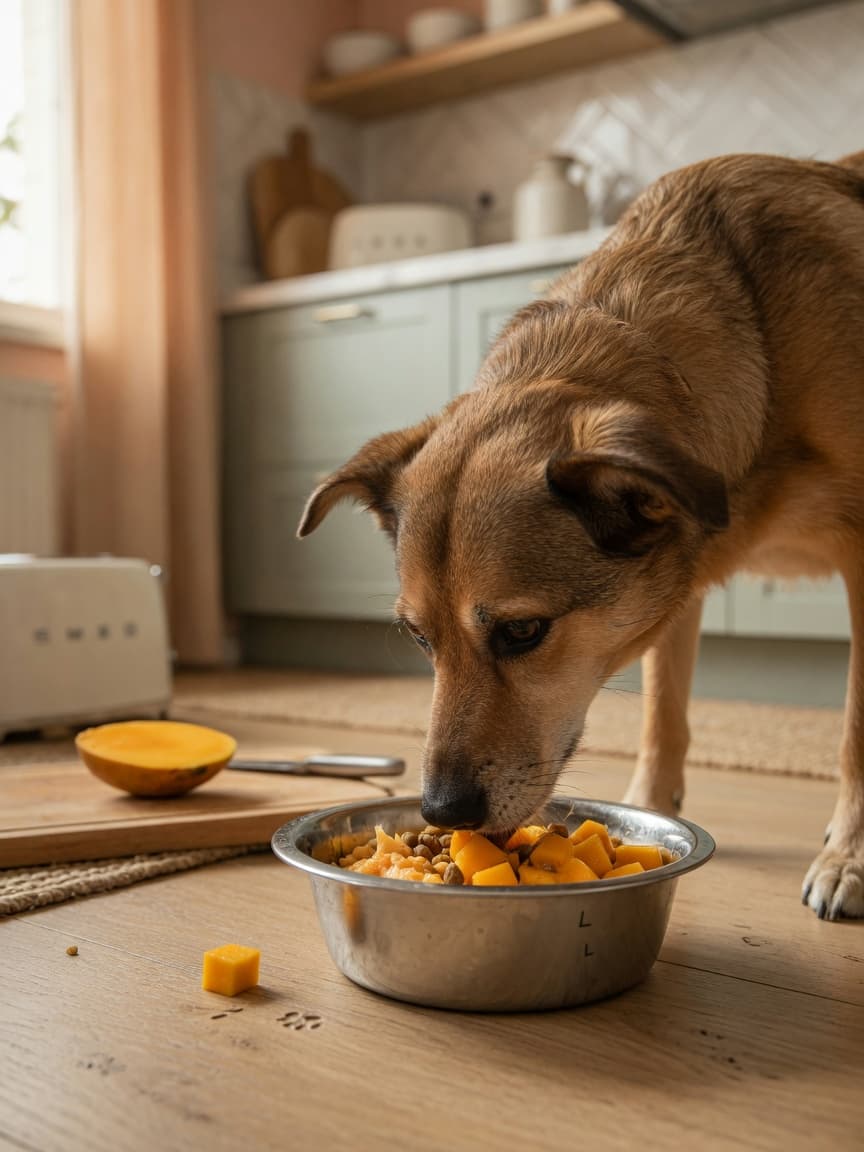
Mango is naturally high in sugar. A 100g portion of mango contains approximately 13–15g of natural sugars, primarily fructose and sucrose. Whilst natural sugar is not inherently dangerous for dogs in small amounts, excess sugar in the diet contributes to weight gain, dental decay, and over time can exacerbate insulin resistance — a concern particularly relevant to dogs already predisposed to diabetes or those that are overweight.
This sugar load also means mango can cause loose stools or diarrhoea in dogs that eat too much, or in dogs with sensitive digestive systems. The high fibre content compounds this if given in large quantities — what begins as a digestive benefit becomes a laxative effect.
The Mango Stone: A Serious Hazard
The mango stone (pit) must always be removed before offering mango to a dog. This is non-negotiable, for two reasons.
First, it is a significant choking and obstruction hazard. Mango stones are large and hard, and if swallowed — which is easier than it sounds for an enthusiastic medium to large dog — they can become lodged in the oesophagus, stomach, or intestines. Gastrointestinal obstruction is a surgical emergency.
Second, mango stones contain small amounts of cyanogenic glycosides, compounds that can release hydrogen cyanide when metabolised. The quantities in a single stone are unlikely to cause acute cyanide poisoning in a large dog, but this is a secondary concern compared to the obstruction risk. Remove the stone entirely and do not allow your dog access to discarded mango stones in the kitchen bin.
The Skin: Better Avoided
Mango skin is not toxic to dogs, but it is considerably harder to digest than the flesh and may cause gastrointestinal irritation, particularly in dogs with sensitive stomachs. It also carries a small risk of pesticide residue if the fruit has not been washed thoroughly. Peeling the mango before offering it to your dog is the most straightforward approach and removes any ambiguity.
How Much Mango Can Dogs Have?
Treats and supplementary foods, including fruit, should account for no more than 10% of a dog's daily caloric intake — the so-called 10% rule used as a rough guide by many vets and nutritionists. In practical terms, this means:
- Small dogs (under 10kg): one or two small cubes (roughly 1–2 tablespoons of flesh) as an occasional treat
- Medium dogs (10–25kg): a small handful of cubes, two to three times per week at most
- Large dogs (over 25kg): up to a quarter of a mango, given infrequently rather than daily
These are guidelines rather than precise prescriptions. Individual dogs vary in how well they tolerate fruit, and dogs with underlying health conditions — particularly diabetes, obesity, or gastrointestinal issues — may need lower amounts or should avoid mango altogether. When introducing mango for the first time, start with a single small piece and observe for any adverse reaction over the following 24 hours before offering more.
Can Dogs Eat Dried Mango?
Dried mango is best avoided. The drying process concentrates the natural sugars significantly — a small portion of dried mango contains far more sugar per gram than fresh fruit. Dried mango is also frequently treated with sulphur dioxide as a preservative and may contain added sugars that further increase the problem. The sugar concentration alone makes it unsuitable for regular feeding, and it offers no advantage over fresh mango.
Can Dogs Drink Mango Juice?
No. Commercial mango juices and smoothies typically contain added sugars and may include preservatives or other ingredients that are not appropriate for dogs. Even 100% pure mango juice lacks the fibre of the whole fruit and delivers a concentrated sugar hit with none of the offsetting nutritional benefits. Fresh water remains the only appropriate drink for dogs.
Signs Your Dog Has Eaten Too Much Mango
If your dog eats more mango than is appropriate, you may notice:
- Loose stools or diarrhoea
- Vomiting
- Bloating or flatulence
- Lethargy
These symptoms typically resolve within 24 hours with normal hydration and no further mango. If symptoms are severe, persistent, or accompanied by blood in the stool, contact your vet.
Preparing Mango Safely for Your Dog
Preparation is straightforward. Peel the mango fully, remove the stone completely and dispose of it securely, and cut the flesh into small, manageable pieces appropriate to the size of your dog. Fresh, ripe mango is ideal. Frozen mango cubes (plain, without additives) also work well, particularly as a cooling summer treat. Offer as an occasional reward rather than a daily supplement, and enjoy the fact that for once, the answer is actually a fairly happy one.