

Can Dogs Eat Celery?
Celery tends to be overlooked as a dog treat — it is not particularly glamorous, and its crunchy, fibrous texture does not immediately suggest itself as something a dog would enjoy. Yet celery is one of the genuinely safe and reasonably nutritious vegetables you can offer your dog, and some dogs take to it enthusiastically. It has even acquired a mild reputation as a breath-freshening snack, though the evidence for this is largely anecdotal.
Nutritional Profile
Celery is approximately 95% water, making it an extremely low-calorie food with useful hydrating properties. Within that remaining 5%, there is a reasonable spread of nutrients: vitamin K, which supports blood clotting and bone metabolism; vitamin C, an antioxidant that supports immune function; vitamin A, important for vision, skin health, and immune response; and folate, which plays a role in cell division and DNA synthesis.
Celery also contains potassium, manganese, and small amounts of calcium and phosphorus. The fibre content, while moderate, contributes positively to digestive function. Taken together, celery is a vegetable that earns its place as an occasional snack rather than simply being a watery filler.
Is Celery Entirely Safe for Dogs?
Yes, celery is considered safe for dogs. It is not toxic in any of its parts — stalk, leaves, or seeds — though practical guidance varies slightly depending on which part is being offered. The stalk is the most commonly fed portion, and it is both the safest and the most palatable for most dogs.
The leaves are safe but more intensely flavoured and slightly more bitter, which some dogs find off-putting. Celery seeds, while not toxic, are very small and highly concentrated in flavour; they are not a typical thing to feed to dogs and can be skipped entirely without missing any meaningful nutritional benefit.
The Choking Fibre Question
Celery's fibrous strings are worth paying attention to. In large pieces, these strings can become awkward in the mouth and throat, particularly for smaller dogs or those that tend to gulp their food without much chewing. While serious choking incidents are not commonly reported with celery specifically, the stringy texture does warrant some care in preparation.
Cutting celery into small, appropriately sized pieces eliminates most of the risk. For a small dog, thin rounds of no more than 1–2 cm work well. For larger dogs, slightly larger pieces are fine, but it is still worth cutting rather than offering whole stalks. Removing the most prominent fibrous strings before cutting is a sensible extra step for dogs that eat quickly.
Portion Guidance
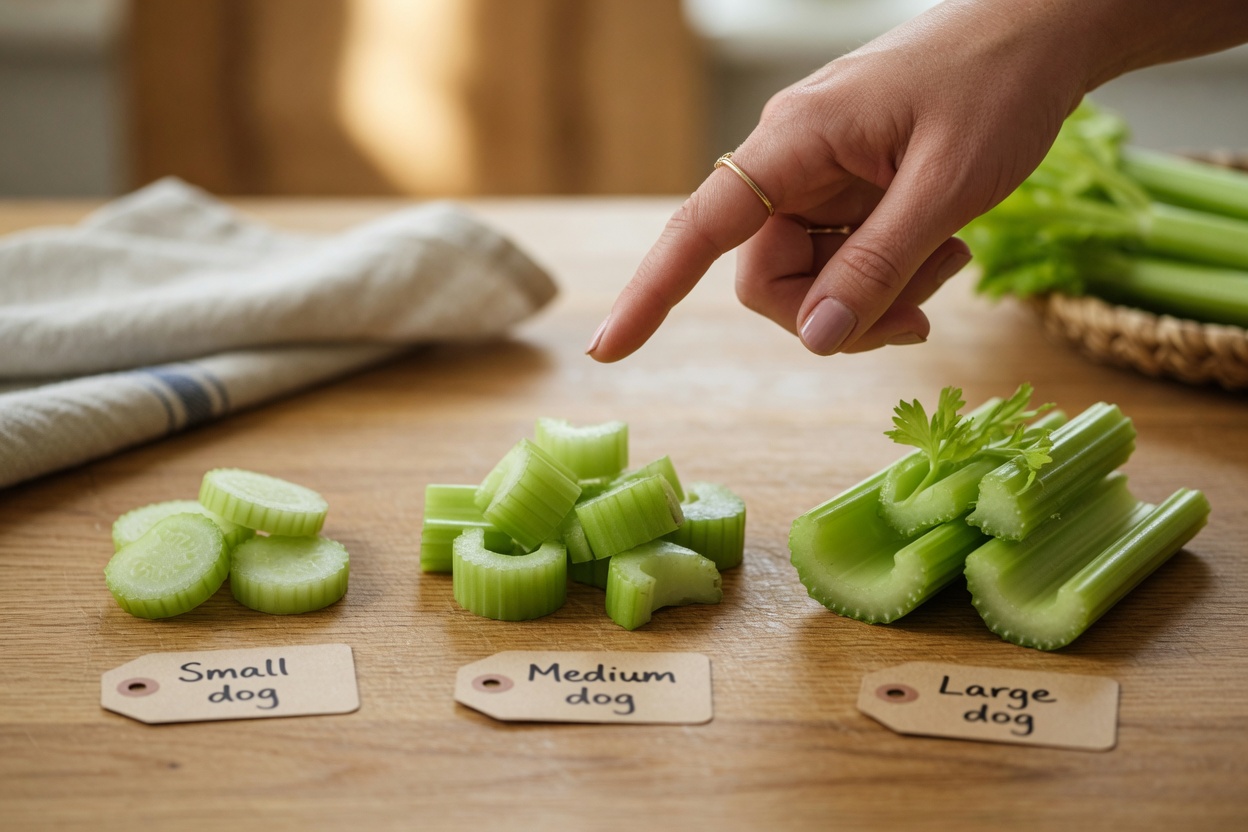
Celery's low calorie count means portion concerns are less pressing than with denser treats, but the 10% rule for treats still applies. As a practical guide:
- Small dogs: two to three small pieces per serving
- Medium dogs: four to five pieces, roughly the size of a thumbnail
- Large dogs: up to half a stalk, cut into pieces
Celery can be offered raw, which most dogs prefer for the crunch, or lightly steamed if your dog has a particularly sensitive digestive system. Steaming softens the fibre and may make it easier to digest, though it also reduces some of the water-soluble vitamin content. Raw is generally the better option unless there is a specific reason to cook it.
Digestive Considerations

Because celery is high in insoluble fibre, feeding too much at once can cause loose stools or excess gas, particularly in dogs with sensitive digestive systems. Introducing it gradually is the sensible approach, especially if your dog has not had fibrous vegetables before. One or two pieces initially, increasing slowly over several days, allows the digestive system to adjust without incident.
Dogs with kidney disease should have celery portions kept small due to the potassium and sodium content, and ideally discussed with a vet. While the amounts present in a few sticks of celery are not alarming, dietary management in kidney disease requires attention to cumulative intake across all food sources.
Can Celery Freshen a Dog's Breath?
The idea that celery freshens dogs' breath circulates fairly widely in pet care communities. The mechanism proposed is that chewing fibrous vegetables increases saliva production and physically scrubs the teeth, both of which can have a mild short-term effect on breath. There is no peer-reviewed evidence specifically examining celery's effect on canine halitosis, so any benefit is likely modest and temporary.
Persistent bad breath in dogs is more reliably addressed through regular tooth brushing, dental chews designed for oral hygiene, and routine veterinary dental checks. Celery can be a pleasant complement to good dental care but should not substitute for it.
A Simple, Low-Risk Treat
Celery is one of the more straightforward vegetables to add to a dog's treat rotation. It is safe, low in calories, mildly nutritious, and most dogs enjoy the crunch. The preparation requirements are minimal — cut into appropriate pieces, remove obvious strings, offer raw. For owners looking to expand their dog's vegetable variety or reduce treat calories without reducing treat frequency, celery is an easy and sensible choice.