
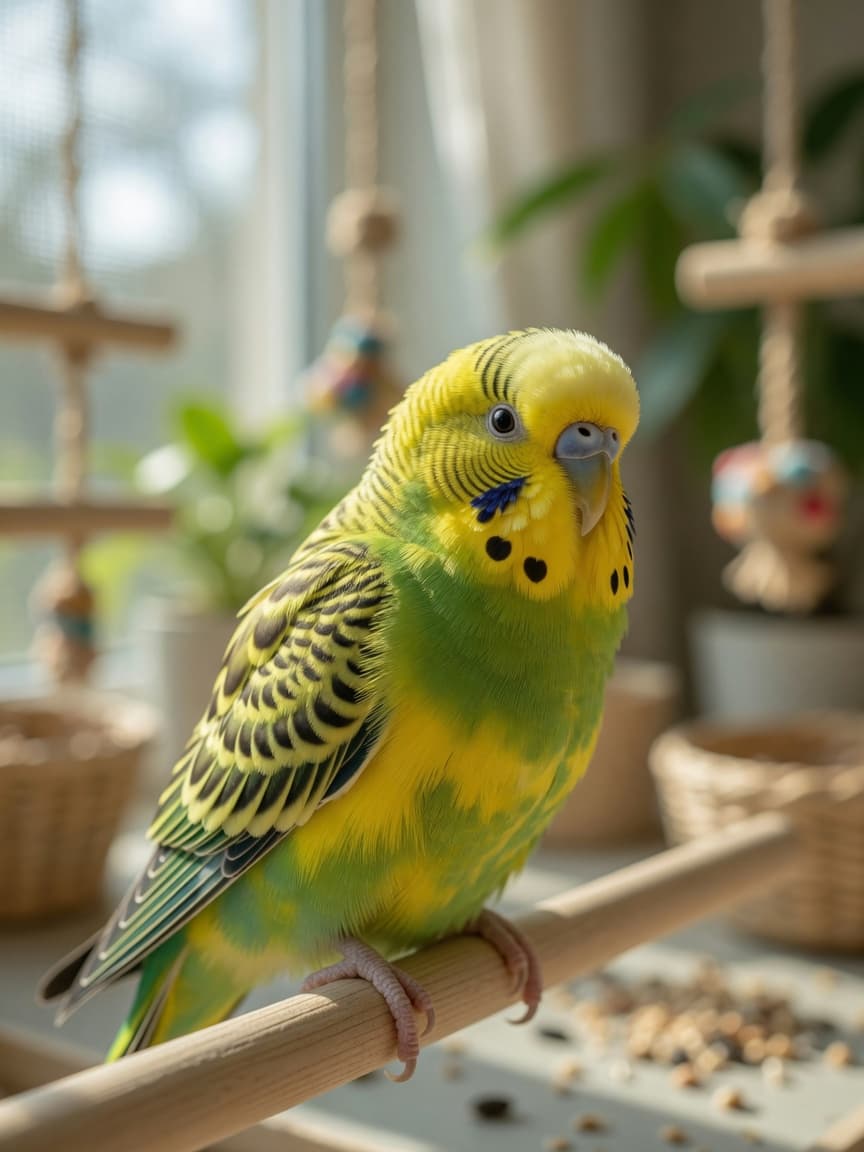
The Budgerigar: Popular but Often Misunderstood
The budgerigar (Melopsittacus undulatus) is native to Australia and is the world's most widely kept pet bird. In the UK, millions of households have owned budgerigars, yet veterinary care for these birds is sought far less often than their prevalence would suggest. Many owners assume that a budgerigar sitting quietly on its perch is a healthy budgerigar. In reality, birds instinctively mask signs of illness until disease is advanced — by the time a budgerigar looks obviously unwell, it may have been sick for some time.
Understanding the conditions budgerigars are susceptible to, recognising early warning signs, and registering with an avian vet before an emergency arises are among the most important things any budgerigar owner can do.
Psittacosis: A Zoonotic Risk
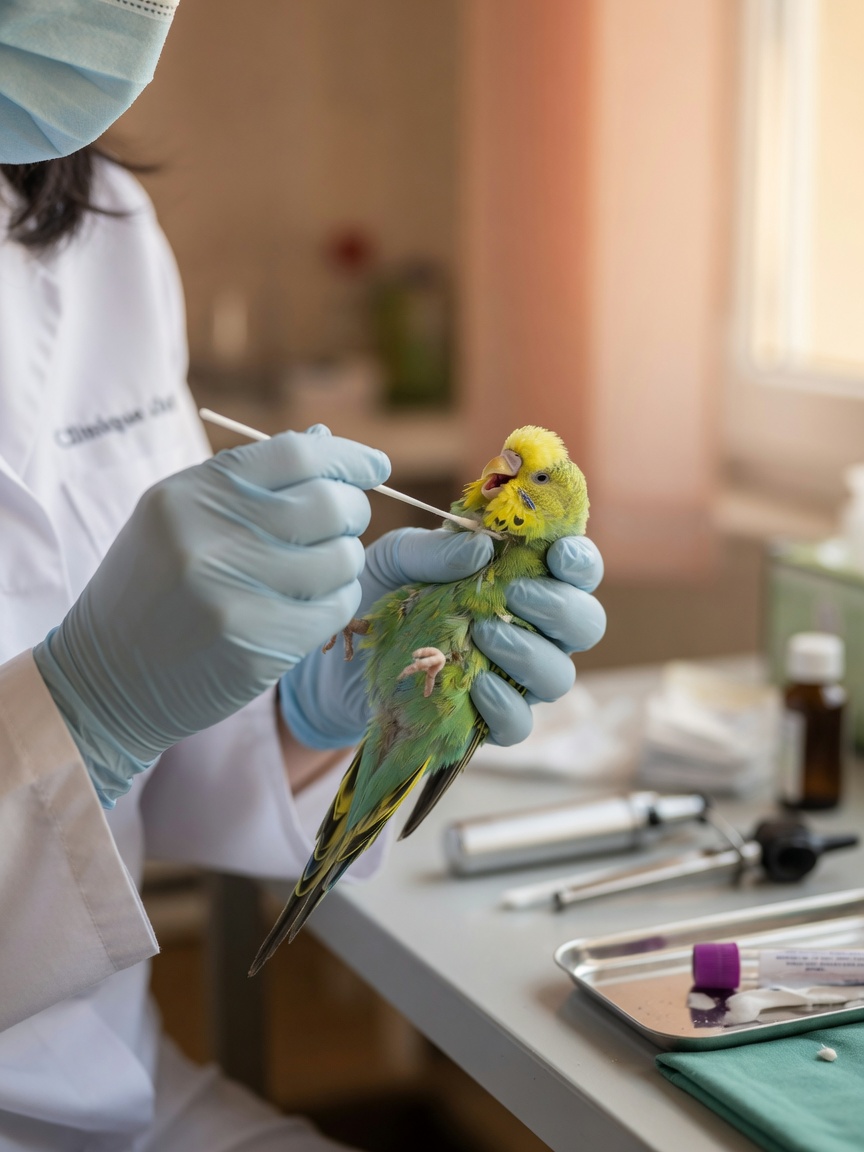
Psittacosis — also known as parrot fever — is caused by the intracellular bacterium Chlamydia psittaci. It affects all psittacine birds, including budgerigars, and is a zoonotic disease: it can be transmitted from birds to humans, and in vulnerable individuals it can cause serious respiratory illness. In the UK, psittacosis is a notifiable disease in humans.
Infected birds may show signs including:
- Nasal or ocular discharge
- Laboured breathing
- Loose, green or yellow droppings
- Weight loss and lethargy
- Ruffled feathers
However, budgerigars can carry Chlamydia psittaci and shed the organism without showing any obvious clinical signs, particularly when the infection is chronic and low-grade. Stress, such as that caused by a new environment, illness, or overcrowding, can trigger active shedding and the appearance of symptoms.
Transmission to humans occurs through inhalation of dried faecal matter or respiratory secretions. Owners should wash their hands after handling their bird or cleaning the cage, avoid cleaning cages in poorly ventilated spaces, and inform their GP if they develop respiratory symptoms following bird contact. Diagnosis in birds requires specific PCR testing of faeces or cloacal swabs. Treatment involves a prolonged course of doxycycline.
Air Sac Mites: A Silent Threat
Sternostoma tracheacolum is a mite that inhabits the trachea, air sacs, and lungs of budgerigars. It is transmitted directly from parent to chick and is most commonly encountered in birds sourced from large-scale breeding operations. Many infected birds carry a low burden without showing obvious signs, but heavier infestations cause progressive respiratory distress.
Classic signs of air sac mite infestation include:
- Wheezing, clicking, or squeaking sounds with each breath
- Tail bobbing (an effort-breathing indicator)
- Open-beak breathing
- Reduced vocalisation or changes in voice quality
- Exercise intolerance and general lethargy
Diagnosis can be made by an experienced avian vet, sometimes by shining a torch through the skin over the trachea in a darkened room to observe mite movement, and confirmed by examination of respiratory secretions. Treatment is with ivermectin or moxidectin, applied topically or by injection. Affected birds and any cage mates should all be treated simultaneously.
Iodine Deficiency and Goitre
Iodine is an essential mineral for thyroid hormone production. Budgerigars fed an exclusively seed-based diet are at high risk of iodine deficiency, because most seeds contain negligible amounts of iodine. The thyroid glands, located near the base of the trachea in the neck, enlarge in response to iodine deficiency as they attempt to compensate for falling hormone production — a condition known as goitre or thyroid hyperplasia.
An enlarged thyroid in a budgerigar can compress the trachea and crop, causing:
- Wheezing or laboured breathing (often confused with air sac mite infestation)
- Regurgitation or delayed crop emptying
- Changes in vocalisation
- Weight loss
In mild cases, iodine supplementation — typically added to the drinking water or provided via iodine-containing mineral supplements — leads to significant improvement. Severe cases require veterinary assessment to rule out other causes of respiratory distress and to monitor thyroid reduction. The most effective long-term prevention is dietary diversification away from seed-only feeding.
Diet: Why Seed Alone Is Not Enough
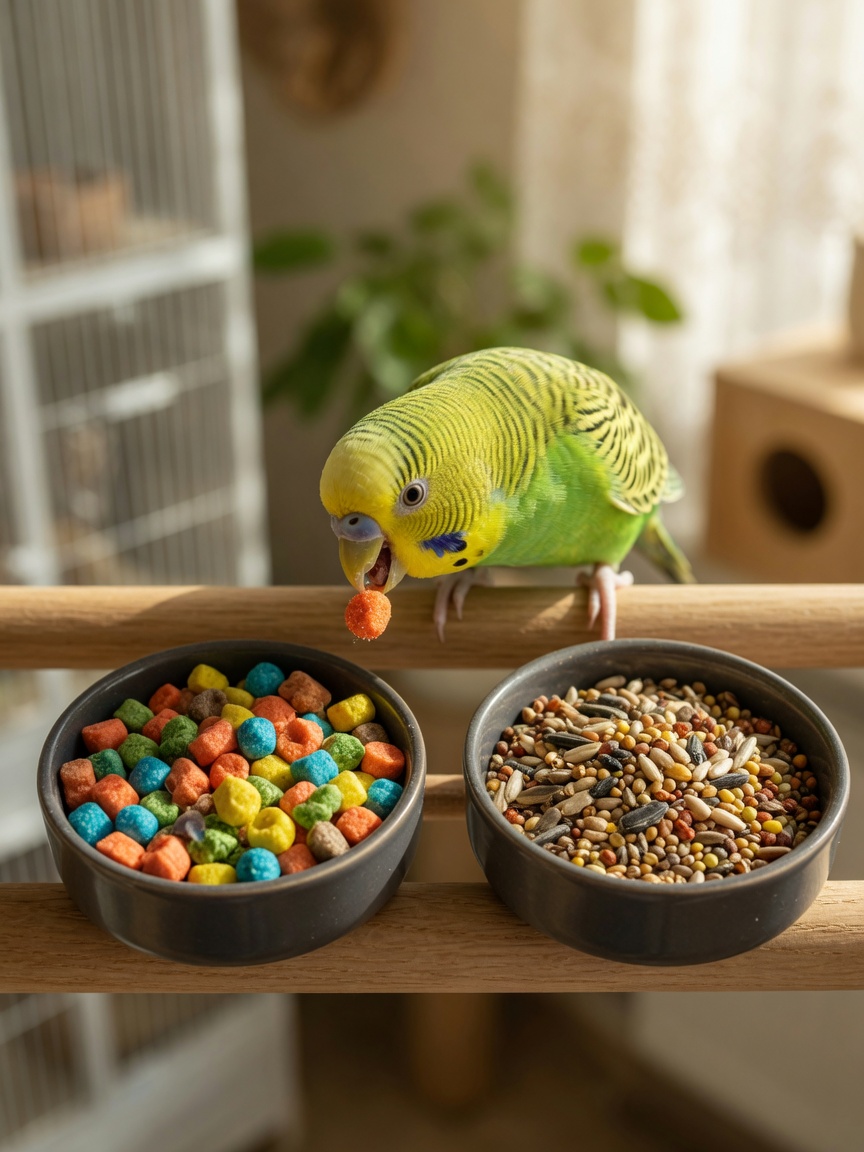
Seed mixes have been the traditional budgerigar diet for decades, but they are nutritionally incomplete and contribute to several of the most common health problems in pet budgerigars — including iodine deficiency, obesity, and fatty liver disease. A high-quality pelleted diet formulated for small psittacines is nutritionally balanced and is the preferred dietary foundation recommended by most avian veterinarians.
Transitioning a seed-habituated budgerigar to pellets requires patience and a gradual approach — most birds initially refuse unfamiliar food. Offering pellets alongside a reduced seed ration, presenting them in different bowls, and crumbling them into familiar foods can all help. Never remove seed entirely without confirming the bird is eating the pellets, as budgerigars can deteriorate rapidly if food intake drops.
Good supplementary foods include:
- Dark leafy greens such as kale, spinach, and parsley
- Carrot, broccoli, and courgette
- Fresh herbs
- Small amounts of cooked egg for protein
Avocado, chocolate, caffeine, alcohol, and onion are toxic to budgerigars and must never be offered.
Cuttlebone: More Than a Perch Accessory
Cuttlebone — the internal shell of the cuttlefish — should be a permanent fixture in every budgerigar cage. It serves two important functions. Firstly, it is an excellent source of calcium, which is essential for bone health, egg production in females, and nerve and muscle function. Secondly, chewing and rubbing the beak against the cuttlebone helps maintain appropriate beak length and shape, reducing the risk of beak overgrowth. Cuttlebone should be attached to the side of the cage and replaced when significantly depleted.
Sociality: Budgerigars Need Company
Budgerigars are highly social flock birds. In the wild they live in large groups, and isolation causes genuine psychological distress. A solitary budgerigar can bond closely with its owner and receive interaction through consistent daily handling, mimicry play, and shared time, but this requires substantial human investment — far more than most owners can realistically provide. Wherever possible, budgerigars should be kept in pairs or small groups. Same-sex pairs are stable and straightforward to manage; opposite-sex pairs will breed if a nest box is provided and require careful management if breeding is not intended.
The Importance of an Avian Vet
Budgerigars should be seen by a vet with specific avian training, not a general small animal practice. Avian medicine requires different clinical skills, reference ranges, and diagnostic approaches. An annual health check with an avian vet — even for an apparently healthy bird — allows early detection of conditions including dental overgrowth, internal tumours, and subclinical infections. In the UK, the Association of Avian Veterinarians maintains a list of qualified practitioners. Register before you need emergency care, not after.