
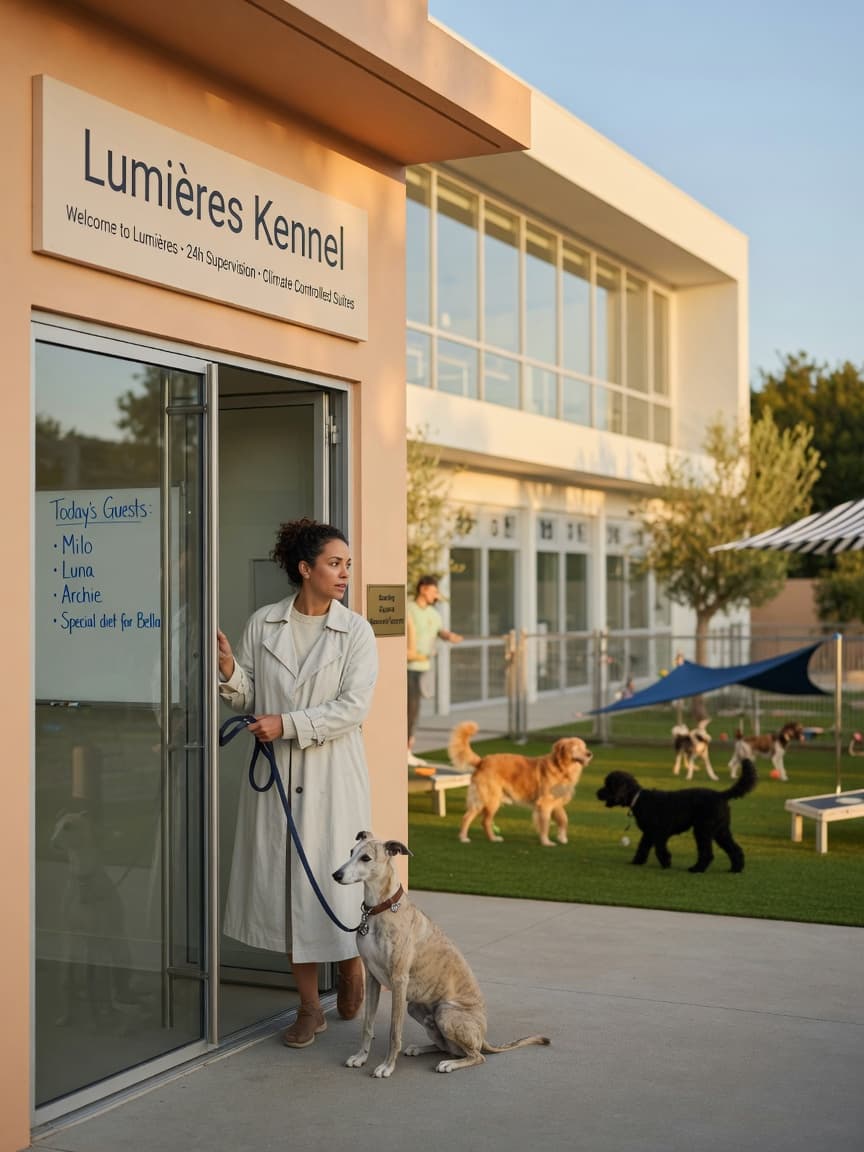
The Question Every Travelling Dog Owner Faces
At some point, almost every dog owner needs to make arrangements for their dog when they cannot take them along. Whether it is a work trip, a family holiday, or a medical procedure, the choice between a boarding kennel and a professional dog sitter is one that deserves more careful thought than many owners give it.
Both options have genuine advantages and real drawbacks, and the right answer depends far more on your individual dog than on general assumptions about what dogs typically prefer. Understanding the variables involved allows you to make a decision based on your dog's specific temperament, health, and history.
What Happens in a Boarding Kennel
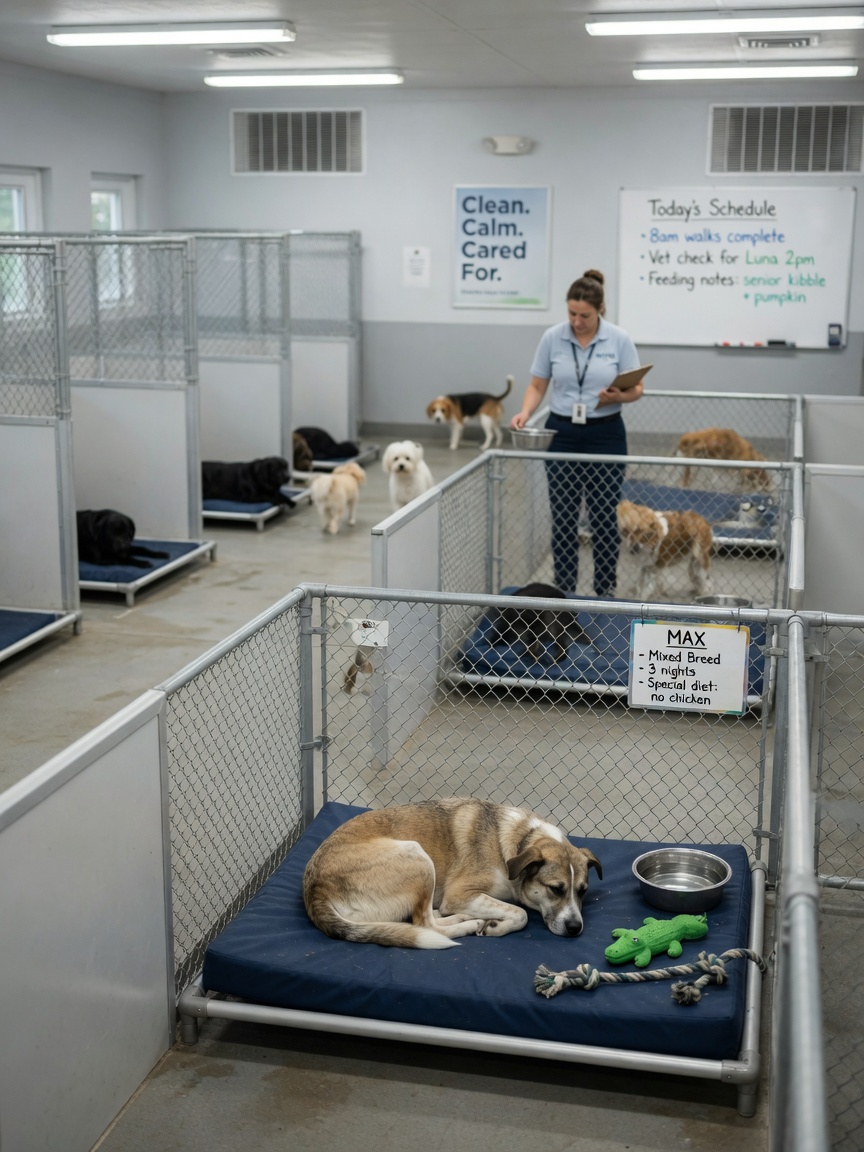
Modern boarding kennels vary enormously in quality, ranging from basic facilities with individual runs to premium establishments offering group play sessions, webcam access for owners, and enrichment programmes. At their best, kennels provide a structured, professionally supervised environment with consistent routines, trained staff, and the ability to respond quickly to medical emergencies.
The key characteristics of kennel-based care include:
- A change of environment, which is neutral for some dogs and significantly stressful for others
- Separation from the owner and familiar surroundings
- Exposure to other dogs, their sounds, and their scents
- A set feeding and exercise schedule that may differ from what the dog is used to at home
- Limited one-to-one human attention compared to a home environment
Research into canine stress responses in kennels, including studies measuring urinary cortisol levels and behavioural markers, consistently shows an initial spike in stress indicators during the first 24 to 48 hours, which typically reduces over time as dogs habituate. Dogs that have been kennelled previously and had positive experiences adjust more quickly than first-timers.
What Dog Sitters Offer
Dog sitters come in two main forms: those who come to your home and care for your dog in their usual surroundings, and those who board your dog in their own home. Both have different implications for your dog's welfare.
In-home dog sitting, where the sitter stays at your property, is arguably the lowest-disruption option available. Your dog sleeps in their own bed, eats from their own bowl, and follows their usual routine. The main variables are the quality, experience, and attentiveness of the sitter, and whether your dog is comfortable with a stranger in the home without you present.
Home boarding, where your dog stays in the sitter's property, combines some of the benefits of a familiar-feeling home environment with the disruption of a new location. In England and Wales, home boarders are required by law to hold a licence under the Animal Activity Licensing scheme, which sets minimum welfare standards. Verifying this licence before booking is a reasonable first step.
Dogs That Tend to Do Better in Kennels
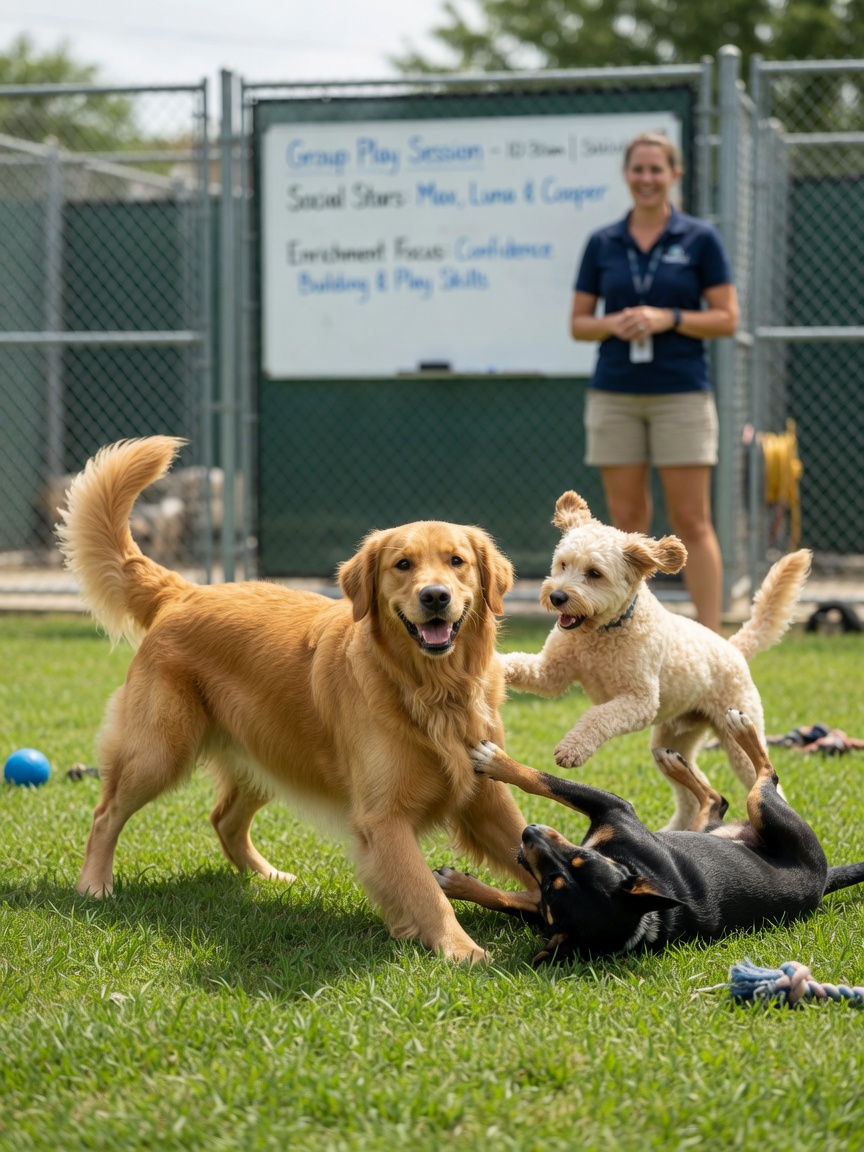
Some dogs are genuinely well-suited to kennels and settle quickly into the routine. These tend to be dogs that:
- Have been kennelled before and have positive associations with the experience
- Are sociable with other dogs and people
- Are robust and confident in new environments
- Have no significant health conditions requiring close monitoring
- Are not prone to separation anxiety triggered specifically by the absence of familiar surroundings
For working breeds that are highly stimulated by structured activity and interaction with other dogs, a well-run kennel with regular group play can actually be more enriching than being alone in a quiet house with a sitter who is present for only part of the day.
Dogs That Tend to Do Better with Sitters
Other dogs find the kennel environment genuinely difficult, regardless of the quality of the facility. These tend to include:
- Senior dogs that find changes in routine and environment physically and psychologically harder to manage
- Dogs with significant anxiety, particularly separation anxiety or noise sensitivity
- Dogs with health conditions requiring medication administration or close observation
- Puppies still in the process of socialisation and routine-building
- Breeds predisposed to stress-related illness, including brachycephalic breeds for whom respiratory stress is a concern
Dogs that have had negative kennel experiences in the past may carry those associations forward regardless of how high-quality the new facility is. Forcing them into the same situation repeatedly in the hope that they will adjust is rarely the right approach.
Questions to Ask Before You Book Either Option
For kennels, visit in person before making a commitment. A reputable kennel will welcome this. Look for clean, well-ventilated facilities with appropriate space per dog, evidence of individual attention, and staff who can speak knowledgeably about the dogs in their care. Ask about their procedure in the event of illness or emergency, and check their vaccination requirements, as any reputable kennel will insist on current core vaccines including kennel cough.
For dog sitters, request references from previous clients and ask specifically how many dogs they care for simultaneously. A sitter managing five or six dogs from different households is providing a different service from one caring for your dog alone. Clarify exactly how many hours per day your dog will be alone, and whether the sitter has any first aid training or experience with dogs of your breed.
A Trial Run Is Always Worth It
Whichever option you choose, introducing your dog to it gradually before your first extended absence is one of the most useful things you can do. A day visit to the kennel, or an overnight stay with the sitter while you are still locally available, allows you to assess your dog's response and gives your dog a chance to experience the environment without the additional stress of your prolonged absence.
How your dog responds to a trial is far more informative than any assumption about what dogs in general prefer. Pay attention to what you observe, and allow that to guide your decision.