
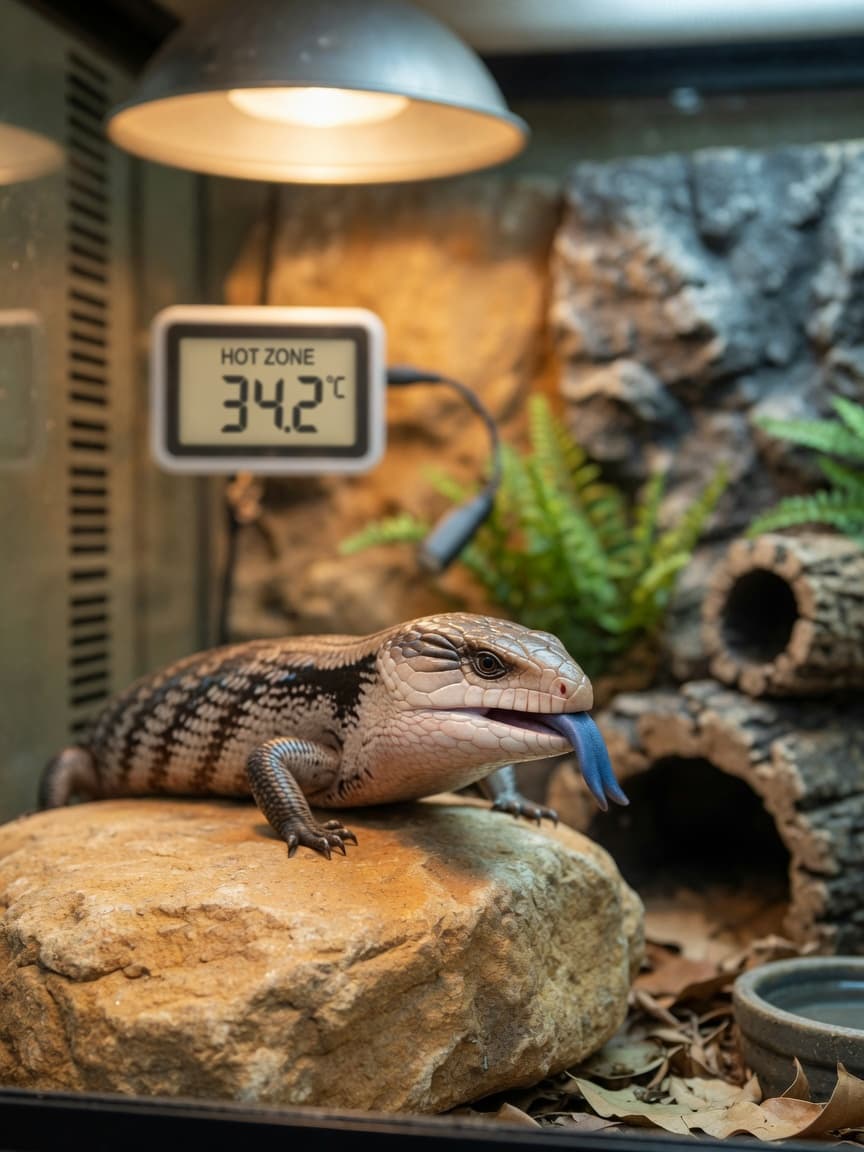
More Personality Than People Expect
Blue-tongued skinks have earned a devoted following among reptile keepers for good reason: they are robust, inquisitive, and tolerate handling better than most lizards. But "robust" does not mean invincible. Two health problems catch new owners off guard with regularity — respiratory infections and retained shed — and their feeding requirements are more nuanced than many beginner resources suggest.
Respiratory Disease in Blue-Tongued Skinks
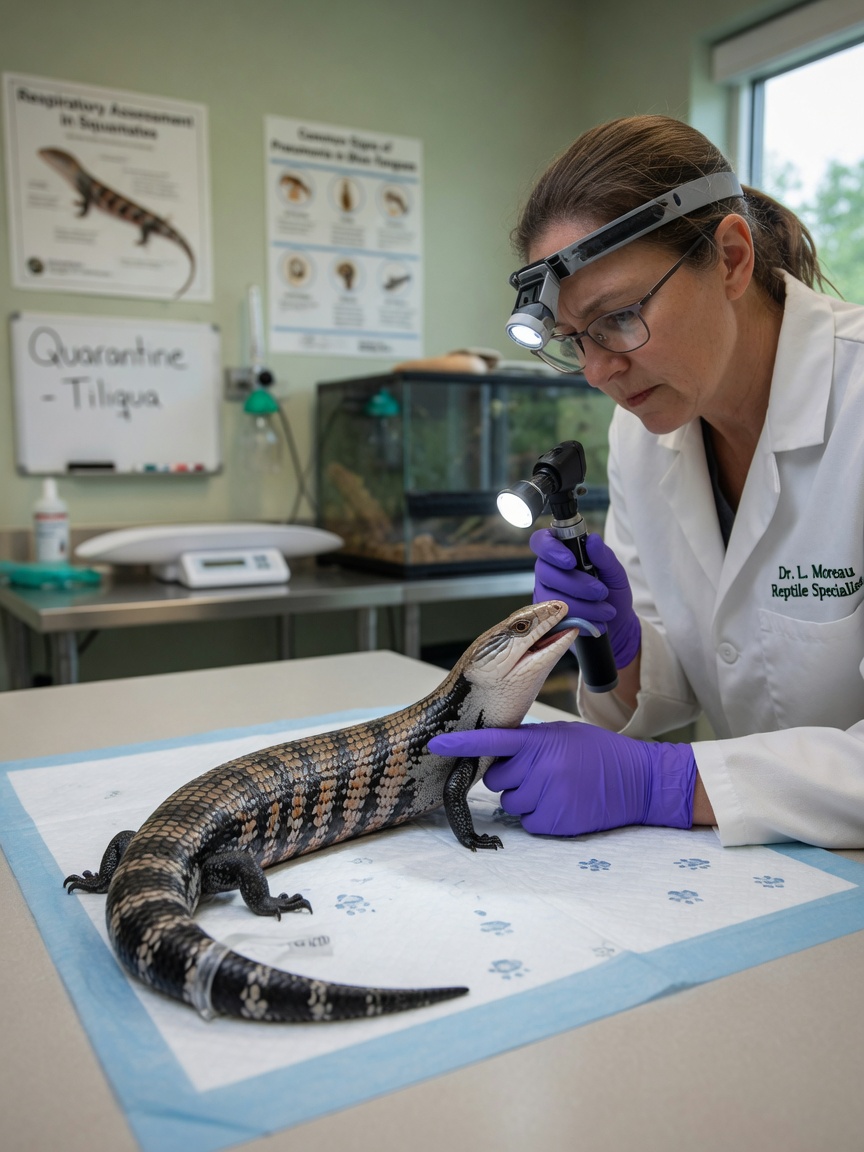
Respiratory infections are among the most frequently reported health complaints in blue-tongued skinks kept in captivity, and in the vast majority of cases, the enclosure environment is implicated. These animals originate from Australia and parts of Indonesia, where conditions vary by species, but none of them thrive in cold, damp enclosures.
Causes and risk factors
- Ambient temperatures consistently below the recommended range (22–24°C cool end, 35–38°C basking zone)
- Humidity levels that are too high for the species being kept (northern species need lower humidity than Indonesian species)
- Poor enclosure ventilation allowing stagnant, moisture-laden air
- Stress from overcrowding or frequent handling during illness
Symptoms and treatment
A skink with a respiratory infection may breathe audibly — wheezing, clicking, or producing a crackling sound — and may keep its mouth slightly open at rest. Mucus from the nostrils, lethargy, and loss of appetite are common accompanying signs. Unlike minor husbandry fixes, respiratory infections in reptiles do not resolve on their own. A vet visit is necessary; treatment typically involves oral or injectable antibiotics and sometimes nebulisation. Correct the enclosure environment simultaneously, or the infection is likely to return.
Retained Shed (Dysecdysis)
Blue-tongued skinks shed their skin in pieces rather than in a single complete casting, which makes retained shed easy to miss. Pieces can adhere around the toes, eyelids, ear openings, and tail tip — locations where constriction can cause serious damage if not addressed promptly.
Why retained shed happens
- Insufficient humidity, particularly for Indonesian species that require 60–80% relative humidity
- No rough surfaces in the enclosure for the animal to rub against
- Underlying skin infections or mite infestations
- Dehydration or nutritional deficiency
Safe removal
If you notice retained shed, place your skink in a shallow, lukewarm soak for 15–20 minutes to soften the skin, then very gently attempt to roll the shed off with a damp cotton bud or soft cloth. Never pull forcefully. Retained shed on toes can cut off circulation within days, so if soaking does not resolve it, seek veterinary help rather than waiting. A humid hide filled with damp sphagnum moss, available throughout the year, greatly reduces the frequency of problem sheds.
Feeding Your Blue-Tongued Skink
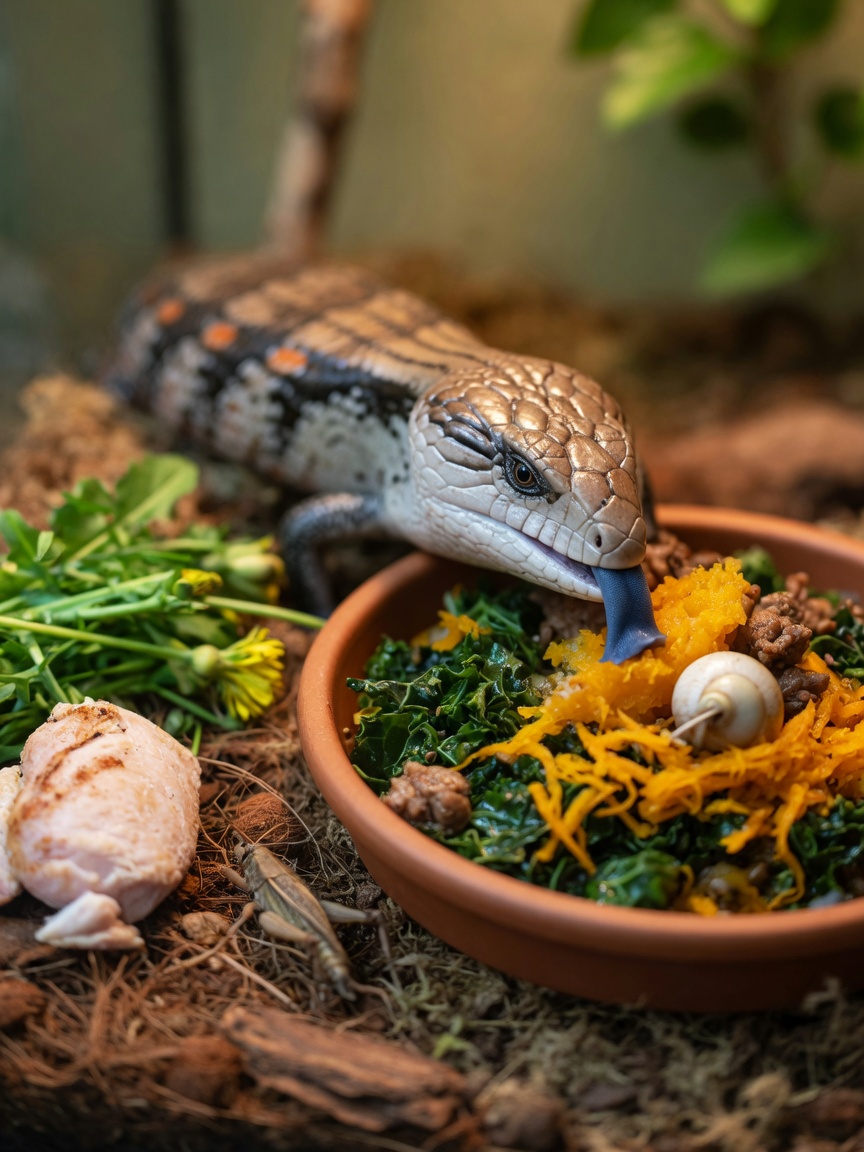
Blue-tongued skinks are omnivores, and getting the balance right matters considerably more than with strictly insectivorous lizards. A diet that skews too heavily toward protein produces long-term kidney stress; one that is too plant-heavy may leave growing animals deficient.
A practical feeding framework
- Aim for roughly 50–60% animal-based protein and 40–50% plant matter for adults
- Suitable protein sources include lean cooked meat, snails, crickets, dubia roaches, and tinned dog food with no onion, garlic, or artificial additives
- Plant matter should include dark leafy greens (dandelion, collard greens, endive), squash, and grated carrot; avoid high-oxalate greens like spinach as a staple
- Fruit should be a small occasional addition, not a regular portion — the sugar content does not suit skinks well
- Calcium and vitamin D3 supplementation should be used on most meals, with a complete multivitamin once weekly
Juveniles should be fed daily or every other day; adults do well on three to four meals per week. Obesity is a genuine risk in skinks that are fed too frequently or given high-fat items — a healthy adult should feel firm and muscular, not squishy or visibly round when viewed from above.
Key Health Monitoring Points
Weigh your skink monthly using kitchen scales. A gradual, sustained downward trend in weight warrants investigation, as does any sudden change. Inspect the skin after each shed cycle, particularly around the digits and eyes. Check the enclosure temperatures with a digital probe thermometer at both ends of the gradient every few weeks, and verify that your thermostat is functioning correctly. Replace UVB bulbs every six months; while blue-tongued skinks are not as UVB-dependent as bearded dragons, there is good evidence that access to appropriate UVB improves their overall health and calcium metabolism.
When to Call the Vet
- Audible breathing, open-mouth breathing, or nasal discharge
- Retained shed that does not resolve after two or three soaks
- Swollen or discoloured toes
- Weight loss of more than 10% over a month without an obvious cause
- Sudden aggression or extreme lethargy in an otherwise sociable animal
A reptile-specialist vet is a worthwhile investment; establish that relationship before an emergency arises. Most health problems caught early carry a far better prognosis than those that have been allowed to progress.