
Loving Every Year of a Life That Can Be Too Short
Bernese Mountain Dogs are affectionate, gentle giants — loyal family companions with a calm presence that belies their considerable working heritage in the Swiss Alps. Yet the Berner, as they are often called, carries a heartbreaking statistical reality: they have one of the shortest average lifespans of any large breed, largely due to their extraordinary predisposition to cancer. Understanding what threatens this breed — cancer in its various forms, histiocytic diseases, and significant joint problems — is not pessimistic. It is the most loving thing an owner can do.
Cancer: The Leading Cause of Death in Berners
Studies suggest that more than half of all Bernese Mountain Dogs will die from cancer, a rate that far exceeds the canine average. The breed is susceptible to multiple cancer types, with malignant histiocytosis, mast cell tumours, and osteosarcoma among the most frequently reported.
Malignant Histiocytosis
Malignant histiocytosis is a particularly aggressive form of cancer arising from histiocytes — immune cells that normally help the body fight infection and injury. In Berners, the disease is heritable and tends to spread rapidly to multiple organs including the lungs, liver, spleen, and bone marrow. Clinical signs include rapid weight loss, lethargy, difficulty breathing, and neurological symptoms if the brain is involved. Prognosis is generally poor, with many dogs surviving only weeks to months after diagnosis. Chemotherapy may offer some extension of survival time, and referral to a veterinary oncologist is advisable.
Osteosarcoma
Bone cancer is more common in large and giant breeds, and Berners are no exception. Osteosarcoma typically affects the long bones of the limbs and causes progressive lameness and localised swelling. Pain can be severe. Treatment options include limb amputation combined with chemotherapy, or palliative pain management. The disease is often diagnosed at an advanced stage, making early attention to any persistent lameness essential.
Histiocytic Diseases: A Spectrum of Conditions
Beyond malignant histiocytosis, Bernese Mountain Dogs are predisposed to the broader spectrum of histiocytic diseases. Systemic histiocytosis is a related but distinct condition in which histiocytes proliferate abnormally and infiltrate skin, lymph nodes, and other tissues. Unlike the malignant form, systemic histiocytosis is not immediately life-threatening but is a chronic, often relapsing condition that requires long-term management.
- Skin lesions, swelling around the eyes or muzzle, and enlarged lymph nodes are common presentations
- The condition can wax and wane over months or years
- Immunosuppressive medication is often used to control flare-ups
- Regular veterinary monitoring is necessary throughout the dog's life
Genetic research into histiocytic diseases in Berners is ongoing. Responsible breeders track disease incidence in their lines and avoid breeding from dogs with histories of histiocytic disease wherever possible.
Joint Disease: Hip and Elbow Dysplasia
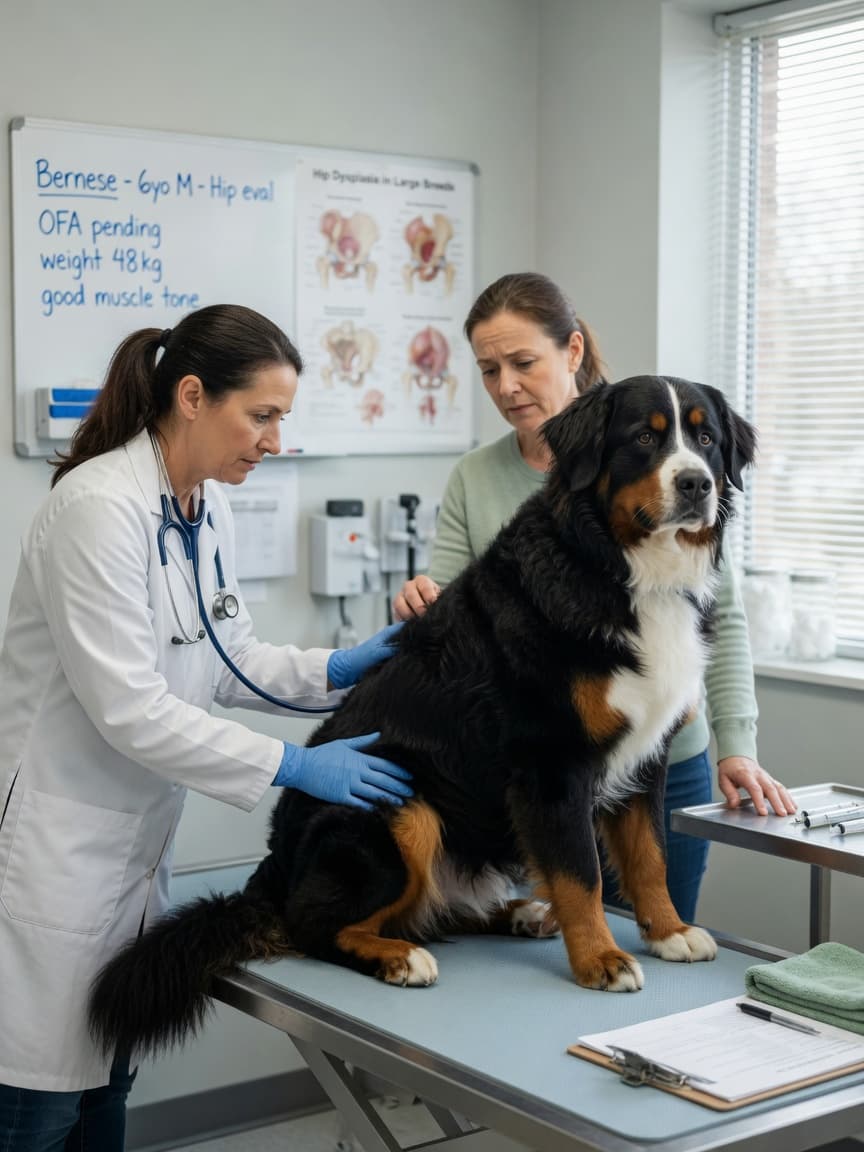
Structural joint disease is a significant welfare concern in Bernese Mountain Dogs. Both hip dysplasia and elbow dysplasia are common in the breed, and many Berners are affected by both simultaneously.
Hip Dysplasia
Hip dysplasia arises from abnormal development of the hip joint, leading to laxity, cartilage damage, and osteoarthritis. In a heavy breed like the Berner, additional body weight substantially worsens joint stress. Signs include difficulty rising, hindlimb stiffness, reluctance to exercise, and a characteristic swaying gait.
Elbow Dysplasia
Elbow dysplasia encompasses several developmental conditions — including fragmented coronoid process and osteochondrosis — that cause pain and lameness in the forelimbs. Signs typically appear in young dogs between five and twelve months of age and include forelimb lameness that worsens after exercise and visible swelling of the elbow joint.
- Both conditions are diagnosed by radiography
- BVA/KC screening schemes exist for both hips and elbows in the UK
- Surgical intervention is often recommended in young dogs with significant elbow disease
- Long-term management includes weight control, physiotherapy, and appropriate medication
Nutrition Strategies for Bernese Mountain Dogs
Given the cancer burden and joint vulnerability in this breed, nutrition plays a more prominent role than in many others. While no diet prevents cancer, emerging research supports the role of nutrition in immune function and inflammatory regulation.
- Feed a large-breed puppy formula to support controlled skeletal growth and reduce developmental joint risk
- Maintain a lean adult body weight — obesity dramatically worsens both joint disease and cancer outcomes
- Omega-3 fatty acids have documented anti-inflammatory effects and may support dogs with joint disease or undergoing cancer treatment
- Antioxidant-rich diets containing vitamins E and C, selenium, and polyphenols may support immune health
- Avoid overfeeding energy-dense food — Berners gain weight easily and the consequences are significant
What Berner Owners Should Prioritise
- Hip and elbow score all breeding animals under a recognised scheme
- Choose breeders who actively track histiocytic disease within their lines
- Begin annual veterinary health checks from two years of age, including lymph node palpation and chest assessment
- Report any lump, swelling, or unexplained weight loss to your vet without delay
- Keep your Berner lean throughout their life and provide regular, moderate exercise
- If cancer is diagnosed, seek referral to a veterinary oncologist for the most current treatment options
No breed inspires more devotion, and perhaps no breed asks more of its owners in return. Bernese Mountain Dogs deserve every opportunity for early detection and thoughtful care. Your vet is an essential partner in monitoring this breed's unique vulnerabilities — do not wait for symptoms to become severe before seeking advice.