
When Antibiotics Are Necessary
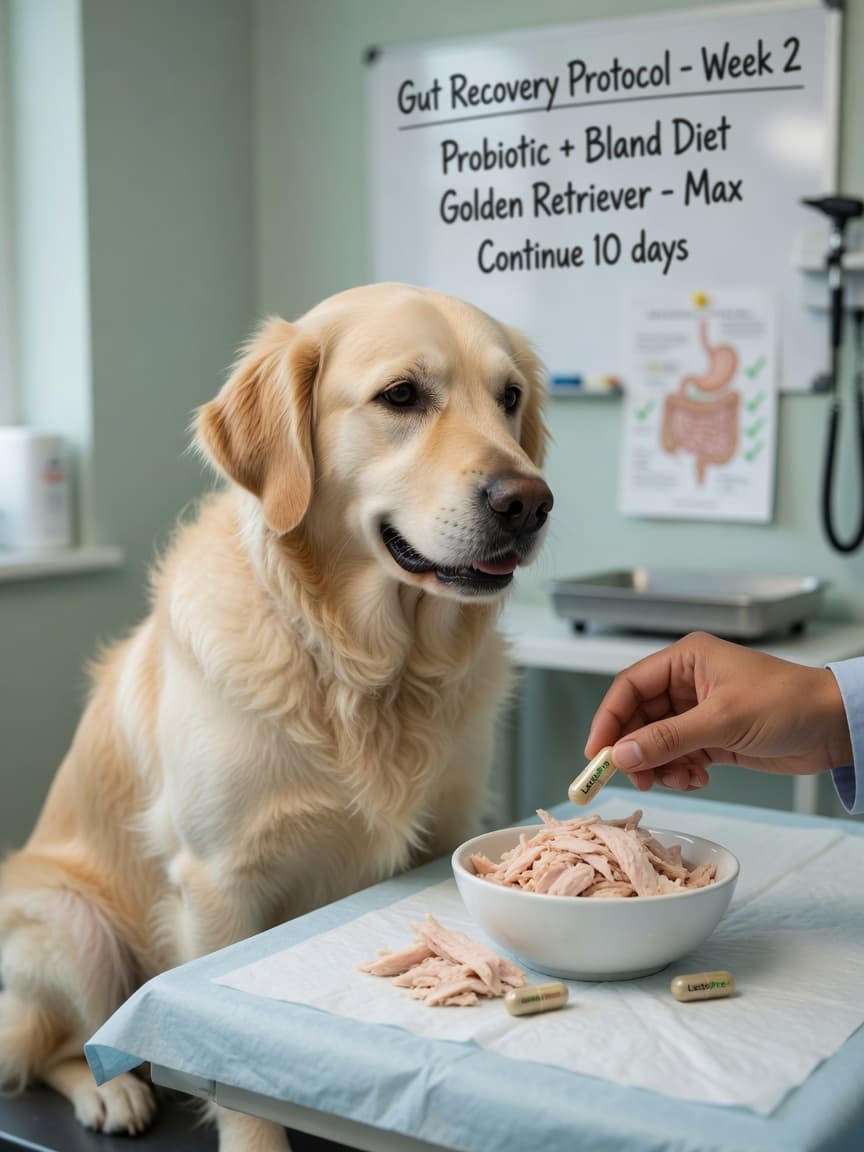
Antibiotics save lives. There are infections in dogs — pyoderma, urinary tract infections, leptospirosis, Lyme disease — where antibiotic treatment is not optional. A responsible pet owner does not avoid antibiotics when they are genuinely needed. But understanding what antibiotics do to the gut microbiome helps you manage the side effects intelligently and support recovery once the course is finished.
The core problem is that antibiotics cannot distinguish between harmful bacteria and the beneficial species your dog's gut depends on. They suppress or eliminate bacterial populations indiscriminately. The broader the antibiotic's spectrum — meaning the wider the range of bacteria it targets — the more extensive the collateral damage tends to be.
What Happens Inside the Gut During a Course
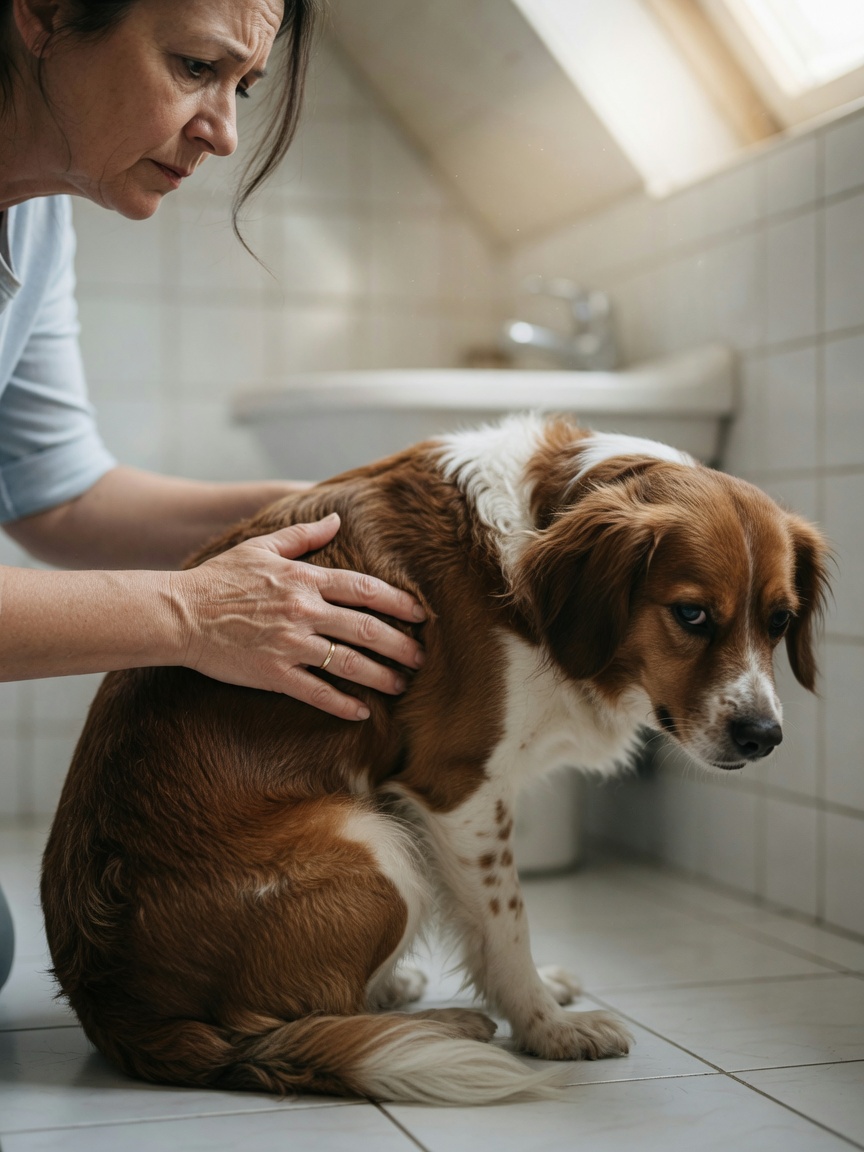
Within 24 to 48 hours of starting antibiotics, measurable changes begin in the gut microbiome. Populations of beneficial species such as Lactobacillus, Bifidobacterium, and Faecalibacterium drop sharply. Opportunistic bacteria that are normally kept in check by the healthy microbial community can expand to fill the gap. In some cases, this allows pathogens like Clostridium perfringens to proliferate, causing antibiotic-associated diarrhoea.
In dogs, antibiotic-associated diarrhoea is one of the most commonly reported side effects of treatment. It can occur during the course itself or appear in the days following completion. Some dogs develop loose stools, increased frequency of defecation, or visible discomfort. Others seem unaffected on the surface but still experience significant microbial disruption that is not outwardly obvious.
Research has documented that some of the diversity lost during antibiotic treatment does not fully return for weeks or months after the course ends. In cases where multiple antibiotic courses are given in sequence, or where broad-spectrum antibiotics are used at high doses, recovery may be incomplete. This has implications not just for digestion but for immune function, inflammatory tone, and long-term health.
Which Antibiotics Cause the Most Disruption
Not all antibiotics cause equal disruption. The degree of gut damage depends on the drug's spectrum, route of administration, and whether the drug is absorbed in the upper gut or reaches the lower intestine in active form.
- Amoxicillin-clavulanate — broad spectrum, commonly associated with diarrhoea in dogs
- Metronidazole — frequently prescribed for gut infections, but has been shown to significantly reduce microbial diversity even when given specifically for gastrointestinal conditions
- Enrofloxacin (a fluoroquinolone) — associated with notable microbiome disruption
- Tylosin — less disruptive than some others, sometimes used for its gut-modulating properties as well as its antibacterial action
Metronidazole is a particularly interesting case. It is widely prescribed for diarrhoea in dogs, and there is a reasonable evidence base for its use in specific infections. However, some research suggests it may actually worsen microbial diversity in dogs with uncomplicated acute diarrhoea, where the cause is not bacterial. This has led some veterinary gastroenterologists to call for more selective use of metronidazole, particularly in cases where a simple dietary modification or probiotic might be sufficient.
How to Support Gut Recovery
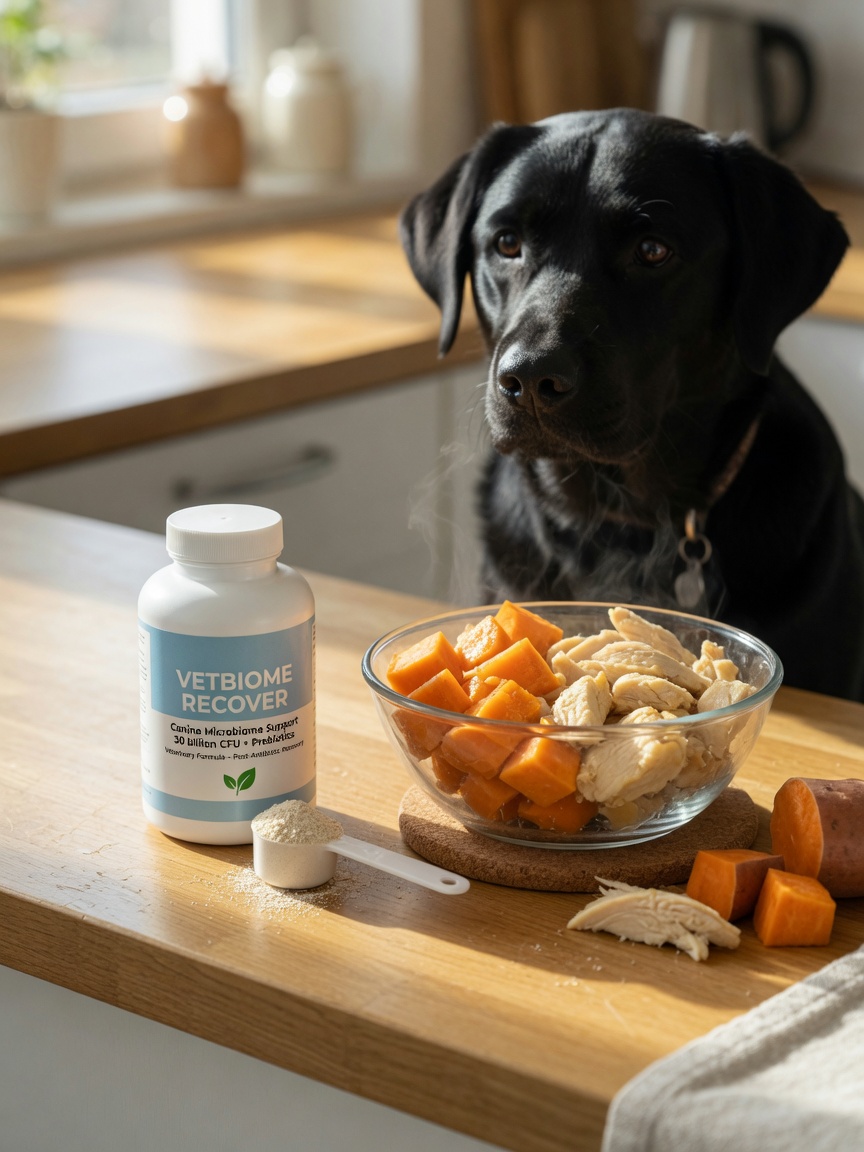
There are several practical steps that can reduce the impact of antibiotic treatment and support faster microbiome recovery.
Give Probiotics During and After the Course
Administering a veterinary-grade probiotic alongside antibiotics — and continuing for at least two to four weeks after the course ends — is one of the most evidence-supported interventions for reducing antibiotic-associated diarrhoea and accelerating microbial recovery. The probiotic should ideally be given a few hours apart from the antibiotic dose to reduce the chance that the antibiotic simply kills the probiotic bacteria before they can colonise.
Species used in veterinary probiotics include Enterococcus faecium, Lactobacillus acidophilus, Bifidobacterium animalis, and Saccharomyces boulardii (a beneficial yeast). Not all products are created equal — look for products with documented colony-forming unit counts and species specifically studied in dogs.
Feed Prebiotic-Rich Foods or Supplements
Prebiotics are the food that beneficial bacteria need to establish and grow. Feeding a diet that includes fermentable fibre during and after antibiotic treatment gives recovering microbial populations the substrate they need. Good dietary sources include cooked sweet potato, chicory, and oats. Supplement options include inulin and fructooligosaccharides (FOS).
Consider a Bland, Easy-to-Digest Diet Temporarily
During a course of antibiotics, particularly if your dog is experiencing gastrointestinal symptoms, a temporary shift to a plain, easily digestible diet can reduce the burden on the gut. Boiled chicken and white rice is a classic approach. It is not nutritionally complete for long-term use, but for a week or two it can ease discomfort while the gut stabilises.
Avoid Unnecessary Repeat Courses
If your dog is prescribed antibiotics frequently — more than once or twice in a year — it is worth having a broader conversation with your vet about the underlying causes. Recurrent skin infections, ear infections, and urinary tract infections may have root causes that antibiotics alone cannot fix. Addressing diet, immune health, and gut microbiome as part of the overall picture can sometimes reduce the frequency of infections and therefore the frequency of antibiotic exposure.
What Realistic Recovery Looks Like
For most dogs, gut microbiome disruption from a single antibiotic course is temporary and manageable. With appropriate probiotic and prebiotic support, many dogs return to normal digestion within a few weeks of finishing treatment. Stool consistency improves, frequency normalises, and the general energy and comfort of the dog returns to baseline.
For dogs with pre-existing gastrointestinal sensitivities, inflammatory bowel disease, or a history of multiple antibiotic courses, recovery can take longer and may benefit from closer veterinary supervision. Faecal microbiome transplantation is an emerging intervention for severe dysbiosis in dogs, though it remains specialised and is not yet widely available.
The key message is simple: antibiotics when needed, always — but with eyes open to what they cost the gut, and a plan in place to support recovery. That combination gives your dog the best of both outcomes.