
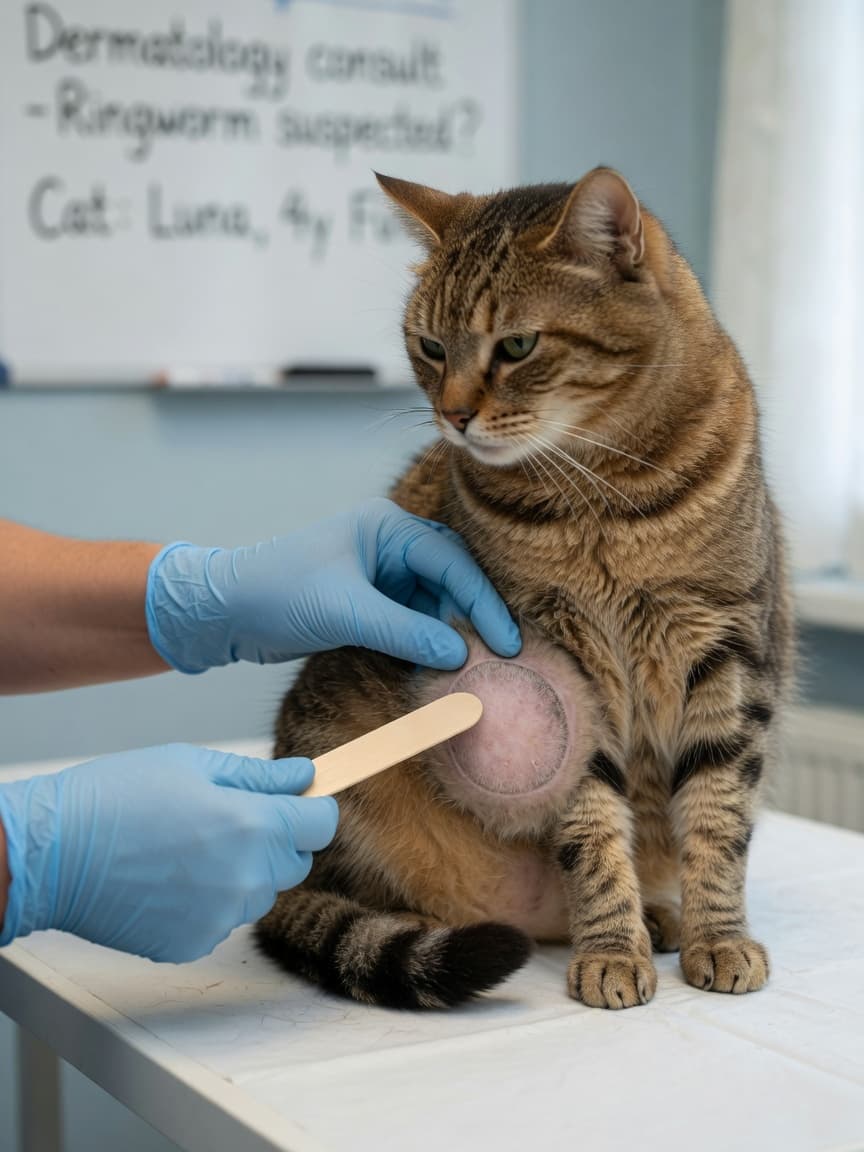
What Is Feline Alopecia?
Alopecia simply means hair loss, and in cats it presents in various ways — from small, coin-sized bald patches to large areas of thinning or complete absence of fur. It is a symptom rather than a diagnosis in itself, which means identifying the root cause requires some investigation. The location of the hair loss, the condition of the skin beneath it, and the presence of any accompanying symptoms are all important clues that help veterinarians narrow down the cause.
Hair loss in cats can be spontaneous, where the hair falls out on its own, or self-induced, where the cat removes the hair through excessive grooming, scratching, or barbering. Distinguishing between these two mechanisms is the first step in getting to a diagnosis, and it shapes the direction of any further investigation.
Self-Induced Hair Loss
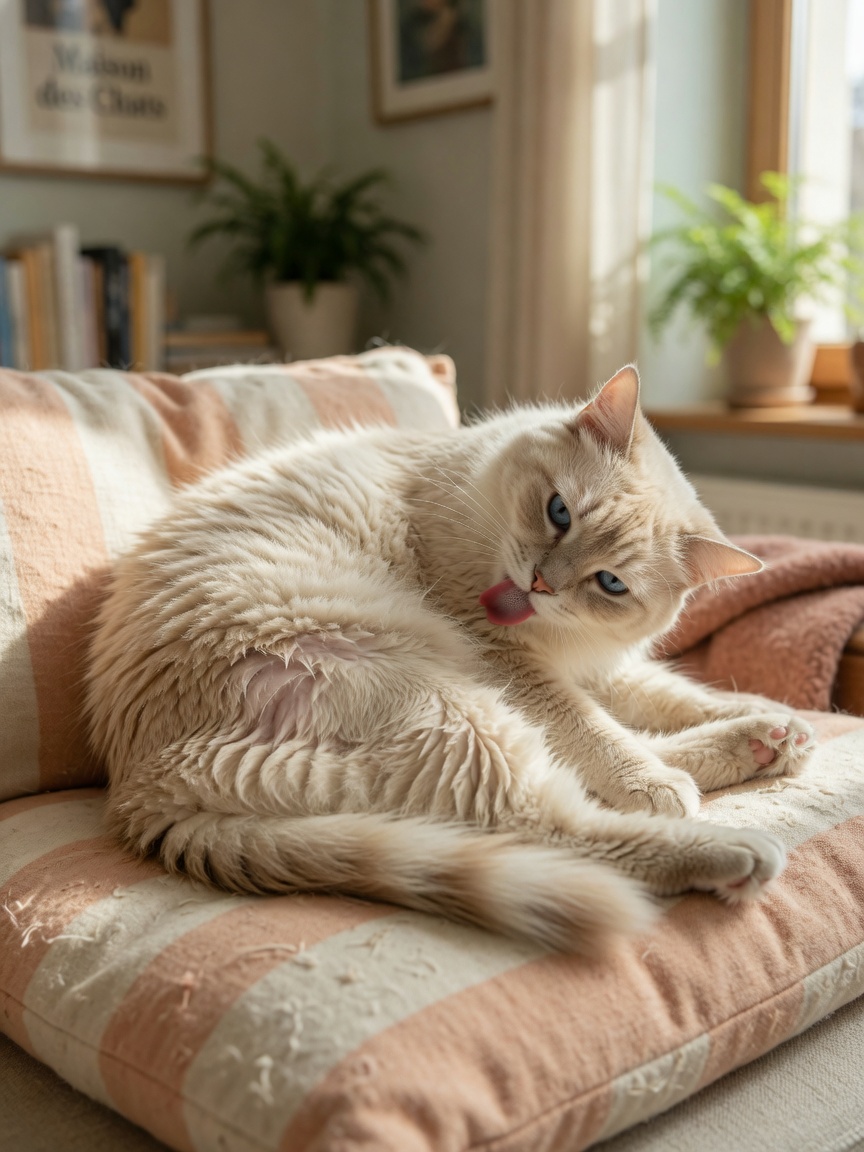
Self-induced alopecia is among the most common presentations seen in feline dermatology. The cat grooms one or several areas so persistently that the hair breaks off or is pulled out entirely. The skin beneath often appears relatively normal — perhaps slightly pink or smooth — and the remaining hair shafts, when examined closely, show the characteristic blunt ends that result from repeated licking rather than natural fallout.
Allergic Skin Disease
Allergies are the leading cause of self-induced hair loss. Flea allergy dermatitis is the most prevalent allergic condition in cats worldwide. An allergic reaction to flea saliva causes intense pruritus — itching — that prompts relentless grooming. The hair loss typically appears along the back, at the base of the tail, and on the belly and inner thighs. Even one or two flea bites per week can sustain this reaction in a sensitised cat.
Environmental allergies, known as atopic dermatitis, and food allergies produce similar patterns of over-grooming. Identifying the specific allergen often requires a structured elimination diet trial of eight to twelve weeks, intradermal skin testing, or specific serum allergy tests performed by a veterinary dermatologist.
Stress and Psychogenic Alopecia
Some cats respond to psychological stress through compulsive grooming. This is sometimes called psychogenic alopecia, and it tends to affect certain breeds more than others — Siamese, Burmese, Abyssinian, and other highly intelligent, sensitive breeds appear to be overrepresented. The hair loss is typically symmetrical, affecting the belly, flanks, or inner legs, and the skin beneath looks entirely healthy.
Triggers include multi-cat household tensions, changes in routine, outdoor stressors such as neighbouring cats, or insufficient environmental enrichment. Management involves addressing the source of stress and, in some cases, anti-anxiety medication or behavioural therapy prescribed by a veterinary behaviourist.
Spontaneous Hair Loss
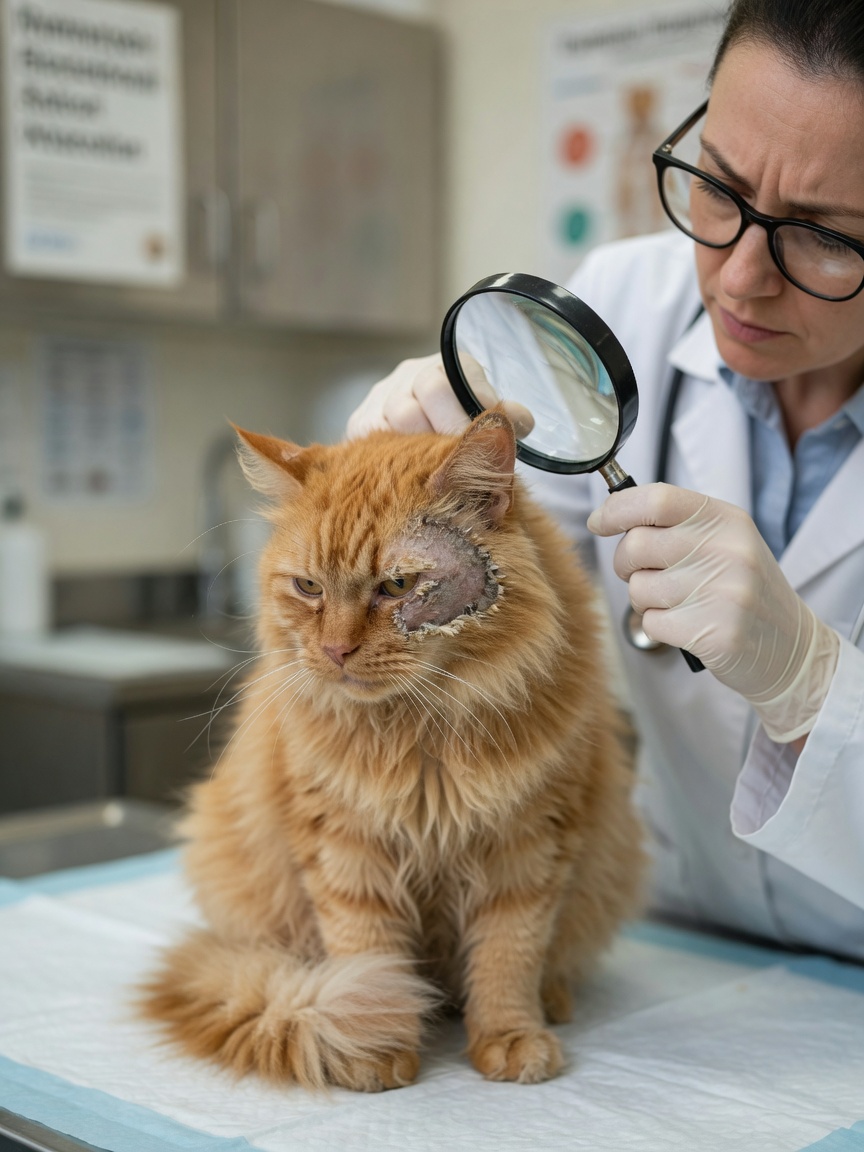
When hair falls out without the cat pulling it — which a vet can confirm by examining hair root morphology or by checking for over-grooming behaviour — the differential list shifts towards systemic, hormonal, or infectious causes.
Ringworm
Despite the name, ringworm is a fungal infection caused by species of Dermatophytes, most commonly Microsporum canis in cats. It produces circular or irregular patches of hair loss, often with a scaly, crusty appearance at the edges. The patches frequently appear around the face, ears, and paws. Ringworm is highly contagious to other pets and to humans, making prompt diagnosis and treatment important. Diagnosis is typically confirmed with a fungal culture. Treatment involves antifungal medications — both topical and oral — as well as thorough environmental decontamination.
Hormonal Disorders
Hormonal imbalances can cause bilaterally symmetrical hair loss — that is, hair loss that mirrors itself on both sides of the body — without associated itching. Hyperthyroidism in middle-aged to older cats may produce coat changes alongside classic signs such as weight loss, increased appetite, and restlessness. Hyperadrenocorticism (Cushing's disease) is rare in cats but does occur, and it can cause fragile, easily damaged skin and widespread hair thinning.
Iatrogenic alopecia — hair loss caused by medication — can result from long-term use of corticosteroids or the use of progesterone-based drugs, which were historically used for certain reproductive conditions.
Telogen Effluvium
This is a pattern of diffuse hair shedding that occurs in response to a significant physiological stress event — a serious illness, major surgery, high fever, or in the case of female cats, queening (giving birth). The hair follicles shift en masse into the resting phase of the hair cycle, and several weeks later a noticeable increase in shedding occurs. This form of alopecia typically resolves on its own once the cat has recovered from the precipitating event.
Diagnosis and What to Expect at the Vet
A thorough diagnostic workup for feline alopecia usually begins with a detailed history — when the hair loss started, whether it is progressive, whether your cat has been scratching or grooming excessively, and any recent changes in health or environment. Physical examination will include assessment of the skin, lymph nodes, and overall body condition.
- Trichoscopy — microscopic examination of hair shafts — can indicate whether loss is spontaneous or self-induced
- Skin scrapings help identify mites
- Fungal culture rules out ringworm
- Bloodwork, including thyroid levels, gives information about systemic health
- A food elimination trial may be recommended if food allergy is suspected
Treatment depends entirely on the identified cause. Flea-related alopecia resolves with rigorous, sustained flea control. Fungal infections clear with appropriate antifungal therapy. Allergic skin disease may require allergen avoidance, dietary management, immunotherapy, or medical management with drugs such as ciclosporin or monoclonal antibody treatments now available for cats.
The important takeaway is that patchy hair loss in cats should not be dismissed as cosmetic. It nearly always reflects something happening beneath the surface, and the earlier the cause is identified and addressed, the better the outcome for your cat's comfort and long-term skin and coat health.