
Your Home's Air May Not Be as Clean as It Feels
The assumption that indoor air is cleaner than outdoor air is widespread and largely wrong. The United States Environmental Protection Agency has documented that indoor air can be two to five times more polluted than outdoor air — and in some cases up to 100 times worse. For pets, who breathe air at floor level and spend far more time indoors than most of their owners, this is not an abstract statistic.
Why Pets Are More Vulnerable
Several physiological and behavioural factors make companion animals disproportionately sensitive to indoor air pollutants.
Respiratory Rate and Body Size
Small animals breathe faster than large ones relative to body mass, meaning they process more air — and any contaminants within it — per unit of time. A small dog or cat inhales proportionally more airborne particles per hour than a human adult sharing the same room.
Proximity to the Floor
Many volatile organic compounds and particulate matter settle or accumulate near floor level. Pets that rest and sleep on the floor experience near-continuous exposure to concentrations their owners, sitting or standing at height, largely avoid.
Limited Detoxification Capacity
Cats, in particular, have well-documented deficiencies in hepatic glucuronidation pathways, which limits their ability to metabolise certain chemical exposures that humans and dogs handle more efficiently.
Common Indoor Pollutants and Their Effects
Scented Candles and Incense
Paraffin wax candles release toluene, benzene, and fine particulate matter during combustion. Fragrance compounds add synthetic musks, aldehydes, and phthalates. In enclosed rooms, regular candle use can raise particle counts significantly. Cats exposed to high incense use have shown elevated rates of lymphoma in some epidemiological studies, though isolating the specific causative agent is methodologically difficult. Birds are acutely sensitive and should never share a room with burning candles or incense.
PTFE and Non-Stick Cookware
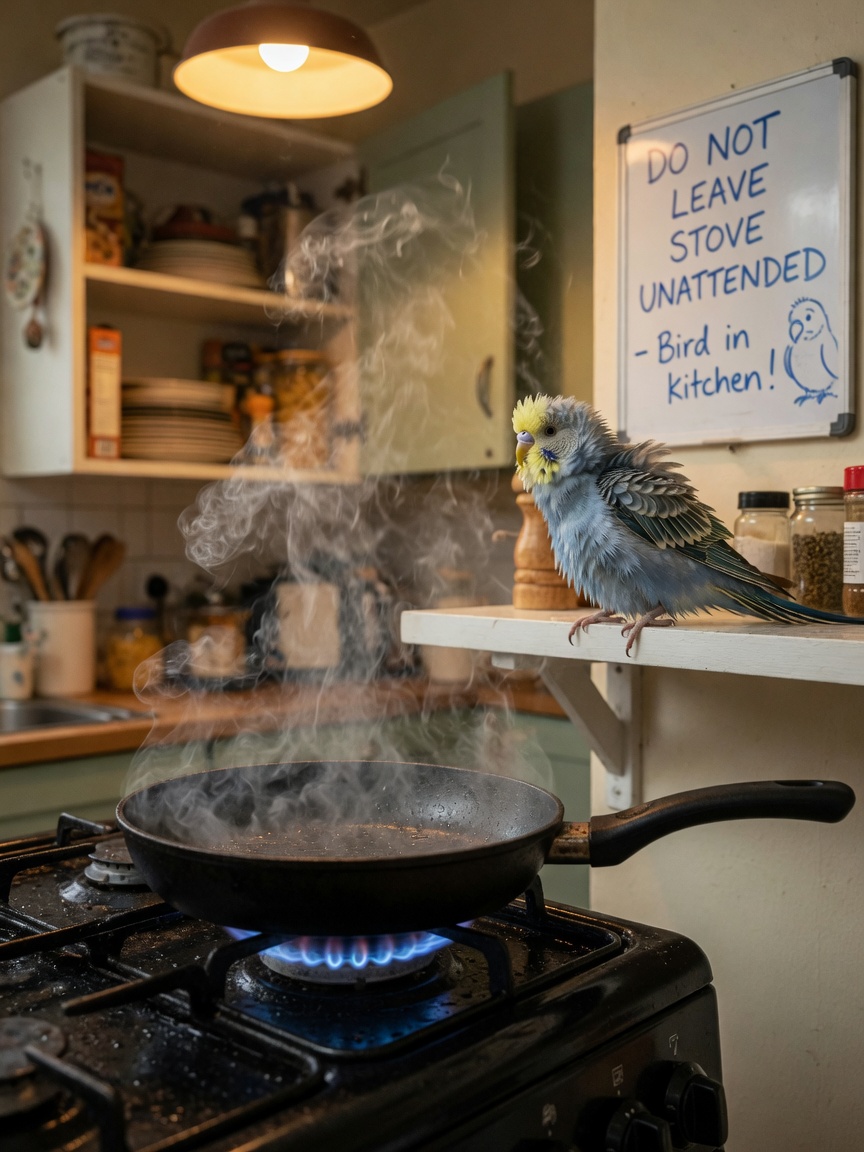
This is one of the most serious and underappreciated hazards for pet bird owners. Polytetrafluoroethylene coatings on non-stick cookware, when overheated above approximately 260°C, release fumes that cause fatal pulmonary haemorrhage in birds within minutes. This syndrome, known as PTFE toxicosis, has killed birds in rooms several floors away from the kitchen. PTFE is also found in some self-cleaning ovens, certain heat lamps, and ironing board covers. If you keep birds, these products should be removed from the home entirely.
Cleaning Products and Air Fresheners
Phenol-based disinfectants are toxic to cats. Many household surface sprays, toilet blocks, and plug-in air fresheners contain compounds including formaldehyde, naphthalene, and volatile organic compounds. Cats walking across recently cleaned surfaces then ingest residues during grooming. Dogs and cats with chronic respiratory symptoms, watery eyes, or unexplained lethargy sometimes improve significantly when cleaning product use is reduced or switched to fragrance-free, pet-safe alternatives.
Tobacco and Cannabis Smoke
Second-hand tobacco smoke exposure is associated with elevated cancer risk in dogs and cats, including nasal carcinoma in long-nosed breeds and lymphoma in cats. Cannabis smoke and vapour exposure can cause cannabis toxicity in pets, characterised by ataxia, urinary incontinence, and sedation. These are not rare presentations in veterinary emergency settings.
Improving Indoor Air Quality for Pets
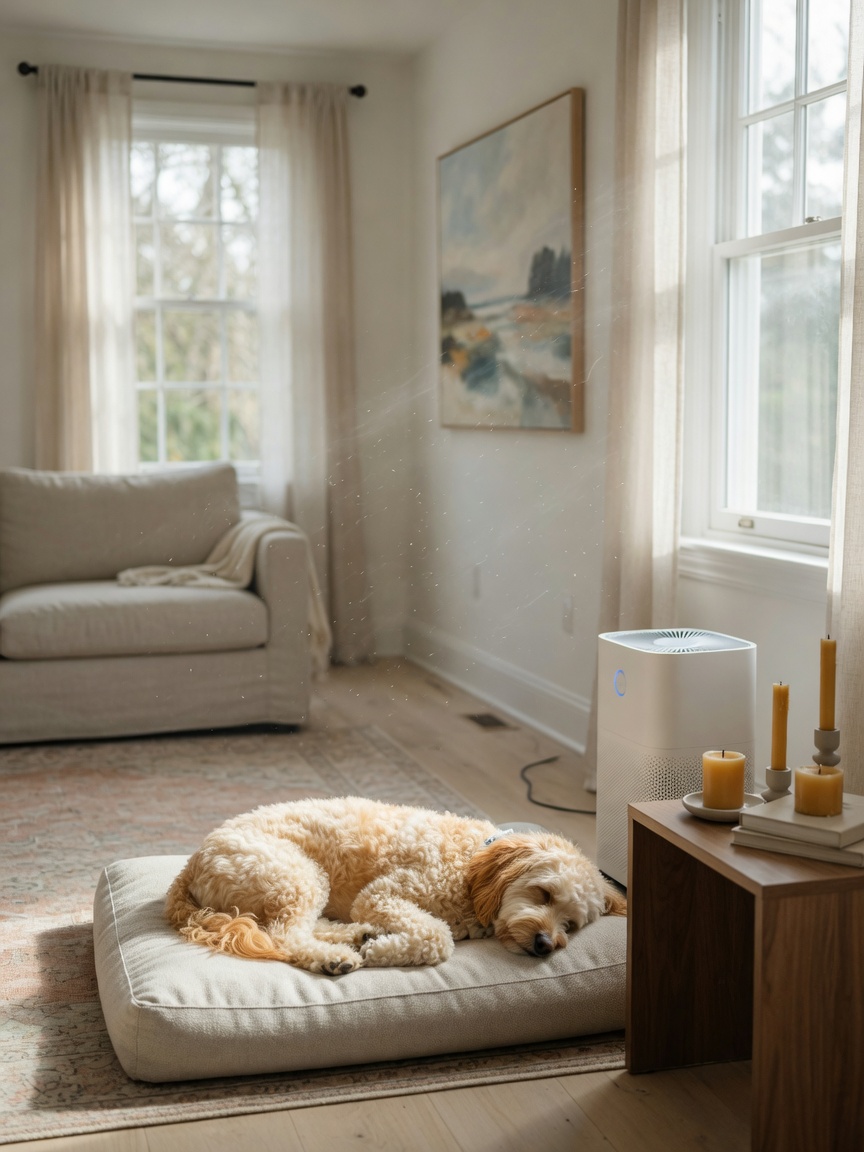
- Replace paraffin candles with beeswax or soy alternatives, or use battery-operated candles, particularly in rooms where pets spend time.
- Ensure kitchens are well-ventilated during cooking; never use non-stick cookware if you keep birds.
- Switch cleaning products to fragrance-free, phenol-free formulations and allow surfaces to dry fully before pets re-enter the area.
- Unplug synthetic air fresheners and avoid aerosol sprays in enclosed rooms where pets sleep.
- Open windows daily where outdoor air quality permits — cross-ventilation for 15 minutes substantially refreshes indoor air.
- Consider a HEPA air purifier in rooms where pets sleep, particularly in urban environments or homes with smokers.
When to Speak to Your Vet
Persistent sneezing, coughing, ocular discharge, or unexplained lethargy in the absence of other diagnoses should prompt a conversation about your home environment. Vets increasingly ask about household product use as part of a full clinical history. If your pet's symptoms fluctuate with your own presence at home — worsening at weekends, for example — an environmental trigger is worth investigating. Air quality is one of the simplest levers you can adjust without waiting for a diagnosis.